 Ver en contexto
 Enviar
 Compartir
 Detalles

 Descargar
 Similares
 Radiografía
 Presentación de diapositivas
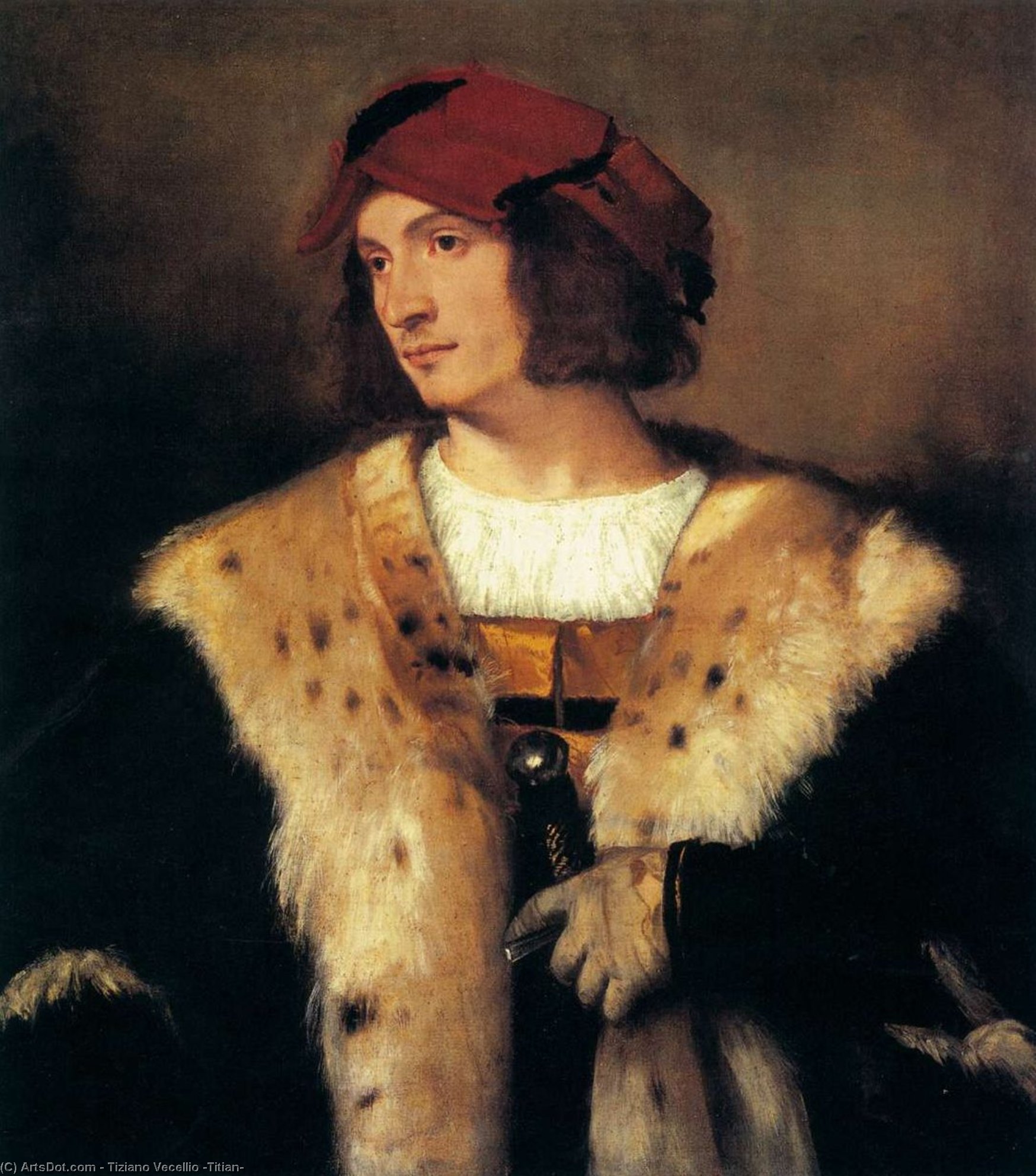
Portrait of a Man in a Red Cap
 Acrílico sobre lienzo
- Arte de pared
- High Renaissance
 1516
1516 82.0 x 71.0 cm
 Colección Frick
 Ver más
Reproducción al óleo hecha a mano
Óleo sobre lienzo pintado a mano en el tamaño y marco de su elección, realizado por encargo por nuestros artistas. ( Comprar impresión Comprar imagen)




P118B $10

P118H $10

P118W $10

P438Z $10

P508JH $12

P508YH $12

P805H $10

P805Z $10

P919BZ $10

P919G $10

P919XJ $10

P959ZH $10

P968JZ $12

W106C $8

W218G $10

W218JH $8

W218Y $10

W307PJ $10

W316G $10

W316PJ $8

W316Y $10

W398PJ $8

W4111J $10

W500HY $15

W500JH $15

W692G $12

W849H $8

W940BG $15

W953PJ $8




Elija entre nuestros tamaños predefinidos que respetan las proporciones originales de la obra.

Puede ingresar sus propias dimensiones para adaptarse a un marco o espacio específico. Si el tamaño seleccionado no coincide con las proporciones de la imagen original, recortaremos la obra o extenderemos la pintura con elementos adicionales pintados a mano. Se le enviará una maqueta digital para su aprobación antes de comenzar la producción.
Tenga en cuenta que la vista previa en pantalla no refleja el recorte o la extensión reales. Solo la maqueta mostrará con precisión la composición final.
Si bien existen tamaños personalizados, recomendamos seleccionar una dimensión de la lista predefinida para preservar las proporciones originales.
Tras realizar el pedido, el equipo de ArtsDot.com enviará un correo electrónico al cliente para solicitar instrucciones y proporcionarle una vista previa del boceto.
Envío a todo el mundo () en 3-4 semanas en lugar de las 5 semanas estándar. (24 agosto). Sin comprometer la calidad.

Envío exprés gratuito a todo el mundo

Lienzo de lino de alta calidad

Seguro de envío total

Garantía de reembolso de impuestos aduaneros

Garantía de fidelidad cromática exacta

Política de devolución de 60 días (solo por defectos)

Garantía de devolución del 100% del dinero

Descuento por cantidad
 La opción de vidrio solo está disponible en tamaños inferiores a 110 cm.

Portrait of a Man in a Red Cap
Técnica de reproducción
Dimensiones de la reproducción
-


Precio total final
$ 263
Descripción de la obra
A Regal Presence Captured in Light and Texture: Titian’s Portrait of a Man in a Red Cap
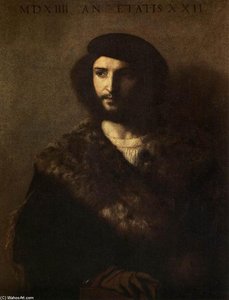
Titian Ramsay Peale II's "Portrait of a Man in a Red Cap," housed within The Frick Collection, stands as an exquisite exemplar of Venetian High Renaissance artistry—a testament to masterful paint handling and profound psychological insight. Painted circa 1516, this captivating oil on oak canvas transcends mere representation; it embodies the spirit of its era and invites contemplation on themes of authority, introspection, and artistic innovation. The painting’s provenance traces back to Santo Spirito monastery in Venice, where it originally resided alongside eight monumental tondi by Titian himself—a deliberate pairing that underscores the artist's significance within the intellectual landscape of his time.- Subject Matter: The portrait depicts a young man dressed in opulent attire, dominated by a scarlet cap – a fashionable accessory indicative of aristocratic status during the Renaissance. His gaze directs firmly toward the viewer, establishing an immediate connection and conveying a sense of dignified composure.
- Style & Technique: Titian’s signature style is characterized by luminous color palettes and velvety brushstrokes—a technique perfected over decades of experimentation that resulted in unparalleled textural richness. Observe how he skillfully renders the fur coat draped around the man's shoulders, achieving an astonishing illusion of softness through meticulous layering and blending.
- Historical Context: Created during a period of artistic flourishing in Venice, “Portrait of a Man” reflects the humanist ideals prevalent at the time—a fascination with human anatomy and emotion alongside a renewed interest in classical art forms. The inclusion of a sword symbolizes power and nobility, mirroring the ambitions of Venetian elites eager to assert their influence on the European stage.
- Symbolism: Beyond its visual splendor, the painting carries subtle symbolic weight. The book positioned near the bottom right corner suggests erudition and intellectual pursuits—values highly esteemed within Renaissance society. Furthermore, the man’s contemplative gaze hints at inner reflection and a profound awareness of his own identity.
Obras relacionadas
Biografía del artista
Tiziano Vecellio: The Venetian Titan
Tiziano Vecellio, universally known as Titian, stands as a monumental figure of the Italian Renaissance—perhaps its most celebrated colorist and a master who redefined the possibilities of oil painting. Born around 1490 in Pieve di Cadore, nestled amidst the dramatic landscapes of the Venetian Alps, his journey from humble beginnings to international acclaim is a testament to prodigious talent and an unwavering dedication to artistic innovation. The exact date of Titian’s birth remains elusive, debated by scholars, but contemporary sources and his early stylistic development converge on estimates between 1488 and 1490.
His father, Gregorio Vecellio, was a military man—a profession that instilled in young Tiziano a disciplined spirit and an appreciation for observation. Lucia, his mother, nurtured him with affection and fostered his artistic inclinations. Recognizing their sons’ potential, the family arranged for Tiziano and Francesco to apprentice with Sebastiano Zuccato, a mosaicist—a decision that would irrevocably alter the course of art history. This formative experience exposed them to the meticulous craftsmanship required for creating intricate decorative panels, shaping their aesthetic sensibilities from an early age.
Titian’s artistic training continued under Giovanni Bellini, who was then Venice’s most prominent painter and a revered teacher. Bellini’s workshop fostered a tradition of Venetian painting characterized by lyrical beauty and subtle tonal harmonies—influences that would permeate Titian’s oeuvre throughout his life. Notably, he collaborated closely with Giorgione—a fellow Venetian artist whose groundbreaking style championed atmospheric perspective and psychological depth.
A Master's Early Style: Giorgione's Influence
The partnership between Titian and Giorgione proved pivotal in shaping Titian’s artistic vision. Their collaboration on the exterior frescoes for the Fondaco dei Tedeschi—a bustling trading post frequented by German merchants—established a stylistic precedent that would endure for decades. The paintings showcased a remarkable sensitivity to light and color, reflecting Giorgione’s pioneering exploration of atmospheric perspective—a technique that aimed to convey the illusion of depth and realism.
Titian’s early works embody this Giorgionesque aesthetic—characterized by hazy landscapes, muted palettes, and an emphasis on capturing mood rather than precise detail. Paintings like *A Man with a Quilted Sleeve* exemplify his burgeoning talent for portraiture, skillfully portraying not only the physical likeness of his subjects but also their inner character—a hallmark of Venetian Renaissance painting.
Expanding Horizons: Bellini's Legacy and Artistic Maturity
Following Giorgione’s untimely death in 1510, Titian continued his artistic development under Giovanni Bellini’s guidance—though Bellini himself was gradually withdrawing from active painting. This period witnessed a gradual shift toward bolder compositions and more assertive color palettes—reflecting Titian’s growing confidence as an independent artist.
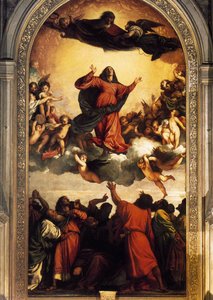
His monumental altarpiece for Santa Maria Gloriosa dei Frari—commissioned in 1518—marked a watershed moment in Venetian painting history. The ambitious undertaking demanded mastery of technique, compositional innovation, and chromatic brilliance—qualities that Titian possessed in abundance. This masterpiece cemented his reputation as Venice’s foremost painter and established him as a pioneer of monumental fresco painting.
The Venetian School's Dominance
Titian’s influence extended far beyond his own lifetime, shaping the artistic landscape of Europe for centuries to come. He became a cornerstone of the Venetian school—a movement that championed coloristic realism and psychological depth—inspiring artists across generations. From Rubens and Rembrandt to Delacroix and Monet, Titian’s techniques—particularly his innovative layering of pigments and his masterful manipulation of light—became models for aspiring painters.
His legacy endures not only in the masterpieces he created but also in the enduring fascination with color and emotion that characterizes Venetian art. Tiziano Vecellio—Titian—remains an unparalleled figure in the history of painting, a testament to artistic genius and an embodiment of the Renaissance spirit.
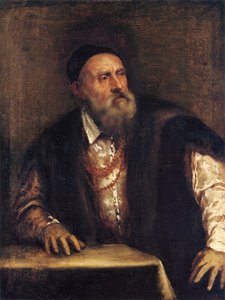
Tiziano
1490 - 1576 , Italia
Datos clave
- Artistic Movement Or Style: Renacimiento Veneciano
- Artists Or Movements Influenced By This Artist:
- Rubens
- Delacroix
- Artists Who Influenced This Artist:
- Giovanni Bellini
- Giorgione
- Date Of Birth: c. 1490
- Date Of Death: 1576
- Full Name: Tiziano Vecellio
- Nationality: Italiano
- Notable Artworks:
- La Schiavona
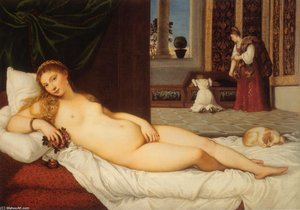
- Venus de Urbino
- Place Of Birth: Pieve di Cadore, Italia
Artículos relacionados
Titian: Innovation, Technique & the Venetian Renaissance Portrait Tradition
Explore the revolutionary techniques & enduring legacy of Titian, the master of Venetian Renaissance portraiture. Discover insights for collectors & appreciate his impact on art history.

Crimson Threads of Narrative: Exploring Symbolism & Representation in Artworks Featuring the Red Dress
Explore the rich symbolism of the red dress in art history! From ancient power displays to iconic portraits like Cézanne’s 'Madame Cezanne', discover the cultural and artistic significance behind this captivating color. Expert analysis & insights.

Jacopo Tintoretto: Las 25 Obras Maestras del Genio Veneciano | Arte y Decoración en ArtsDot
Descubre las 25 obras maestras de Jacopo Tintoretto, el genio veneciano del Renacimiento. Explora su arte dramático, composiciones innovadoras y paleta vibrante. Reproducciones de alta calidad en ArtsDot.com para transformar tu hogar.

Sebastiano del Piombo: Bridging Venetian Colorism & Roman Grand Manner Portraiture
Explore the captivating art of Sebastiano del Piombo, a Renaissance master bridging Venetian colorism & Roman grandeur. Discover his iconic portraits and lasting influence on art history. Learn more at ArtsDot.
Jacopo Palma il Giovane: A Venetian Master's Poetic Evolution
Explore the captivating world of Jacopo Palma il Giovane, a pivotal Venetian Renaissance master. Discover his unique style, influenced by Titian & Tintoretto, and learn about key works perfect for discerning collectors.