 Ver en contexto
 Enviar
 Compartir
 Detalles

 Descargar
 Similares
 Radiografía
 Presentación de diapositivas
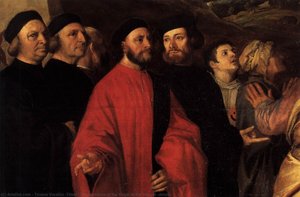
Portrait of Jacopo (Giacomo) Dolfin (detail)


 Ver más
Giclée / Impresión de arte
Impresiones giclée o en lienzo de calidad de museo con producción rápida y opciones de acabado flexibles. ( Comprar pintura hecha a mano Comprar imagen)




P118B $10

P118H $10

P118W $10

P438Z $10

P508JH $12

P508YH $12

P805H $10

P805Z $10

P919BZ $10

P919G $10

P919XJ $10

P959ZH $10

P968JZ $12

W106C $8

W218G $10

W218JH $8

W218Y $10

W307PJ $10

W316G $10

W316PJ $8

W316Y $10

W398PJ $8

W4111J $10

W500HY $15

W500JH $15

W692G $12

W849H $8

W940BG $15

W953PJ $8




Elija entre nuestros tamaños predefinidos que respetan las proporciones originales de la obra.

Puede introducir sus propias dimensiones para adaptarse a un marco o espacio específico. Si el tamaño seleccionado no coincide con las proporciones de la imagen original, recortaremos la obra de arte o extenderemos la imagen con un borde con efecto espejo o de color sólido. Se enviará una maqueta digital para su aprobación antes de que comience la producción.
Tenga en cuenta que la vista previa en pantalla no refleja el recorte o la extensión real. Solo la maqueta mostrará con precisión la composición final.
Aunque existen tamaños personalizados, recomendamos seleccionar una dimensión de la lista predefinida para preservar las proporciones originales.
Envío a todo el mundo () en 2 semanas en lugar de las 4/5 semanas estándar. (3 septiembre)

Envío exprés gratuito a todo el mundo

Lienzo de lino de alta calidad

Seguro de envío total

Garantía de reembolso de impuestos aduaneros

Garantía de fidelidad cromática exacta

Política de devolución de 60 días (solo por defectos)

Garantía de devolución del 100% del dinero

Descuento por cantidad
 La opción de vidrio solo está disponible en tamaños inferiores a 110 cm.

Portrait of Jacopo (Giacomo) Dolfin (detail)
Giclée / Impresión de arte
Dimensiones de la reproducción
-


Precio total final
$ 62
A Portrait of Venetian Dignity: Titian’s Dolfin
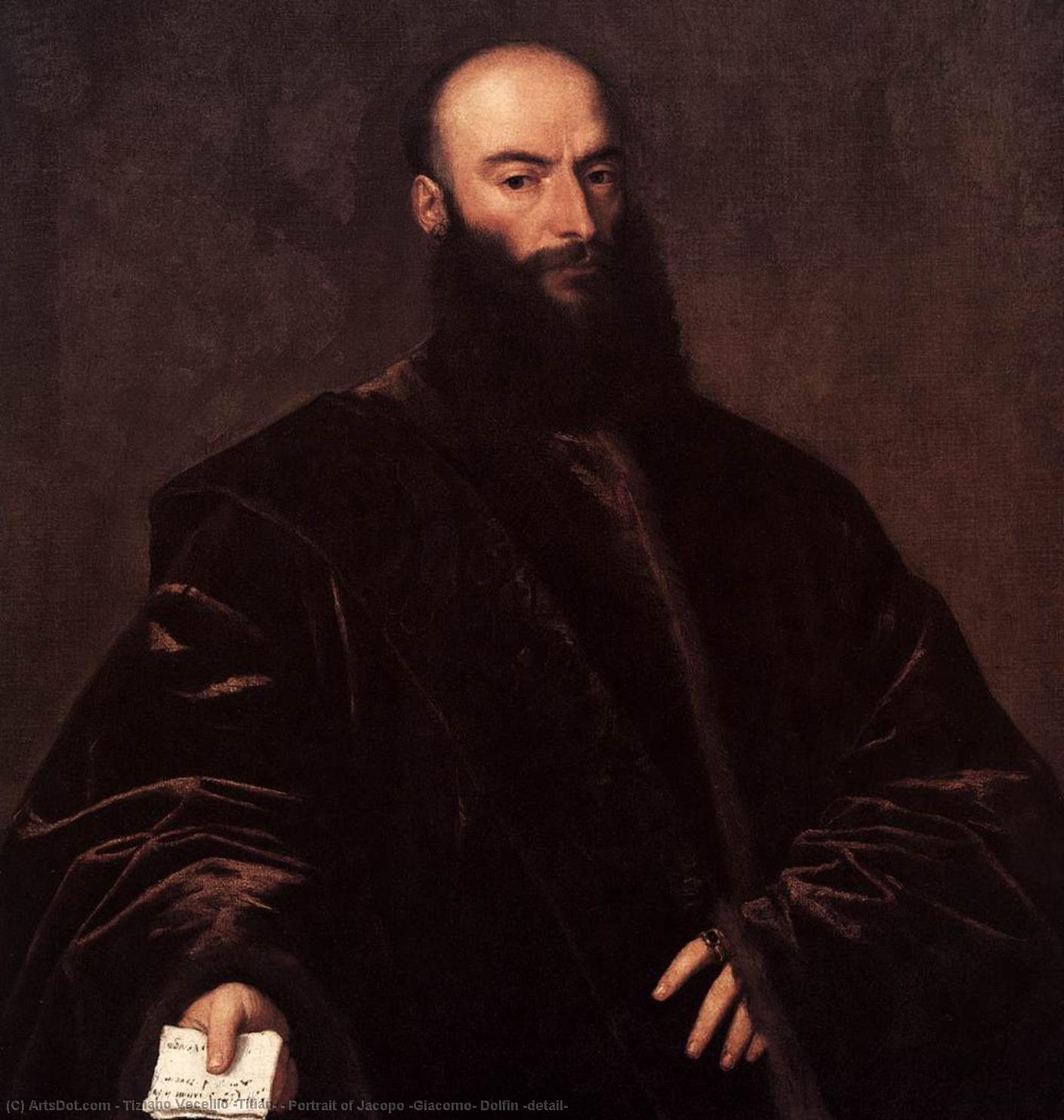
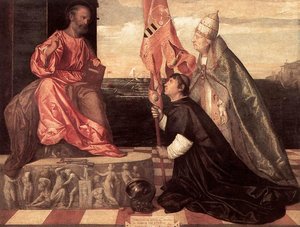
Tiziano Vecellio, universally known as Titian, stands as one of the most pivotal figures in the history of Western art—a master colorist whose innovations fundamentally reshaped oil painting. His “Portrait of Jacopo (Giacomo) Dolfin,” painted around 1532 and now residing within the Los Angeles County Museum of Art, is not merely a likeness; it’s a meticulously crafted embodiment of Renaissance ideals – power, status, and an understated elegance that continues to captivate viewers centuries later. This painting offers a rare glimpse into the world of Venetian nobility, revealing both the outward display of wealth and the subtle complexities of human character.
The subject himself, Jacopo Dolfin, was a prominent figure in Treviso’s political landscape, serving as provincial governor at the time the portrait was commissioned. Titian skillfully captures this man's position through a carefully orchestrated composition. He is depicted seated, his posture conveying authority and self-assuredness. The rich crimson robe, a hallmark of Venetian magistrates, immediately establishes his social standing – a vibrant splash of color against the muted backdrop, drawing the eye and emphasizing his importance. The letter he holds in his right hand isn’t just an accessory; it subtly suggests his active role in governance, hinting at the responsibilities carried by this noble position.
A Mannerist Masterpiece: Composition and Technique
Titian's approach to portraiture during this period moved beyond simple representation. He embraced elements of the emerging Mannerist style, evident in the subtly distorted perspective and the dynamic arrangement of figures. The painting’s composition is anchored by a series of crossed diagonals, creating a sense of movement and vitality—a departure from the more static, balanced arrangements favored by earlier Renaissance artists like Giorgione. This deliberate disruption adds an element of visual interest and suggests the influence of nature's unpredictable forces, perhaps even hinting at the wind blowing across the scene.
Technically, “Portrait of Jacopo Dolfin” showcases Titian’s unparalleled mastery of oil paint. He employs a technique known as ‘sfumato,’ blurring lines and softening edges to create an incredibly realistic yet subtly dreamlike quality. The rendering of textures—the heavy folds of the robe, the delicate details of the beard, even the sheen on the skin—is astonishingly precise. Notice how Titian uses light and shadow not just to define form but also to evoke emotion; the subtle illumination highlights Dolfin’s face, drawing attention to his thoughtful expression.
Symbolism and Emotional Resonance
Beyond its technical brilliance, the portrait is laden with symbolic meaning. The subject's serious gaze—a hallmark of Renaissance portraiture—suggests a man of deep contemplation and perhaps even melancholy. He’s not offering a boisterous smile or an overtly charming expression; instead, he presents a carefully controlled image of dignified reserve. This restraint reflects the values of Venetian society, where outward displays of emotion were often tempered by social decorum.
The inclusion of the letter is particularly significant. It’s not merely a detail but a visual cue to Dolfin's role and status. The muted background—a deep brown that evokes the shadows of Venice—further emphasizes the subject, creating a sense of intimacy and drawing the viewer into his world. Ultimately, “Portrait of Jacopo Dolfin” is more than just a portrait; it’s a carefully constructed statement about power, dignity, and the complexities of human character within the context of Renaissance Venice.
A Legacy Enduring: Replicas and Influence
Titian's impact on the art world was immediate and profound. The success and popularity of “Portrait of Jacopo Dolfin” are evident in the numerous replicas, copies, and derivations that have emerged over the centuries. Artists like Rubens in Haarlem and Brusasorzi in Rovereto were deeply influenced by Titian’s innovative approach to color and composition. This widespread influence underscores Titian's position as a pivotal figure who shaped the course of art history.
Today, reproductions of this masterpiece continue to inspire artists and designers alike. Its timeless appeal lies not only in its technical brilliance but also in its ability to capture the essence of human dignity and the spirit of a bygone era. It serves as a powerful reminder of Titian’s enduring legacy—a testament to his genius and his profound contribution to the world of art.
Obras relacionadas
Biografía del artista
Tiziano Vecellio: The Venetian Titan
Tiziano Vecellio, universally known as Titian, stands as a monumental figure of the Italian Renaissance—perhaps its most celebrated colorist and a master who redefined the possibilities of oil painting. Born around 1490 in Pieve di Cadore, nestled amidst the dramatic landscapes of the Venetian Alps, his journey from humble beginnings to international acclaim is a testament to prodigious talent and an unwavering dedication to artistic innovation. The exact date of Titian’s birth remains elusive, debated by scholars, but contemporary sources and his early stylistic development converge on estimates between 1488 and 1490.
His father, Gregorio Vecellio, was a military man—a profession that instilled in young Tiziano a disciplined spirit and an appreciation for observation. Lucia, his mother, nurtured him with affection and fostered his artistic inclinations. Recognizing their sons’ potential, the family arranged for Tiziano and Francesco to apprentice with Sebastiano Zuccato, a mosaicist—a decision that would irrevocably alter the course of art history. This formative experience exposed them to the meticulous craftsmanship required for creating intricate decorative panels, shaping their aesthetic sensibilities from an early age.
Titian’s artistic training continued under Giovanni Bellini, who was then Venice’s most prominent painter and a revered teacher. Bellini’s workshop fostered a tradition of Venetian painting characterized by lyrical beauty and subtle tonal harmonies—influences that would permeate Titian’s oeuvre throughout his life. Notably, he collaborated closely with Giorgione—a fellow Venetian artist whose groundbreaking style championed atmospheric perspective and psychological depth.
A Master's Early Style: Giorgione's Influence
The partnership between Titian and Giorgione proved pivotal in shaping Titian’s artistic vision. Their collaboration on the exterior frescoes for the Fondaco dei Tedeschi—a bustling trading post frequented by German merchants—established a stylistic precedent that would endure for decades. The paintings showcased a remarkable sensitivity to light and color, reflecting Giorgione’s pioneering exploration of atmospheric perspective—a technique that aimed to convey the illusion of depth and realism.
Titian’s early works embody this Giorgionesque aesthetic—characterized by hazy landscapes, muted palettes, and an emphasis on capturing mood rather than precise detail. Paintings like *A Man with a Quilted Sleeve* exemplify his burgeoning talent for portraiture, skillfully portraying not only the physical likeness of his subjects but also their inner character—a hallmark of Venetian Renaissance painting.
Expanding Horizons: Bellini's Legacy and Artistic Maturity
Following Giorgione’s untimely death in 1510, Titian continued his artistic development under Giovanni Bellini’s guidance—though Bellini himself was gradually withdrawing from active painting. This period witnessed a gradual shift toward bolder compositions and more assertive color palettes—reflecting Titian’s growing confidence as an independent artist.
His monumental altarpiece for Santa Maria Gloriosa dei Frari—commissioned in 1518—marked a watershed moment in Venetian painting history. The ambitious undertaking demanded mastery of technique, compositional innovation, and chromatic brilliance—qualities that Titian possessed in abundance. This masterpiece cemented his reputation as Venice’s foremost painter and established him as a pioneer of monumental fresco painting.
The Venetian School's Dominance
Titian’s influence extended far beyond his own lifetime, shaping the artistic landscape of Europe for centuries to come. He became a cornerstone of the Venetian school—a movement that championed coloristic realism and psychological depth—inspiring artists across generations. From Rubens and Rembrandt to Delacroix and Monet, Titian’s techniques—particularly his innovative layering of pigments and his masterful manipulation of light—became models for aspiring painters.
His legacy endures not only in the masterpieces he created but also in the enduring fascination with color and emotion that characterizes Venetian art. Tiziano Vecellio—Titian—remains an unparalleled figure in the history of painting, a testament to artistic genius and an embodiment of the Renaissance spirit.
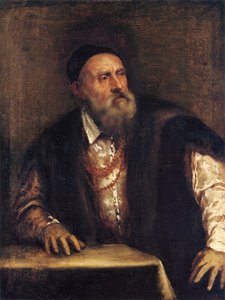
Tiziano
1490 - 1576 , Italia
Datos clave
- Artistic Movement Or Style: Renacimiento Veneciano
- Artists Or Movements Influenced By This Artist:
- Rubens
- Delacroix
- Artists Who Influenced This Artist:
- Giovanni Bellini
- Giorgione
- Date Of Birth: c. 1490
- Date Of Death: 1576
- Full Name: Tiziano Vecellio
- Nationality: Italiano
- Notable Artworks:
- La Schiavona
- Venus de Urbino
- Place Of Birth: Pieve di Cadore, Italia
Artículos relacionados

Jacopo Tintoretto: Las 25 Obras Maestras del Genio Veneciano | Arte y Decoración en ArtsDot
Descubre las 25 obras maestras de Jacopo Tintoretto, el genio veneciano del Renacimiento. Explora su arte dramático, composiciones innovadoras y paleta vibrante. Reproducciones de alta calidad en ArtsDot.com para transformar tu hogar.
Jacopo Palma il Giovane: A Venetian Master's Poetic Evolution
Explore the captivating world of Jacopo Palma il Giovane, a pivotal Venetian Renaissance master. Discover his unique style, influenced by Titian & Tintoretto, and learn about key works perfect for discerning collectors.
Titian: Innovation, Technique & the Venetian Renaissance Portrait Tradition
Explore the revolutionary techniques & enduring legacy of Titian, the master of Venetian Renaissance portraiture. Discover insights for collectors & appreciate his impact on art history.
La Luz Dorada de la Innovación: Explorando el Renacimiento Veneciano (1430–1580)
Descubra la riqueza y el esplendor del Renacimiento veneciano con ArtsDot. Explore las obras maestras de Tiziano, Giorgione y Tintoretto. Análisis experto, historia detallada e información para coleccionistas.
Jacopo Bassano: A Venetian Master of Color, Family & the Renaissance Landscape
Explore the life & art of Jacopo Bassano, a Venetian master renowned for his vibrant colorism and innovative religious scenes. Discover his family legacy & enduring influence on Renaissance painting with ArtsDot.