 Ver en contexto
 Enviar
 Compartir
 Detalles

 Descargar
 Similares
 Radiografía
 Presentación de diapositivas
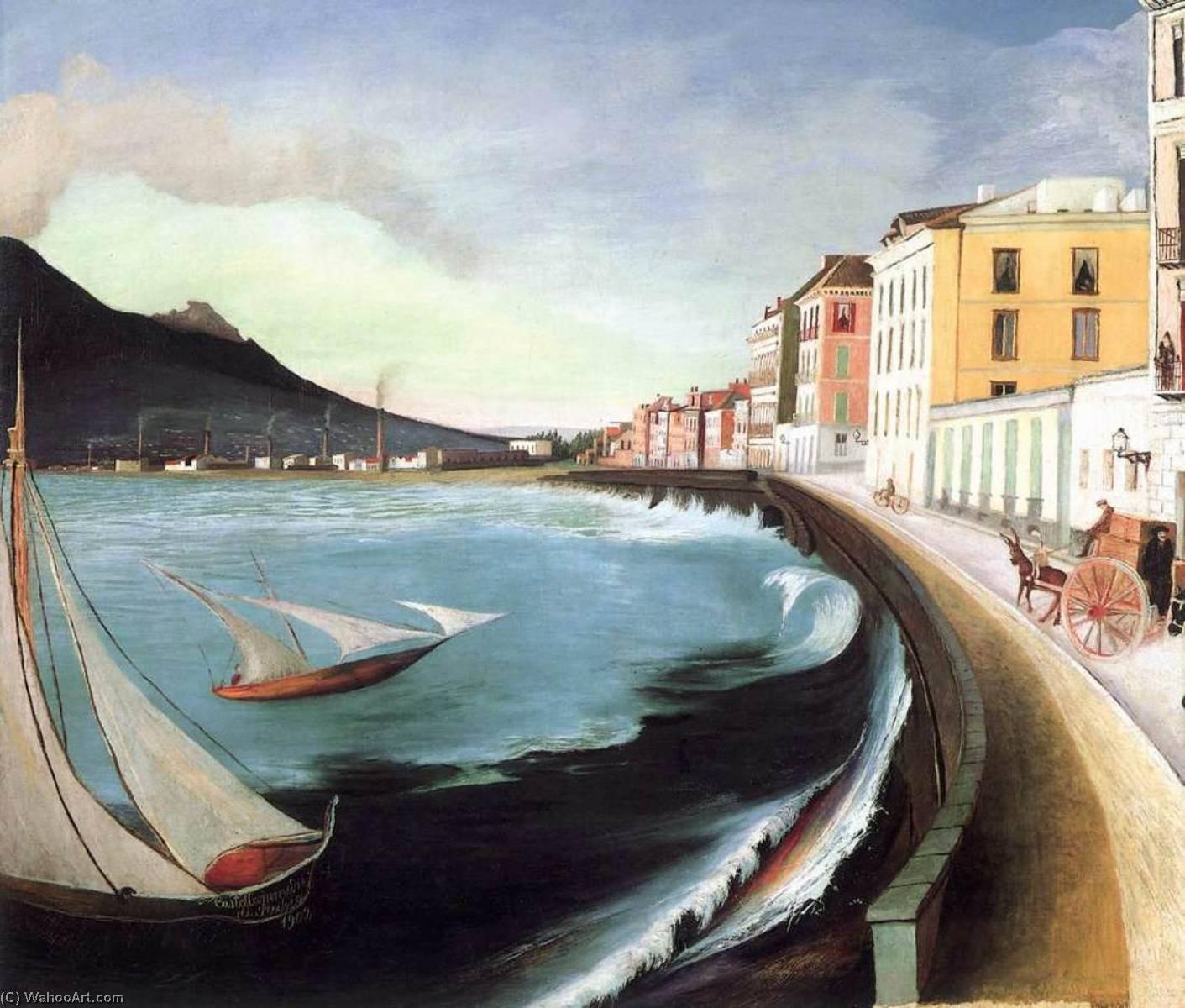
Castellammare di Stabia
 Acrílico sobre lienzo
- Arte de pared
- Symbolism and Expressionism
 1902
1902 101.0 x 120.0 cm
 Museo Janus Pannonius
 Ver más
Reproducción al óleo hecha a mano
Óleo sobre lienzo pintado a mano en el tamaño y marco de su elección, realizado por encargo por nuestros artistas. ( Comprar impresión Comprar imagen)




P118B $10

P118H $10

P118W $10

P438Z $10

P508JH $12

P508YH $12

P805H $10

P805Z $10

P919BZ $10

P919G $10

P919XJ $10

P959ZH $10

P968JZ $12

W106C $8

W218G $10

W218JH $8

W218Y $10

W307PJ $10

W316G $10

W316PJ $8

W316Y $10

W398PJ $8

W4111J $10

W500HY $15

W500JH $15

W692G $12

W849H $8

W940BG $15

W953PJ $8




Elija entre nuestros tamaños predefinidos que respetan las proporciones originales de la obra.

Puede ingresar sus propias dimensiones para adaptarse a un marco o espacio específico. Si el tamaño seleccionado no coincide con las proporciones de la imagen original, recortaremos la obra o extenderemos la pintura con elementos adicionales pintados a mano. Se le enviará una maqueta digital para su aprobación antes de comenzar la producción.
Tenga en cuenta que la vista previa en pantalla no refleja el recorte o la extensión reales. Solo la maqueta mostrará con precisión la composición final.
Si bien existen tamaños personalizados, recomendamos seleccionar una dimensión de la lista predefinida para preservar las proporciones originales.
Tras realizar el pedido, el equipo de ArtsDot.com enviará un correo electrónico al cliente para solicitar instrucciones y proporcionarle una vista previa del boceto.
Envío a todo el mundo () en 3-4 semanas en lugar de las 5 semanas estándar. (28 agosto). Sin comprometer la calidad.

Envío exprés gratuito a todo el mundo

Lienzo de lino de alta calidad

Seguro de envío total

Garantía de reembolso de impuestos aduaneros

Garantía de fidelidad cromática exacta

Política de devolución de 60 días (solo por defectos)

Garantía de devolución del 100% del dinero

Descuento por cantidad
 La opción de vidrio solo está disponible en tamaños inferiores a 110 cm.

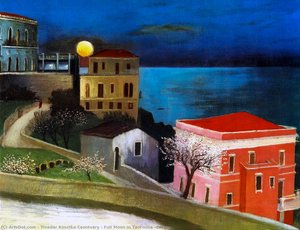
Castellammare di Stabia
Técnica de reproducción
Dimensiones de la reproducción
-


Precio total final
$ 263
Castellamare Di Stabia: A Symphony of Light and Tranquility by Tivadar Csontváry Kosztka
Tivadar Csontváry Kosztka, born Mihály Tivadar Kosztka on July 5th, 1853, in Kisszeben (modern-day Sabinov, Slovakia), remains a captivating enigma in the landscape of Hungarian art—a painter whose life was as dramatic and unconventional as the canvases he produced. His artistic journey began with an unexpected revelation: at the age of twenty-seven, while seated outside his pharmacy in Gács, he heard a heavenly voice proclaiming that he would become the greatest painter in the world, surpassing Raphael’s mastery.
This prophetic utterance ignited within him a fervent desire to emulate the Renaissance titan—a conviction that fueled his relentless pursuit of artistic excellence. He diligently honed his craft, initially practicing pharmacy before dedicating himself wholeheartedly to painting. His formative years were marked by intellectual curiosity and a profound appreciation for the natural world, shaping the distinctive worldview that would permeate his oeuvre.
A Visionary Style: The Sunway Aesthetic
Csontváry’s artistic style—often referred to as “Sunway” (napút)—is instantly recognizable. It distinguishes itself from prevailing trends of its time through an unwavering devotion to capturing the ethereal beauty of sunlight filtering through landscapes. Unlike Impressionists who sought fleeting moments of color and atmosphere, Csontváry aimed for a deeper resonance with nature’s essence—a quest for harmony and spiritual illumination.
He meticulously studied the interplay between light and shadow, employing bold brushstrokes and vibrant hues to convey not merely what he saw but how he *felt*. This expressive approach aligns perfectly with the burgeoning Symbolist movement, which prioritized conveying emotions and psychological states over objective representation.
Castellamare Di Stabia: Capturing a Moment of Serenity
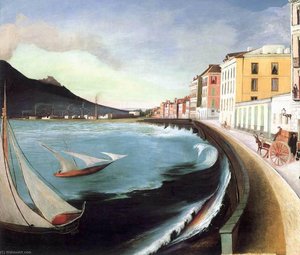
“Castellammare Di Stabia,” completed in 1902, exemplifies Csontváry’s signature style with breathtaking precision. The painting depicts a picturesque harbor scene nestled at the foot of Mount Vesuvius—a location steeped in geological history and imbued with symbolic significance.
The composition is dominated by a tranquil bay bathed in golden sunlight. Boats of varying sizes bob gently on the water’s surface, their reflections shimmering against the azure expanse. A hazy skyline punctuates the horizon, adding depth and grandeur to the vista. Scattered figures—likely visitors enjoying the seaside ambiance—are subtly integrated into the landscape, enhancing its sense of realism.
Symbolism Beyond Technique
Beyond its masterful execution—characterized by loose brushstrokes and a luminous palette—“Castellammare Di Stabia” resonates with profound symbolic undertones. Mount Vesuvius serves as a powerful reminder of both destruction and renewal, mirroring the cyclical nature of life itself. The sun’s radiant glow symbolizes enlightenment and spiritual aspiration—a core preoccupation of Csontváry’s artistic vision.
The artist's deliberate use of perspective contributes to the painting's immersive quality, drawing viewers into a contemplative space where they can contemplate the sublime beauty of the natural world. It is a testament to Csontváry’s ability to transform observation into emotion—a feat that secures his place as one of Hungary’s most enduring artistic luminaries.
A Legacy Illuminated
Tivadar Csontváry Kosztka's influence extends far beyond the confines of Hungarian art history. His pioneering exploration of Symbolism paved the way for subsequent generations of artists to delve into the complexities of human psychology and spirituality. Today, his work continues to inspire collectors and interior designers alike—a beacon of artistic integrity and visionary creativity.
Obras relacionadas

Biografía del artista
Tivadar Csontváry Kosztka, the Painter of Lights
Tivadar Csontváry Kosztka remains a captivating enigma in the landscape of Hungarian art—a painter whose life was as dramatic and unconventional as the canvases he produced. Born Mihály Tivadar Kosztka on July 5th, 1853, in Kisszeben (modern-day Sabinov, Slovakia), his origins were steeped in a fascinating confluence of cultures. His father, Dr. László Kosztka, was a physician and pharmacist, his mother Franciszka Hajczelmajer of Darócz (now Šarišské Dravce, Slovakia); his ancestors on his father’s side were Poles who settled in Hungary. This early immersion in diverse linguistic and cultural currents arguably contributed to the unique perspective that would later define his artistic vision—a vision both intensely personal and universally resonant. For many years, he dutifully followed in his father’s footsteps, practicing pharmacy until his twenties. However, a life-altering experience at the age of twenty-seven irrevocably altered his course. On October 13th, 1880, while immersed in his work, Csontváry claimed to receive a divine calling: a voice declared him destined to become “the greatest painter of the world, greater than Raphael.” This moment became the cornerstone of his artistic ambition, propelling him onto an extraordinary and often solitary path.From Apothecary to Artistic Pilgrim
The mystical vision irrevocably altered Csontváry’s trajectory. He abandoned his profession of pharmacist and embarked upon a period of intense preparation—fueled by unwavering self-belief and a relentless pursuit of artistic mastery. Initially rebuffed by traditional art schools, he persevered, traveling extensively throughout Europe—Rome, Paris, Munich—studying the masters and honing his skills. He financed these journeys by continuing to work as an apothecary, sacrificing personal comfort for the sake of his artistic calling. From 1890 onwards, his travels expanded beyond Europe, taking him to North Africa and the Middle East—to Dalmatia, Italy, Greece, Lebanon, Palestine, Egypt, and Syria. These lands became a profound source of inspiration, imbuing his canvases with exotic landscapes, dramatic light, and a sense of spiritual yearning. He wasn’t merely documenting what he saw; he was interpreting it through the lens of his own intensely personal vision—a vision often tinged with melancholy and a deep reverence for nature's power. The sheer scale of his ambition is reflected in the monumental size of many of his works, demanding attention and enveloping the viewer in their immersive landscapes.The ‘Sunway’ and a Unique Artistic Voice
Csontváry’s artistic style defies easy categorization. While often associated with Post-Impressionism and Expressionism, he remained largely self-taught, forging his own path. His paintings are characterized by their monumental scale—many stretch several meters in width and height—and a bold use of color and composition. He developed what he termed the “sunway” (*napút*)—an approach that emphasized the transformative power of light and its ability to reveal hidden truths. This wasn’t merely about depicting sunlight; it was about capturing the very essence of illumination, both physical and spiritual. His landscapes are often imbued with a sense of awe-inspiring grandeur, while his depictions of Middle Eastern scenes possess a haunting beauty and an undercurrent of melancholy. Works like *The Lonely Cedar* (1907) and *Pilgrimage to the Cedars in Lebanon* (1907) exemplify this approach—towering trees silhouetted against dramatic skies, evoking feelings of solitude, reverence, and the sublime. Other notable paintings include *Springtime in Mostar* (1903), capturing a romantic vision of the historic town, and *The Wailing Wall in Jerusalem* (1904), a poignant depiction of faith and remembrance. He sought to capture not just the appearance of things, but their underlying spiritual essence—a quality that sets his work apart from many of his contemporaries.Major Achievements and Recognition Delayed
Csontváry’s artistic journey was marked by both triumphs and tribulations. Despite facing rejection from established art institutions and enduring considerable financial hardship during his later years, he persevered with unwavering determination. He traveled extensively throughout Europe—Rome, Paris, Munich—studying the masters and honing his skills. His fascination with light and color—a cornerstone of his distinctive style—inspired him to create some of Hungary’s most iconic landscapes. The monumental *Rendezvous* (1902), depicting a couple embracing under moonlight, exemplifies this artistic vision—a painting that captures both beauty and mystery simultaneously. It achieved considerable acclaim among critics and collectors alike. His unwavering belief in his artistic calling—fueled by the prophetic voice he heard at age twenty-seven—served as an inspiration to him throughout his life. However, Csontváry’s work remained largely unrecognized during his lifetime, a tragic irony considering its enduring significance today.A Legacy Enduring Through Time
Csontváry’s story is not merely that of an artist; it's a testament to the power of belief, the pursuit of beauty, and the enduring legacy of a visionary who dared to paint his own truth. His canvases remain portals into a world where light itself becomes a spiritual force—a world waiting to be rediscovered by each new generation of art lovers. He died in Budapest on June 20th, 1919, largely unappreciated by the Hungarian art establishment, but today Tivadar Csontváry Kosztka is celebrated as Hungary’s greatest painter—a figure whose work continues to captivate and inspire audiences across cultures and generations. His paintings are held in prestigious collections such as the Hungarian National Gallery in Budapest and the Csontváry Museum in Pécs, ensuring that his legacy will endure for centuries to come.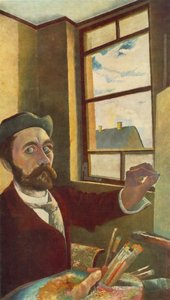
Tivadar Csontváry Kosztka
1853 - 1919 , Eslovaquia
Datos clave
- Artistic Movement Or Style: Post-Impressionismo, Expresionismo
- Artists Or Movements Influenced By This Artist: ['Sunway']
- Artists Who Influenced This Artist: ['Rafael']
- Date Of Birth: 5 julio 1853
- Date Of Death: 20 junio 1919
- Full Name: Tivadar Csontváry Kosztka
- Nationality: Húngaro
- Notable Artworks:
- El Encuentro de los Amantes
- La Cascada en Mostar
- El Muro Lamentoso
- Place Of Birth: Sabinov, Eslovaquia
Artículos relacionados

Katsushika Hokusai: Las 25 Obras Maestras del Ukiyo-e que Transformaron el Arte Japonés | ArtsDot
Descubre las 25 obras maestras de Katsushika Hokusai, el genio del ukiyo-e. Explora 'La Gran Ola', paisajes japoneses y su impacto en el arte moderno. Reproducciones de alta calidad para tu hogar en ArtsDot.com.

Paisajes Románticos: 10 Obras Maestras que Definieron un Movimiento Artístico
Descubre los 10 paisajes románticos más influyentes de artistas como Caspar David Friedrich y Turner. Explora la belleza, el simbolismo y las técnicas del movimiento romántico. Reproducciones de arte exclusivas en ArtsDot.com.

John Constable: Las 25 Obras Maestras del Paisaje Inglés | ArtsDot
Descubre las 25 obras maestras de John Constable, el pintor romántico inglés que capturó la belleza del paisaje. Explora su técnica, historia y significado en ArtsDot.com. Reproducciones de arte de alta calidad para tu hogar.

Evocations of Place: A Historical Journey Through Landscape Art
Explore the rich history of landscape art with ArtsDot. Discover renowned artists, movements like Impressionism & Romanticism, and expert guidance for collecting timeless pieces. Find your perfect serene escape today!
Evoking Atmosphere & Identity: A Journey Through Landscape Painting's History
Explore the rich history of landscape painting! Discover renowned artists, movements like Romanticism, & techniques such as atmospheric perspective. Find inspiration and quality reproductions at ArtsDot.