

 Enviar
 Compartir
 Detalles

 Descargar
 Similares
 Presentación de diapositivas
 Stats
StatsIbirapuera Audotorium


 Ver más
Reproducción al óleo hecha a mano
Óleo sobre lienzo pintado a mano en el tamaño y marco de su elección, realizado por encargo por nuestros artistas. ( Switch to Print Switch to Digital Image)




































Elija entre nuestros tamaños predefinidos que respetan las proporciones originales de la obra.

Puede ingresar sus propias dimensiones para adaptarse a un marco o espacio específico. Si el tamaño seleccionado no coincide con las proporciones de la imagen original, recortaremos la obra o extenderemos la pintura con elementos adicionales pintados a mano. Se le enviará una maqueta digital para su aprobación antes de comenzar la producción.
Tenga en cuenta que la vista previa en pantalla no refleja el recorte o la extensión reales. Solo la maqueta mostrará con precisión la composición final.
Si bien existen tamaños personalizados, recomendamos seleccionar una dimensión de la lista predefinida para preservar las proporciones originales.
Tras realizar el pedido, el equipo de ArtsDot.com enviará un correo electrónico al cliente para solicitar instrucciones y proporcionarle una vista previa del boceto.
Envío a todo el mundo () en 3-4 semanas en lugar de las 5 semanas estándar. (8 septiembre). Sin comprometer la calidad.

Envío exprés gratuito a todo el mundo

Lienzo de lino de alta calidad

Seguro de envío total

Garantía de reembolso de impuestos aduaneros

Garantía de fidelidad cromática exacta

Política de devolución de 100 días (solo por defectos)

Garantía de devolución del 100% del dinero

Descuento por cantidad
 La opción de vidrio solo está disponible en tamaños inferiores a 110 cm.

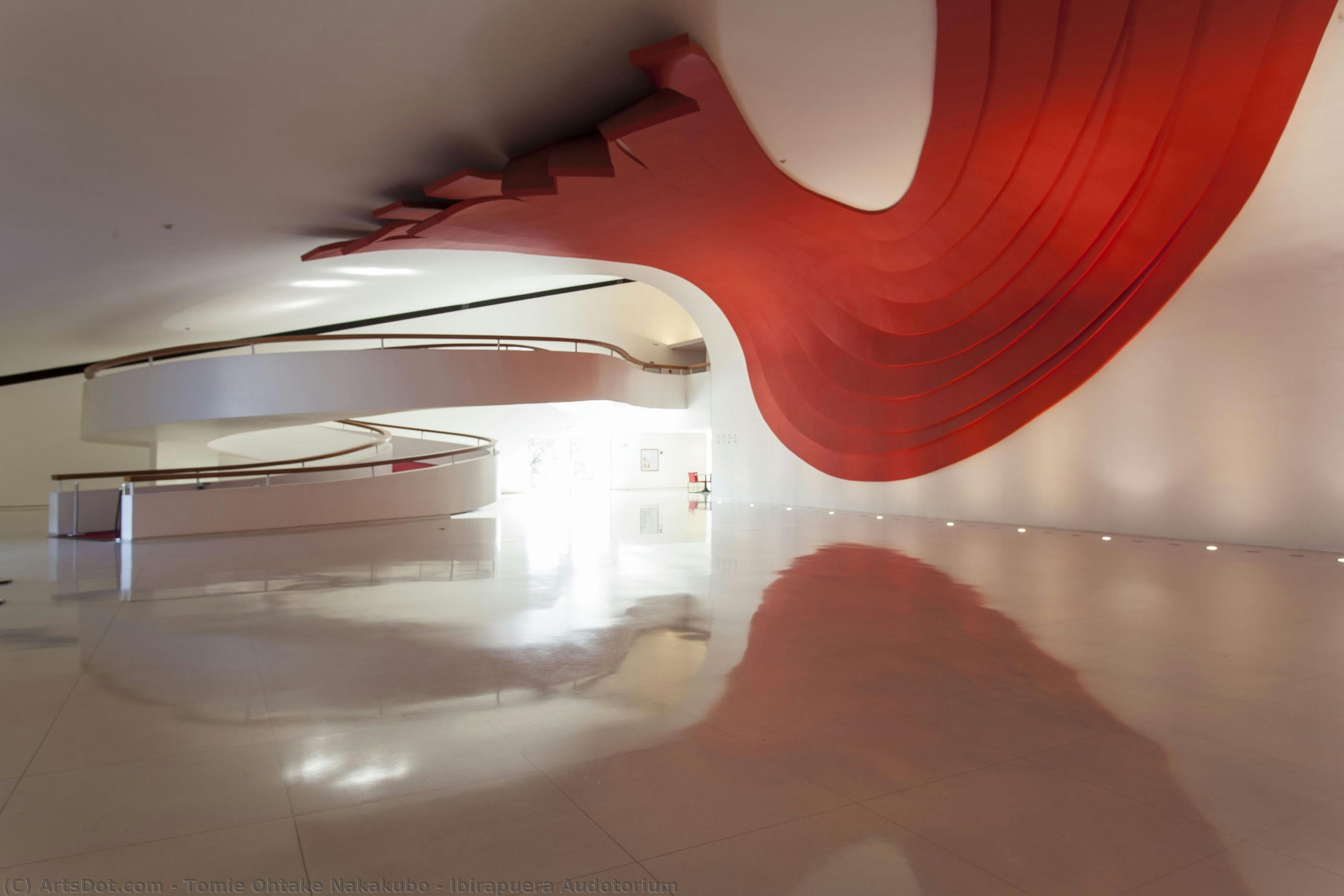
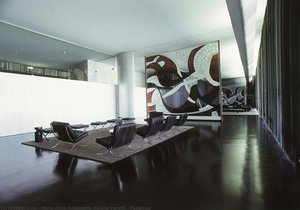
Ibirapuera Audotorium
Técnica de reproducción
Dimensiones de la reproducción
-


Precio total final
$ 263
A Symphony of Form and Color
In the heart of São Paulo’s cultural landscape, where architecture meets the soul of the city, lies a masterpiece of abstract movement titled Ibirapuera Auditorium. Created by the legendary Japanese-Brazilian artist Tomie Ohtake Nakakubo in 2004, this work serves as a breathtaking dialogue between sculpture and space. The piece captures a singular, fluid moment—a red, undulating wave that seems to pulse with its own internal rhythm. As light dances across its reflective, metallic surface, the artwork transcends its physical boundaries, blurring the line between a solid object and a fleeting shadow. For the discerning collector or interior designer, this work offers more than mere decoration; it provides a focal point of profound elegance, inviting the viewer into a world where geometry meets grace.
The technique employed in this composition reflects Ohtake’s mastery over informal abstractionism. The sculpture, characterized by its sweeping curves and bold, crimson hue, mimics the organic flow of water or the rhythmic breath of a living entity. The use of reflective materials allows the surrounding environment—the very architecture of the Ibirapuala Auditorium—to become part of the art itself. This interplay of light and surface creates a dynamic experience that changes with every step the observer takes. It is a sophisticated play of textures, where the hard, industrial nature of metal is softened by the lyrical, wave-like silhouette, making it an ideal inspiration for modern, minimalist, or avant-garde interior settings.
A Legacy of Cultural Fusion
To understand the emotional depth of Ibirapuera Auditorium, one must look to the remarkable life of Tomie Ohtake. Born in Kyoto, Japan, and later becoming a cornerstone of the Brazilian modernist movement, her work is a beautiful synthesis of Eastern precision and Latin American vibrancy. This piece stands as a testament to her ability to command public spaces, turning structural environments into poetic landscapes. The sculpture does not merely sit within the lobby; it breathes with the building, echoing the architectural genius of its surroundings.
For those seeking to bring a sense of prestige and intellectual depth to a curated collection, a high-quality reproduction of this work offers an unparalleled opportunity. It carries with it the spirit of 20th-century abstractionism and the serene strength of Ohtake’s unique vision. Whether placed in a grand corporate lobby, a contemporary gallery, or a sophisticated private residence, the painting evokes a sense of timelessness and movement, reminding us that even in the most structured environments, there is always room for the fluid beauty of the abstract imagination.
Obras relacionadas


Biografía del artista
Early Life and Career
Tomie Ohtake Nakakubo, a luminary of Japanese Brazilian art, was born on November 21, 1913, in Kyoto, Japan. Her life took an extraordinary turn when she embarked on a journey to Brazil in 1936 at the age of twenty-three—a pilgrimage intended for her brother—but fate intervened, preventing her return home due to the escalating tensions surrounding World War II. This pivotal moment irrevocably altered the trajectory of her artistic path and ultimately cemented her place as one of Brazil’s foremost visual artists. Her formative years were marked by an encounter with Keisuke Sugano's studio in 1951, a connection that proved instrumental in shaping her artistic sensibilities. It was here that she honed her craft and began to explore the nascent realm of informal abstractionism—a movement poised to redefine Brazilian art’s landscape. Her debut exhibition arrived in 1957 at the Salão Nacional de Arte Moderna, establishing her presence within the burgeoning avant-garde scene. Subsequently, she graced the São Paulo Biennale stage in 1961, showcasing her evolving artistic vision alongside fellow innovators. Notably, her participation in the prints section of the Venice Biennale in 1972 and the Tokyo Biennale in 1978 solidified her reputation as a globally recognized artist.Artistic Journey
The genesis of Tomie Ohtake’s artistic vocation unfolded in São Paulo after her relocation from Japan. Guided by Sugano's mentorship, she immersed herself in figurative painting, absorbing influences from Impressionism and establishing herself as a cornerstone of Brazilian geometric abstraction. Her groundbreaking approach—characterized by bold primary colors and meticulously crafted geometric frames—immediately distinguished her work from prevailing trends. The impetus for this stylistic shift stemmed from a profound reaction to the pervasive rationalism dominating contemporary Brazilian artistic discourse. A defining moment arrived in 1988 when she undertook a daring experiment: blind painting. Stripped of visual cues, Ohtake deliberately obscured her eyes during sessions—a deliberate act designed to liberate her creative process from external constraints and championing an alternative path toward artistic expression. This courageous endeavor underscored her unwavering commitment to challenging conventional notions of perception and fostering innovation within the Brazilian art community.Notable Achievements
Tomie Ohtake’s legacy extends far beyond her studio practice, encompassing a profound engagement with public space sculpture—a vocation that yielded dozens of monumental artworks scattered throughout São Paulo. Her dedication to civic art earned her recognition through prestigious honors bestowed upon her for commemorating Japanese immigration in 1988 and cultural merit in 2006. These accolades served as testament to her enduring contribution to Brazilian culture and artistic heritage. Her artwork has garnered acclaim from esteemed institutions worldwide, including The Metropolitan Museum of Art, San Francisco Museum of Modern Art, and Tate—a testament to the universality of her artistic vision and its resonance across cultural boundaries. Explore Tomie Ohtake’s captivating creations on ArtsDot. Discover more about informal abstractionism in Brazil through ArtsDot's mixed subjects. Learn about the evolution of western art with wahoo art timeline.Family and Legacy
Tomie Ohtake was married to Ushio Ohtake, an agronomist, and together they nurtured a family comprising architects Rui Ohtake and Ricardo Ohtake—individuals who embody her artistic spirit and continue to champion innovation in their respective fields. Her passing on February 12, 2015, at the venerable age of 101 marked the end of an extraordinary life dedicated to art and familial devotion—leaving behind a legacy that will endure for generations to come.Collections and Exhibitions
Tomie Ohtake’s oeuvre has captivated collectors and curators alike, securing prominent positions within major museums across continents. Her paintings—particularly “Aché Laboratory” and “Embarkment at José Menino Beach”—represent seminal works of Brazilian art history. These pieces exemplify her masterful command of color and form, reflecting the profound influence of Japanese aesthetics on her artistic idiom.
Tomie Ohtake
1913 - 2015 , Japón
Datos clave
- Artistic Movement Or Style: Informal Abstractionismo
- Artists Or Movements Influenced By This Artist: ['Arte brasileño']
- Artists Who Influenced This Artist: ['Keisuke Sugano']
- Date Of Birth: November 21, 1913
- Date Of Death: February 12, 2015
- Full Name: Tomie Ohtake Nakakubo
- Nationality: Japonesa Brasileña
- Notable Artworks:
- Aché Laboratory
- Embarkment at José Menino Beach
- Place Of Birth: Kyoto, Japón
Artículos relacionados

Kandinsky: Las 25 Obras Maestras del Pionero de la Abstracción | ArtsDot
Descubre las 25 obras maestras de Wassily Kandinsky, pionero del arte abstracto. Explora su expresionismo, composiciones únicas y la historia detrás de cada cuadro. Reproducciones de alta calidad para decorar tu hogar con arte moderno en ArtsDot.com.
Expresionismo Abstracto: 10 Obras Maestras que Transformaron el Arte |
Descubre las 10 obras maestras del Expresionismo Abstracto: Pollock, Rothko y más. Explora la historia, técnica y significado de estos lienzos icónicos. Reproducciones de arte exclusivas en .
Barbara Hepworth: A Sculptural Dialogue with Form, Space & the Human Condition
Explore the profound world of Barbara Hepworth's sculpture. Discover her artistic evolution, iconic forms, and lasting influence on modern art. A guide for collectors & enthusiasts.

Abstracción Geométrica: 10 Obras Maestras que Transformaron el Arte Moderno | ArtsDot
Descubre las 10 obras maestras de la abstracción geométrica que revolucionaron el arte moderno. Explora a Mondrian, Malevich y Kandinsky en ArtsDot.com. Reproducciones de alta calidad para tu hogar.

Esculturas de Bronce Legendarias: 10 Obras Maestras que Transformaron el Arte | ArtsDot
Descubre las 10 esculturas de bronce más legendarias que revolucionaron el arte. Explora la historia de Rodin, Degas y otros maestros del bronce. Encuentra reproducciones de alta calidad e inspiración para tu hogar en ArtsDot.com.