

 Ver en contexto
 Enviar
 Compartir
 Detalles

 Descargar
 Similares
 Radiografía
 Presentación de diapositivas
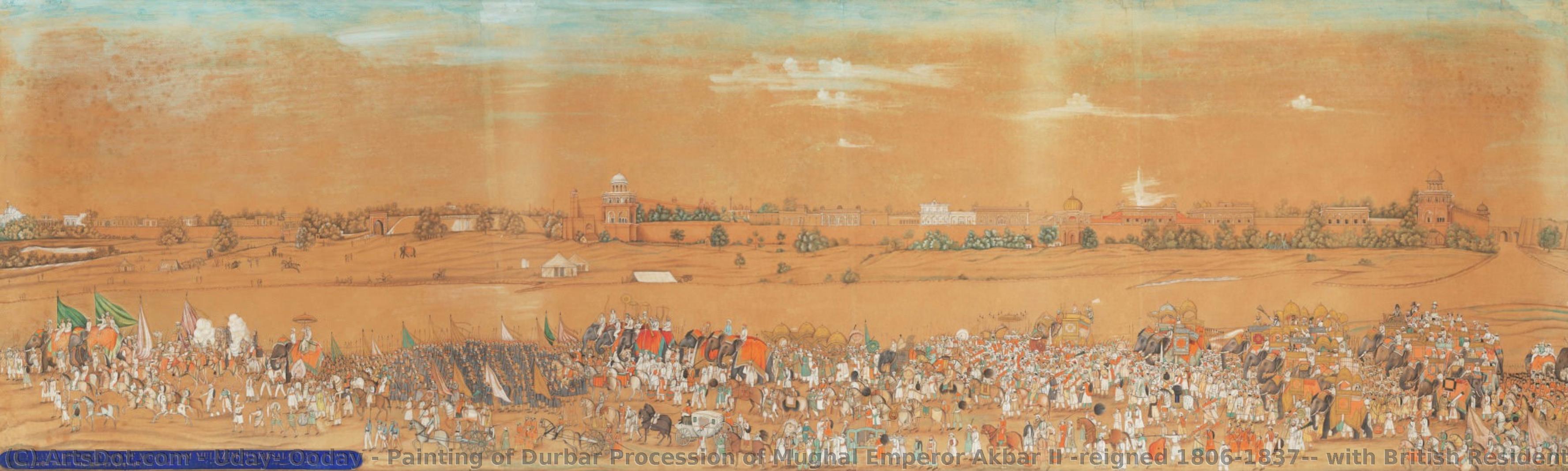
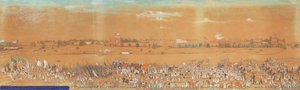
Painting of Durbar Procession of Mughal Emperor Akbar II (reigned 1806-1837), with British Resident Charles Metcalfe (1785-1846)

 Ver más
Giclée / Impresión de arte
Impresiones giclée o en lienzo de calidad de museo con producción rápida y opciones de acabado flexibles. ( Comprar pintura hecha a mano Comprar imagen)




































Elija entre nuestros tamaños predefinidos que respetan las proporciones originales de la obra.

Puede introducir sus propias dimensiones para adaptarse a un marco o espacio específico. Si el tamaño seleccionado no coincide con las proporciones de la imagen original, recortaremos la obra de arte o extenderemos la imagen con un borde con efecto espejo o de color sólido. Se enviará una maqueta digital para su aprobación antes de que comience la producción.
Tenga en cuenta que la vista previa en pantalla no refleja el recorte o la extensión real. Solo la maqueta mostrará con precisión la composición final.
Aunque existen tamaños personalizados, recomendamos seleccionar una dimensión de la lista predefinida para preservar las proporciones originales.
Envío a todo el mundo () en 2 semanas en lugar de las 4/5 semanas estándar. (4 septiembre)

Envío exprés gratuito a todo el mundo

Lienzo de lino de alta calidad

Seguro de envío total

Garantía de reembolso de impuestos aduaneros

Garantía de fidelidad cromática exacta

Política de devolución de 60 días (solo por defectos)

Garantía de devolución del 100% del dinero

Descuento por cantidad
 La opción de vidrio solo está disponible en tamaños inferiores a 110 cm.

Painting of Durbar Procession of Mughal Emperor Akbar II (reigned 1806-1837), with British Resident Charles Metcalfe (1785-1846)
Giclée / Impresión de arte
Dimensiones de la reproducción
-


Precio total final
$ 62
Obras relacionadas



Biografía del artista
A Glimpse into a Vanished Court: The World of Udey Ram
The name Udey Ram, also known as Uday or Ooday, resonates softly within the annals of 19th-century Indian painting. He was an artist whose work offers a rare and captivating window into a world rapidly fading – the twilight years of the Mughal Empire and the burgeoning artistic traditions of British India. While biographical details remain frustratingly scarce, the power and beauty of his surviving artwork, particularly his monumental watercolor depicting the Durbar procession of Emperor Akbar II in 1890, speak volumes about his skill, sensitivity, and historical context. He emerges not as a fully documented figure, but as a compelling presence felt through the delicate brushstrokes and vibrant hues that bring a bygone era to life.Early Life and Artistic Training: Shadows of Tradition
Born in India – the precise location remains unknown – Udey Ram’s early life is shrouded in mystery. What we can surmise, however, is rooted in the artistic landscape of his time. The Mughal court, though diminished from its zenith, continued to exert a powerful influence on painting styles throughout much of the 19th century. The traditions of miniature painting, refined over centuries, were still practiced by numerous artists, often patronized by regional rulers and wealthy individuals. It is highly probable that Udey Ram received his initial training within this established system, learning the meticulous techniques of watercolor application, the precise rendering of figures, and the symbolic language embedded in visual narratives. The influence of Company painting – a hybrid style developed under British patronage which blended European realism with Indian aesthetics – may also have played a role in shaping his artistic development. This fusion is subtly evident in his work, particularly in the attention to detail and perspective.The Durbar Procession: A Masterpiece of Historical Record
Udey Ram’s most celebrated achievement is undoubtedly his watercolor painting of Akbar II's Durbar procession created in 1890. This expansive composition isn’t merely a depiction of an event; it’s a meticulously crafted historical document, imbued with artistic license and cultural understanding. The Durbar, a formal audience held by the emperor, was a spectacle designed to showcase power, wealth, and legitimacy. Udey Ram captures this grandeur with remarkable precision. Hundreds of figures are rendered with individual character, their costumes, gestures, and expressions revealing social status and roles within the court hierarchy. The painting is a treasure trove of information for historians, offering insights into Mughal dress, weaponry, architecture, and ceremonial practices. Beyond its documentary value, however, the work possesses an undeniable aesthetic beauty. The delicate washes of watercolor create a luminous atmosphere, while the vibrant colors evoke the opulence and splendor of the Mughal court. The artist’s skill in depicting textiles is particularly noteworthy, with intricate patterns and shimmering fabrics brought to life through masterful brushwork.Influences and Style: Bridging Worlds
Pinpointing Udey Ram's specific influences is a complex undertaking, given the limited documentation surrounding his life. However, several key artistic currents likely shaped his style. The legacy of Mughal miniature painting is undeniable – evident in the precise detailing, flattened perspective, and emphasis on narrative storytelling. The influence of Rajput painting traditions, known for their bold colors and dynamic compositions, may also be present. Furthermore, as mentioned previously, the impact of Company painting cannot be overlooked. This style encouraged a greater degree of realism and attention to anatomical accuracy, which is subtly reflected in Udey Ram’s rendering of figures. His unique blend of these influences results in a style that is both deeply rooted in Indian tradition and responsive to the changing artistic landscape of his time. He wasn't simply replicating existing styles; he was synthesizing them into something new – a visual language that captured the spirit of a transitioning era.Legacy and Historical Significance: A Silent Witness
Udey Ram’s known oeuvre is limited, yet his single masterpiece, the Durbar procession painting, secures his place as an important artist within the context of 19th-century Indian history and art. He serves as a silent witness to the final years of the Mughal Empire, preserving a visual record of a court on the verge of collapse.- His work offers invaluable insights into the material culture, social customs, and political dynamics of the period.
- The painting stands as a testament to the enduring power of Indian artistic traditions, even in the face of colonial influence.
- Udey Ram’s sensitivity and skill remind us of the countless unnamed artists whose contributions shaped the rich tapestry of Indian art history.
uday, ooday
India
Datos clave
- Artistic Movement Or Style: Modern Dance; Socialist Realism
- Artists Or Movements Influenced By This Artist: ['Anna Pavlova']
- Artists Who Influenced This Artist:
- André Lhote
- Fernand Léger
- Date Of Birth: December 8, 1900
- Full Name: Uday Shankar Chowdhury
- Nationality: Indian
- Notable Artworks: ['Durbar Procession of Mughal Emperor Akbar II']
- Place Of Birth: Udaipur, Rajasthan

