 Ver en contexto
 Enviar
 Compartir
 Detalles

 Descargar
 Similares
 Radiografía
 Presentación de diapositivas
Actor Bando Shiuka Playing the Courtesan Yamanaya Urazato


 Ver más
Giclée / Impresión de arte
Impresiones giclée o en lienzo de calidad de museo con producción rápida y opciones de acabado flexibles. ( Comprar pintura hecha a mano Comprar imagen)




P118B $10

P118H $10

P118W $10

P438Z $10

P508JH $12

P508YH $12

P805H $10

P805Z $10

P919BZ $10

P919G $10

P919XJ $10

P959ZH $10

P968JZ $12

W106C $8

W218G $10

W218JH $8

W218Y $10

W307PJ $10

W316G $10

W316PJ $8

W316Y $10

W398PJ $8

W4111J $10

W500HY $15

W500JH $15

W692G $12

W849H $8

W940BG $15

W953PJ $8




Elija entre nuestros tamaños predefinidos que respetan las proporciones originales de la obra.

Puede introducir sus propias dimensiones para adaptarse a un marco o espacio específico. Si el tamaño seleccionado no coincide con las proporciones de la imagen original, recortaremos la obra de arte o extenderemos la imagen con un borde con efecto espejo o de color sólido. Se enviará una maqueta digital para su aprobación antes de que comience la producción.
Tenga en cuenta que la vista previa en pantalla no refleja el recorte o la extensión real. Solo la maqueta mostrará con precisión la composición final.
Aunque existen tamaños personalizados, recomendamos seleccionar una dimensión de la lista predefinida para preservar las proporciones originales.
Envío a todo el mundo () en 2 semanas en lugar de las 4/5 semanas estándar. (29 agosto)

Envío exprés gratuito a todo el mundo

Lienzo de lino de alta calidad

Seguro de envío total

Garantía de reembolso de impuestos aduaneros

Garantía de fidelidad cromática exacta

Política de devolución de 60 días (solo por defectos)

Garantía de devolución del 100% del dinero

Descuento por cantidad
 La opción de vidrio solo está disponible en tamaños inferiores a 110 cm.

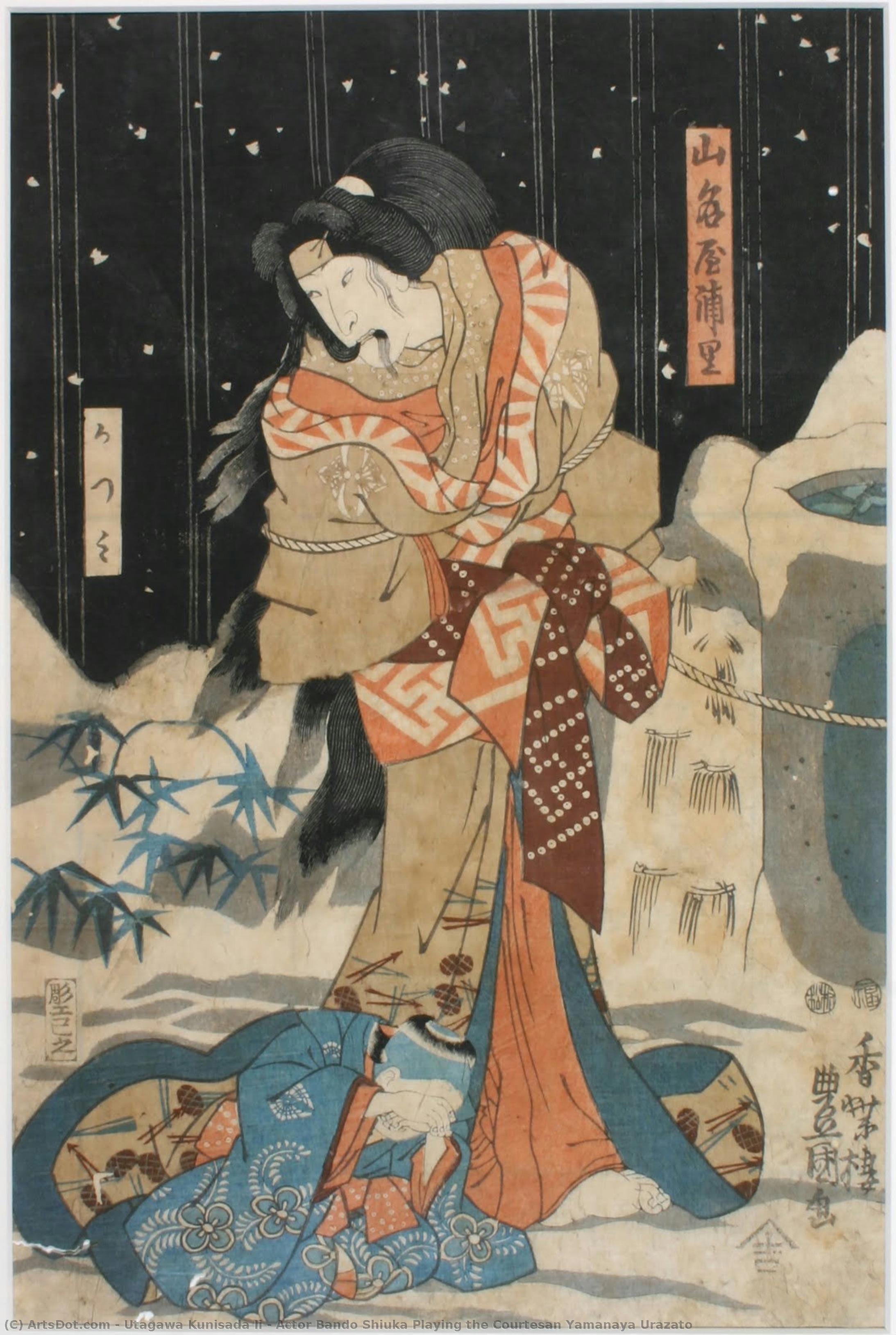
Actor Bando Shiuka Playing the Courtesan Yamanaya Urazato
Giclée / Impresión de arte
Dimensiones de la reproducción
-


Precio total final
$ 62
A Captivating Encounter in the Floating World
In the delicate interplay of color and line that defines the ukiyo-e tradition, "Actor Bando Shiuka Playing the Courtesan Yamanaya Urazato" emerges as a profound window into the theatrical soul of Edo-period Japan. Created by the master Utagawa Kunisada II around 1851, this woodblock print captures a moment of intense dramatic tension, blurring the lines between reality and performance. The scene presents a striking visual narrative: two figures, draped in the rich, vibrant hues of red and blue, are locked in a ritualistic or theatrical interaction amidst a serene, snow-dusted landscape. The presence of a snowy hillside adds a layer of quiet melancholy to the composition, contrasting the warmth of the characters' attire with the biting chill of winter, creating an atmosphere that is both intimate and epic.
The artistry of Kunisada II shines through in the meticulous execution of the onnagata—the male actors who specialized in female roles. As noted by art historians, the subtle details, such as the purple cloth visible above the actor’s forehead, serve as a sophisticated clue to the performer's identity, signaling the shaved forelock characteristic of a man portraying a woman. This layer of theatrical artifice adds a fascinating psychological depth to the piece; the viewer is not merely looking at a portrait of a courtesan, but at a masterful transformation. The composition, featuring one figure kneeling while another stands with a symbolic chain, suggests a narrative of power, devotion, or perhaps a scripted moment of struggle from a Kabuki play, inviting collectors to contemplate the stories hidden within the woodblock's grain.
Mastery of Technique and Aesthetic Elegance
For the discerning collector or interior designer, this print offers an unparalleled blend of historical significance and decorative versatility. The technique of ukiyo-e—the "pictures of the floating world"—relies on the precise layering of pigments to achieve depth and texture. In this work, the bold use of primary colors is balanced by the soft, atmospheric rendering of the snowy environment. The interplay between the heavy, patterned kimonos and the stark, white backdrop of the winter landscape creates a rhythmic visual movement that draws the eye across the page. Such a piece serves as a sophisticated focal point in any curated space, bringing with it the storied elegance of 19-century Japanese aesthetics.
Beyond its technical brilliance, the emotional resonance of the work lies in its ability to evoke nostalgia for a vanished era of urban splendor and theatrical passion. The print does not merely depict a scene; it captures an essence of movement and emotion that remains potent over a century later. Whether displayed as part of a larger collection of Japanese prints or as a standalone statement piece in a modern setting, this reproduction of Kunisada II’s work provides a timeless connection to the cultural heartbeat of old Tokyo. It is an invitation to experience the drama, the fashion, and the exquisite craftsmanship of the Utagawa school, making it a truly transformative addition to any fine art collection.
Obras relacionadas
Biografía del artista
**Primeros años y formación artística**
Utagawa Kunisada II, también conocido como Toyokuni IV, fue un destacado diseñador de grabados japoneses ukiyo-e, nacido en Edo (actual Tokio) en 1823. Su trayectoria artística se desarrolló dentro del prestigioso Utagawa School, una institución que dominaba el panorama artístico de la época. Kunisada II recibió su formación inicial a las órdenes de su maestro, Utagawa Kunisada I, un nombre propio que le sirvió como punto de partida y con el cual firmó gran parte de sus primeras obras. La adopción del nombre “Kunisada II” alrededor de 1850-51 marcó una transición crucial en su carrera, consolidando su posición dentro de la escuela y heredando su legado artístico. Este cambio no solo representó un reconocimiento a su talento, sino también una reafirmación de su pertenencia a una tradición artística profundamente arraigada.**Estilo artístico y obras maestras**
El trabajo de Kunisada II se caracteriza por una notable diversidad temática y estilística. Sus grabados abarcan una amplia gama de sujetos, desde representaciones teatrales de actores (yakusha-e), que eran enormemente populares en la época, hasta retratos de bellas damas, ilustraciones basadas en escenas literarias, obras eróticas y otros temas variados. Entre sus logros más destacados se encuentra “La historia de los ocho héroes caninos” (Hakkendun Inu no Sōshi no Uchi), creada en 1852, inspirada en la épica novela de Kyokutei Bakin, "El clan Satomi y los ocho perros". Esta obra es un ejemplo paradigmático de su habilidad para combinar elementos narrativos complejos con una estética visualmente impactante. Además de esta pieza central, Kunisada II produjo más de 40 series distintas, cada una explorando diferentes aspectos de la vida y el arte en Japón durante el período Edo.**Legado e influencia**
Kunisada II desempeñó un papel fundamental como líder del Utagawa School, manteniendo la continuidad de su estilo maestro, pero sin alcanzar la misma fama o reconocimiento que este último había logrado. Su popularidad experimentó un declive significativo durante el período Meiji (1868-1912), marcado por las profundas transformaciones sociales y políticas que sacudieron Japón. A partir de 1874, parece que Kunisada II dejó de producir grabados con regularidad, falleciendo el 20 de julio de 1880 y siendo enterrado en Banshōin Kōunji. Su nombre funerario budista, Sankōin Hōkokujutei Shinji, refleja su compromiso con las tradiciones religiosas y espirituales de su época.**Menciones notables en ArtsDot.com**
Para explorar la obra completa de Utagawa Kunisada II, se recomienda visitar la plataforma ArtsDot.com:- Ver las obras de Utagawa Kunisada II en ArtsDot.com
- Explorar la colección del Museo Moderno de Hokkaido (Japón) en ArtsDot.com
- Descubrir las pinturas de Nonoyama Kōzan en ArtsDot.com
**Puntos clave en la vida de Kunisada II**
- 1823: Nacimiento en Edo, Japón
- 1850-51: Adopción del nombre Kunisada II
- 1852: Creación de “La historia de los ocho héroes caninos”
- 1868–1912: Período Meiji, marcado por el declive de su popularidad
- 20 de julio de 1880: Fallecimiento y entierro en Banshōin Kōunji
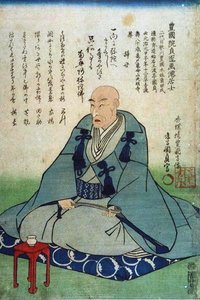
Utagawa Kunisada Ii
1823 - 1880 , Japón
Datos clave
- Artistic Movement Or Style: Ukiyo-e (yakusha-e)
- Artists Or Movements Influenced By This Artist: ['Escuela Utagawa']
- Artists Who Influenced This Artist: ['Utagawa Kunisada I']
- Date Of Birth: 1823
- Date Of Death: 1880
- Full Name: Utagawa Kunisada II
- Nationality: Japonesa
- Notable Artworks:
- La historia de losø ocho perros
- El actor de Osaka Kataoka Gado
- Place Of Birth: Tokio, Japón
Artículos relacionados

Katsushika Hokusai: Las 25 Obras Maestras del Ukiyo-e que Transformaron el Arte Japonés | ArtsDot
Descubre las 25 obras maestras de Katsushika Hokusai, el genio del ukiyo-e. Explora 'La Gran Ola', paisajes japoneses y su impacto en el arte moderno. Reproducciones de alta calidad para tu hogar en ArtsDot.com.
Ukiyo-e: Un Viaje al Corazón del Mundo Flotante Japonés y su Legado Artístico
Descubre el fascinante mundo del Ukiyo-e, el arte japonés del Período Edo. Explora las técnicas de grabado, los maestros Hokusai y Hiroshige, y su legado perdurable. ¡Un viaje cultural inolvidable!

The Enduring Legacy of Woodblock Printmaking: Technique, History & Artistic Expression
Explore the rich history of woodblock printmaking – from ancient techniques to Ukiyo-e masterpieces. Discover expert insights on collecting, preserving & appreciating this enduring art form.
Tōshūsai Sharaku: A Fleeting Glimpse into Edo Period Kabuki – Life, Art, and the Enigma of a Ukiyo-e Master
Explore the captivating world of Tōshūsai Sharaku, the enigmatic Edo period ukiyo-e master. Discover his iconic Kabuki actor portraits and unravel the mystery behind this fleeting artistic genius. Learn about his unique style & lasting legacy.
Tsukioka Yoshitoshi: A Master of Ukiyo-e's Final Flourish – Narrative, Innovation, and the Meiji Transition
Explore the life & art of Tsukioka Yoshitoshi, the last great master of ukiyo-e woodblock printing. Discover his dramatic warrior prints, innovative series like 'One Hundred Aspects of the Moon,' and legacy reflecting Japan's Meiji transition.