 Ver en contexto
 Enviar
 Compartir
 Detalles

 Descargar
 Similares
 Radiografía
 Presentación de diapositivas
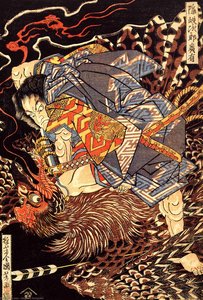
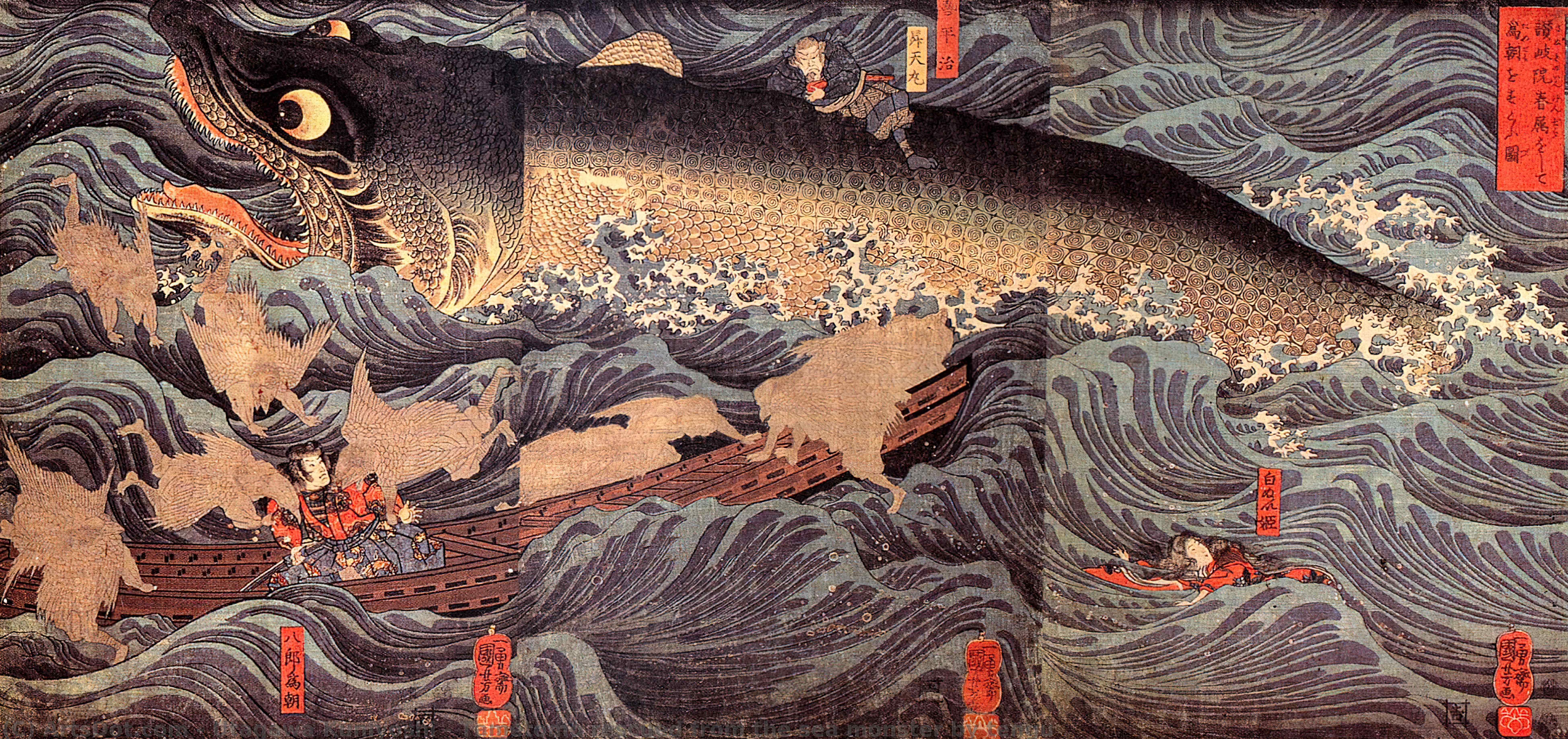
Tametomo rescued from the sea monster by tengu


 Ver más
Giclée / Impresión de arte
Impresiones giclée o en lienzo de calidad de museo con producción rápida y opciones de acabado flexibles. ( Comprar pintura hecha a mano Comprar imagen)




P118B $10

P118H $10

P118W $10

P438Z $10

P508JH $12

P508YH $12

P805H $10

P805Z $10

P919BZ $10

P919G $10

P919XJ $10

P959ZH $10

P968JZ $12

W106C $8

W218G $10

W218JH $8

W218Y $10

W307PJ $10

W316G $10

W316PJ $8

W316Y $10

W398PJ $8

W4111J $10

W500HY $15

W500JH $15

W692G $12

W849H $8

W940BG $15

W953PJ $8




Elija entre nuestros tamaños predefinidos que respetan las proporciones originales de la obra.

Puede introducir sus propias dimensiones para adaptarse a un marco o espacio específico. Si el tamaño seleccionado no coincide con las proporciones de la imagen original, recortaremos la obra de arte o extenderemos la imagen con un borde con efecto espejo o de color sólido. Se enviará una maqueta digital para su aprobación antes de que comience la producción.
Tenga en cuenta que la vista previa en pantalla no refleja el recorte o la extensión real. Solo la maqueta mostrará con precisión la composición final.
Aunque existen tamaños personalizados, recomendamos seleccionar una dimensión de la lista predefinida para preservar las proporciones originales.
Envío a todo el mundo () en 2 semanas en lugar de las 4/5 semanas estándar. (2 septiembre)

Envío exprés gratuito a todo el mundo

Lienzo de lino de alta calidad

Seguro de envío total

Garantía de reembolso de impuestos aduaneros

Garantía de fidelidad cromática exacta

Política de devolución de 60 días (solo por defectos)

Garantía de devolución del 100% del dinero

Descuento por cantidad
 La opción de vidrio solo está disponible en tamaños inferiores a 110 cm.

Tametomo rescued from the sea monster by tengu
Giclée / Impresión de arte
Dimensiones de la reproducción
-


Precio total final
$ 62
A Tempest of Legend and Ink
In the heart of the turbulent Edo period, the master Utagawa Kuniyoshi breathed life into the supernatural through his unparalleled command of the ukiyo-e woodblock medium. His masterpiece, Tametomo rescued from the sea monster by tengu, serves as a breathtaking window into a world where the boundaries between reality and myth are perpetually blurred. The composition is anchored by a colossal, primordial creature—a fish of monstrous proportions that seems to surge directly out of the paper toward the viewer. This immense being, likely a tuna or marlin reimagined through a lens of folklore, dominates the upper reaches of the print, its powerful form creating a vertical axis of tension that commands immediate attention. Below this titan, the sea is a chaotic symphony of dark blues and frothing whites, where small, fragile fishing boats struggle against the overwhelming weight of the waves, emphasizing the profound vulnerability of human existence when confronted by the indomitable forces of nature.
The technical brilliance of Kuniyoshi lies in his ability to translate raw energy into the delicate medium of woodblock printing. Each line is a deliberate stroke of drama; the sharp, linear definitions of the waves and the geometric precision of the boats provide a structural counterpoint to the organic, sweeping curves of the sea monster. Through the meticulous layering of ink, Kuniyoshi achieves a textured, almost grainy atmosphere that mimics the salt-sprayed air of a storm-tossed ocean. The color palette is intentionally somber, utilizing deep greens, earthy browns, and midnight blues to evoke a sense of mystery and impending peril. A solitary moon hangs in the sky, casting a ghostly light that illuminates the scene with a dramatic chiaroscuro effect, heightening the emotional stakes of the struggle unfolding below.
Symbolism and the Spirit of Survival
Beyond its visual spectacle, this artwork is a profound meditation on the themes of survival and divine intervention. The presence of the tengu—the legendary mountain spirits of Japanese folklore—introduces a layer of spiritual complexity to the narrative. As Tametomo is rescued from the jaws of the deep, the print transcends a mere depiction of a maritime accident, becoming instead an allegory for the struggle against overwhelming destiny and the unexpected grace found in moments of absolute terror. The contrast between the massive, predatory fish and the tiny, industrious fishermen serves as a poignant reminder of human insignificance within the vastness of the cosmos, yet the very existence of the rescue suggests a universe that is watched over by unseen, supernatural forces.
For the discerning collector or interior designer, this reproduction offers more than just a decorative element; it provides a focal point of immense narrative depth and historical prestige. The artwork’s ability to evoke awe and contemplation makes it an ideal centerpiece for spaces that value storytelling and classical Japanese aesthetics. Whether placed in a contemporary gallery setting or a traditional study, the print brings with it the vibrant legacy of the Utagawa school, inviting viewers to lose themselves in the swirling currents of history and myth. It is a piece that does not merely decorate a wall but animates a room, offering a window into a time when every wave held a secret and every shadow might hide a legend.
Obras relacionadas
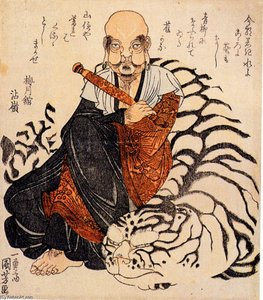
Biografía del artista
Biografía y Contribuciones Artísticas
Utagawa Kuniyoshi, un renombrado artista japonés, nació el 1 de enero de 1798 en Japón y falleció el 14 de abril de 1861. Fue uno de los últimos grandes maestros del estilo japonés ukiyo-e de grabados xilográficos y pintura, y miembro de la escuela Utagawa.Primeros Años y Formación
Kuniyoshi pasó sus primeros años ayudando en el negocio de tintorería de seda de su padre, donde desarrolló un ojo para el color y los patrones textiles. A la edad de siete u ocho años, quedó impresionado por los grabados guerreros ukiyo-e y las imágenes de artesanos, lo que más tarde influyó en su propio trabajo.Carrera Artística
El talento artístico de Kuniyoshi fue reconocido a la edad de 12 años, lo que llevó a su aprendizaje con el famoso maestro de grabado ukiyo-e Utagawa Toyokuni. Se convirtió en uno de los principales alumnos de Toyokuni y recibió el nombre de "Kuniyoshi" en 1811. Su primer trabajo publicado, las ilustraciones para kusazōshi gōkan gobuji chūshingura, una parodia de la historia original de Chūshingura, marcó su debut como artista independiente.Obras Notables y Contribuciones
- Cien y ocho héroes del popular Suikoden: Esta serie, basada en el relato chino Shuihu Zhuan, mostró el estilo único de Kuniyoshi y se volvió extremadamente popular en Edo.
- El fantasma de Taira no Tomomori en la bahía de Daimotsu: Este trabajo demostró la capacidad de Kuniyoshi para invocar una sensación efectiva de intensidad de acción en su descripción del combate.
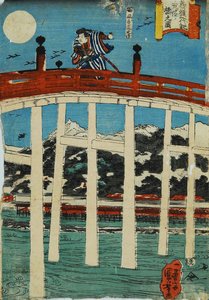
- El puente Gōjō: Este tríptico de 1839 mostró el estilo temático de Kuniyoshi, que satisfizo el interés público por lo espeluznante, emocionante y bizarro.
Influencia y Legado
El arte de Kuniyoshi incorporó aspectos de la representación occidental en la pintura de paisajes y la caricatura. Su influencia en el arte ukiyo-e es evidente en su mezcla única de elementos japoneses tradicionales con técnicas occidentales.- vea el autorretrato de Kuniyoshi del álbum shunga (ukiyo-e) en ArtsDot.
- explore más obras de Utagawa Kuniyoshi en ArtsDot.
- lea más sobre Utagawa Kuniyoshi en Wikipedia.
Conclusión
Utagawa Kuniyoshi sigue siendo una figura significativa en el arte ukiyo-e japonés, conocido por sus diversos temas y su innovadora mezcla de técnicas tradicionales y occidentales. Su legado continúa inspirando a artistas y entusiastas del arte por igual. Importante: Este artículo se basa en la información proporcionada por ArtsDot.com y wikipedia.org, centrándose en la biografía de Kuniyoshi, su carrera artística, sus obras notables, su influencia y su legado.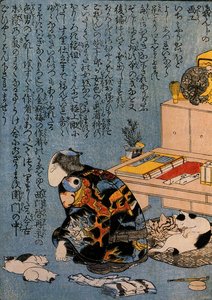
Utagawa Kuniyoshi
1797 - 1861 , Japón
Datos clave
- Artistas Influyentes: ['Utagawa Toyokuni']
- Estilo Artístico: Ukiyo-e
- Fecha De Fallecimiento: 14 de abril de 1861
- Fecha De Nacimiento: 1 de enero de 1798
- Lugar De Nacimiento: Tokio, Japón
- Nacionalidad: Japonés
- Nombre Completo: Utagawa Kuniyoshi
- Obras Notables:
- Cien héroes del Suikoden
- El fantasma de Taira no Tomomori
- El puente Gōjō
Artículos relacionados

Katsushika Hokusai: Las 25 Obras Maestras del Ukiyo-e que Transformaron el Arte Japonés | ArtsDot
Descubre las 25 obras maestras de Katsushika Hokusai, el genio del ukiyo-e. Explora 'La Gran Ola', paisajes japoneses y su impacto en el arte moderno. Reproducciones de alta calidad para tu hogar en ArtsDot.com.
Utagawa Kuniyoshi: A Master of Japanese Ukiyo-e – Narrative Innovation & the Fusion of Tradition with Popular Culture
Explore the captivating world of Utagawa Kuniyoshi, a master of Japanese ukiyo-e woodblock prints. Discover his innovative warrior scenes, vibrant landscapes & lasting legacy in 19th-century art history.
Ukiyo-e: Un Viaje al Corazón del Mundo Flotante Japonés y su Legado Artístico
Descubre el fascinante mundo del Ukiyo-e, el arte japonés del Período Edo. Explora las técnicas de grabado, los maestros Hokusai y Hiroshige, y su legado perdurable. ¡Un viaje cultural inolvidable!

The Enduring Legacy of Woodblock Printmaking: Technique, History & Artistic Expression
Explore the rich history of woodblock printmaking – from ancient techniques to Ukiyo-e masterpieces. Discover expert insights on collecting, preserving & appreciating this enduring art form.
Tsukioka Yoshitoshi: A Master of Ukiyo-e's Final Flourish – Narrative, Innovation, and the Meiji Transition
Explore the life & art of Tsukioka Yoshitoshi, the last great master of ukiyo-e woodblock printing. Discover his dramatic warrior prints, innovative series like 'One Hundred Aspects of the Moon,' and legacy reflecting Japan's Meiji transition.