Menú
Ver en contextoVer en contexto Vista previa en RAVista previa en RA Comprar impresión Comprar impresiónComprar imagen Comprar imagen EnviarEnviar
DetallesDetalles Añadir a favoritos Añadir a favoritos DescargarDescargar SimilaresSimilares RadiografíaRadiografía Presentación de diapositivasPresentación de diapositivas

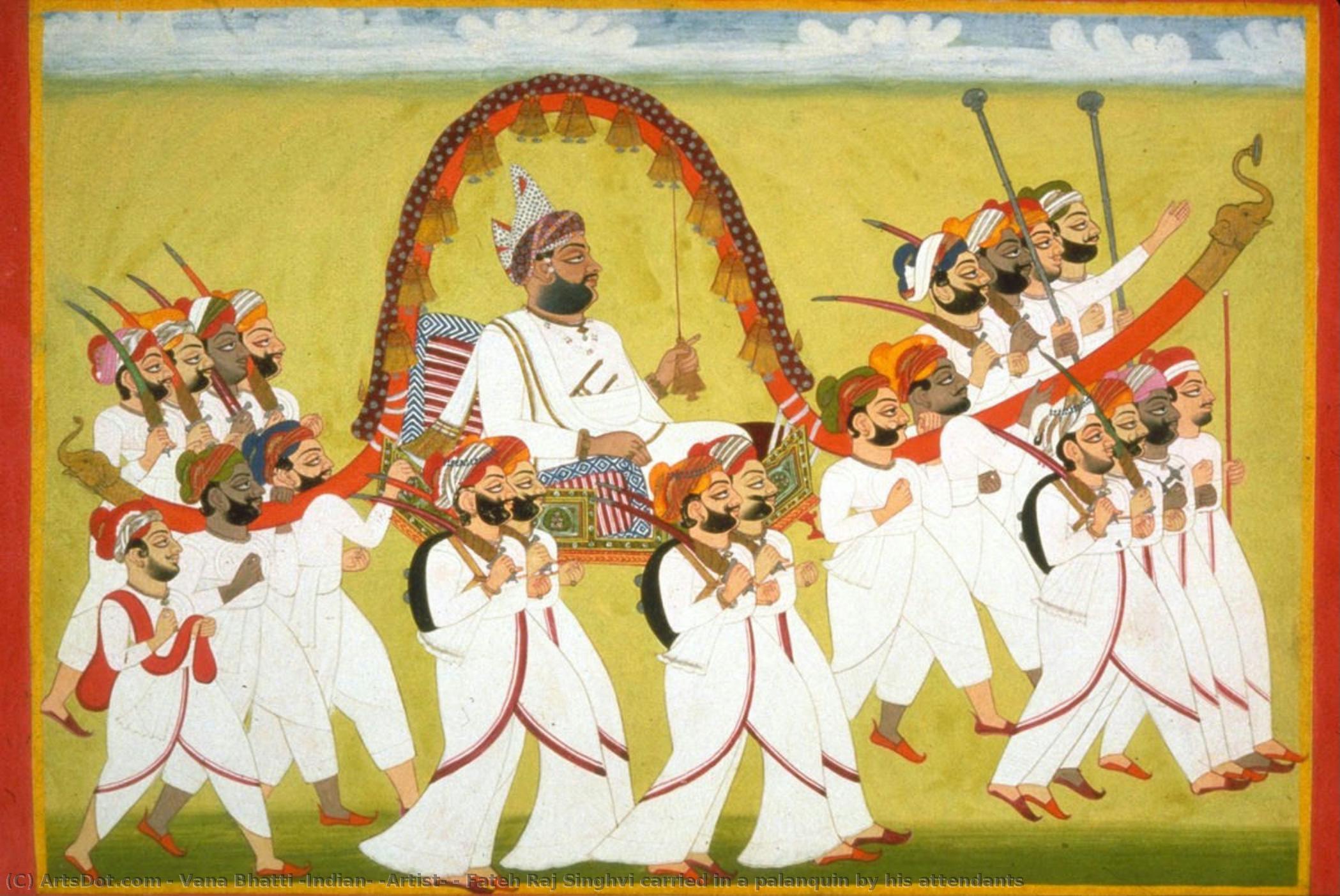
Fateh Raj Singhvi carried in a palanquin by his attendants

An Indian master of traditional portraiture known for capturing the grandeur of the Jodhpur court in works like Fateh Raj Singhvi carried in a palanquin by his attendants, inviting you to discover a lost era of royal splendor.

Reproducción al óleo hecha a mano

Óleo sobre lienzo pintado a mano en el tamaño y marco de su elección, realizado por encargo por nuestros artistas. (Comprar impresión Comprar impresiónComprar imagen Comprar imagen)

Estándar
a medida
CM
INCH

Elija entre nuestros tamaños predefinidos que respetan las proporciones originales de la obra.

ancho
altura

Puede ingresar sus propias dimensiones para adaptarse a un marco o espacio específico. Si el tamaño seleccionado no coincide con las proporciones de la imagen original, recortaremos la obra o extenderemos la pintura con elementos adicionales pintados a mano. Se le enviará una maqueta digital para su aprobación antes de comenzar la producción.
Tenga en cuenta que la vista previa en pantalla no refleja el recorte o la extensión reales. Solo la maqueta mostrará con precisión la composición final.
Si bien existen tamaños personalizados, recomendamos seleccionar una dimensión de la lista predefinida para preservar las proporciones originales.

Ejemplos de lo que se puede personalizar: Reemplace el rostro con una foto del cliente; Agregue una mascota (por ejemplo, cambie un gato por un perro); Incluya un mensaje oculto en el fondo; Cambie el paisaje o los elementos del fondo.
Tras realizar el pedido, el equipo de ArtsDot.com enviará un correo electrónico al cliente para solicitar instrucciones y proporcionarle una vista previa del boceto.

Envío a todo el mundo () en 3-4 semanas en lugar de las 5 semanas estándar. (7 septiembre). Sin comprometer la calidad.

why_choose_icon
Envío exprés gratuito a todo el mundo
why_choose_icon
Lienzo de lino de alta calidad
why_choose_icon
Seguro de envío total
why_choose_icon
Garantía de reembolso de impuestos aduaneros
why_choose_icon
Garantía de fidelidad cromática exacta
why_choose_icon
Política de devolución de 100 días (solo por defectos)
why_choose_icon
Garantía de devolución del 100% del dinero
why_choose_icon
Descuento por cantidad

Precio total

$ 263

reproduction

Fateh Raj Singhvi carried in a palanquin by his attendants

Técnica de reproducción

Dimensiones de la reproducción

-

Precio total final

$ 263

Before the Age of Profile Pictures: Indian Portraiture A portrait, typically an image of an individual showing a likeness, conveys information about who they are, or perhaps, how they want to be seen. Portraits combine aspects of the “real” and the observed with the idealized and the imaginary, to make for powerful messages about one’s identity and self-image. Before the twentieth century, portraits in India were mainly of kings, politicians, or important teachers—people whose skills, achievements, or contributions were considered worthy of memorializing. It was a high privilege to have one’s portrait made as it required resources to acquire the artistic talent and expensive materials. Numerous portraits of Indian rulers and noblemen survive from after the 1700s. They were included in dynastic or family histories, exchanged as personal and diplomatic gifts, and seen in public and private settings. Through an artist’s eye—and conveyed by clothing, accessories, and settings— portraits emphasized an individual’s character, abilities, status, and role in society. Today, with the easy access to smart phones and social media, portraits as selfies and profile pictures proliferate in ways not seen before. They have become democratized in many respects, as each person can independently control the message and circulate it widely and quickly without the mediation of an artist’s interpretation. Yet, like the paintings on view here, ideas about who we are and what we want others to see about us remain key features of the art of the selfie. , A high-ranking minister at the Jodhpur royal court, Fateh Raj Singhvi is seen here traveling with his impressive entourage. He is the unmistakable focus of the painting: his crowned and seated figure is the largest in size; it is positioned at the center of the image and framed by the palanquin canopy. He is well protected by his private army and his arrival is announced by standard-bearers. Such symbols and protocols are established conventions for Indian rulers. But here, a visual association is made between the power and privileges of royalty and Fateh Raj—who was a minister and not a king. An inscription on this painting’s reverse gives the name of Fateh Raj, and the rendering of his face, although stylized, suggests his distinctive features, giving the portrait a specificity.