

 Ver en contexto
 Enviar
 Compartir
 Detalles

 Descargar
 Similares
 Radiografía
 Presentación de diapositivas
 Estadísticas
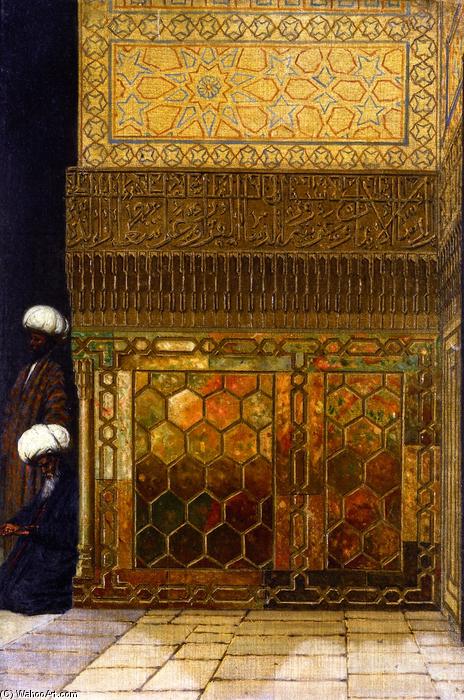
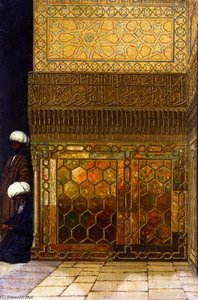
Corner in the Gur-Emir Mausoleum


 Ver más
Reproducción al óleo hecha a mano
Óleo sobre lienzo pintado a mano en el tamaño y marco de su elección, realizado por encargo por nuestros artistas. ( Cambiar a Impresión Cambiar a imagen digital)




































Elija entre nuestros tamaños predefinidos que respetan las proporciones originales de la obra.

Puede ingresar sus propias dimensiones para adaptarse a un marco o espacio específico. Si el tamaño seleccionado no coincide con las proporciones de la imagen original, recortaremos la obra o extenderemos la pintura con elementos adicionales pintados a mano. Se le enviará una maqueta digital para su aprobación antes de comenzar la producción.
Tenga en cuenta que la vista previa en pantalla no refleja el recorte o la extensión reales. Solo la maqueta mostrará con precisión la composición final.
Si bien existen tamaños personalizados, recomendamos seleccionar una dimensión de la lista predefinida para preservar las proporciones originales.
Tras realizar el pedido, el equipo de ArtsDot.com enviará un correo electrónico al cliente para solicitar instrucciones y proporcionarle una vista previa del boceto.
Envío a todo el mundo () en 3-4 semanas en lugar de las 5 semanas estándar. (12 septiembre). Sin comprometer la calidad.

Envío exprés gratuito a todo el mundo

Lienzo de lino de alta calidad

Seguro de envío total

Garantía de reembolso de impuestos aduaneros

Garantía de fidelidad cromática exacta

Política de devolución de 100 días (solo por defectos)

Garantía de devolución del 100% del dinero

Descuento por cantidad
 La opción de vidrio solo está disponible en tamaños inferiores a 110 cm.

Corner in the Gur-Emir Mausoleum
Técnica de reproducción
Dimensiones de la reproducción
-


Precio total final
$ 263
Obras relacionadas
Biografía del artista
A Life Etched in Conflict: Vasily Vereshchagin and the Brutality of War
Vasily Vasilievich Vereshchagin, born in 1842 near Cherepovets, Russia, was not merely a painter; he was a chronicler of conflict, an artist who dared to depict war not as glorious spectacle but as a harrowing and often senseless tragedy. His early life offered little indication of the path he would take. Coming from a family with deep roots in military service – his grandfather had fought under Suvorov, and his father was a retired officer – Vasily initially pursued a career at the Naval Academy in St. Petersburg. However, a passion for art soon superseded naval ambitions, leading him to study at the Imperial Academy of Arts, where he quickly distinguished himself with his talent for detail and composition. His formal training provided a solid foundation, but it was his experiences on the battlefields of Central Asia that would irrevocably shape his artistic vision.From Caucasus to Turkestan: Witnessing the Realities of Imperial Expansion
Vereshchagin’s career truly began with his participation in Russia's military campaigns in the Caucasus and, more significantly, in Turkestan (Central Asia) during the 1860s and 70s. Unlike many artists who romanticized warfare from a distance, Vereshchagin *lived* it. He volunteered for active service, immersing himself in the harsh realities of desert combat, enduring scorching heat, brutal skirmishes, and witnessing the suffering of both soldiers and civilians. This firsthand exposure fundamentally altered his perspective. He wasn’t interested in depicting triumphant generals or heroic charges; instead, he focused on the grim aftermath of battle – piles of skulls, abandoned weaponry, desolate landscapes littered with corpses. His paintings from this period, such as “The Apotheosis of War” (1871), a chilling depiction of a pyramid of skulls beneath a blood-red sky, were shocking in their stark realism and anti-war sentiment. These works weren’t celebrations of conquest; they were indictments of it. He meticulously researched the cultures he encountered, striving for accuracy in his depictions of Central Asian people and environments, adding another layer of complexity to his work beyond simply portraying violence.Technique as Testimony: A Master of Realism
Vereshchagin’s artistic technique was instrumental in conveying the brutal truth he sought to represent. He possessed an extraordinary ability to render detail with almost photographic precision, yet his paintings were far from mere reproductions of reality. He employed a restrained palette, often dominated by earthy tones and muted colors, which heightened the sense of desolation and despair. His brushwork was deliberate and controlled, creating surfaces that felt both tangible and emotionally charged. He wasn’t afraid to depict the grotesque – decaying bodies, wounded soldiers, the stark emptiness of death – but he did so with a profound respect for his subjects. He aimed not to sensationalize violence but to force viewers to confront its consequences. His use of light and shadow was particularly effective in creating dramatic contrasts and emphasizing the psychological impact of war on those who experienced it. He also incorporated elements of ethnographic detail, showcasing the customs and traditions of the people affected by conflict, further humanizing his subjects and challenging simplistic narratives of imperial dominance.Beyond Turkestan: Expanding Themes and Lasting Legacy
While Central Asia remained a central focus throughout much of his career, Vereshchagin’s artistic interests expanded over time. He traveled extensively, visiting Egypt, Syria, Palestine, and Japan, incorporating these experiences into his work. He painted scenes from biblical history, landscapes imbued with spiritual significance, and portraits that captured the dignity and resilience of diverse cultures. However, even in these seemingly unrelated subjects, the themes of suffering, mortality, and the human cost of conflict often resurfaced. His later works, such as those depicting the siege of Plevna during the Russo-Turkish War (1877-78), continued to challenge conventional representations of warfare, earning him both acclaim and controversy. Vereshchagin’s unflinching portrayal of war made him a controversial figure in his time. While some praised his courage and honesty, others accused him of being overly pessimistic and unpatriotic. Despite the criticism, he remained steadfast in his commitment to depicting the truth as he saw it. He died in 1904 aboard the battleship *Petropavlovsk* during the Russo-Japanese War, a fitting end for an artist who dedicated his life to documenting the realities of conflict. His legacy extends far beyond his technical skill; he remains a powerful voice against war and a testament to the enduring power of art to bear witness to human suffering.Influences and Historical Significance
Vereshchagin’s work stands somewhat apart from traditional artistic movements, though it shares affinities with Realism and Naturalism in its commitment to depicting life as it is. He was influenced by the Barbizon school's emphasis on plein air painting and their focus on capturing the natural world, but he diverged from their idyllic landscapes by focusing on the harsh realities of war-torn environments. He also drew inspiration from ethnographic studies and travel literature, which informed his accurate depictions of diverse cultures. His historical significance lies in his pioneering role as a war artist who rejected romanticized narratives and instead offered a brutally honest portrayal of conflict’s human cost.- His paintings challenged the prevailing glorification of warfare prevalent in 19th-century art.
- He paved the way for future generations of artists to explore themes of trauma, loss, and the psychological impact of war.
- His work continues to resonate today as a powerful reminder of the enduring consequences of conflict and the importance of seeking peace.
Artículos relacionados
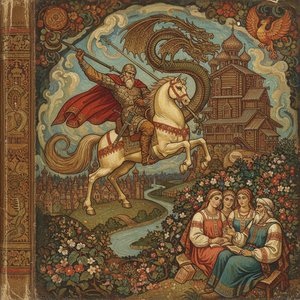
Victor Vasnetsov: Myth, Nationalism & the Revival of Russian Fairy Tale Painting
Explore the captivating world of Victor Vasnetsov, a co-founder of Russian folklorist painting. Discover his iconic works, influence on national identity, and lasting legacy in this expert guide.
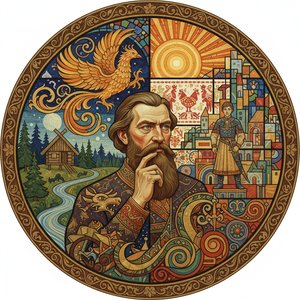
Ivan Bilibin: A Synthesis of Folklore, Modernism & National Identity in Russian Illustration
Explore the enchanting world of Ivan Bilibin, a master Russian illustrator who synthesized folklore, Art Nouveau & national identity. Discover his iconic fairy tale illustrations and legacy with ArtsDot.
The Enduring Appeal of Geometric Patterns in Art: A Historical & Contemporary Exploration
Explore the captivating history of geometric abstraction in art, from ancient roots to contemporary masters. Expert insights for collectors & enthusiasts. Discover key artists, movements & investment potential.
Geometric Design in Art: A Historical Survey & Contemporary Appeal for Collectors
Explore the enduring legacy of geometric abstraction! Discover key artists, historical movements & investment insights for discerning art collectors. Expert guidance from ArtsDot.
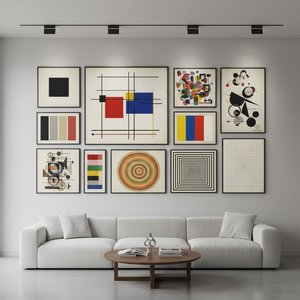
Abstracción Geométrica: 10 Obras Maestras que Transformaron el Arte Moderno | ArtsDot
Descubre las 10 obras maestras de la abstracción geométrica que revolucionaron el arte moderno. Explora a Mondrian, Malevich y Kandinsky en ArtsDot.com. Reproducciones de alta calidad para tu hogar.