 Ver en contexto
 Enviar
 Compartir
 Detalles

 Descargar
 Similares
 Radiografía
 Presentación de diapositivas
Apotheosis of St Ursula
 Oil On Canvas
- WallArt
- Early Renaissance
 1491
1491 481.0 x 336.0 cm
 Galería de la Academia
 Ver más
Reproducción al óleo hecha a mano
Óleo sobre lienzo pintado a mano en el tamaño y marco de su elección, realizado por encargo por nuestros artistas. ( Comprar impresión Comprar imagen)




P118B $10

P118H $10

P118W $10

P438Z $10

P508JH $12

P508YH $12

P805H $10

P805Z $10

P919BZ $10

P919G $10

P919XJ $10

P959ZH $10

P968JZ $12

W106C $8

W218G $10

W218JH $8

W218Y $10

W307PJ $10

W316G $10

W316PJ $8

W316Y $10

W398PJ $8

W4111J $10

W500HY $15

W500JH $15

W692G $12

W849H $8

W940BG $15

W953PJ $8




Elija entre nuestros tamaños predefinidos que respetan las proporciones originales de la obra.

Puede ingresar sus propias dimensiones para adaptarse a un marco o espacio específico. Si el tamaño seleccionado no coincide con las proporciones de la imagen original, recortaremos la obra o extenderemos la pintura con elementos adicionales pintados a mano. Se le enviará una maqueta digital para su aprobación antes de comenzar la producción.
Tenga en cuenta que la vista previa en pantalla no refleja el recorte o la extensión reales. Solo la maqueta mostrará con precisión la composición final.
Si bien existen tamaños personalizados, recomendamos seleccionar una dimensión de la lista predefinida para preservar las proporciones originales.
Tras realizar el pedido, el equipo de ArtsDot.com enviará un correo electrónico al cliente para solicitar instrucciones y proporcionarle una vista previa del boceto.
Envío a todo el mundo () en 3-4 semanas en lugar de las 5 semanas estándar. (23 agosto). Sin comprometer la calidad.

Envío exprés gratuito a todo el mundo

Lienzo de lino de alta calidad

Seguro de envío total

Garantía de reembolso de impuestos aduaneros

Garantía de fidelidad cromática exacta

Política de devolución de 60 días (solo por defectos)

Garantía de devolución del 100% del dinero

Descuento por cantidad
 La opción de vidrio solo está disponible en tamaños inferiores a 110 cm.

Apotheosis of St Ursula
Técnica de reproducción
Dimensiones de la reproducción
-


Precio total final
$ 1913
Descripción de la obra
The Divine Coronation – An Exploration of Vittore Carpaccio’s ‘Apotheosis of St Ursula’
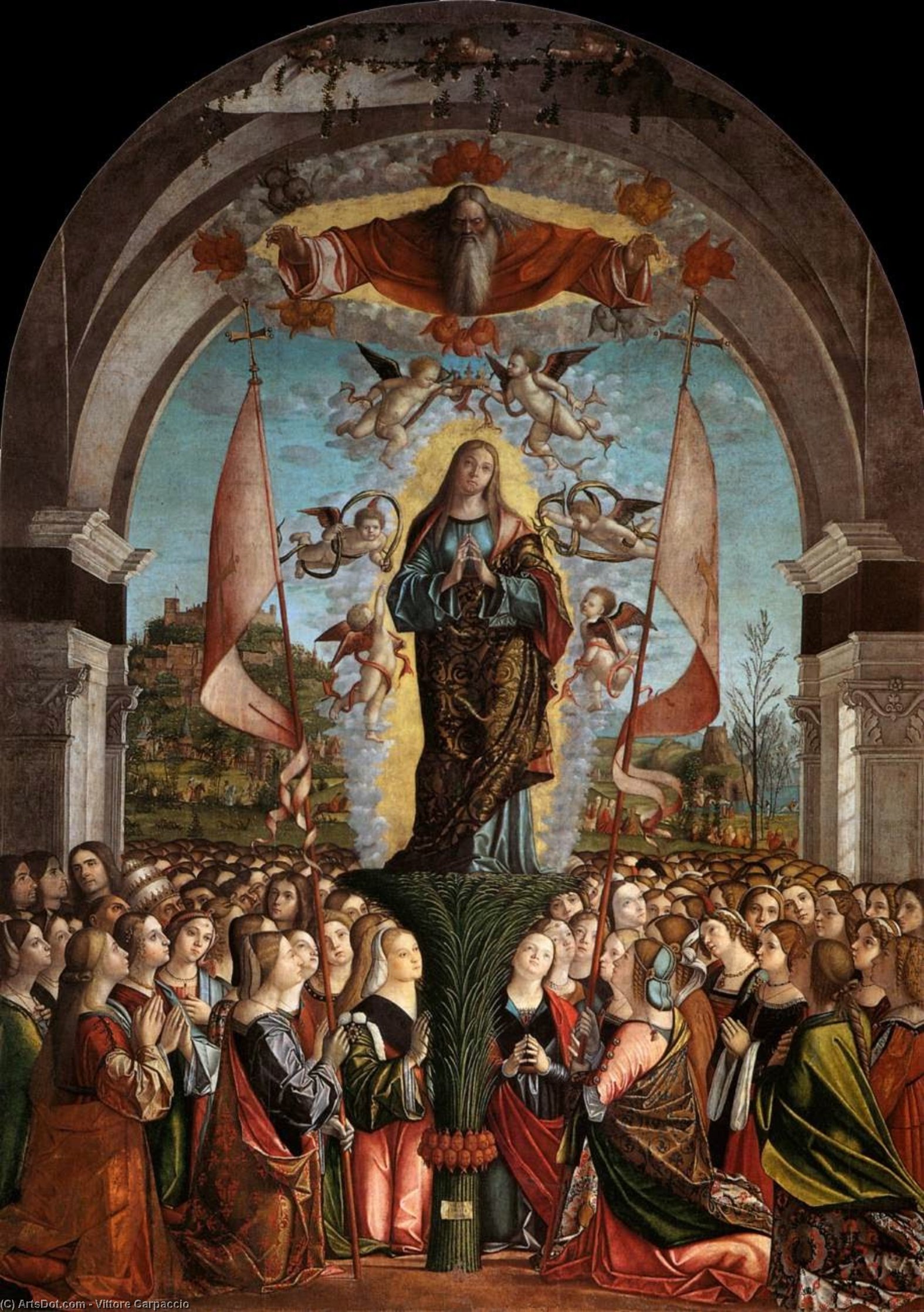
Vittore Carpaccio's “Apotheosis of St. Ursula,” painted in 1491, isn’t merely a religious depiction; it’s a meticulously crafted tableau of faith, power, and the profound beauty of Renaissance artistry. This monumental work, now housed within the Gallerie dell’Accademia in Venice, transports the viewer to a lavishly rendered scene of the Virgin Mary crowning her granddaughter, St. Ursula, amidst an array of angels and kneeling figures – a testament to both Marian devotion and the burgeoning artistic confidence of the Venetian school. Carpaccio, deeply influenced by Antonello da Messina's mastery of light and form, eschewed the prevailing trends of his time, opting instead for a style characterized by a quiet dignity and a remarkable attention to detail that sets this piece apart.
The composition itself is remarkably complex, layered with figures and architectural elements that create a sense of both grandeur and intimacy. The arched niche, reminiscent of a church interior, serves as the stage for this sacred event. Carpaccio’s use of perspective, though not entirely adhering to strict mathematical rules, generates a convincing illusion of depth – achieved through careful layering of forms and overlapping draperies rather than relying solely on linear convergence. Notice how the light, originating primarily from above, dramatically illuminates Mary and Christ at the center, casting intricate shadows that add richness and volume to the scene.
A Master of Narrative Detail: Carpaccio’s Venetian Style
Carpaccio's distinctive style is immediately recognizable through his meticulous rendering of textures and fabrics. The flowing robes of the figures are depicted with an astonishing level of realism, each fold and pleat meticulously rendered to convey weight and movement. This dedication to detail extends to the architectural elements as well – from the intricate carvings on the columns to the delicate patterns adorning the arches. He employs a technique known as *sfumato*, subtly blending colors and softening edges to create an atmosphere of ethereal beauty, characteristic of Venetian painting at this time.
The artist’s choice of color palette is equally noteworthy. Warm tones – golds, reds, and browns – dominate the scene, evoking a sense of reverence and majesty. The halo surrounding Mary's head, rendered in shimmering gold leaf, draws the viewer's eye to the central figure, while the vibrant hues of the robes contribute to the overall richness and splendor of the composition. Symbolism is woven throughout the painting; the cross held by Christ represents his sacrifice, the palm branches signify victory and royalty bestowed upon Mary, and the angels flanking them embody divine grace.
Historical Context & Symbolism
“Apotheosis of St. Ursula” was created during a period of significant religious and artistic transformation in Venice. The city’s thriving merchant class had amassed considerable wealth, fueling a surge in patronage for the arts. Carpaccio's work reflects this prosperity, showcasing the lavishness and grandeur that characterized Venetian society. The painting also aligns with the broader context of Renaissance art, which sought to revive classical ideals while simultaneously exploring new artistic techniques and approaches. The depiction of St. Ursula, a legendary figure revered for her unwavering faith and virtue, served as an inspiration for artists throughout Europe.
Furthermore, Carpaccio’s work is deeply rooted in the tradition of *sacra conversazione*, a popular genre that depicted religious scenes with multiple figures engaged in conversation or prayer. This approach allowed artists to convey complex theological ideas in a visually engaging manner. The inclusion of numerous saints and angels underscores the universality of faith and the interconnectedness of the divine realm.
A Timeless Vision: Reproduction & Artistic Legacy
Today, “Apotheosis of St. Ursula” stands as a testament to Carpaccio’s artistic genius and a remarkable example of Venetian Renaissance painting. Reproductions offer an accessible way to experience the beauty and complexity of this masterpiece, bringing its rich symbolism and evocative atmosphere into any space. Whether adorning a grand salon or a smaller study, a high-quality reproduction can serve as a constant reminder of the enduring power of faith, art, and human creativity.
Obras relacionadas
Biografía del artista
Vida y Formación Temprana
Vittore Carpaccio, un destacado pintor italiano, nació en Venecia alrededor de 1465. Estudió bajo la tutela de Gentile Bellini, un renombrado artista de la escuela veneciana. Este aprendizaje sentó las bases para el futuro éxito de Carpaccio.
Estilo Artístico e Influencias
El estilo de Carpaccio se caracterizó por su naturaleza conservadora, mostrando una influencia mínima de las tendencias humanistas que transformaron la pintura del Renacimiento italiano durante su vida. Su obra fue influenciada por el estilo de Antonello da Messina y el arte netherlandish temprano. Esta mezcla única de estilos resultó en un enfoque distintivo de la pintura veneciana.
Obras Destacadas
- La Leyenda de Santa Úrsula, un ciclo de nueve pinturas, es la obra más famosa de Carpaccio. Esta serie, ahora alojada en las Gallerie dell'Accademia, muestra su maestría en la pintura narrativa.
- El retablo Gloria de Santa Úrsula (1491) demuestra la habilidad de Carpaccio para capturar la luz y el color, reminiscente del estilo de Giovanni Bellini.
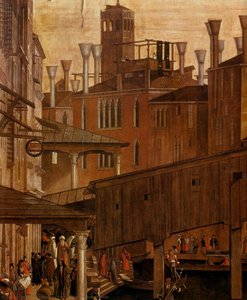
- Milagro de la Reliquia de la Cruz en el Ponte di Rialto (1494) destaca la capacidad de Carpaccio para equilibrar composición y narrativa.
Carrera e Importancia Histórica
Las principales obras de Carpaccio fueron ejecutadas entre 1490 y 1519, lo que le sitúa entre los primeros maestros del Renacimiento veneciano. Su estilo orientalista, como se ve en San Jorge bautizando a los Selenitas, refleja una nueva fascinación por el Levante. La obra de Carpaccio ha sido algo pasada por alto en comparación con sus contemporáneos, como Giovanni Bellini o Giorgione. A pesar de ello, su contribución al arte veneciano es innegable y su enfoque único lo distingue dentro del panorama artístico de la época.
Referencias Adicionales
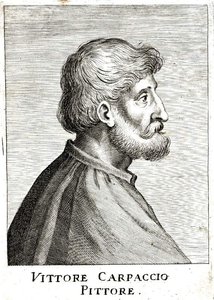
Vittore Carpaccio
1465 - 1526 , Italia
Datos clave
- Artistas Que Influyeron:
- Gentile Bellini
- Antonello da Messina
- Fecha De Muerte: 1526
- Fecha De Nacimiento: c. 1465
- Lugar De Nacimiento: Venecia, Italia
- Movimiento Artístico: Renacimiento veneciano
- Nacionalidad: Italiana
- Nombre Completo: Vittore Carpaccio
- Notable Obras:
- Leyenda de Santa Úrsula
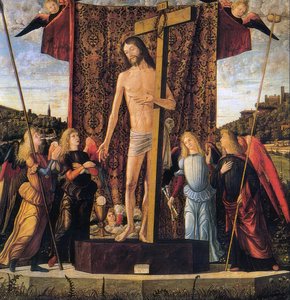
- Cristo con los Símbolos de la Pasión
- Retrato de una dama
Artículos relacionados
Vittore Carpaccio: Venetian Renaissance Narrative & the Poetics of Detail
Explore the captivating world of Vittore Carpaccio, a master storyteller of the Venetian Renaissance. Discover his intricate details, narrative cycles like 'The Legend of St. Ursula,' and unique artistic style.

El Óleo sobre Lienzo: Historia, Técnica y la Persistencia de un Medio Artístico Atemporal
Descubre la historia y técnica del óleo sobre lienzo. Explora reproducciones fieles hechas a mano, personalización artística y consejos de expertos con ArtsDot. ¡Colecciona arte con confianza!

The Enduring Legacy of Oil on Canvas: Technique, History & Aesthetic Impact
Explore the rich history & techniques of oil painting – from Renaissance masters to Impressionism. Discover pigments, layering methods, and why this timeless medium endures. Expert insights for artists & art enthusiasts.

The Enduring Power of Painting: A Historical & Contemporary Exploration of Form and Emotion
Explore the rich history & enduring techniques of oil painting with ArtsDot. Discover masterpieces, learn about art collecting, and find authentic handmade reproductions crafted by skilled artists.

El Greco: Las 25 Obras Maestras que Definen un Genio del Arte y la Fe
Descubre las 25 obras maestras de El Greco, el genio del Renacimiento español. Explora su arte religioso, manierismo y la historia detrás de cuadros icónicos como 'El Entierro del Conde de Orgaz'. Encuentra reproducciones de alta calidad en ArtsDot.com.