 Ver en contexto
 Enviar
 Compartir
 Detalles

 Descargar
 Similares
 Radiografía
 Presentación de diapositivas
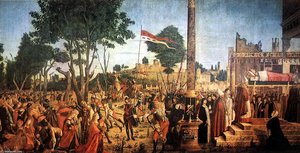
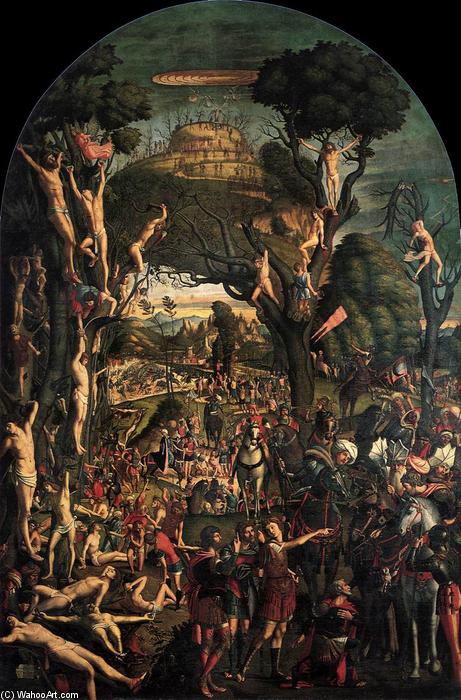
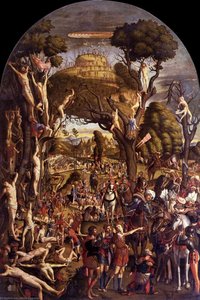
Crucifixion and Apotheosis of the Ten Thousand Martyrs


 Ver más
Reproducción al óleo hecha a mano
Óleo sobre lienzo pintado a mano en el tamaño y marco de su elección, realizado por encargo por nuestros artistas. ( Comprar impresión Comprar imagen)




P118B $10

P118H $10

P118W $10

P438Z $10

P508JH $12

P508YH $12

P805H $10

P805Z $10

P919BZ $10

P919G $10

P919XJ $10

P959ZH $10

P968JZ $12

W106C $8

W218G $10

W218JH $8

W218Y $10

W307PJ $10

W316G $10

W316PJ $8

W316Y $10

W398PJ $8

W4111J $10

W500HY $15

W500JH $15

W692G $12

W849H $8

W940BG $15

W953PJ $8




Elija entre nuestros tamaños predefinidos que respetan las proporciones originales de la obra.

Puede ingresar sus propias dimensiones para adaptarse a un marco o espacio específico. Si el tamaño seleccionado no coincide con las proporciones de la imagen original, recortaremos la obra o extenderemos la pintura con elementos adicionales pintados a mano. Se le enviará una maqueta digital para su aprobación antes de comenzar la producción.
Tenga en cuenta que la vista previa en pantalla no refleja el recorte o la extensión reales. Solo la maqueta mostrará con precisión la composición final.
Si bien existen tamaños personalizados, recomendamos seleccionar una dimensión de la lista predefinida para preservar las proporciones originales.
Tras realizar el pedido, el equipo de ArtsDot.com enviará un correo electrónico al cliente para solicitar instrucciones y proporcionarle una vista previa del boceto.
Envío a todo el mundo () en 3-4 semanas en lugar de las 5 semanas estándar. (3 septiembre). Sin comprometer la calidad.

Envío exprés gratuito a todo el mundo

Lienzo de lino de alta calidad

Seguro de envío total

Garantía de reembolso de impuestos aduaneros

Garantía de fidelidad cromática exacta

Política de devolución de 60 días (solo por defectos)

Garantía de devolución del 100% del dinero

Descuento por cantidad
 La opción de vidrio solo está disponible en tamaños inferiores a 110 cm.

Crucifixion and Apotheosis of the Ten Thousand Martyrs
Técnica de reproducción
Dimensiones de la reproducción
-


Precio total final
$ 263
A Celestial Tapestry of Faith and Martyrdom
Behold this magnificent circular composition, Crucifixion and Apotheosis of the Ten Thousand Martyrs, a breathtaking journey into the heights of spiritual ecstasy and profound human sacrifice. Dating from 1515, this work by Vittore Carpaccio captures not merely an event, but an entire cosmic drama unfolding within painted pigment. The eye is immediately drawn to the central, monumental tree—a veritable Tree of Life—whose branches serve as both a structural backbone and a narrative conduit. It is here that the artist masterfully weaves together countless figures, each seemingly suspended in a moment of eternal significance. The sheer density of life depicted, from those gathered in contemplation below to the divine radiance emanating from above, speaks to an overwhelming sense of communal devotion.
Carpaccio's Venetian Hand and Renaissance Narrative
To understand this piece is to appreciate the genius of Vittore Carpaccio, a master painter whose style, while deeply rooted in the traditions of the Venetian School, possessed a unique narrative vigor. Though his contemporaries were embracing the full sweep of High Renaissance humanism, Carpaccio maintained a distinctive quality, drawing influence from the delicate touch of Antonello da Messina and the rich storytelling inherent in early Netherlandish art. This painting exemplifies that blend: it possesses the vibrant color sensibility characteristic of Venice, yet its complex iconography demands the meticulous narrative planning associated with the grand altarpieces of the era. The circular format itself suggests an unending cycle—a divine story that circles back upon itself, forever renewing faith.
Symbolism Woven in Light and Shadow
The symbolism within this canvas is as rich as its palette. At the apex, a luminous figure, perhaps an angel or deity, holds aloft a scroll, symbolizing revealed knowledge or divine law—the ultimate source of revelation. Below, the gathering figures engage in what appears to be profound discourse, their classical drapery hinting at timeless philosophical debates that underpin religious fervor. The contrast between the earthly tones of the lower scenes and the ethereal blues and greens surrounding the celestial apex creates a palpable sense of vertical ascent. Light is not merely illumination; it is a divine force, strategically employed by Carpaccio to guide the viewer's gaze toward moments of ultimate grace and apotheosis.
An Echo for the Modern Collector
For the discerning collector or designer seeking an object that transcends mere decoration, this reproduction offers an unparalleled window into Renaissance spiritual ambition. The emotional impact of the piece is one of awe—a feeling evoked by witnessing so many lives converging toward a single, sublime truth. While its subject matter speaks to martyrdom and divine glory, its visual complexity makes it a powerful focal point for any grand hall or library. Owning a reproduction allows one to bring home not just paint on canvas, but the very spirit of Venetian artistic storytelling, inviting contemplation upon sacrifice, knowledge, and eternal life into your own space.
Obras relacionadas

Biografía del artista
Vida y Formación Temprana
Vittore Carpaccio, un destacado pintor italiano, nació en Venecia alrededor de 1465. Estudió bajo la tutela de Gentile Bellini, un renombrado artista de la escuela veneciana. Este aprendizaje sentó las bases para el futuro éxito de Carpaccio.
Estilo Artístico e Influencias
El estilo de Carpaccio se caracterizó por su naturaleza conservadora, mostrando una influencia mínima de las tendencias humanistas que transformaron la pintura del Renacimiento italiano durante su vida. Su obra fue influenciada por el estilo de Antonello da Messina y el arte netherlandish temprano. Esta mezcla única de estilos resultó en un enfoque distintivo de la pintura veneciana.
Obras Destacadas
- La Leyenda de Santa Úrsula, un ciclo de nueve pinturas, es la obra más famosa de Carpaccio. Esta serie, ahora alojada en las Gallerie dell'Accademia, muestra su maestría en la pintura narrativa.
- El retablo Gloria de Santa Úrsula (1491) demuestra la habilidad de Carpaccio para capturar la luz y el color, reminiscente del estilo de Giovanni Bellini.
- Milagro de la Reliquia de la Cruz en el Ponte di Rialto (1494) destaca la capacidad de Carpaccio para equilibrar composición y narrativa.
Carrera e Importancia Histórica
Las principales obras de Carpaccio fueron ejecutadas entre 1490 y 1519, lo que le sitúa entre los primeros maestros del Renacimiento veneciano. Su estilo orientalista, como se ve en San Jorge bautizando a los Selenitas, refleja una nueva fascinación por el Levante. La obra de Carpaccio ha sido algo pasada por alto en comparación con sus contemporáneos, como Giovanni Bellini o Giorgione. A pesar de ello, su contribución al arte veneciano es innegable y su enfoque único lo distingue dentro del panorama artístico de la época.
Referencias Adicionales
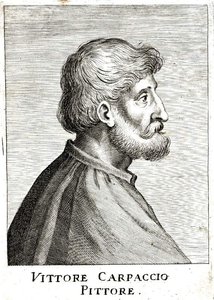
Vittore Carpaccio
1465 - 1526 , Italia
Datos clave
- Artistas Que Influyeron:
- Gentile Bellini
- Antonello da Messina
- Fecha De Muerte: 1526
- Fecha De Nacimiento: c. 1465
- Lugar De Nacimiento: Venecia, Italia
- Movimiento Artístico: Renacimiento veneciano
- Nacionalidad: Italiana
- Nombre Completo: Vittore Carpaccio
- Notable Obras:
- Leyenda de Santa Úrsula
- Cristo con los Símbolos de la Pasión
- Retrato de una dama
Artículos relacionados
Vittore Carpaccio: Venetian Renaissance Narrative & the Poetics of Detail
Explore the captivating world of Vittore Carpaccio, a master storyteller of the Venetian Renaissance. Discover his intricate details, narrative cycles like 'The Legend of St. Ursula,' and unique artistic style.

Jacopo Tintoretto: Las 25 Obras Maestras del Genio Veneciano | Arte y Decoración en ArtsDot
Descubre las 25 obras maestras de Jacopo Tintoretto, el genio veneciano del Renacimiento. Explora su arte dramático, composiciones innovadoras y paleta vibrante. Reproducciones de alta calidad en ArtsDot.com para transformar tu hogar.
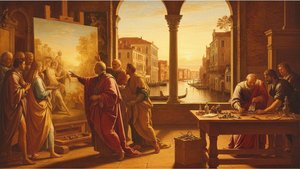
La Luz Dorada de la Innovación: Explorando el Renacimiento Veneciano (1430–1580)
Descubra la riqueza y el esplendor del Renacimiento veneciano con ArtsDot. Explore las obras maestras de Tiziano, Giorgione y Tintoretto. Análisis experto, historia detallada e información para coleccionistas.
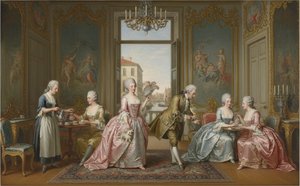
Pietro Longhi's Venetian Scenes: A Study of Rococo Society & Domestic Life
Explore the captivating world of Pietro Longhi's Venetian scenes! Discover insightful analysis of his Rococo masterpieces & social commentary on 18th-century life. Learn about this 'Venetian Hogarth' and his lasting artistic legacy.
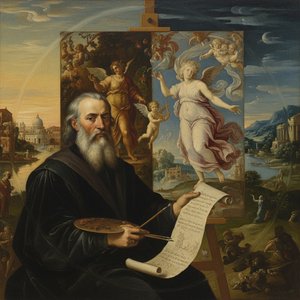
Jacopo Palma il Giovane: A Venetian Master's Poetic Evolution
Explore the captivating world of Jacopo Palma il Giovane, a pivotal Venetian Renaissance master. Discover his unique style, influenced by Titian & Tintoretto, and learn about key works perfect for discerning collectors.