

 Vista previa
 Compartir
 Compartir
 Ver detalles

 Descargar
 Ver similares
 Radiografía
 Presentación de diapositivas
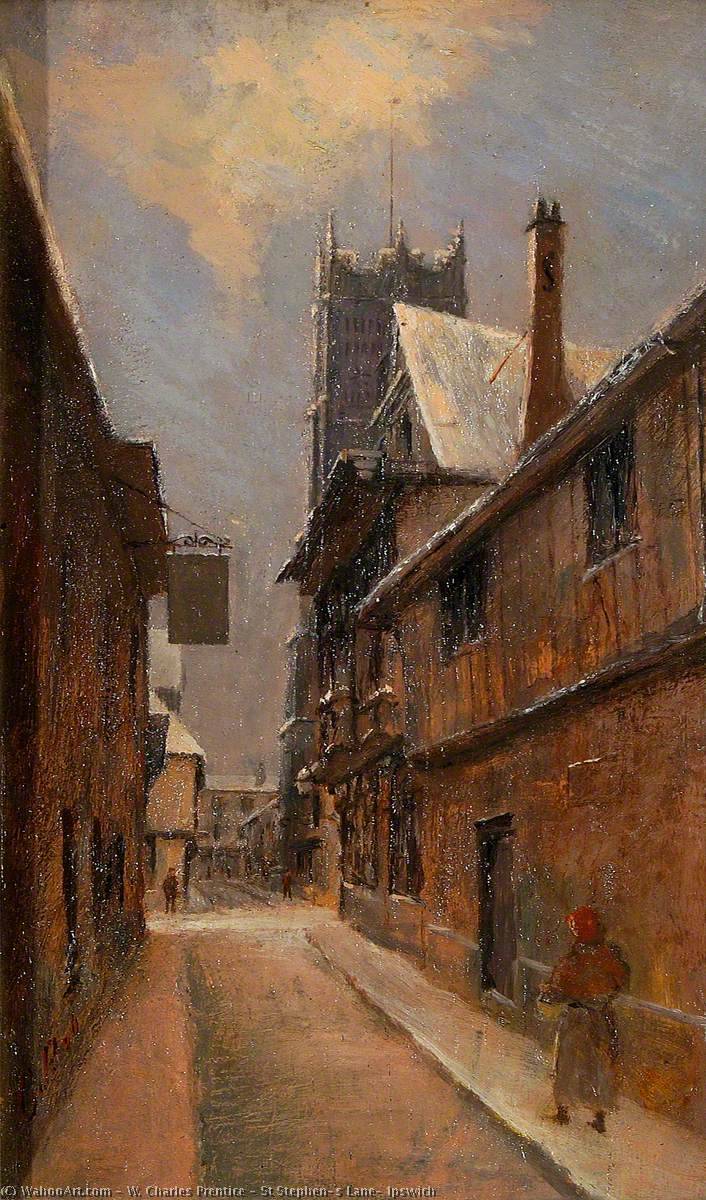
St Stephen's Lane, Ipswich
 1930
1930 26.0 x 16.0 cm
 Leer más
Adquiera una imagen digital de alta resolución y optimizada, muy superior a la vista previa en línea.
Cada archivo es preparado meticulosamente por nuestros especialistas internos mediante el uso de herramientas avanzadas y un experto retoque manual. Nos aseguramos de que cada imagen posea una claridad excepcional, una precisión cromática impecable y un detalle minucioso.
El archivo final se entrega por correo electrónico en un plazo de 72 horas, optimizado para su uso inmediato en entornos profesionales, editoriales y de impresión. Esta es la misma calidad en la que confían los estudios de diseño, las editoriales y las galerías de primer nivel.
Imagen Digital
Descarga un archivo de alta resolución para exhibición personal, impresión y proyectos creativos. ( Pedir impresión Encargar reproducción pintada a mano)
Incluido en cada compra de imágenes digitales
Entrega digital experta, garantizada.
Al elegir ArtsDot.com, no solo está adquiriendo una imagen; está recibiendo una obra de arte digital mejorada profesionalmente, elaborada con precisión y respaldada por una garantía de satisfacción. Esto es todo lo que incluye su pedido, automáticamente:

Entrega rápida por email
Recibirá su archivo de imagen digital en alta resolución por correo electrónico en un plazo de 72 horas tras realizar su pedido, listo para su uso inmediato.

Archivo digital optimizado por IA
Su obra de arte se optimiza profesionalmente mediante herramientas avanzadas de IA y edición manual, garantizando el máximo detalle, claridad y precisión cromática.

Reenvío gratuito de por vida
¿Has borrado o perdido tu archivo por error? No te preocupes: te lo volveremos a enviar en cualquier momento, sin coste adicional.

Sin gastos de importación, siempre
Disfrute de su obra de arte al instante sin aduanas, aranceles ni gastos de envío; las descargas digitales siempre están libres de impuestos.

Garantía de precisión de color
Garantizamos que su imagen digital refleje los colores originales con la mayor fidelidad posible, mediante el uso de herramientas profesionales y gestión del color.

Garantía de satisfacción de 60 días
Si no está satisfecho con su imagen digital, la revisaremos o le reembolsaremos el 100% en un plazo de 60 días, sin preguntas.

100% Garantía de devolución de dinero
¿No está satisfecho? Obtenga un reembolso completo dentro de los 60 días posteriores a la recepción de su archivo digital, sin necesidad de explicaciones.

Descuentos por volumen
Compra 3 imágenes, ahorra 10% - Compra 5, ahorra 15% - Compra 10+, ahorra 20%. Ideal para proyectos creativos, galerías y agencias.
Obras relacionadas










Biografía del artista
William Charles Prentice: A Suffolk Visionary
The world of Victorian and Edwardian art often focuses on grand narratives – the sweep of empire, the rise of industrialism, the burgeoning middle class. Yet, within these broad movements, a wealth of quietly observant artists captured the essence of everyday life, transforming familiar scenes into works imbued with subtle beauty and profound detail. William Charles Prentice (1858-1933) stands as one such figure, a master of Suffolk landscapes and Ipswich interiors whose meticulous realism and keen eye for light and atmosphere have earned him a deserved place in British art history. Born in Bromley, Middlesex, Prentice’s early life was rooted in the agricultural heartland of Stowmarket, Suffolk – a connection that profoundly shaped his artistic vision.
Prentice's formal education began at Ipswich School, laying the groundwork for his later skill in capturing the nuances of the region. He then enrolled at Oxford University, studying Classics, though he ultimately found his true calling not within the halls of academia but amidst the rolling fields and historic buildings of Suffolk. His artistic journey wasn’t immediately defined; he initially worked as a clerk before dedicating himself fully to painting. A pivotal moment arrived in 1891 when he joined the Ipswich Fine Art Club, an organization that provided him with crucial exposure and a platform for his work. This membership marked the beginning of a sustained career dedicated to documenting the beauty of his adopted home.
Prentice’s style is immediately recognizable – a detailed, almost photographic realism tempered by a deep understanding of color and light. He wasn't interested in romanticizing or idealizing; instead, he presented scenes with an unflinching honesty, capturing the textures of brickwork, the dampness of marshes, and the subtle shifts in weather. His subjects ranged from grand vistas of Suffolk’s countryside to intimate glimpses into Ipswich’s streets and buildings – the Buttermarket, St Stephen's Lane, and even the interior of local pubs. He frequently depicted working-class life, portraying laborers, merchants, and farmers with a respect for their dignity and labor. His meticulous attention to detail extended beyond mere representation; he sought to convey a sense of place, capturing not just what was seen but also the feeling of being there.
The Influence of Ruskin and Turner
Prentice’s artistic sensibilities were undoubtedly shaped by two towering figures of the Victorian era: John Ruskin and J.M.W. Turner. Ruskin's theories on color, light, and the importance of representing nature truthfully profoundly influenced Prentice’s approach to painting. Ruskin advocated for a “sympathetic” observation of the natural world, urging artists to capture not just its appearance but also its underlying spirit. Turner, with his atmospheric landscapes and masterful use of light, provided a model for capturing the fleeting effects of weather and time. Prentice's paintings frequently echo these influences – the diffused light of a Suffolk evening, the shimmering reflections on a marsh, the subtle gradations of color in a field of wheat.
However, Prentice’s work wasn’t simply a slavish imitation of his predecessors. He possessed a unique sensibility and developed his own distinctive style. He was particularly adept at capturing the effects of light and shadow, creating paintings that are both luminous and atmospheric. His use of color was restrained but effective, relying on subtle shifts in tone to convey depth and mood. Furthermore, Prentice’s meticulous attention to detail – the texture of brickwork, the folds of fabric, the expressions on faces – set him apart from many of his contemporaries.
A Suffolk Portfolio
Prentice's output was remarkably consistent over a period of several decades. He exhibited regularly at the Ipswich Fine Art Club and the Norfolk & Norwich Art Circle, showcasing a diverse portfolio of landscapes and interiors. His subjects included iconic Suffolk landmarks – the Wye Valley, Woodbridge Mill, Ufford Mill – as well as more intimate scenes of everyday life in Ipswich. Notable works include ‘Old Cottages, Playford,’ ‘Evening,’ ‘On the Marshes at Homersfield,’ and a series of detailed depictions of Ipswich’s streets and buildings. His paintings offer a rich tapestry of Suffolk's visual landscape, reflecting both its natural beauty and its industrial heritage.
His later works, particularly those painted in the 1930s, reveal a deepening sense of melancholy and nostalgia. Many of his paintings depict scenes of decay and abandonment – crumbling cottages, deserted mills, and empty streets – suggesting a profound awareness of the passage of time and the loss of traditional ways of life. These later works are not merely depictions of decline; they are elegies to a disappearing world.
Legacy and Historical Significance
William Charles Prentice’s legacy extends beyond his individual paintings. He played a crucial role in documenting the visual culture of Suffolk, providing us with a valuable record of the region's landscape and its people. His meticulous realism and keen eye for detail have earned him a place among the most important artists of the Victorian era. His work is now held in collections across Britain, including the Colchester and Ipswich Museums Service, testament to his enduring appeal.
Prentice’s story also highlights the importance of regional art movements. His dedication to capturing the beauty of Suffolk helped to establish Ipswich as a center for artistic activity and contributed to the development of a distinctive regional style. He stands as a reminder that great art can be found in the most unexpected places, and that even the simplest scenes can hold profound meaning.
w. charles prentice
1858 - 1933
Datos clave
- Artistic Movement Or Style: Detailed Realism
- Artists Or Movements Influenced By This Artist: ['British Watercolor']
- Artists Who Influenced This Artist: ['Alfred Worthington']
- Date Of Birth: January 9, 1858
- Date Of Death: December 30, 1933
- Full Name: William Charles Prentice
- Nationality: British
- Notable Artworks:
- Old Cottages, Playford
- Evening
- On the Marshes at Homersfield
- Sketch on the Gipping
- Autumn Sunshine
- No.23a Tacket Street, Ipswich
- Old Town Hall Garden
- Sketch at Woodbridge
- Sketches at Ufford
- Malting Yard, Fore Street, Ipswich
- Wood Sheds, The Grove Ipswich
- View on Bungay Common
- Through the Arch, Canal de Mendfriers, Bruges
- Lower Orwell Street, Ipswich
- Pond Hall on the Orwell
- Market Place, Bungay
- Place Of Birth: Bromley, Middlesex

