 Ver en contexto
 Enviar
 Compartir
 Detalles

 Descargar
 Similares
 Radiografía
 Presentación de diapositivas
Girl at a Window, Little Rachel


 Ver más
Giclée / Impresión de arte
Impresiones giclée o en lienzo de calidad de museo con producción rápida y opciones de acabado flexibles. ( Comprar pintura hecha a mano Comprar imagen)




P118B $10

P118H $10

P118W $10

P438Z $10

P508JH $12

P508YH $12

P805H $10

P805Z $10

P919BZ $10

P919G $10

P919XJ $10

P959ZH $10

P968JZ $12

W106C $8

W218G $10

W218JH $8

W218Y $10

W307PJ $10

W316G $10

W316PJ $8

W316Y $10

W398PJ $8

W4111J $10

W500HY $15

W500JH $15

W692G $12

W849H $8

W940BG $15

W953PJ $8




Elija entre nuestros tamaños predefinidos que respetan las proporciones originales de la obra.

Puede introducir sus propias dimensiones para adaptarse a un marco o espacio específico. Si el tamaño seleccionado no coincide con las proporciones de la imagen original, recortaremos la obra de arte o extenderemos la imagen con un borde con efecto espejo o de color sólido. Se enviará una maqueta digital para su aprobación antes de que comience la producción.
Tenga en cuenta que la vista previa en pantalla no refleja el recorte o la extensión real. Solo la maqueta mostrará con precisión la composición final.
Aunque existen tamaños personalizados, recomendamos seleccionar una dimensión de la lista predefinida para preservar las proporciones originales.
Envío a todo el mundo () en 2 semanas en lugar de las 4/5 semanas estándar. (22 agosto)

Envío exprés gratuito a todo el mundo

Lienzo de lino de alta calidad

Seguro de envío total

Garantía de reembolso de impuestos aduaneros

Garantía de fidelidad cromática exacta

Política de devolución de 60 días (solo por defectos)

Garantía de devolución del 100% del dinero

Descuento por cantidad
 La opción de vidrio solo está disponible en tamaños inferiores a 110 cm.

Girl at a Window, Little Rachel
Giclée / Impresión de arte
Dimensiones de la reproducción
-


Precio total final
$ 62
Descripción de la pieza
A Moment Suspended: Contemplation at the Pane
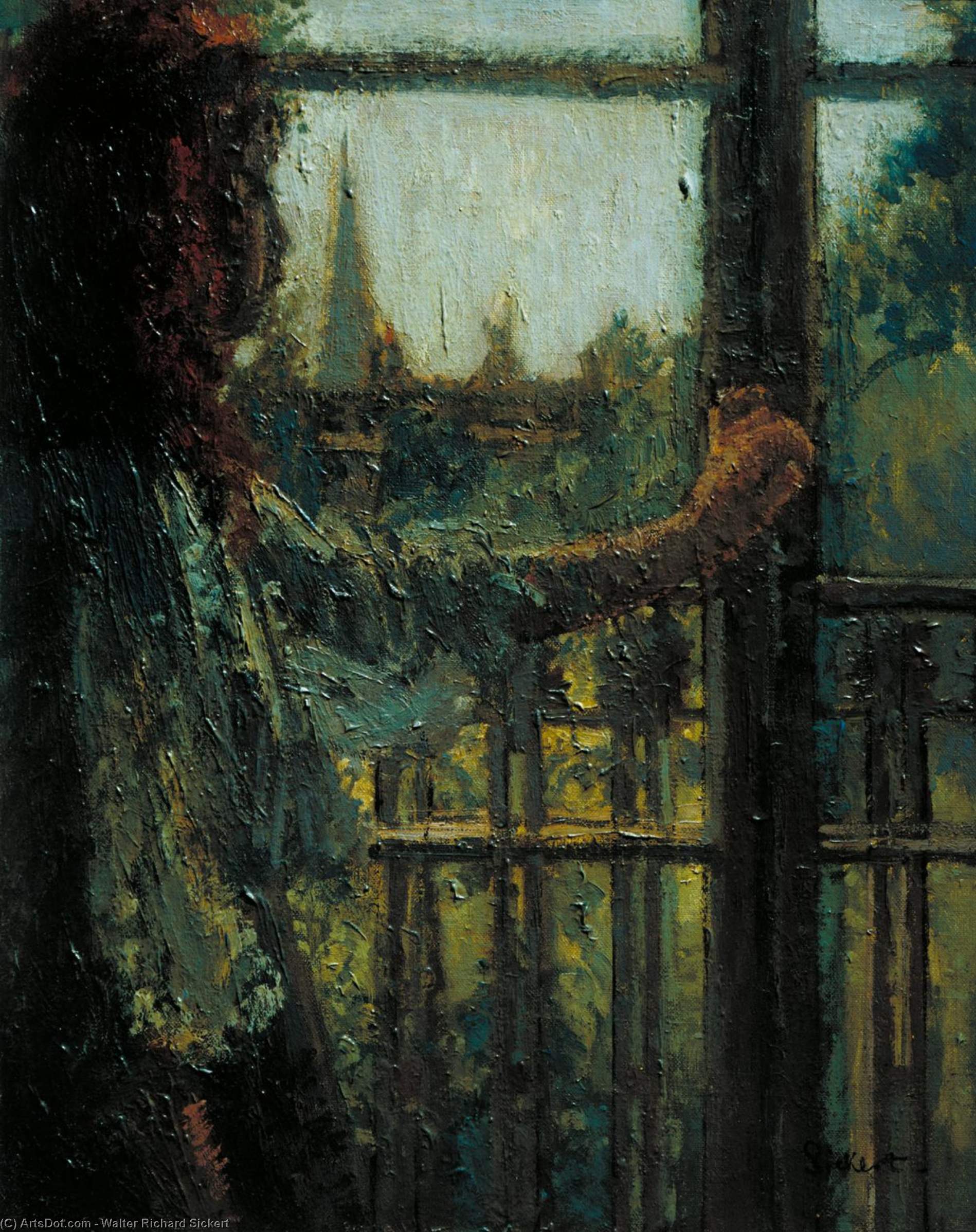
To stand before Girl at a Window, Little Rachel is to step across the threshold of time itself. Walter Richard Sickert’s masterful oil on canvas from 1907 does not merely depict a scene; it captures the exquisite, fragile breath between one thought and the next. The painting centers on a young girl positioned intimately with the window frame—a classic trope in art history, yet here rendered with an immediacy that feels startlingly modern. She is caught in a state of profound contemplation, her gaze directed outward as if fixed upon some unseen drama unfolding across the urban expanse beyond the glass. This quiet moment speaks volumes about the human condition: the necessary pause amidst the relentless rush of daily life.
The Whisper of Impressionism and Modernity
Sickert’s handling of light is nothing short of breathtaking. The soft, natural daylight filtering through the window acts as both a spotlight and a veil, bathing the scene in muted tones that speak of early morning or late afternoon introspection. His technique is deeply rooted in the spirit of Impressionism, echoing the subtle brushwork and atmospheric concerns championed by his contemporaries. Yet, Sickert never simply replicated; he imbued this style with a distinct psychological weight. The visible texture of the paint, the loose application, allows the viewer’s eye to wander, mirroring the way memory itself drifts—never perfectly sharp, but rich with suggestion and atmosphere.
Symbolism of the Threshold
The window itself functions as the painting's most potent symbol. It is a threshold, separating the contained, private world of the girl from the vast, unknowable city outside. This division invites deep symbolic reading: are we looking out at freedom, or merely observing our own confinement? The inclusion of details—the visible clocks in the background, perhaps marking time passing regardless of her stillness; the simple chair waiting patiently nearby—grounds this ethereal moment in tangible reality. These elements suggest that while she appears lost in thought, time marches on, a constant counterpoint to her suspended reverie.
Bringing Serenity Home: Reproduction for the Modern Collector
For those who seek to infuse their living space with such quiet depth and artistic resonance, acquiring a high-quality reproduction of Girl at a Window, Little Rachel is an act of curatorial poetry. Imagine this scene rendered in your own salon or study; the subtle interplay of light and shadow will transform any room into a sanctuary of contemplation. Our hand-painted reproductions strive not just to copy pigment and canvas, but to translate the very mood Sickert captured—that perfect blend of elegant simplicity and profound emotional depth. It is an artwork that does not shout for attention, but rather whispers its beauty into the quiet corners of your life.
Obras relacionadas
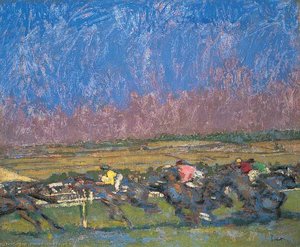
Biografía del artista
Primeros años y formación
Walter Richard Sickert, un pintor británico de origen alemán, nació el 31 de mayo de 1860 en Múnich, Reino de Baviera. Su familia se estableció en Inglaterra en 1868, tras la anexión alemana de Schleswig-Holstein. La educación temprana de Sickert tuvo lugar en la University College School y la King's College School, donde estudió hasta los 18 años.Desarrollo artístico
El viaje artístico de Sickert comenzó con una breve incursión como actor, seguida de su inscripción en la Slade School en 1881. Posteriormente, se convirtió en alumno de James Abbott McNeill Whistler, quien influyó significativamente en su obra. Sus primeras pinturas fueron pequeños estudios tonales pintados "alla prima" desde la naturaleza siguiendo el ejemplo de Whistler.Obras destacadas y controversia
Las primeras obras importantes de Sickert, que datan de finales de la década de 1880, representaban escenas en los teatros de música de Londres. Una de sus pinturas notables, Katie Lawrence at Gatti's, generó controversia debido a su representación de una conocida cantante de teatro musical, considerada "fea y vulgar" por los críticos.Asociación con el Grupo de Camden Town
Sickert fue una influencia importante en los estilos británicos de arte vanguardista del siglo XX. Se unió al New English Art Club en 1888, un grupo de artistas realistas influenciados por los franceses, y posteriormente se convirtió en miembro del Grupo de Camden Town.Legado
La obra de Sickert puede encontrarse en varios museos, incluido el Museum Kunstsalon Franke Schenk, que presenta obras desde los siglos XVI al XX. Su legado se extiende más allá de su propio arte, influyendo en los estilos británicos de arte vanguardista a mediados y finales del siglo XX.- Vea las pinturas de Sickert en ArtsDot: Walter Richard Sickert
- Descubra más sobre el Grupo de Camden Town en Wikipedia: Wyndham Lewis
- Explore la colección del Museum Kunstsalon Franke Schenk en ArtsDot: El Museo Kunstsalon Franke Schenk
- Aprenda más sobre la vida y obra de Sickert en Wikipedia: Walter Sickert
- 31 de mayo de 1860: Nacimiento en Múnich, Reino de Baviera
- 1888: Se unió al New English Art Club
- 1903-04: Desarrolló un enfoque distintivo para los conjuntos de múltiples figuras durante su último viaje de pintura a Venecia
Conclusión
El trabajo pionero de Walter Richard Sickert en el arte británico de vanguardia ha dejado una huella indeleble en el mundo del arte. Su legado continúa inspirando e influyendo en artistas, convirtiéndolo en una figura crucial en la historia del arte moderno.
Walter Richard Sickert
1860 - 1942 , Alemania
Datos clave
- Artistas Que Influyeron: ['James Abbott McNeill Whistler']
- Fecha De Fallecimiento: 22 de enero de 1942
- Fecha De Nacimiento: 31 de mayo de 1860
- Influencia Artística: Camden Town Group, Arte británico moderno
- Lugar De Nacimiento: Múnich, Alemania
- Movimiento Artístico: Postimpresionismo, Realismo
- Nacionalidad: Británico (de origen alemán)
- Nombre Completo: Walter Richard Sickert
- Obras Notables:
- Katie Lawrence en Gatti's
- Gaieté Montparnasse
Artículos relacionados
Walter Sickert: A Shadowy Realism & the Modern British Canvas
Explore the life & work of Walter Sickert, a pivotal British painter bridging Impressionism to Modernism. Discover his evocative scenes of London life, controversial legacy, and lasting influence on 20th-century art.
William Trost Richards: Luminism, Spirituality & the American Landscape Tradition
Explore the captivating landscapes of William Trost Richards, a master of Luminism associated with both the Hudson River School & American Pre-Raphaelite movements. Discover his spiritual connection to nature and lasting influence on American art.
Samuel Walters: Capturing Victorian Maritime Life with Precision & Artistry
Explore the exquisite maritime paintings of Samuel Walters (1811-1882). Discover his mastery of detail, historical scenes & influence on Victorian art. Learn about collecting his works and find high-quality reproductions at ArtsDot.
Evan Walters: A Study in Contemporary Landscape Painting & Emotional Resonance
Explore the captivating world of Evan Walters, a Welsh artist renowned for his evocative landscapes & social commentary. Discover his Impressionistic style, unique journey, and lasting impact on 20th-century art – a valuable insight for collectors.
Walter Greaves: A Study in Victorian Realism & the Social Landscape of British Art
Explore the life & work of Walter Greaves, a key Victorian realist painter influenced by Whistler. Discover his London streetscapes, portraits, and enduring legacy. Learn about art appraisal & reproduction options at ArtsDot.