

 Ver en contexto
 Enviar
 Compartir
 Detalles

 Descargar
 Similares
 Radiografía
 Presentación de diapositivas
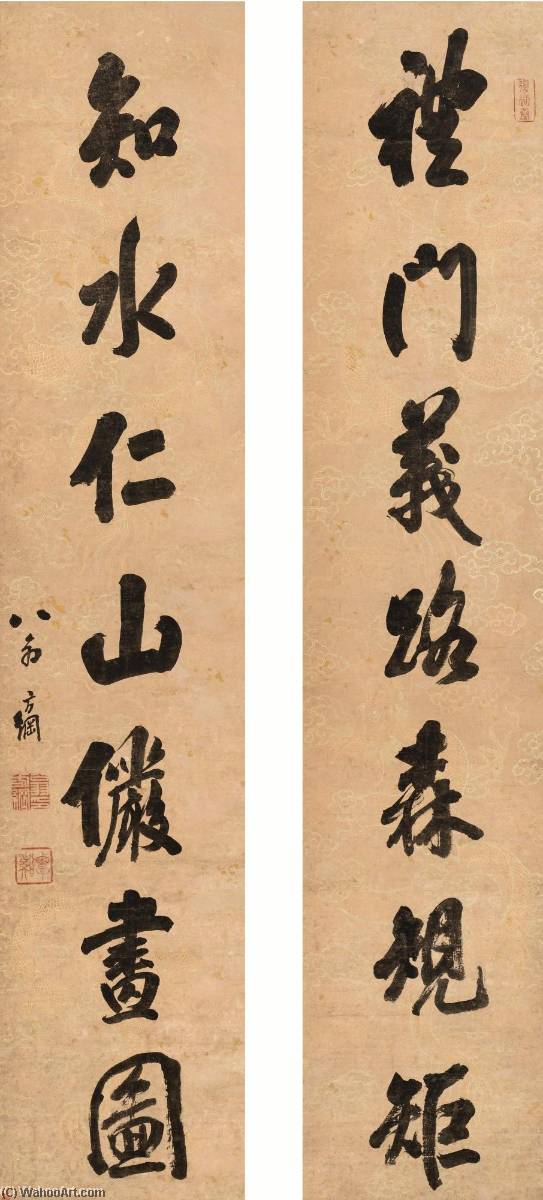
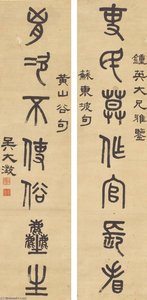
Calligraphy Couplet in Xingshu
 Chinese Calligraphy
 167.0 x 37.0 cm
 Ver más
Adquiera una imagen digital de alta resolución y optimizada, muy superior a la vista previa en línea.
Cada archivo es preparado meticulosamente por nuestros especialistas internos mediante el uso de herramientas avanzadas y un experto retoque manual. Nos aseguramos de que cada imagen posea una claridad excepcional, una precisión cromática impecable y un detalle minucioso.
El archivo final se entrega por correo electrónico en un plazo de 72 horas, optimizado para su uso inmediato en entornos profesionales, editoriales y de impresión. Esta es la misma calidad en la que confían los estudios de diseño, las editoriales y las galerías de primer nivel.
Imagen Digital
Descarga un archivo de alta resolución para exhibición personal, impresión y proyectos creativos. ( Comprar impresión Comprar pintura hecha a mano)
Incluido en cada pedido de imágenes digitales
Entrega digital experta, garantizada.
Al elegir ArtsDot.com, no solo está adquiriendo una imagen; está recibiendo una obra de arte digital mejorada profesionalmente, elaborada con precisión y respaldada por una garantía de satisfacción. Esto es todo lo que incluye su pedido, automáticamente:

Entrega rápida por email
Recibirá su archivo de imagen digital en alta resolución por correo electrónico en un plazo de 72 horas tras realizar su pedido, listo para su uso inmediato.

Archivo digital optimizado por IA
Su obra de arte se optimiza profesionalmente mediante herramientas avanzadas de IA y edición manual, garantizando el máximo detalle, claridad y precisión cromática.

Reenvío gratuito de por vida
¿Has borrado o perdido tu archivo por error? No te preocupes: te lo volveremos a enviar en cualquier momento, sin coste adicional.

Sin gastos de importación, siempre
Disfrute de su obra de arte al instante sin aduanas, aranceles ni gastos de envío; las descargas digitales siempre están libres de impuestos.

Garantía de fidelidad de color
Garantizamos que su imagen digital refleje los colores originales con la mayor fidelidad posible, mediante el uso de herramientas profesionales y gestión del color.

Garantía de satisfacción de 60 días
Si no está satisfecho con su imagen digital, la revisaremos o le reembolsaremos el 100% en un plazo de 60 días, sin preguntas.

100% Garantía de devolución de dinero
¿No está satisfecho? Obtenga un reembolso completo dentro de los 60 días posteriores a la recepción de su archivo digital, sin necesidad de explicaciones.

Descuentos por pedidos grandes
Compra 3 imágenes, ahorra 10% - Compra 5, ahorra 15% - Compra 10+, ahorra 20%. Ideal para proyectos creativos, galerías y agencias.
Obras relacionadas
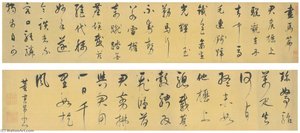
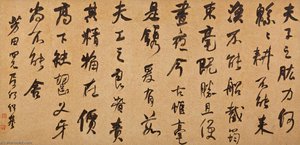
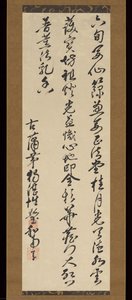

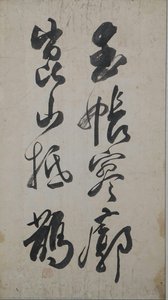
Biografía del artista
Weng Fanggang: A Cultivated Legacy in Calligraphy and Thought
Born in Beijing’s Daxing District in 1733, Weng Fanggang (翁方綱) emerged as a pivotal figure during the late Qing Dynasty – a time of profound intellectual ferment and artistic refinement. More than simply a calligrapher, he was a philosopher, literary critic, and collector deeply invested in shaping the aesthetic landscape of his era. His life’s work reveals a complex interplay between formal tradition and innovative thought, culminating in a unique approach to calligraphy and a significant contribution to the burgeoning “School of Musculature” (Jili Pai). His story is inextricably linked to the influence of Su Shi – a poet whose legacy he meticulously cultivated, transforming his admiration into a vibrant cultural phenomenon.
Early Life and Courtly Recognition
Weng’s early life was marked by diligent study and a keen awareness of literary trends. He secured the prestigious Jinshi degree in 1752, an accomplishment that opened doors to service within the Qing court. Initially employed as a junior compiler, he steadily ascended through the ranks, eventually becoming a member of the Grand Secretariat – a position reflecting his considerable intellect and administrative abilities. However, Weng’s true passion lay not in bureaucratic affairs but in the pursuit of artistic excellence, particularly in calligraphy and poetry. His translation of Tao Yuanming's “Peach Blossom Spring” (桃花源) into Manchu for the Qianlong Emperor was a watershed moment, securing his royal patronage and establishing him as a respected scholar within the imperial court.
The Philosophy of Musculature: Challenging Convention
Weng Fanggang’s most enduring legacy rests on his development of the “School of Musculature” (Jili Pai), a critical approach to poetry rooted in the concept of ‘muscles’ – referring not to physical strength, but to the rigorous intellectual discipline required to understand and appreciate classical Chinese literature. He vehemently opposed the prevailing trend of “Han Studies,” which prioritized textual analysis over the deeper philosophical underpinnings of Confucianism. Weng argued that true scholarship demanded a holistic understanding of universal principles, embodied in the teachings of Zhu Xi – emphasizing contemplation and the pursuit of ‘righteousness’ (yili) as the foundation for all knowledge. His critique of Dai Zhen's approach, which he deemed overly focused on superficial details, highlighted his commitment to a more profound engagement with literary tradition.
The Cult of Su Shi: A Personal and Collective Endeavor
Perhaps the most fascinating aspect of Weng Fanggang’s career was his deliberate cultivation of the legacy of Su Shi (蘇軾). Recognizing Su Shi's profound influence on Chinese poetry, Weng initiated an annual birthday celebration in his honor – a ritual that quickly gained momentum and became deeply ingrained within Qing cultural life. This wasn’t merely a sentimental homage; it represented a strategic effort to preserve and promote Su Shi’s artistic ideals. Weng amassed a substantial collection of Su Shi's works, including the highly prized Songyang Manuscript (宋陽帖), acquired for an extraordinary sum of 60 Jin – a testament to his dedication. He even established a room in his personal library dedicated solely to Su Shi’s poetry, further solidifying his commitment to this particular literary figure. This “cult” wasn't confined to Weng himself; it involved collaborations with Chosŏn scholars from Korea, creating a vibrant transnational community united by their shared admiration for Su Shi.
Calligraphy and Lasting Influence
Beyond his philosophical pursuits, Weng Fanggang was a highly accomplished calligrapher. He meticulously studied the techniques of ancient masters like Ouyang Xun and Yu Shinan, specializing in Lishu script – a bold, angular style that conveyed both power and elegance. His calligraphy is characterized by its precision, balance, and profound understanding of brushwork. Weng’s work continues to be admired for its technical mastery and its embodiment of the aesthetic principles he espoused in his literary criticism. Weng Fanggang died in 1818, leaving behind a complex and influential legacy – one that bridges the realms of philosophy, literature, and art, shaping the intellectual and artistic landscape of late Qing China.
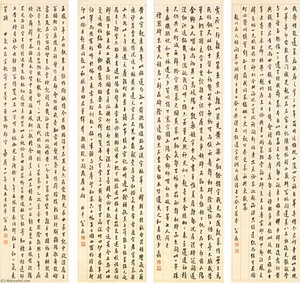
weng fanggang
1733 - 1818
Breves datos
- Artistic Movement Or Style: Xingshu & Kaishu calligraphy
- Artists Or Movements Influenced By This Artist:
- Wang Yangming
- Li Bai
- Su Shi
- Artists Who Influenced This Artist:
- Ouyang Xun
- Yu Shinan
- Date Of Birth: 1733
- Date Of Death: 1818
- Full Name: Weng Fanggang
- Nationality: Chinese
- Notable Artworks:
- Peach Blossom Spring
- Su Shi Studio Essay
- Place Of Birth: Beijing, China

