

 Ver en contexto
 Enviar
 Compartir
 Detalles

 Descargar
 Similares
 Radiografía
 Presentación de diapositivas
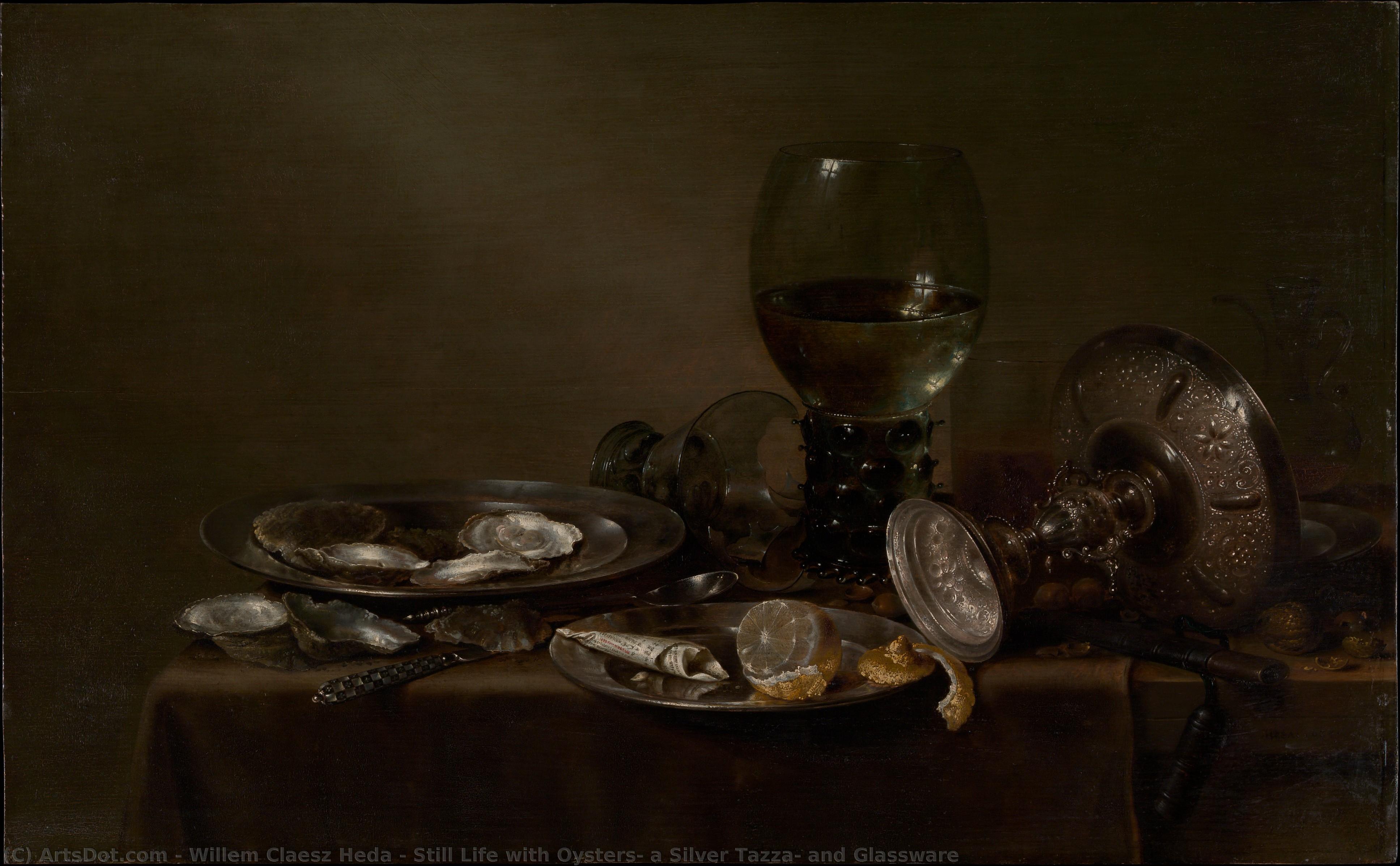
Still Life with Oysters, a Silver Tazza, and Glassware
 Oil On Canvas
- WallArt
- Dutch Golden Age
 1635
1635 50.0 x 81.0 cm
 Museo Metropolitano de Arte
 Ver más
Giclée / Impresión de arte
Impresiones giclée o en lienzo de calidad de museo con producción rápida y opciones de acabado flexibles. ( Comprar pintura hecha a mano Comprar imagen)




P118B $10

P118H $10

P118W $10

P438Z $10

P508JH $12

P508YH $12

P805H $10

P805Z $10

P919BZ $10

P919G $10

P919XJ $10

P959ZH $10

P968JZ $12

W106C $8

W218G $10

W218JH $8

W218Y $10

W307PJ $10

W316G $10

W316PJ $8

W316Y $10

W398PJ $8

W4111J $10

W500HY $15

W500JH $15

W692G $12

W849H $8

W940BG $15

W953PJ $8




Elija entre nuestros tamaños predefinidos que respetan las proporciones originales de la obra.

Puede introducir sus propias dimensiones para adaptarse a un marco o espacio específico. Si el tamaño seleccionado no coincide con las proporciones de la imagen original, recortaremos la obra de arte o extenderemos la imagen con un borde con efecto espejo o de color sólido. Se enviará una maqueta digital para su aprobación antes de que comience la producción.
Tenga en cuenta que la vista previa en pantalla no refleja el recorte o la extensión real. Solo la maqueta mostrará con precisión la composición final.
Aunque existen tamaños personalizados, recomendamos seleccionar una dimensión de la lista predefinida para preservar las proporciones originales.
Envío a todo el mundo () en 2 semanas en lugar de las 4/5 semanas estándar. (26 agosto)

Envío exprés gratuito a todo el mundo

Lienzo de lino de alta calidad

Seguro de envío total

Garantía de reembolso de impuestos aduaneros

Garantía de fidelidad cromática exacta

Política de devolución de 60 días (solo por defectos)

Garantía de devolución del 100% del dinero

Descuento por cantidad
 La opción de vidrio solo está disponible en tamaños inferiores a 110 cm.

Still Life with Oysters, a Silver Tazza, and Glassware
Giclée / Impresión de arte
Dimensiones de la reproducción
-


Precio total final
$ 62
Descripción de la pieza
A Dutch Master’s Still Life of Opulence and Decay
Willem Claesz Heda's "Still Life with Oysters, a Silver Tazza, and Glassware," painted in 1635, is more than just a depiction of a table setting; it’s a meticulously crafted meditation on wealth, mortality, and the fleeting nature of pleasure. Emerging from the vibrant world of Dutch Golden Age painting, Heda wasn't merely an observer of daily life but a deliberate architect of visual experience, employing a sophisticated technique to capture not only the appearance of objects but also their implied narrative. The scene unfolds with a deceptive serenity – a lavish display of oysters, gleaming silver tableware, and delicate glassware arranged upon a dark, richly-colored cloth. Yet, beneath this veneer of abundance lies a subtle tension, hinted at by the broken shards of glass and the discarded cone of paper, remnants of a spice holder, suggesting an interrupted feast and a poignant awareness of time’s relentless passage.
Heda's mastery lay in his ability to render surfaces with astonishing realism. He achieved this through painstaking attention to detail, utilizing layers of thin glazes of oil paint to simulate the textures of polished silver, glistening oysters, and reflective glass. The effect is remarkably convincing – one can almost feel the coolness of the oyster shells and the smooth sheen of the silverware. This meticulous approach was a hallmark of Dutch still life painting, moving beyond simple representation to create an immersive sensory experience for the viewer. His use of light, subtly directional, casts dramatic highlights on these reflective surfaces while leaving much of the composition shrouded in shadow, intensifying their brilliance and drawing attention to their intricate details.
The Symbolism of a Dutch Breakfast
“Still Life with Oysters…” is considered a prime example of Heda’s innovative “breakfast” genre – a relatively new trend within Dutch painting. Unlike earlier still lifes that focused on grand allegorical scenes or portraits, these works depicted the everyday objects associated with a morning meal. This shift reflected a growing interest in domesticity and the appreciation of material comforts during the prosperous 17th century. The oysters themselves are rich with symbolism; traditionally representing fertility, abundance, and prosperity – qualities highly valued within Dutch society at the time. The silver tazza, a shallow dish used for serving sweets, speaks to wealth and refinement, while the glass signifies clarity and beauty. However, the inclusion of broken glass and the discarded spice cone introduces an element of melancholy, subtly reminding us that even the most luxurious displays are ultimately transient.
Furthermore, the almanac fragment adds a layer of intellectual complexity. Almanacs were not merely calendars but contained practical information, including recipes, medicinal remedies, and astrological predictions. Its inclusion suggests a contemplation on human knowledge, its limitations, and the inevitable decay of all things – a concept central to the *vanitas* genre, which often incorporated similar symbolic elements. Heda’s work subtly bridges the gap between the tangible pleasures of the material world and the philosophical questions surrounding mortality and the passage of time.
A Window into 17th-Century Haarlem
Willem Claesz Heda was born in Haarlem, a thriving center of art and commerce during the Dutch Golden Age. His family’s connection to the city's architecture further cemented his position within this artistic community. Heda’s work reflects the values and sensibilities of 17th-century Haarlem – a society characterized by wealth, innovation, and a burgeoning interest in realism and detail. He was known for his ability to capture not just the appearance of objects but also their implied narrative, creating paintings that were both visually stunning and intellectually stimulating.
The painting’s composition is notable for its flattened perspective, a characteristic feature of Dutch Golden Age still lifes. Rather than striving for dramatic spatial recession, Heda focused on meticulously arranging the objects to create a sense of depth through overlapping forms and subtle variations in tone. This approach prioritized clarity and detail over illusionistic realism, allowing the viewer to fully appreciate the intricate textures and reflective surfaces of each object.
Bringing Heda’s Vision Home
A high-quality reproduction of “Still Life with Oysters, a Silver Tazza, and Glassware” offers a remarkable opportunity to experience the artistry and sophistication of Willem Claesz Heda. Whether displayed in a grand salon or a cozy study, this painting will undoubtedly serve as a captivating focal point, sparking conversation and inviting contemplation on themes of wealth, mortality, and the beauty of the everyday. Consider commissioning a hand-painted reproduction from skilled artisans to ensure that you possess an authentic piece of art history – a tangible reminder of Heda’s masterful technique and his profound understanding of the human condition.
Obras relacionadas
Biografía del artista
Un maestro de los momentos silenciosos: la vida y el arte de Willem Claesz. Heda
Willem Claeszzoon Heda, nacido en Haarlem, Países Bajos, en 1594, se erige como una figura fundamental dentro de la Edad de Oro holandesa; no por grandes narrativas históricas o alegorías dramáticas, sino por la profunda belleza que descubrió en lo cotidiano. Dedicó su vida artística casi por completo a la pintura de bodegón y, dentro de este género aparentemente limitado, Heda alcanzó un nivel extraordinario de innovación, particularmente con lo que llegó a conocerse como la "pintura de desayuno". Su obra no trata sobre el despliegje fastuoso, sino que es una sutil meditación sobre la fugacidad, la riqueza y el delicado juego entre la luz y la textura. Nacido en el seno de una familia vinculada a la comunidad artística de Haarlem —su padre era arquitecto de la ciudad y su tío Cornelis Claesz Heda también era pintor—, el camino del joven Willem hacia el arte parece natural, aunque los detalles de su formación temprana siguen siendo esquivos. No existen obras supervivientes que daten definitivamente de sus años formativos, pero los estudiosos estiman que comenzó a pintar alrededor de 1615.El amanecer de la pintura de desayuno y el realismo tonal
Las primeras pinturas conocidas de Heda, incluyendo un bodegón de tipo vanitas, ya insinúan la notable destreza que definiría su carrera. Estas obras tempranas demuestran una atención meticulosa al detalle y una paleta monocromática, lo que representaba un alejamiento de las composiciones más vibrantes típicas de los bodegones holandeses anteriores. Sin embargo, fue con sus escenas de desayuno de la década de 1620 cuando Heda comenzó verdaderamente a forjar su identidad artística única. A diferencia de sus predecesores, que a menudo presentaban una abundancia de objetos dispuestos de manera algo azarosa, las composiciones de Heda se caracterizables por un sorprendente sentido del equilibrio y el efecto espacial. Él no se limitaba a representar los objetos; los plasmaba con tal realismo —el destello del peltre, la delicada curva de una cáscara de limón, el sutil brillo de un vaso roemer— que parecían existir independientemente del lienzo. Este compromiso con la verosimilitud no era mera destreza técnica; era parte integral de los trasfondos filosóficos presentes en su obra. Los objetos elegidos —limones medio pelados, migas de pan, copas volcadas— aluden sutilmente a la naturaleza fugaz de los placeres terrenales y a la inevitabilidad de la decadencia.Reconocimiento y pertenencia al gremio
El talento de Heda no pasó desapercibido dentro del próspero entorno artístico de Haarlem. Obtuvo reconocimiento temprano por parte de figuras prominentes como Samuel Ampzing, un ministro y poeta holandés que celebraba la ciudad en verso. En su obra de 1628, Beschryvinge ende Lof der Stad Haerlem in Holland, Ampzing elogió con entusiasmo a Heda junto a Salomon de Bray y Pieter Claesz, reconociendo su excepcional habilidad en las escenas de banquetes. Este respaldo público contribuyó sin duda a la creciente reputación de Heda y facilitó su aceptación en el Gremio de San Lucas de Haarlem en 1631. Su participación activa dentro del gremio —evidenciada por su firma en un nuevo estatuto para regular sus asuntos— subraya su posición establecida como un artista respetado en la comunidad.Un legado de sutileza e influencia
A lo largo de su carrera, Heda permaneció dedicado en gran medida a la pintura de bodegón, refinando su técnica y explorando variaciones sobre el tema del desayuno. Manipuló magistralmente la luz y la sombra para crear una atmósfera de contemplación tranquila, atrayendo a los espectadores hacia encuentros íntimos con objetos cotidianos. Aunque ocasionalmente se aventuró más allá de las escenas de desayuno —pintando escenarios de banquetes más elaborados o composiciones vanitas—, su legado más perdurable reside en su capacidad para elevar lo mundano al nivel del arte. Su influencia en las generaciones posteriores de pintores de bodegones fue profunda. Artistas como Pieter de Ring y Jan Davidsz. de Heem, aunque desarrollaron sus propios estilos distintivos, demuestran claramente el impacto del realismo tonal y el equilibrio compositivo de Heda. Willem Claesz. Heda no se limitaba a pintar lo que veía; capturaba un sentimiento: una sensación de quietud, fragilidad y la belleza silenciosa inherente al paso del tiempo. Su obra continúa resonando hoy en día, ofreciendo a los espectadores un vistazo al corazón de la vida de la Edad de Oro holandesa y una reflexión atemporal sobre la naturaleza misma de la existencia.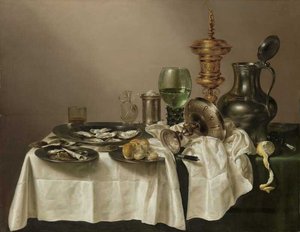
Willem Claesz Heda
1594 - 1680 , Países Bajos
Datos clave
- Artistic Movement Or Style: Siglo de Oro
- Artists Or Movements Influenced By This Artist: ['Salomon de Bray']
- Artists Who Influenced This Artist:
- Gerret Willemsz Heda
- Jan de Bray
- Date Of Birth: December 14, 1594
- Date Of Death: c. 1680
- Full Name: Willem Claesz Heda
- Nationality: Holandés
- Notable Artworks:
- Still Life with a Lobster
- Still Life with a Silver Tazza
- Still Life with a Broken Glass
- Place Of Birth: Haarlem, Netherlands
Artículos relacionados

Los 10 Maestros del Siglo de Oro Holandés: Arte, Historia y Decoración Exclusiva
Descubre los 10 imprescindibles del Siglo de Oro Holandés: Rembrandt, Vermeer y más. Explora la historia, técnica y belleza de estos lienzos clásicos. Encuentra reproducciones de arte exclusivas para decorar tu hogar en .

Reflejos de una Época Dorada: La Pintura Barroca Holandesa y la Innovación Cultural
Descubra la riqueza y el detalle de la pintura barroca holandesa del Siglo de Oro. Explore las obras maestras de Rembrandt, Vermeer y otros artistas clave. Análisis experto e historia cultural.
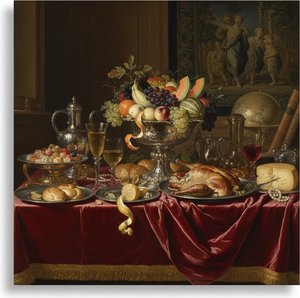
Abraham Hendricksz van Beyeren: Pioneering Dutch Still Life & the Banquet Tradition
Explore the captivating world of Dutch Golden Age still life with Abraham van Beyeren. Discover his innovative techniques, symbolic banquet scenes & lasting influence on art history. Learn about collecting these masterpieces.

La Luz y la República: Innovación Artística en el Siglo de Oro Neerlandés
Descubra la innovación artística del Siglo de Oro Neerlandés. Explore las obras maestras de Rembrandt y Vermeer, técnicas revolucionarias y el legado perdurable de este florecimiento cultural. ¡Sumérjase en la luz y la belleza!
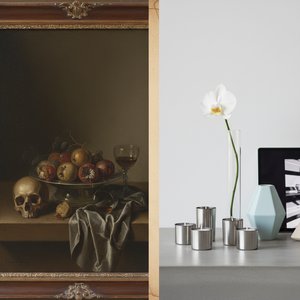
The Enduring Appeal of Still Life: A Historical & Contemporary Exploration
Explore the rich history & symbolism of still life painting with ArtsDot. Discover masterpieces from the Dutch Golden Age, learn about vanitas art, and find expert guidance for collecting timeless artworks.

