 Ver en contexto
 Enviar
 Compartir
 Detalles

 Descargar
 Similares
 Radiografía
 Presentación de diapositivas
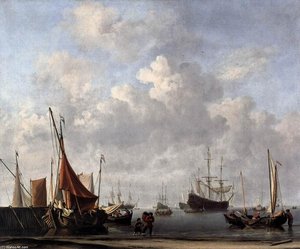
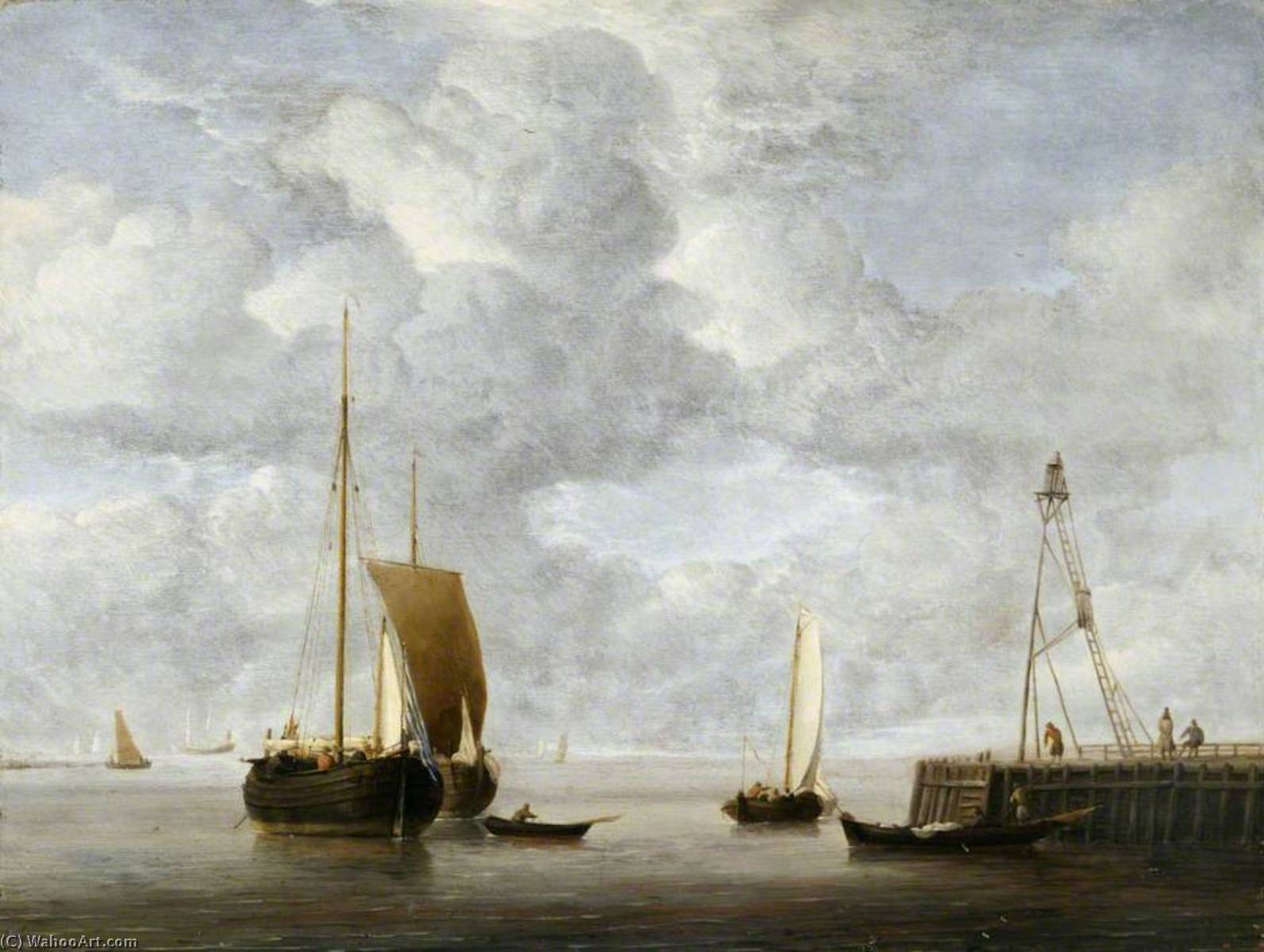
A Dutch Hoeker at Anchor near a Pier
 Acrylic On Canvas
- WallArt
- Golden Age Dutch
 1655
1655 41.0 x 55.0 cm
 English Heritage
 Ver más
Giclée / Impresión de arte
Impresiones giclée o en lienzo de calidad de museo con producción rápida y opciones de acabado flexibles. ( Comprar pintura hecha a mano Comprar imagen)




P118B $10

P118H $10

P118W $10

P438Z $10

P508JH $12

P508YH $12

P805H $10

P805Z $10

P919BZ $10

P919G $10

P919XJ $10

P959ZH $10

P968JZ $12

W106C $8

W218G $10

W218JH $8

W218Y $10

W307PJ $10

W316G $10

W316PJ $8

W316Y $10

W398PJ $8

W4111J $10

W500HY $15

W500JH $15

W692G $12

W849H $8

W940BG $15

W953PJ $8




Elija entre nuestros tamaños predefinidos que respetan las proporciones originales de la obra.

Puede introducir sus propias dimensiones para adaptarse a un marco o espacio específico. Si el tamaño seleccionado no coincide con las proporciones de la imagen original, recortaremos la obra de arte o extenderemos la imagen con un borde con efecto espejo o de color sólido. Se enviará una maqueta digital para su aprobación antes de que comience la producción.
Tenga en cuenta que la vista previa en pantalla no refleja el recorte o la extensión real. Solo la maqueta mostrará con precisión la composición final.
Aunque existen tamaños personalizados, recomendamos seleccionar una dimensión de la lista predefinida para preservar las proporciones originales.
Envío a todo el mundo () en 2 semanas en lugar de las 4/5 semanas estándar. (30 agosto)

Envío exprés gratuito a todo el mundo

Lienzo de lino de alta calidad

Seguro de envío total

Garantía de reembolso de impuestos aduaneros

Garantía de fidelidad cromática exacta

Política de devolución de 60 días (solo por defectos)

Garantía de devolución del 100% del dinero

Descuento por cantidad
 La opción de vidrio solo está disponible en tamaños inferiores a 110 cm.

A Dutch Hoeker at Anchor near a Pier
Giclée / Impresión de arte
Dimensiones de la reproducción
-


Precio total final
$ 62
A Dutch Hoeker at Anchor near a Pier – A Window into Golden Age Maritime Life
Willem van de Velde the Elder’s “A Dutch Hoeker at Anchor near a Pier,” painted circa 1655, isn't merely a seascape; it’s a meticulously crafted tableau of 17th-century Dutch life, brimming with subtle details that whisper tales of commerce, leisure, and the profound connection between humanity and the sea. This remarkable work, now available as a stunning reproduction, offers a captivating glimpse into a pivotal era of European art and maritime history.
The painting immediately draws the eye to the tranquil harbor scene – a carefully orchestrated composition dominated by the gentle sway of three elegant sailboats. These aren’t dramatic battleships or tempestuous waves; instead, they represent the heart of Dutch prosperity: their burgeoning trade network. The boats themselves are rendered with exquisite precision, showcasing Van de Velde's mastery of pen and ink technique, a hallmark of his style. Notice how each sail is delineated with painstaking detail, capturing the subtle nuances of light and shadow – a testament to the artist’s dedication to realism. The small boat near the center, occupied by a solitary figure, adds an element of intimate observation, suggesting a moment of quiet contemplation amidst the bustling activity of the harbor.
The Art of Penschilderij: Technique and Innovation
Van de Velde’s technique – known as “penschilderij” or ‘pen painting’ – was revolutionary for its time. Rather than relying solely on brushstrokes, he built up layers of incredibly fine lines with pen and ink, creating an effect remarkably similar to a detailed drawing. This method allowed him to achieve astonishing levels of detail and texture, capturing the shimmering surface of water, the billowing fabric of sails, and even the weathered wood of the docks. The result is not just a painting; it’s a meticulously rendered study, imbued with a sense of immediacy and observation. The use of black ink on panel created a durable and remarkably stable artwork, capable of enduring for centuries.
A Reflection of Dutch Golden Age Prosperity
“A Dutch Hoeker at Anchor near a Pier” is deeply rooted in the context of the Dutch Golden Age (roughly 1600-1700), a period of unprecedented economic and cultural flourishing. The Netherlands, having gained independence from Spain, became a global maritime power, dominating trade routes across the Atlantic and Asia. This era witnessed an explosion of artistic creativity, fueled by wealth generated through commerce. Van de Velde’s work reflects this prosperity – not with grand battles or heroic figures, but with the quiet dignity of everyday life centered around the sea. The presence of the hoeker (a fisherman) highlights the vital role played by ordinary people in this thriving economy.
Symbolism and Emotional Resonance
Beyond its technical brilliance, the painting is rich in symbolic meaning. The calm waters and gentle light evoke a sense of peace and tranquility – a welcome contrast to the turbulent times of the era. The solitary figure on the smaller boat could represent contemplation or perhaps simply the appreciation of beauty. More broadly, the scene embodies the Dutch spirit of pragmatism, industry, and connection with nature. It’s a celebration of a nation that had mastered its environment and built an empire upon it. The painting invites us to slow down, observe, and appreciate the simple pleasures of life – a timeless message that resonates even today.
Bringing Van de Velde's Masterpiece Home
Today, “A Dutch Hoeker at Anchor near a Pier” is available as a high-quality reproduction, allowing you to bring this exquisite work into your home or office. Whether adorning a study, a living room, or a corporate space, this painting will serve as a constant reminder of the beauty and ingenuity of the Dutch Golden Age – a testament to the enduring power of art to capture both history and emotion.
Obras relacionadas

Biografía del artista
Vida temprana y carrera
Willem van de Velde el Anciano, un renombrado pintor holandés del Siglo de Oro especializado en paisajes marinos, nació en Leiden, Países Bajos, alrededor de 1611. Su padre, Willem Willemsz van de Velde, era un patrón flamenco, lo que probablemente influyó en el interés de su hijo por el arte marítimo.Estilo artístico y técnica
El trabajo de Van de Velde se caracteriza por su precisión y atención al detalle. Fue pionero en la técnica de pintura con pluma (penschilderij), que consistía en crear obras de arte detalladas y duraderas utilizando tinta sobre panel o lienzo. Este enfoque innovador permitía que sus piezas se asemejaran a elaborados dibujos, manteniendo al mismo tiempo la durabilidad de una pintura. Su habilidad para capturar la textura del agua, el movimiento de las velas y los detalles intrincados de los barcos lo distinguieron de otros artistas de su época.Obras notables y colaboraciones
- La batalla de Texel, 1687 (óleo sobre lienzo) - Una representación dramática de una importante batalla naval.
- El incendio del Royal James en la batalla de Solebay (dibujo) - Un estudio detallado de un evento trágico durante una batalla naval.
- Colaboración con Carlos II de Inglaterra, produciendo pinturas de barcos británicos y batallas navales – Esta colaboración real le proporcionó acceso a información privilegiada sobre los buques de la marina inglesa, lo que enriqueció sus representaciones.
Influencias y desarrollo
Van de Velde se benefició de una rica tradición artística holandesa centrada en el retrato marítimo. Aunque su padre influyó inicialmente en su interés por el mar, desarrolló un estilo único que trascendía las convenciones existentes. Su técnica de pintura con pluma le permitió crear obras de arte increíblemente detalladas y duraderas, lo que era particularmente valioso para documentar eventos navales importantes. Su trabajo evolucionó desde representaciones más simples a escenas complejas y dinámicas que capturaban la emoción y el caos de la batalla naval.Legado e importancia histórica
Willem van de Velde el Anciano dejó un legado duradero en la pintura paisajista holandesa del Siglo de Oro. Sus técnicas innovadoras, su atención al detalle y sus colaboraciones con figuras prominentes han consolidado su lugar en la historia del arte. Sus obras son valiosas no solo por su belleza artística sino también como documentos históricos que ofrecen información sobre los barcos, las tácticas navales y la vida marítima de su época. El Museo Universiteitsbibliotheek (Leiden, Países Bajos) - una guía completa en ArtsDot.com proporciona más información sobre el contexto cultural del trabajo de Van de Velde.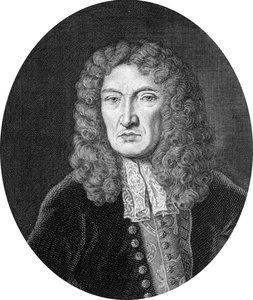
Willem van de Velde el Anciano
1611 - 1693 , Países Bajos
Datos clave
- Fechas Importantes: {'Fallecimiento': '1693', 'Nacimiento': 'c. 1611'}
- Lugar De Nacimiento: Leiden, Países Bajos
- Movimiento Artístico O Estilo: Pintura marina del Siglo de Oro Neerlandés
- Nacionalidad: Neerlandés
- Nombre Completo: Willem van de Velde el Anciano
- Obras Notables:
- La batalla de Texel (1687)
- El incendio del Royal James
- Embarque del rey Carlos II
Artículos relacionados
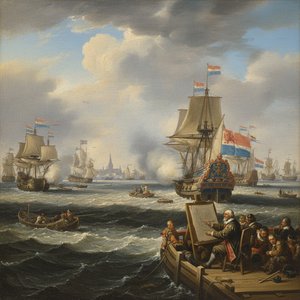
Willem van de Velde the Elder: Master of Maritime Painting & Chronicler of the Dutch Golden Age
Discover the captivating maritime paintings of Willem van de Velde the Elder, a master chronicler of the Dutch Golden Age. Explore his unparalleled realism and lasting influence on naval art history.

Goya: Las 25 Obras Maestras del Genio Español | Reproducciones de Arte en ArtsDot
Descubre las 25 obras maestras de Goya, el genio español. Explora retratos icónicos, 'Los Caprichos' y 'Las Pinturas Negras'. Reproducciones de arte en lienzo de alta calidad para decorar tu hogar con estilo. ¡Encuentra tu obra favorita en ArtsDot.com!

Rembrandt van Rijn: Las 25 Obras Maestras que Definen un Genio | Arte, Historia y Decoración
Descubre las 25 obras maestras de Rembrandt van Rijn, el genio del barroco holandés. Explora su historia, técnica y simbolismo en retratos icónicos como 'La Ronda Nocturna'. Encuentra reproducciones de arte exclusivas para decorar tu hogar con ArtsDot.com.
The Allure of the Horizon: A Comprehensive Exploration of Seascape Art Through History & Emotion
Explore the captivating world of seascape art! Discover its history, key artists & movements – from Dutch Masters to Impressionism. Expert insights for collectors and enthusiasts at ArtsDot.
Jan van Goyen: Master of Dutch Landscape & Atmospheric Perspective
Discover Jan van Goyen, the master of Dutch landscape painting. Explore his subtle technique, atmospheric realism & lasting influence on art history. Learn about this 17th-century pioneer at ArtsDot.