

 Ver en contexto
 Enviar
 Compartir
 Detalles

 Descargar
 Similares
 Radiografía
 Presentación de diapositivas
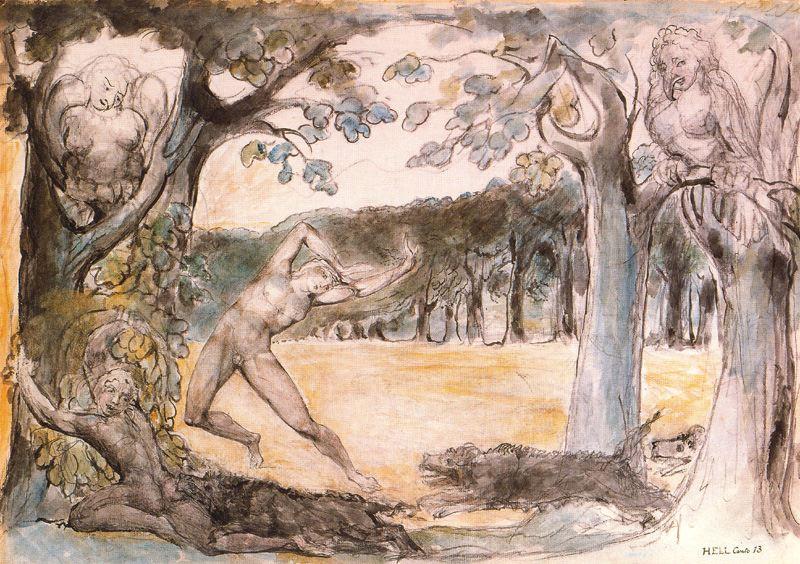
Greyhounds of hell chasing the destroyers of their own property

 Ver más
Adquiera una imagen digital de alta resolución y optimizada, muy superior a la vista previa en línea.
Cada archivo es preparado meticulosamente por nuestros especialistas internos mediante el uso de herramientas avanzadas y un experto retoque manual. Nos aseguramos de que cada imagen posea una claridad excepcional, una precisión cromática impecable y un detalle minucioso.
El archivo final se entrega por correo electrónico en un plazo de 72 horas, optimizado para su uso inmediato en entornos profesionales, editoriales y de impresión. Esta es la misma calidad en la que confían los estudios de diseño, las editoriales y las galerías de primer nivel.
Imagen Digital
Descarga un archivo de alta resolución para exhibición personal, impresión y proyectos creativos. ( Comprar impresión Comprar pintura hecha a mano)
Incluido en cada pedido de imágenes digitales
Entrega digital experta, garantizada.
Al elegir ArtsDot.com, no solo está adquiriendo una imagen; está recibiendo una obra de arte digital mejorada profesionalmente, elaborada con precisión y respaldada por una garantía de satisfacción. Esto es todo lo que incluye su pedido, automáticamente:

Entrega rápida por email
Recibirá su archivo de imagen digital en alta resolución por correo electrónico en un plazo de 72 horas tras realizar su pedido, listo para su uso inmediato.

Archivo digital optimizado por IA
Su obra de arte se optimiza profesionalmente mediante herramientas avanzadas de IA y edición manual, garantizando el máximo detalle, claridad y precisión cromática.

Reenvío gratuito de por vida
¿Has borrado o perdido tu archivo por error? No te preocupes: te lo volveremos a enviar en cualquier momento, sin coste adicional.

Sin gastos de importación, siempre
Disfrute de su obra de arte al instante sin aduanas, aranceles ni gastos de envío; las descargas digitales siempre están libres de impuestos.

Garantía de fidelidad de color
Garantizamos que su imagen digital refleje los colores originales con la mayor fidelidad posible, mediante el uso de herramientas profesionales y gestión del color.

Garantía de satisfacción de 60 días
Si no está satisfecho con su imagen digital, la revisaremos o le reembolsaremos el 100% en un plazo de 60 días, sin preguntas.

100% Garantía de devolución de dinero
¿No está satisfecho? Obtenga un reembolso completo dentro de los 60 días posteriores a la recepción de su archivo digital, sin necesidad de explicaciones.

Descuentos por pedidos grandes
Compra 3 imágenes, ahorra 10% - Compra 5, ahorra 15% - Compra 10+, ahorra 20%. Ideal para proyectos creativos, galerías y agencias.
Descripción del coleccionable
William Blake’s “Greyhounds of Hell Chasing the Destroyers of Their Own Property”: A Symphony of Visionary Terror
The painting "Greyhounds of Hell Chasing the Destroyers of Their Own Property," created by William Blake in 1814-1815, stands as a cornerstone of Romantic art and poetry—a testament to Blake’s unparalleled ability to fuse psychological depth with fantastical imagery. More than just a depiction of animals battling figures, it embodies a profound exploration of human consciousness confronting its own destructive impulses, rendered with breathtaking skill and imbued with layers of symbolic meaning that continue to fascinate scholars and artists alike.Style and Technique: The Blakean Vision
Blake’s artistic style is instantly recognizable—characterized by bold lines, vibrant colors (though often muted in print), and a distinctive flattened perspective reminiscent of illuminated manuscripts. He eschewed academic conventions, prioritizing emotional expression over realistic representation. This approach aligns perfectly with the Romantic ethos of rejecting rationalism in favor of intuition and imagination. Blake’s meticulous engraving technique—developed during his apprenticeship with James Basire—allowed him to achieve remarkable detail while maintaining a stylized aesthetic. The process involved transferring ink from etched copper plates onto paper, resulting in prints that possessed both textural richness and luminous tonal qualities. This painstaking method ensured that the visual impact of his compositions resonated powerfully with viewers.Historical Context: Industrial England and Spiritual Awakening
Blake’s work emerged during a period of intense social and intellectual ferment—the Industrial Revolution reshaping Britain's landscape and economy while simultaneously fueling anxieties about moral decay and spiritual emptiness. Blake himself wrestled with profound religious doubts, yet he remained steadfast in his belief that art could serve as a conduit for accessing transcendent truths. “Greyhounds of Hell” reflects this preoccupation with confronting darkness within oneself—a response to the perceived corruption of Victorian society and a yearning for spiritual renewal. The painting’s imagery draws upon biblical symbolism—particularly references to hounds representing divine justice and figures embodying destructive forces—to convey a message of moral reckoning.Symbolism: Decoding Blake's Complex Language
The painting is replete with symbolic elements that demand careful interpretation. The central female figure, naked and outstretched, represents innocence corrupted by experience—a motif prevalent throughout Blake’s oeuvre. Surrounding her are trees symbolizing life and regeneration, juxtaposed against the menacing hounds pursuing figures representing societal ruin. Birds circling overhead signify divine providence, offering a glimmer of hope amidst the pervasive terror. Each element contributes to a larger narrative about the battle between good and evil—a struggle waged not only externally but also within the human psyche. Blake’s use of color is particularly significant; muted hues convey a sense of melancholy and decay, reinforcing the painting's overarching theme of spiritual crisis.Emotional Impact: Confronting Inner Demons
“Greyhounds of Hell” compels viewers to confront uncomfortable truths about their own vulnerabilities—to acknowledge the capacity for destructive behavior while simultaneously recognizing the possibility of redemption. The painting’s unsettling atmosphere—characterized by dramatic lighting and distorted perspectives—creates a visceral experience that transcends mere visual observation. It taps into primal fears associated with mortality, loss, and transgression. Yet, beneath the surface of terror lies an invitation to introspection—a challenge to examine one's conscience and strive for moral integrity. Blake’s masterpiece remains a powerful reminder that true beauty resides not in idealized representations but in unflinching honesty about the human condition.Obras relacionadas
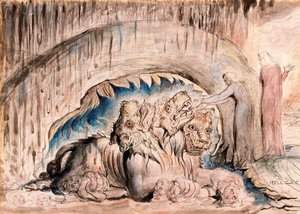
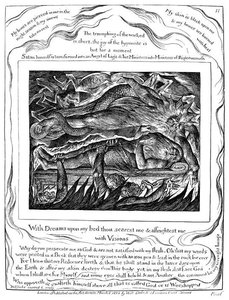
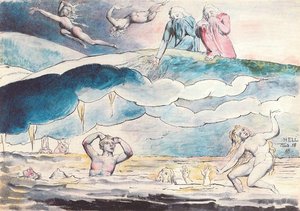
Biografía del artista
una vida marcada por un espíritu creativo
william blake, un artista, poeta e grabador visionario, dejó una marca indeleble en el mundo del arte. Nacido en Londres el 28 de noviembre de 1757 y fallecido el 12 de agosto de 1827, la vida de Blake fue un testimonio de su profundo espíritu creativo.vida temprana e influencias
Los primeros años de Blake estuvieron marcados por una profunda conexión con las artes. Su padre, william blake sr., un hosier, y su madre, catherine wright, influyeron en sus inclinaciones espirituales y artísticas. Esto llevó a su aprendizaje bajo la tutela de francisco bartolozzi, un grabador.evolución artística y obras notables
El viaje artístico de Blake abarcó diversos medios, incluyendo la pintura, la poesía y la grabado. Algunas de sus obras más notables incluyen:- the tyger (1795) - una obra maestra de la literatura romántica, que muestra la mezcla única de Blake entre lo místico y lo real.
- the sickle (1803) - un ejemplo conmovedor de su destreza en el grabado, que refleja su profunda conexión con la naturaleza.
- the ghost of a flea (c. 1819–1820) - un testimonio del enfoque innovador de Blake en el arte, que difumina las líneas entre la realidad y la fantasía.
museos que exhiben obras de Blake
- blake museum, reino unido - un destino imprescindible para cualquier entusiasta de Blake, que alberga una extensa colección de sus obras de arte. [https://ArtsDot.com/@/william-blake](https://ArtsDot.com/@/william-blake)
- fulham public library, reino unido - aunque no es un museo dedicado exclusivamente a Blake, presenta varias de sus obras notables, ofreciendo una perspectiva única del arte británico. [https://ArtsDot.com/@@/a@d3bma9-discovering-the-artworks-of-fulham-public-library-united-kingdom](https://ArtsDot.com/@@/a@d3bma9-discovering-the-artworks-of-fulham-public-library-united-kingdom)
legado e impacto
La influencia de Blake en el arte británico es innegable. Su mezcla única de lo místico, lo profético y lo imaginativo ha inspirado a generaciones de artistas. Como precursor del movimiento romántico, la obra de Blake continúa desafiando cualquier categorización fácil, convirtiéndolo en una piedra angular de la literatura y el arte británicos.lecturas adicionales
Para más información sobre William Blake y sus obras, explore: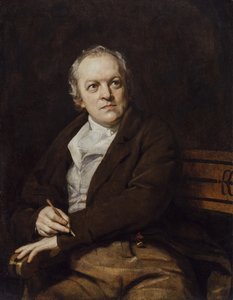
William Blake
1757 - 1827 , Reino Unido
Breves datos
- Artistas Influenciados:
- Pre-Rafaelitas
- Simbolismo
- Modernismo
- Artistas Que Influyeron:
- Raphael
- Miguel Ángel
- Fecha De Muerte: 12 de agosto de 1827
- Fecha De Nacimiento: 28 de noviembre de 1757
- Lugar De Nacimiento: Londres, Reino Unido
- Movimiento Artístico: Romanticismo
- Nacionalidad: Británico
- Nombre Completo: William Blake
- Obras Notables:
- El Tigre (1795)
- La Segadora (1803)
- El Fantasma de una Pulga
- Canciones de Inocencia
- Jerusalén (1804-1820)

