

 Ver en contexto
 Enviar
 Compartir
 Detalles

 Descargar
 Similares
 Radiografía
 Presentación de diapositivas
L'Allegro
 Oil On Canvas
- WallArt
- Romanticism
 1848
1848- 19th Century
 97.0 x 71.0 cm
 Colección Real
 Ver más
Reproducción al óleo hecha a mano
Óleo sobre lienzo pintado a mano en el tamaño y marco de su elección, realizado por encargo por nuestros artistas. ( Comprar impresión Comprar imagen)




P118B $10

P118H $10

P118W $10

P438Z $10

P508JH $12

P508YH $12

P805H $10

P805Z $10

P919BZ $10

P919G $10

P919XJ $10

P959ZH $10

P968JZ $12

W106C $8

W218G $10

W218JH $8

W218Y $10

W307PJ $10

W316G $10

W316PJ $8

W316Y $10

W398PJ $8

W4111J $10

W500HY $15

W500JH $15

W692G $12

W849H $8

W940BG $15

W953PJ $8




Elija entre nuestros tamaños predefinidos que respetan las proporciones originales de la obra.

Puede ingresar sus propias dimensiones para adaptarse a un marco o espacio específico. Si el tamaño seleccionado no coincide con las proporciones de la imagen original, recortaremos la obra o extenderemos la pintura con elementos adicionales pintados a mano. Se le enviará una maqueta digital para su aprobación antes de comenzar la producción.
Tenga en cuenta que la vista previa en pantalla no refleja el recorte o la extensión reales. Solo la maqueta mostrará con precisión la composición final.
Si bien existen tamaños personalizados, recomendamos seleccionar una dimensión de la lista predefinida para preservar las proporciones originales.
Tras realizar el pedido, el equipo de ArtsDot.com enviará un correo electrónico al cliente para solicitar instrucciones y proporcionarle una vista previa del boceto.
Envío a todo el mundo () en 3-4 semanas en lugar de las 5 semanas estándar. (6 septiembre). Sin comprometer la calidad.

Envío exprés gratuito a todo el mundo

Lienzo de lino de alta calidad

Seguro de envío total

Garantía de reembolso de impuestos aduaneros

Garantía de fidelidad cromática exacta

Política de devolución de 100 días (solo por defectos)

Garantía de devolución del 100% del dinero

Descuento por cantidad
 La opción de vidrio solo está disponible en tamaños inferiores a 110 cm.

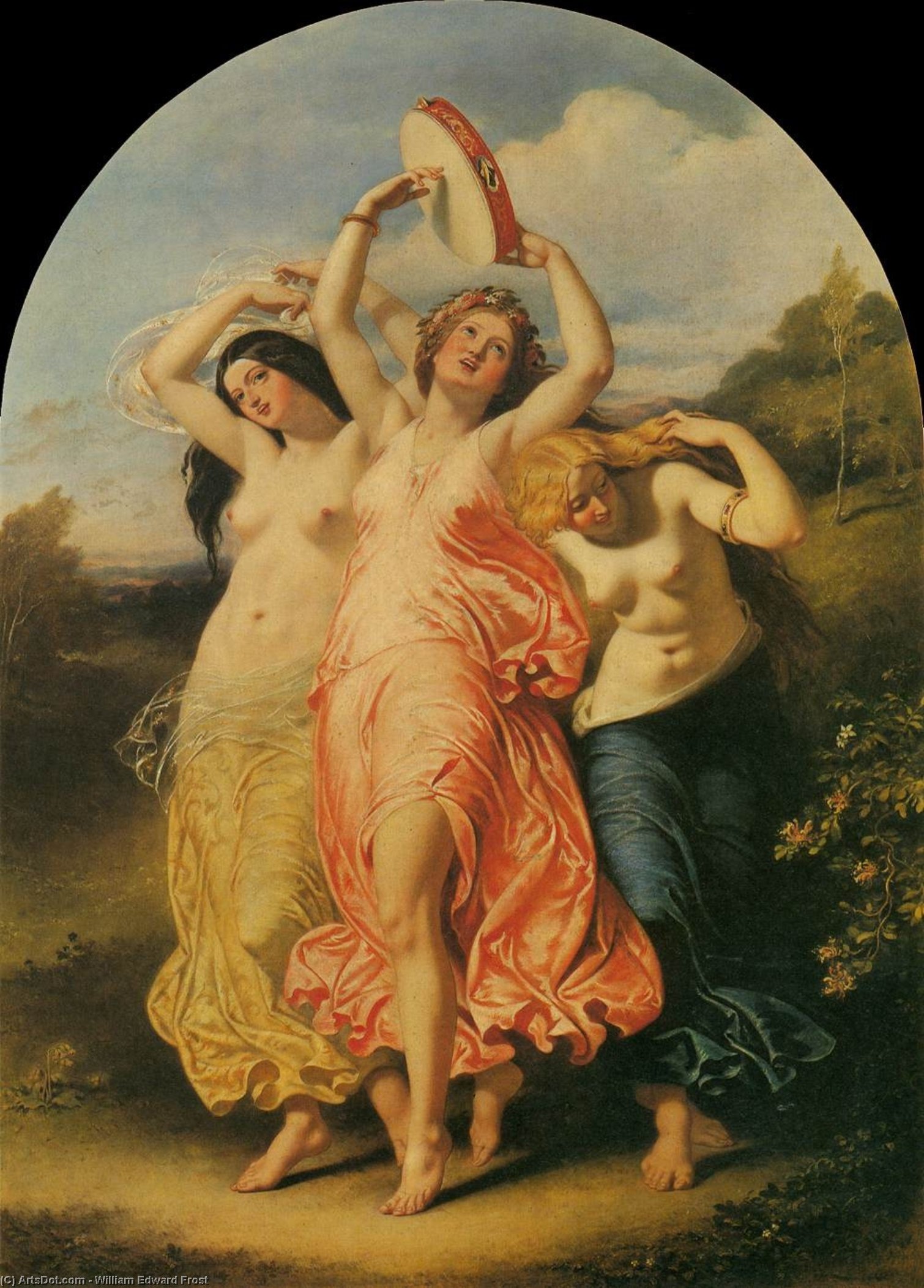
L'Allegro
Técnica de reproducción
Dimensiones de la reproducción
-


Precio total final
$ 313
A Symphony of Joy: The Radiant World of L'Allegro
In the golden light of a mid-Victorian afternoon, William Edward Frost invites us into a realm where time seems to suspend itself in a moment of pure, unadulterated bliss. L'Allegro is not merely a painting; it is an evocative escape into a pastoral dreamscape, capturing the essence of celebration and the timeless beauty of the human form. As three nude women engage in a rhythmic, joyful dance, the viewer is drawn into a scene that breathes with life and vitality. The composition, masterfully arranged in a pyramidal structure, directs the eye toward the central figure, whose movement serves as the heartbeat of the piece. Set against a backdrop of soft, undulating hills and a hazy, atmospheric horizon, the artwork evokes a sense of eternal summer, making it an exquisite centerpiece for any collection seeking to infuse a space with warmth and classical elegance.
The technical mastery displayed in this work reflects Frost’s profound command over the Romantic and Neoclassical traditions. Utilizing oil on canvas, the artist employs a meticulous layering technique that lends a luminous, almost ethereal glow to the skin tones of the dancers. The lighting is nothing short of dramatic; an unseen light source from the upper left casts brilliant highlights across the curves of the figures, creating deep, velvety shadows that lend a sculptural weight to their forms. This interplay of light and shadow—the chiaroscuro effect—enhances the three-dimensional presence of the subjects, making them appear to emerge from the canvas itself. The color palette is a rich tapestry of warm ochres, terracottas, and golds, which provides a stunning contrast to the cool, receding blues and greens of the distant landscape, creating a profound sense of depth and atmospheric perspective.
Symbolism and the Spirit of the Victorian Era
Beyond its aesthetic splendor, L'Allegro carries deep symbolic resonance. The title itself, suggesting a state of "merriment" or "mirth," sets the stage for an exploration of themes involving fertility, nature, and the celebration of life. The presence of the tambourine held by one of the women serves as a subtle nod to ritualistic music and the ancient connection between dance and communal joy. In an era often characterized by rigid social decorum and increasing Victorian prudery, Frost’s decision to depict the female nude with such grace and idealized beauty was both a daring artistic statement and a profound tribute to the natural world. He captures a sense of innocence and freedom that transcends his historical moment.
For the discerning collector or interior designer, this reproduction offers more than just visual appeal; it offers an emotional atmosphere. The flowing lines of the drapery and the organic shapes of the landscape work in harmony to create a sense of tranquility and movement. Whether placed in a grand salon to serve as a conversation piece or in a quiet study to provide a window into a romanticized past, L'Allegro brings with it an aura of sophisticated charm. It is a piece that celebrates the triumph of light over shadow and the enduring power of beauty to inspire the human spirit.
Obras relacionadas
Biografía del artista
A Pioneer of the Victorian Nude: The Life and Art of William Edward Frost
William Edward Frost, a name perhaps less immediately recognizable than some of his contemporaries, occupies a fascinatingly unique position within the landscape of 19th-century British art. Born in the United Kingdom in 1810, Frost distinguished himself as one of the very few English artists during the mid-Victorian period to dedicate a significant portion of his oeuvre to the portrayal of the female nude – a daring choice given the era’s prevailing social and moral climate. His career unfolded against a backdrop of increasing prudery, yet he managed not only to navigate these sensitivities but also to achieve considerable success and recognition for his work.Early Training and Artistic Development
Frost's artistic journey began with formal education at the schools of the Royal Academy in 1829. This foundational training provided him with a solid grounding in academic principles, initially directing his talents towards portraiture. He quickly established himself as a capable portrait painter, but it wasn’t long before he broadened his scope to encompass historical and mythological subjects. This shift proved pivotal, leading him into the captivating realm of fairy painting – a genre that resonated deeply with Victorian sensibilities, offering an avenue for imaginative storytelling and often veiled allegorical commentary. The year 1839 marked a significant milestone when Frost was awarded the Royal Academy’s gold medal for his ambitious work, Prometheus Bound. This achievement signaled his growing mastery of composition and narrative, demonstrating a clear understanding of classical themes and their dramatic potential. Further recognition followed in 1843 with a prize-winning entry at Westminster Hall competition for Una Alarmed by Fauns, a scene drawn from Edmund Spenser’s epic poem, The Faerie Queene. This work showcased his ability to capture moments of delicate tension and ethereal beauty.Following in Etty's Footsteps: A Unique Victorian Sensibility
Frost is widely acknowledged as a follower of William Etty, the preeminent British painter of nudes in the first half of the 19th century. However, while deeply influenced by Etty’s technical prowess and anatomical precision, Frost developed his own distinctive style. Etty's figures often possessed a robust physicality, reflecting a fascination with the power and sensuality of the human form. In contrast, Frost’s nudes are characterized by a more refined and jewel-like quality. His young models exude a pert, self-conscious charm – an intriguing blend of vulnerability and awareness that arguably makes them *more* captivating than their predecessors. This subtle titillation, carefully balanced with artistic grace, proved remarkably popular amongst Victorian audiences who were simultaneously drawn to and repelled by the depiction of the nude form.Recognition and Legacy
Frost’s ascent within the art world was steady and well-deserved. He was elected an associate member of the Royal Academy in 1846, a testament to his growing reputation amongst his peers. This culminated in his full membership in 1870 – a prestigious honor that solidified his position as a leading figure in British art. Despite the societal constraints of the Victorian era, Frost’s career was financially successful, indicating a strong demand for his work. His paintings were not merely tolerated; they were actively sought after by collectors who appreciated their aesthetic beauty and skillful execution. While he may not be as widely celebrated today as some of his more overtly dramatic contemporaries, William Edward Frost remains an important figure in the history of British art – a pioneer who dared to explore the human form with sensitivity and grace, leaving behind a legacy of captivating nude portraits that continue to intrigue and delight.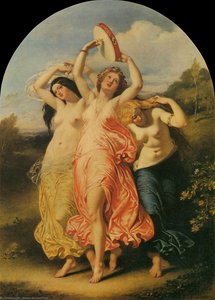
william edward frost
1810 - 1877 , United Kingdom
Datos clave
- Artistic Movement Or Style: Victorian Art
- Artists Or Movements Influenced By This Artist: ['Romanticism']
- Artists Who Influenced This Artist: ['William Etty']
- Date Of Birth: 1810
- Date Of Death: 1877
- Full Name: William Edward Frost
- Nationality: British
- Notable Artworks:
- Prometheus Bound
- Una Alarmed Fauns
- Place Of Birth: United Kingdom
Artículos relacionados

Paisajes Románticos: 10 Obras Maestras que Definieron un Movimiento Artístico
Descubre los 10 paisajes románticos más influyentes de artistas como Caspar David Friedrich y Turner. Explora la belleza, el simbolismo y las técnicas del movimiento romántico. Reproducciones de arte exclusivas en ArtsDot.com.
Idyllic Visions: Exploring the Pastoral Scene in Art History – From Arcadia to Modern Interpretations
Explore the captivating history of pastoral art from classical Arcadia to modern masterpieces. Discover key artists like Millet & Cole at ArtsDot. Find serene landscape paintings for your home.
Idyllic Visions: Exploring the Pastoral Tradition in Western Art – Themes, Techniques & Enduring Appeal
Explore the rich history of pastoral art from classical Arcadia to contemporary interpretations. Discover key artists, themes & collecting tips at ArtsDot.

Evocations of Place: A Historical Journey Through Landscape Art
Explore the rich history of landscape art with ArtsDot. Discover renowned artists, movements like Impressionism & Romanticism, and expert guidance for collecting timeless pieces. Find your perfect serene escape today!

John Constable: Las 25 Obras Maestras del Paisaje Inglés | ArtsDot
Descubre las 25 obras maestras de John Constable, el pintor romántico inglés que capturó la belleza del paisaje. Explora su técnica, historia y significado en ArtsDot.com. Reproducciones de arte de alta calidad para tu hogar.