

 Ver en contexto
 Enviar
 Compartir
 Detalles

 Descargar
 Similares
 Radiografía
 Presentación de diapositivas
 Stats
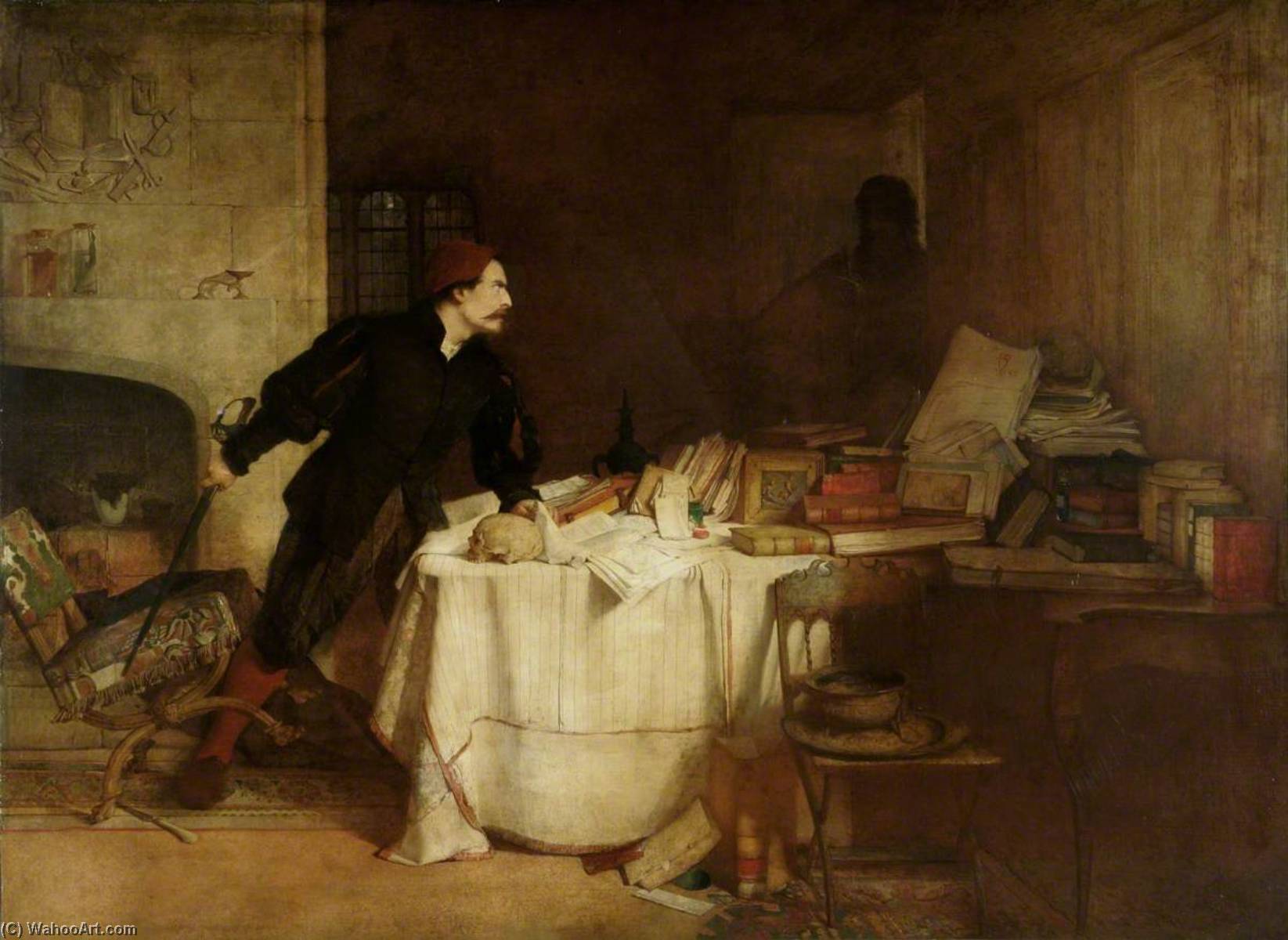
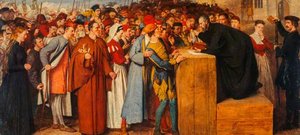
StatsThe Summons to the Secret Tribunal
 Pre-Raphaelite
 1860
1860 107.0 x 146.0 cm
 Ver más
Reproducción al óleo hecha a mano
Óleo sobre lienzo pintado a mano en el tamaño y marco de su elección, realizado por encargo por nuestros artistas. ( Switch to Print Switch to Digital Image)




































Elija entre nuestros tamaños predefinidos que respetan las proporciones originales de la obra.

Puede ingresar sus propias dimensiones para adaptarse a un marco o espacio específico. Si el tamaño seleccionado no coincide con las proporciones de la imagen original, recortaremos la obra o extenderemos la pintura con elementos adicionales pintados a mano. Se le enviará una maqueta digital para su aprobación antes de comenzar la producción.
Tenga en cuenta que la vista previa en pantalla no refleja el recorte o la extensión reales. Solo la maqueta mostrará con precisión la composición final.
Si bien existen tamaños personalizados, recomendamos seleccionar una dimensión de la lista predefinida para preservar las proporciones originales.
Tras realizar el pedido, el equipo de ArtsDot.com enviará un correo electrónico al cliente para solicitar instrucciones y proporcionarle una vista previa del boceto.
Envío a todo el mundo () en 3-4 semanas en lugar de las 5 semanas estándar. (7 septiembre). Sin comprometer la calidad.

Envío exprés gratuito a todo el mundo

Lienzo de lino de alta calidad

Seguro de envío total

Garantía de reembolso de impuestos aduaneros

Garantía de fidelidad cromática exacta

Política de devolución de 100 días (solo por defectos)

Garantía de devolución del 100% del dinero

Descuento por cantidad
 La opción de vidrio solo está disponible en tamaños inferiores a 110 cm.

The Summons to the Secret Tribunal
Técnica de reproducción
Dimensiones de la reproducción
-


Precio total final
$ 288
Composition and Symbolism
The painting depicts a man standing in a room surrounded by books, papers, and clocks, evoking a sense of mystery and intrigue. The use of light and shadow creates a dramatic effect, drawing the viewer's eye to the central figure. The presence of two clocks in the scene adds to the sense of urgency and importance, hinting at the significance of the summons.Artistic Style and Influences
William Fettes Douglas' style is characterized by his attention to detail and ability to capture the subtleties of human emotion. His work is often compared to that of other notable artists, such as Eugène Louis Boudin, who was known for his seascapes and landscapes. The National Galleries of Scotland has an impressive collection of Douglas' works, including The Spell, which showcases his mastery of oil on canvas.- Handmade oil painting reproductions of The Summons to the Secret Tribunal are available at ArtsDot.com, allowing art lovers to own a piece of history.
- The Holy Trinity Chapel in Biggar, United Kingdom, is another notable example of Douglas' work, with its stunning architecture and beautiful artwork.
The Summons to the Secret Tribunal is a masterpiece that continues to fascinate art enthusiasts, offering a glimpse into the world of 19th-century art and the creative genius of William Fettes Douglas.
Obras relacionadas
Biografía del artista
Sir William Fettes Douglas: A Visionary of Mysticism and Detail
William Fettes Douglas (1822–1891) stands as a prominent figure in Scottish Pre-Raphaelite art, celebrated for his profound engagement with esoteric subjects and his masterful execution—a testament to meticulous observation and artistic sensitivity. Born in Edinburgh on March 12th, 1822, he descended from a lineage steeped in aristocratic tradition; his father, James Douglas, was accountant for the Commercial Bank of Scotland, while his maternal grandmother, Martha Brook, possessed connections to Sir William Fettes, Bart., the founder of Fettes College—a formative influence shaping his intellectual and artistic upbringing. Douglas’s artistic journey began modestly, fueled by a passion cultivated during his studies at Edinburgh High School. Rather than pursuing formal academic training, he honed his skills through self-directed practice, diligently sketching landscapes and honing his draughtsmanship with the guidance of fellow artists Alexander Fraser and James Abbott MacKenzie Whistler. This dedication to independent study proved crucial in developing his distinctive style—one characterized by an unwavering commitment to accuracy and a fascination for capturing atmospheric subtleties. He meticulously studied anatomy alongside botanical pursuits, reflecting a holistic approach to artistic understanding that would inform his later works. His artistic breakthrough arrived in 1845 when he debuted at the Royal Scottish Academy, immediately garnering acclaim for canvases imbued with a palpable spiritual resonance. Notably influenced by Dante Gabriel Rossetti and John Ruskin, Douglas embraced themes rooted in mythology, folklore, and biblical narratives—subjects that demanded both intellectual contemplation and technical virtuosity. His paintings frequently explored notions of mortality, symbolism, and psychological depth, reflecting the broader aesthetic currents of the Pre-Raphaelite Brotherhood. He sought to recapture the spirit of early Renaissance painting through his masterful technique and profound artistic vision. Douglas’s artistic output flourished throughout the 1850s and 60s, producing masterpieces such as “The Ruby Ring” (1853), “The Alchemist” (1855), and “Hudibras and Ralph Visiting the Astrologer” (1856)—adaptations of Chaucer’s satirical poem—demonstrating his ability to reinterpret literary classics with visual splendor. His depiction of Rosicrucians in 1856 exemplifies his fascination with esoteric traditions, while "The Spell" showcases a masterful command of color and texture. Furthermore, portraits like “David Laing, LL.D.” reveal Douglas’s meticulous attention to detail and psychological nuance—skills honed through anatomical studies alongside botanical pursuits. Throughout his career, Douglas maintained an unwavering dedication to artistic exploration, undertaking several expeditions to Italy where he absorbed the inspiration of Renaissance art and architecture. His legacy resides not only in his impressive oeuvre but also in his role as President of the Royal Scottish Academy from 1860 until his death in 1891—a position that solidified his influence within Scotland’s artistic community. Sir William Fettes Douglas remains a significant figure in Pre-Raphaelite art history, remembered for his visionary imagination and unparalleled technical skill—artists who sought to recapture the spirit of early Renaissance painting.
William Fettes Douglas
1822 - 1881 , Escocia
Datos clave
- Artistic Movement Or Style: Pre-Raphaelite
- Artists Or Movements Influenced By This Artist: ['Romanticism']
- Artists Who Influenced This Artist:
- John Ruskin
- Edward Burne-Jones
- Date Of Birth: 1822
- Date Of Death: 1891
- Full Name: William Fettes Douglas
- Nationality: Scottish
- Notable Artworks:
- The Summons to the Secret Tribunal
- Stonehaven Harbour
- Place Of Birth: Edinburgh, Scotland
Artículos relacionados
Dante Gabriel Rossetti: Las 25 Obras Maestras del Prerrafaelismo | ArtsDot
Descubre las 25 obras maestras de Dante Gabriel Rossetti, el máximo exponente del Prerrafaelismo. Explora su simbolismo, retratos victorianos y la belleza femenina en lienzos inolvidables. Reproducciones de arte exclusivas en ArtsDot.com.
La Hermandad Prerrafaelita: Rebelión Estética y Romance Medieval en el Arte Victoriano
Descubre la fascinante historia de la Hermandad Prerrafaelita y su rebelión estética contra el arte victoriano. Análisis profundo de sus obras, temas y legado con expertos en arte.

John William Waterhouse: Pre-Raphaelite Mythmaker & Poetic Depictions of Female Identity
Explore the captivating world of John William Waterhouse, a master of Pre-Raphaelite painting. Discover his iconic depictions of mythology and female identity in this expert guide.
La Hermandad Prerrafaelita: Una Rebelión Estética y el Renacimiento Medieval en la Pintura Victoriana
Descubre la Hermandad Prerrafaelita: su rebelión contra el arte académico victoriano y su fascinante retorno a los maestros del Renacimiento. Análisis profundo, artistas clave y obras emblemáticas.
Sir John Everett Millais: Pre-Raphaelite Rebellion & Victorian Narrative Detail
Explore the revolutionary art of Sir John Everett Millais & the Pre-Raphaelite Brotherhood. Discover their radical realism, symbolic narratives, and lasting impact on Victorian aesthetics. A deep dive into 19th-century masterpieces.