

 Ver en contexto
 Enviar
 Compartir
 Detalles

 Descargar
 Similares
 Radiografía
 Presentación de diapositivas
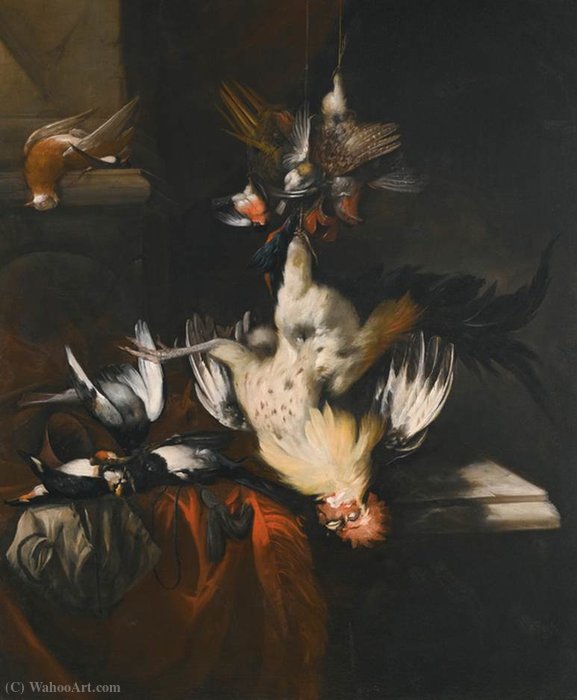
Still-Life of Dead Game and Songbirds
 Ver más
Adquiera una imagen digital de alta resolución y optimizada, muy superior a la vista previa en línea.
Cada archivo es preparado meticulosamente por nuestros especialistas internos mediante el uso de herramientas avanzadas y un experto retoque manual. Nos aseguramos de que cada imagen posea una claridad excepcional, una precisión cromática impecable y un detalle minucioso.
El archivo final se entrega por correo electrónico en un plazo de 72 horas, optimizado para su uso inmediato en entornos profesionales, editoriales y de impresión. Esta es la misma calidad en la que confían los estudios de diseño, las editoriales y las galerías de primer nivel.
Imagen Digital
Descarga un archivo de alta resolución para exhibición personal, impresión y proyectos creativos. ( Comprar impresión Comprar pintura hecha a mano)
Incluido en cada pedido de imágenes digitales
Entrega digital experta, garantizada.
Al elegir ArtsDot.com, no solo está adquiriendo una imagen; está recibiendo una obra de arte digital mejorada profesionalmente, elaborada con precisión y respaldada por una garantía de satisfacción. Esto es todo lo que incluye su pedido, automáticamente:

Entrega rápida por email
Recibirá su archivo de imagen digital en alta resolución por correo electrónico en un plazo de 72 horas tras realizar su pedido, listo para su uso inmediato.

Archivo digital optimizado por IA
Su obra de arte se optimiza profesionalmente mediante herramientas avanzadas de IA y edición manual, garantizando el máximo detalle, claridad y precisión cromática.

Reenvío gratuito de por vida
¿Has borrado o perdido tu archivo por error? No te preocupes: te lo volveremos a enviar en cualquier momento, sin coste adicional.

Sin gastos de importación, siempre
Disfrute de su obra de arte al instante sin aduanas, aranceles ni gastos de envío; las descargas digitales siempre están libres de impuestos.

Garantía de fidelidad de color
Garantizamos que su imagen digital refleje los colores originales con la mayor fidelidad posible, mediante el uso de herramientas profesionales y gestión del color.

Garantía de satisfacción de 60 días
Si no está satisfecho con su imagen digital, la revisaremos o le reembolsaremos el 100% en un plazo de 60 días, sin preguntas.

100% Garantía de devolución de dinero
¿No está satisfecho? Obtenga un reembolso completo dentro de los 60 días posteriores a la recepción de su archivo digital, sin necesidad de explicaciones.

Descuentos por pedidos grandes
Compra 3 imágenes, ahorra 10% - Compra 5, ahorra 15% - Compra 10+, ahorra 20%. Ideal para proyectos creativos, galerías y agencias.
Obras relacionadas
Biografía del artista
A Life Amongst Stillness: The World of William Gowe Ferguson
William Gouw (or Gow, or Gowe) Ferguson remains a somewhat enigmatic figure in the landscape of 17th-century art, yet his quiet mastery of still life painting secured him a respected place amongst his contemporaries. Born around 1632/3 in Scotland—a nation not particularly renowned for its artistic output at that time—Ferguson’s journey took him far from his homeland and into the heart of European artistic innovation. His early training is believed to have occurred within Scotland itself, but an ambition for greater refinement led him towards France and Italy, formative experiences that would profoundly shape his aesthetic vision. By 1660, Ferguson had established a residence in The Hague, a bustling center of trade and culture, where he entered into an unusual agreement with a house proprietor: the annual creation of a painting as part of his tenancy. This arrangement speaks to both the demand for his work and the practical realities of an artist’s life during this period. He continued to reside there until at least 1668, steadily building a reputation for his evocative depictions of the natural world.The Dutch Influence and Artistic Development
Ferguson's artistic development was deeply intertwined with his time in the Netherlands, particularly within the circles of Utrecht, The Hague, and Amsterdam. It’s here that he absorbed the meticulous detail and realism characteristic of the Dutch Golden Age still life tradition. Artists like Jan Vonck and Willem van Aelst served as significant influences, inspiring Ferguson's precise rendering of textures, light, and form. However, Ferguson wasn’t merely an imitator; he infused his work with a distinctly personal sensibility. While specializing in *dead game*—still lifes featuring meticulously arranged birds, animals, and hunting implements—he also ventured into compositions incorporating classical ruins and sculptural fragments, often bathed in dramatic chiaroscuro lighting. This blending of genres reveals a sophisticated artistic intellect, capable of harmonizing the naturalistic precision of Dutch painting with the more theatrical elements favored by Italianate artists. In 1681, he was betrothed to Sara van Someren of Stockholm while living in Amsterdam’s Batavier Graat, suggesting a degree of social standing and integration within the city's artistic community. Horace Walpole noted his extended sojourn in Italy and France, further emphasizing the breadth of his European experience.Themes of Vanitas and Evocative Realism
Ferguson’s still lifes are not simply exercises in technical skill; they resonate with deeper symbolic meaning. The *dead game* genre, popular throughout the 17th century, often served as a visual meditation on mortality—a reminder of the fleeting nature of life and the inevitability of decay. The meticulously rendered feathers, fur, and flesh, while beautiful in their detail, simultaneously hint at transience. This subtle interplay between beauty and decay aligns with the broader *Vanitas* tradition prevalent during this era. Beyond the symbolic weight, Ferguson’s paintings are remarkable for their evocative realism. He possessed an exceptional ability to capture the textures and colors of his subjects, creating a sense of tangible presence that draws the viewer into the scene. His skillful use of light and shadow further enhances this effect, imbuing his compositions with a dramatic intensity. Examples of his work can be found in prestigious institutions like the Rijksmuseum in Amsterdam and the Berlin State Museums, testaments to his enduring artistic quality.Later Life and Legacy
The details surrounding Ferguson’s later life remain somewhat obscure. His last known dated painting appears in 1689, after which records become scarce. It is believed he returned to London, though some accounts suggest a possible return to Scotland. Intriguingly, twelve of his paintings were sold in Edinburgh between 1692 and 1693, indicating continued artistic activity or the dispersal of earlier works. Despite the lack of definitive biographical information, Ferguson’s legacy as a skilled still life painter is secure. His work has often been favorably compared to that of more celebrated artists, and instances have even occurred where his paintings were mistakenly attributed to Cornelis van Lelienbergh or Jan Weenix—a testament to the quality and stylistic similarities of their respective oeuvres. He occupies a unique position as one of Scotland’s most accomplished 17th-century painters, bridging the gap between native artistic traditions and the innovations of the Dutch Golden Age. His paintings continue to captivate viewers with their exquisite detail, evocative realism, and subtle exploration of themes surrounding life, death, and the beauty of the natural world.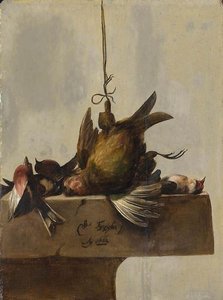
William Gowe Ferguson
1632 - 1689

