 Ver en contexto
 Enviar
 Compartir
 Detalles

 Descargar
 Similares
 Radiografía
 Presentación de diapositivas
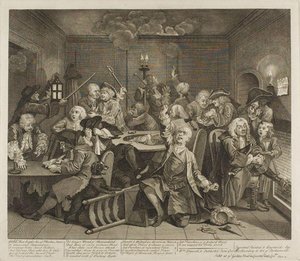
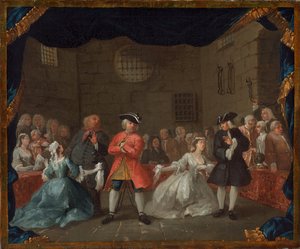
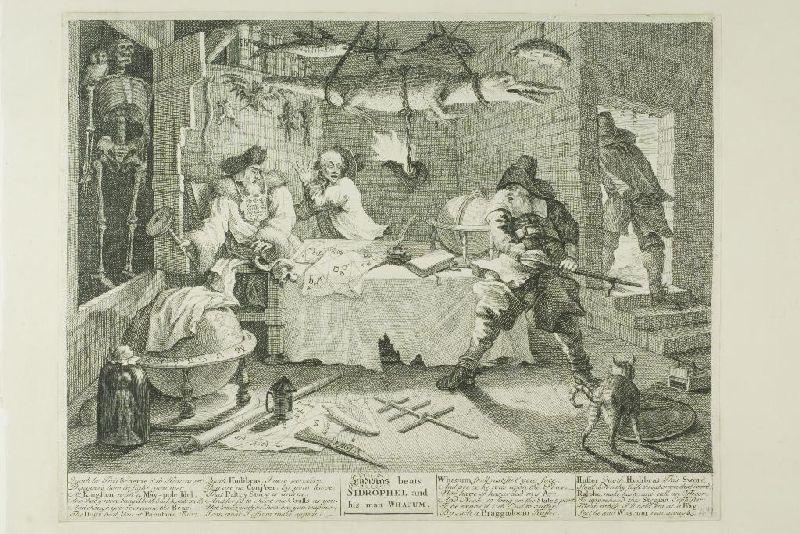
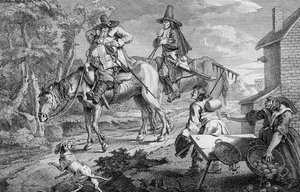
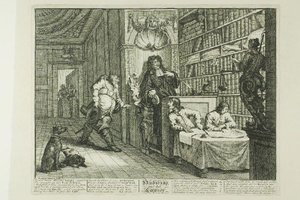
Hudibras and Sidrophel, plate eight from Hudibras

 Ver más
Giclée / Impresión de arte
Impresiones giclée o en lienzo de calidad de museo con producción rápida y opciones de acabado flexibles. ( Comprar pintura hecha a mano Comprar imagen)




P118B $10

P118H $10

P118W $10

P438Z $10

P508JH $12

P508YH $12

P805H $10

P805Z $10

P919BZ $10

P919G $10

P919XJ $10

P959ZH $10

P968JZ $12

W106C $8

W218G $10

W218JH $8

W218Y $10

W307PJ $10

W316G $10

W316PJ $8

W316Y $10

W398PJ $8

W4111J $10

W500HY $15

W500JH $15

W692G $12

W849H $8

W940BG $15

W953PJ $8




Elija entre nuestros tamaños predefinidos que respetan las proporciones originales de la obra.

Puede introducir sus propias dimensiones para adaptarse a un marco o espacio específico. Si el tamaño seleccionado no coincide con las proporciones de la imagen original, recortaremos la obra de arte o extenderemos la imagen con un borde con efecto espejo o de color sólido. Se enviará una maqueta digital para su aprobación antes de que comience la producción.
Tenga en cuenta que la vista previa en pantalla no refleja el recorte o la extensión real. Solo la maqueta mostrará con precisión la composición final.
Aunque existen tamaños personalizados, recomendamos seleccionar una dimensión de la lista predefinida para preservar las proporciones originales.
Envío a todo el mundo () en 2 semanas en lugar de las 4/5 semanas estándar. (26 agosto)

Envío exprés gratuito a todo el mundo

Lienzo de lino de alta calidad

Seguro de envío total

Garantía de reembolso de impuestos aduaneros

Garantía de fidelidad cromática exacta

Política de devolución de 60 días (solo por defectos)

Garantía de devolución del 100% del dinero

Descuento por cantidad
 La opción de vidrio solo está disponible en tamaños inferiores a 110 cm.

Hudibras and Sidrophel, plate eight from Hudibras
Giclée / Impresión de arte
Dimensiones de la reproducción
-


Precio total final
$ 62
Descripción de la pieza
William Hogarth’s Hudibras and Sidrophel: A Satirical Portrait of Enlightenment Excess
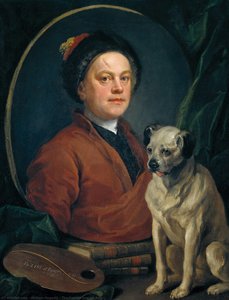
William Hogarth (1697–1764), a London Life in Ink and Paint, stands as one of the most distinctive figures in British art history. More than merely an artist proficient in draughtsmanship, he was a visual historian—a keen observer of societal mores and anxieties—who wielded his brush with uncompromising satirical precision. His oeuvre captures the turbulent spirit of the eighteenth century, reflecting its burgeoning ambitions alongside deep-seated contradictions that Hogarth relentlessly exposed through meticulously detailed depictions.
- Subject Matter: The painting portrays a scene from Samuel Butler’s Hudibras, a sprawling narrative poem satirizing Puritanism and political machinations during the Interregnum. It depicts Hudibras, a Cromwellian knight, visiting an astrologer named Sidrophel in pursuit of securing the affections of a woman he desires—a calculated maneuver designed to mock the pretensions of those clinging to outdated beliefs.
- Style & Technique: Hogarth’s masterful etching and engraving technique exemplifies Rococo style's influence. The artist employs chiaroscuro – dramatic contrasts between light and dark – to heighten the theatrical atmosphere, emphasizing the figures’ expressions and gestures. Precise linework captures minute details of the room’s furnishings and the characters’ attire, furthering the painting’s realism while simultaneously underlining its critique.
- Historical Context: Created in 1725–26, Hudibras reflects the anxieties surrounding the Restoration of Charles II following Cromwell's demise. Butler’s poem served as a pointed commentary on the excesses of Puritanism and challenged prevailing social conventions—themes powerfully conveyed through Hogarth’s visual narrative.
- Symbolism: The inclusion of objects like the bed, chair, bowl, spoon, books, and stuffed crocodile speaks to broader symbolic concerns. These items represent status, intellect, superstition, and worldly ambition – all subjects of Hogarth's biting satire. Notably, the owl perched atop the skeleton symbolizes death and decay, mirroring the poem’s critique of intellectual stagnation.
- Emotional Impact: The painting’s palpable energy communicates a sense of social confrontation and psychological tension. Hudibras’s furious demeanor underscores the absurdity of his quest—a deliberate provocation designed to expose the folly of those clinging to rigid dogma. Hogarth's depiction captures not just a scene but an ethos, conveying the artist’s conviction that reason must triumph over superstition.
The Art Institute of Chicago houses a remarkable reproduction of this iconic artwork, allowing viewers to appreciate Hogarth’s unparalleled ability to distill complex social commentary into visually arresting form. Its enduring appeal lies in its unflinching honesty and its timeless relevance—a testament to Hogarth's legacy as one of Britain’s foremost satirists and a pivotal figure in the development of modern British art.
Obras relacionadas
Biografía del artista
vida temprana e influencias
William Hogarth, un artista inglés multifacético, nació el 10 de noviembre de 1697 en Londres. Su vida temprana estuvo marcada por su aprendizaje como grabador a cargo de Ellis Gamble en Leicester Fields, donde desarrolló sus habilidades en la grabado de carteles publicitarios. Esta experiencia influyó significativamente en su tono artístico, frecuentemente notado por su filo crítico y agudo.carrera artística
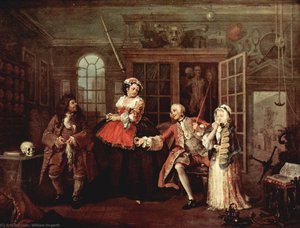
El rango creativo de Hogarth abarcó desde el retrato realista hasta las pioneras series pictóricas de tipo cómico, denominadas "sujetos morales modernos". Es famoso por sus obras A Harlot's Progress, A Rake's Progress y Marriage a-la-Mode. Su estilo distintivo se volvió tan influyente que las ilustraciones políticas satíricas similares a menudo se denominan "hogarthianas".obras notables y su significado
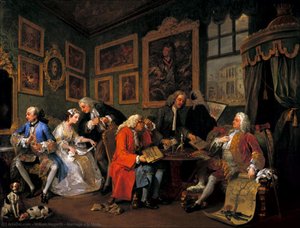
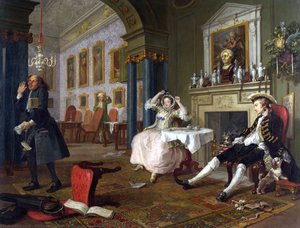
- El Contrato Matrimonial (clasicismo, óleo sobre lienzo): Esta pintura muestra la maestría de Hogarth en el sarcasmo, criticando las narrativas sociales de su tiempo. [https://ArtsDot.com/@@/8bwmb6-william-hogarth-the-marriage-contract](https://ArtsDot.com/@@/8bwmb6-william-hogarth-the-marriage-contract)
- A Harlot's Progress (arte satírico, grabado): Esta serie de pinturas es un testimonio de la capacidad de Hogarth para capturar la forma humana con gracia y poder, a menudo incorporando contenido sexualmente explícito. [https://ArtsDot.com/@/william-hogarth](https://ArtsDot.com/@/william-hogarth)
legado e influencia
El arte de Hogarth ganó una inmensa popularidad y fue producido masivamente a través de grabados, convirtiéndolo en el artista inglés más importante de su tiempo. Charles Lamb, el ensayista, comentó famoso que las imágenes de Hogarth eran como libros para leer en lugar de simplemente mirarlos.museos y colecciones
El Museo Británico, con su extensa colección de objetos artísticos culturales y antigüedades, es una institución importante del Reino Unido. [https://en.wikipedia.org/wiki/british_museum](https://en.wikipedia.org/wiki/british_museum) Aunque no se centra específicamente en el trabajo de Hogarth, representa el contexto más amplio del arte y la cultura británicos.conclusión
El legado de William Hogarth como artista satírico continúa influyendo en el mundo del arte. Sus obras, tales como El Contrato Matrimonial y A Harlot's Progress, siguen siendo significativas no solo por su valor artístico sino también por su crítica aguda de las narrativas sociales. Explore más del trabajo de Hogarth en [https://ArtsDot.com/@/william-hogarth](https://ArtsDot.com/@/william-hogarth).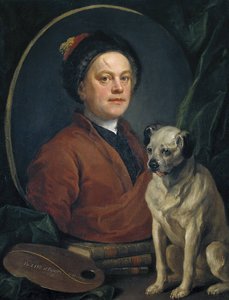
William Hogarth
1697 - 1764 , Reino Unido
Datos clave
- Artistas Influenciados:
- James Gillray
- George Cruikshank
- Artistas Que Influyeron:
- Pieter de Hooch
- Jonathan Swift
- Fecha De Muerte: 1764
- Fecha De Nacimiento: 10 de noviembre de 1697
- Lugar De Nacimiento: Londres, Reino Unido
- Movimiento Artístico: Arte satírico, Realismo
- Nacionalidad: Británico
- Nombre Completo: William Hogarth
- Obras Notables:
- A Harlot's Progress
- A Rake's Progress
- Marriage A-la-Mode
Artículos relacionados
William Hogarth: Satire, Social Commentary & the Birth of Modern British Art
Explore the satirical world of William Hogarth, pioneering British painter & engraver. Discover his iconic works like *A Rake's Progress* and insightful social commentary on 18th-century London life.
El Siglo XVIII en el Arte: 10 Obras Maestras para Decorar con Historia y Elegancia
Descubre 10 obras maestras del siglo XVIII: Goya, Fragonard y más. Explora la historia, el arte barroco, rococó y neoclasicismo que inspiran decoración elegante. Reproducciones de alta calidad en ArtsDot.com.
The Sharpest Wit: A Critical Exploration of Satire in Art History – From Hogarth to Contemporary Critique
Explore the history of satire in art! From Hogarth's London to contemporary critique, discover how artists use wit & visual power to reflect and challenge society. Expert insights at ArtsDot.

Giclée Prints: Archival Quality & Aesthetic Nuances for the Discerning Collector
Explore the world of giclée prints with ArtsDot. Learn about archival quality, aesthetic nuances & investment potential. Expert guidance for discerning art collectors seeking museum-quality reproductions and lasting value.

The Enduring Legacy of Fine Art Prints: Technique, History & Aesthetic Impact
Explore the rich history & techniques of fine art prints. Discover investment potential, assess authenticity, and learn how to preserve your collection with expert guidance. Trusted insights for discerning collectors.