

 Ver en contexto
 Enviar
 Compartir
 Detalles

 Descargar
 Similares
 Radiografía
 Presentación de diapositivas
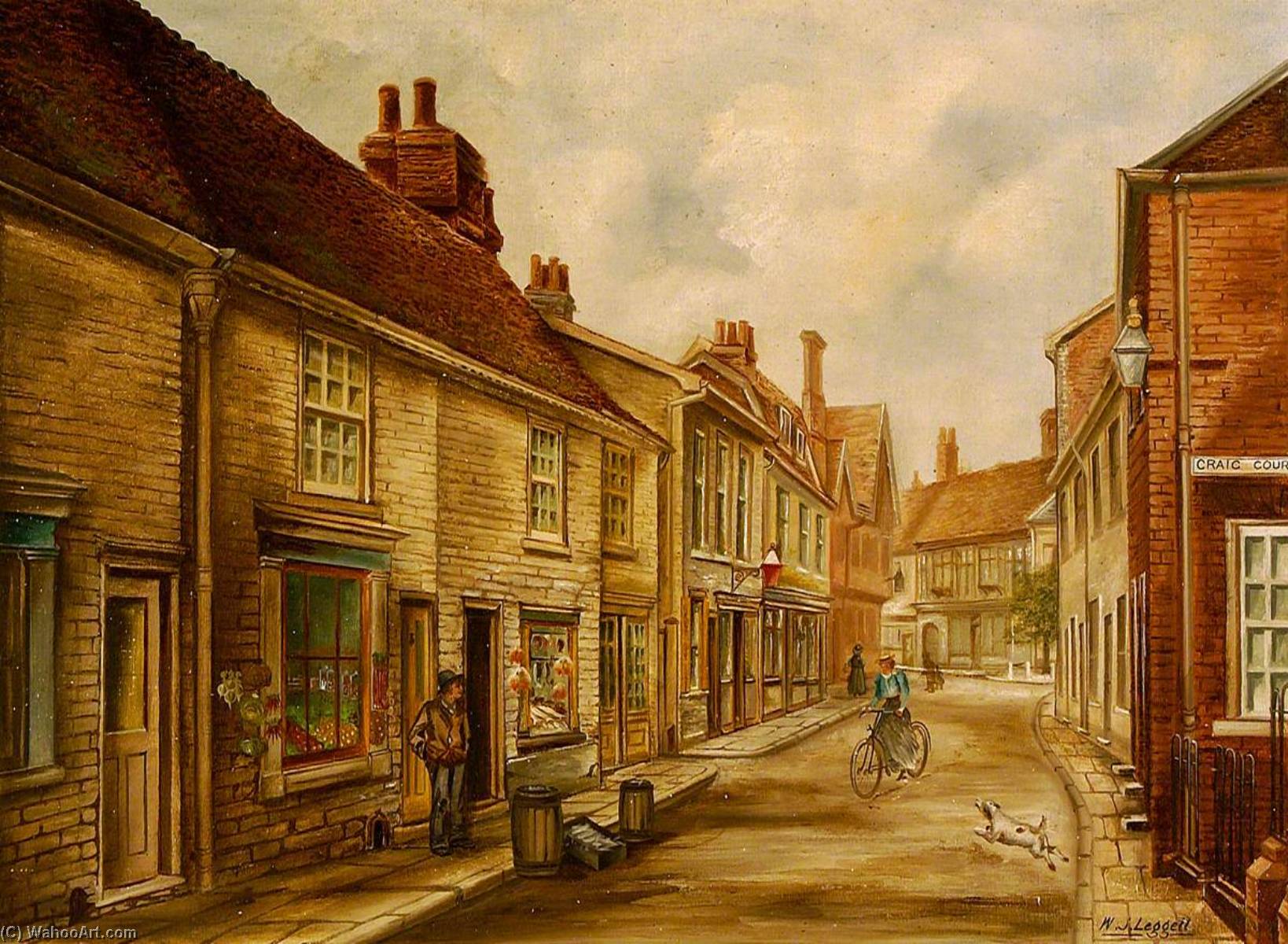
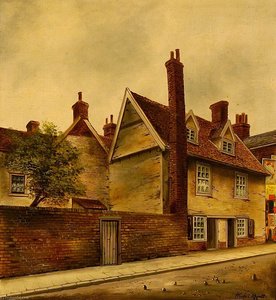
Upper Orwell Street, Ipswich
 1903
1903 56.0 x 76.0 cm
 Ver más
Adquiera una imagen digital de alta resolución y optimizada, muy superior a la vista previa en línea.
Cada archivo es preparado meticulosamente por nuestros especialistas internos mediante el uso de herramientas avanzadas y un experto retoque manual. Nos aseguramos de que cada imagen posea una claridad excepcional, una precisión cromática impecable y un detalle minucioso.
El archivo final se entrega por correo electrónico en un plazo de 72 horas, optimizado para su uso inmediato en entornos profesionales, editoriales y de impresión. Esta es la misma calidad en la que confían los estudios de diseño, las editoriales y las galerías de primer nivel.
Imagen Digital
Descarga un archivo de alta resolución para exhibición personal, impresión y proyectos creativos. ( Comprar impresión Comprar pintura hecha a mano)
Incluido en cada pedido de imágenes digitales
Entrega digital experta, garantizada.
Al elegir ArtsDot.com, no solo está adquiriendo una imagen; está recibiendo una obra de arte digital mejorada profesionalmente, elaborada con precisión y respaldada por una garantía de satisfacción. Esto es todo lo que incluye su pedido, automáticamente:

Entrega rápida por email
Recibirá su archivo de imagen digital en alta resolución por correo electrónico en un plazo de 72 horas tras realizar su pedido, listo para su uso inmediato.

Archivo digital optimizado por IA
Su obra de arte se optimiza profesionalmente mediante herramientas avanzadas de IA y edición manual, garantizando el máximo detalle, claridad y precisión cromática.

Reenvío gratuito de por vida
¿Has borrado o perdido tu archivo por error? No te preocupes: te lo volveremos a enviar en cualquier momento, sin coste adicional.

Sin gastos de importación, siempre
Disfrute de su obra de arte al instante sin aduanas, aranceles ni gastos de envío; las descargas digitales siempre están libres de impuestos.

Garantía de fidelidad de color
Garantizamos que su imagen digital refleje los colores originales con la mayor fidelidad posible, mediante el uso de herramientas profesionales y gestión del color.

Garantía de satisfacción de 60 días
Si no está satisfecho con su imagen digital, la revisaremos o le reembolsaremos el 100% en un plazo de 60 días, sin preguntas.

100% Garantía de devolución de dinero
¿No está satisfecho? Obtenga un reembolso completo dentro de los 60 días posteriores a la recepción de su archivo digital, sin necesidad de explicaciones.

Descuentos por pedidos grandes
Compra 3 imágenes, ahorra 10% - Compra 5, ahorra 15% - Compra 10+, ahorra 20%. Ideal para proyectos creativos, galerías y agencias.
Obras relacionadas






Biografía del artista
William John Leggett: A Suffolk Streetscape in Oil
The Ipswich artist William John Leggett (1856-1936) wasn’t a name widely celebrated during his lifetime, yet his meticulous paintings of Victorian Suffolk offer an invaluable window into the daily life and architectural details of a rapidly changing England. More than just topographical records, Leggett's works—particularly his street scenes—capture a specific mood, a sense of quiet observation mingled with a keen eye for detail and a subtle understanding of light and shadow. He wasn’t striving for grand romanticism; instead, he presented the familiar rhythms of Ipswich life – the bustle of market days, the shadows lengthening on cobbled streets, the weathered faces of its inhabitants – with remarkable precision and understated charm.
Born in 1856 into a family of modest means, Leggett’s early life was shaped by the industrial landscape of Ipswich. His father worked as a maltster, and young William began his working life as a foundry labourer. However, he possessed an innate artistic sensibility, nurtured perhaps by his parents' involvement in local literary circles. He transitioned into decorative painting, eventually establishing himself as a respected artist known for his ability to render the nuances of urban environments with remarkable accuracy. His career unfolded largely within Ipswich, and it was here that he developed his signature style – detailed, realistic depictions of everyday scenes, often imbued with a melancholic beauty.
Leggett’s artistic development can be traced through his prolific output during the late 19th and early 20th centuries. He wasn't formally trained in the traditional sense; he was largely self-taught, honing his skills through diligent observation and practice. His technique is characterized by a meticulous approach to rendering surfaces – the rough texture of brickwork, the sheen of polished metal, the folds of clothing. He employed a limited palette, favoring muted earth tones and subtle gradations of color, creating a sense of atmospheric depth and realism. A key influence on his work was likely the rise of Realism in art, which emphasized depicting subjects truthfully and without idealization. However, Leggett’s style transcends mere imitation; he imbued his scenes with a distinct emotional resonance.
Key Works and Locations
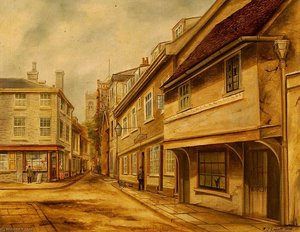
Leggett's most celebrated works depict street scenes within Ipswich, offering a remarkably detailed record of the town’s Victorian architecture and social life. “Corner, Brook Street, Old Buttermarket, Ipswich” (1906) is perhaps his most iconic painting – a vibrant snapshot of a bustling market day, complete with vendors, shoppers, and the distinctive signage of ‘Wonders of Lyon’. The inclusion of this foreign advertisement speaks volumes about Ipswich’s place within the wider British economy. “Dog's Head Street, Suffolk” (circa 1890) captures a quieter moment, showcasing the town’s historic buildings and the everyday routines of its residents. “Upper Orwell Street Shops, Ipswich” (circa 1900) provides an intimate view of the local commerce, with details like the shop fronts and the figures engaged in business transactions.
These paintings aren't simply records of physical locations; they are imbued with a sense of place. Leggett’s meticulous attention to detail—the arrangement of goods on stalls, the expressions on people’s faces, the play of light and shadow—transport the viewer back in time, offering a tangible connection to Ipswich’s Victorian past. The “Wonders of Lyon” sign, for example, is not just a commercial element; it's a symbol of global trade and the town’s role within the larger world.
The Suffolk Record
What distinguishes Leggett’s work from that of many other Victorian artists is his dedication to documenting local history. His paintings are essentially visual diaries, capturing the essence of Ipswich life at a specific moment in time. He wasn't interested in grand historical narratives; instead, he focused on the small details—the architecture, the trades, the social interactions—that collectively shaped the town’s identity. The Ipswich Museum holds several examples of his work, and they are now recognized as invaluable resources for historians and researchers seeking to understand the town’s past.
His paintings offer a unique perspective on the lives of ordinary people – shopkeepers, laborers, merchants, and housewives—who formed the backbone of Ipswich society. They provide insights into their daily routines, their social customs, and their economic activities. Leggett's work is therefore not just an artistic achievement; it’s also a crucial historical document.
Legacy and Influence
While Leggett didn't achieve widespread fame during his lifetime, his paintings have gained increasing recognition in recent years as valuable contributions to the history of Ipswich art. His meticulous realism and keen observation are particularly noteworthy, and his works offer a unique perspective on Victorian life. His legacy lies not only in his artistic skill but also in his dedication to documenting local history.
Today, Leggett’s paintings can be found in public collections and private hands, and they continue to inspire artists and historians alike. They serve as a reminder of the importance of preserving our cultural heritage and celebrating the everyday lives of those who came before us. His work stands as a testament to the power of art to capture not just images but also memories, emotions, and the spirit of a place.
william john leggett
1856 - 1936
Breves datos
- Artistic Movement Or Style: Street scenes
- Artists Or Movements Influenced By This Artist: ['']
- Artists Who Influenced This Artist: ['']
- Date Of Birth: 1856
- Date Of Death: 1936
- Full Name: William John Leggett
- Nationality: British
- Notable Artworks:
- Corner, Brook Street
- Dog's Head Street
- Upper Orwell Street Shops
- Place Of Birth: Ipswich, England

