 Ver en contexto
 Enviar
 Compartir
 Detalles

 Descargar
 Similares
 Radiografía
 Presentación de diapositivas
 Estadísticas
Moses Swaim


 Ver más
Giclée / Impresión de arte
Impresiones giclée o en lienzo de calidad de museo con producción rápida y opciones de acabado flexibles. ( Comprar pintura hecha a mano Cambiar a imagen digital)




P118B $10

P118H $10

P118W $10

P438Z $10

P508JH $12

P508YH $12

P805H $10

P805Z $10

P919BZ $10

P919G $10

P919XJ $10

P959ZH $10

P968JZ $12

W106C $8

W218G $10

W218JH $8

W218Y $10

W307PJ $10

W316G $10

W316PJ $8

W316Y $10

W398PJ $8

W4111J $10

W500HY $15

W500JH $15

W692G $12

W849H $8

W940BG $15

W953PJ $8




Elija entre nuestros tamaños predefinidos que respetan las proporciones originales de la obra.

Puede introducir sus propias dimensiones para adaptarse a un marco o espacio específico. Si el tamaño seleccionado no coincide con las proporciones de la imagen original, recortaremos la obra de arte o extenderemos la imagen con un borde con efecto espejo o de color sólido. Se enviará una maqueta digital para su aprobación antes de que comience la producción.
Tenga en cuenta que la vista previa en pantalla no refleja el recorte o la extensión real. Solo la maqueta mostrará con precisión la composición final.
Aunque existen tamaños personalizados, recomendamos seleccionar una dimensión de la lista predefinida para preservar las proporciones originales.
Envío a todo el mundo () en 2 semanas en lugar de las 4/5 semanas estándar. (12 septiembre)

Envío exprés gratuito a todo el mundo

Lienzo de lino de alta calidad

Seguro de envío total

Garantía de reembolso de impuestos aduaneros

Garantía de fidelidad cromática exacta

Política de devolución de 100 días (solo por defectos)

Garantía de devolución del 100% del dinero

Descuento por cantidad
 La opción de vidrio solo está disponible en tamaños inferiores a 110 cm.

Moses Swaim
Giclée / Impresión de arte
Dimensiones de la reproducción
-


Precio total final
$ 62
A Glimpse Through the Lens of Early American Impressionism
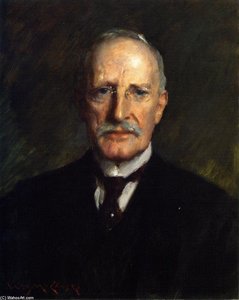
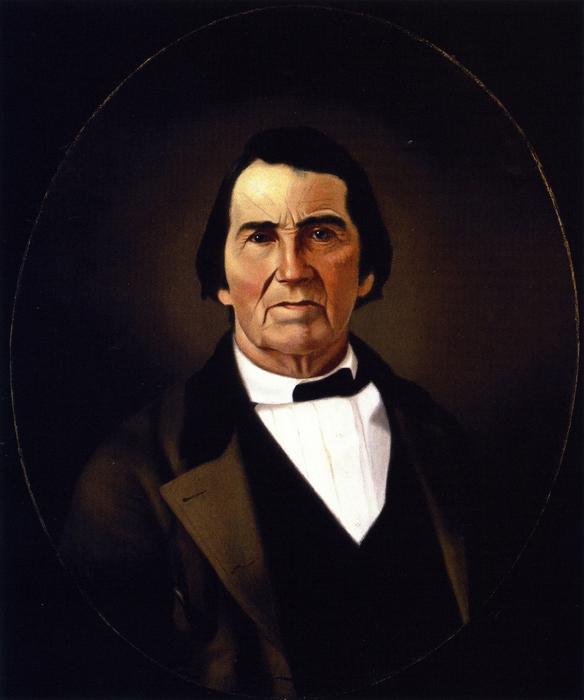
In the quiet, commanding presence of William Merritt Chase’s “Moses Swaim,” painted in 1866, we encounter more than a mere portrait; we find a profound window into the burgeoning spirit of American Impressionism. Long before the movement reached its full, vibrant crescendo, this early work by Chase hints at a revolutionary shift in how light and character could be captured on canvas. The painting presents us with Moses Swaim, a man whose historical footprint as a prominent Indiana businessman and philanthropist is etched into his very expression. As we gaze upon him, there is an immediate, almost startling connection established through his direct gaze—a look that balances the weight of civic responsibility with a subtle, underlying vulnerability. It is a piece that does not merely document a face, but invites the viewer into a silent dialogue with the past.
The composition is masterfully anchored by Chase’s early experimentation with chiaroscuro, using dramatic contrasts between light and shadow to sculpt the contours of Swaim’s features. While the subject matter leans toward the dignified realism of the mid-19th century, one can sense the seeds of Impressionism beginning to sprout in the way Chase handles texture and atmosphere. The artist moves away from the rigid, sterile perfection of academic tradition, opting instead for a technique that prioritizes the emotional truth of the moment. Through the careful application of paint, he captures the soft sheen of spectacles—symbolizing intellect and wisdom—and the heavy, formal textures of a dark suit and tie, which ground the subject in the societal expectations of his era.
Symbolism and the Soul of the Subject
Beyond the biographical significance of the sitter, “Moses Swaim” is rich with symbolic resonance that continues to captivate collectors and historians alike. The inclusion of spectacles serves as a poignant metaphor for the clarity of thought and the depth of knowledge associated with Swaim’s reputation. Every element of his attire speaks to a life of structure and duty, yet Chase imbues the portrait with a sense of quiet introspection. This tension between outward formality and inward contemplation is what gives the painting its enduring emotional impact. For the discerning decorator or art enthusiast, this work offers a sophisticated focal point that brings a sense of historical gravity and intellectual depth to any curated space.
To possess a reproduction of such a masterpiece is to bring a piece of American art history into the modern home. The painting’s ability to evoke dignity, wisdom, and a timeless sense of peace makes it an ideal selection for interior designers seeking to create environments of prestige and reflection. Whether placed in a private library, a formal study, or a contemporary gallery setting, Chase’s work serves as a testament to the power of light and the enduring strength of the human spirit. It remains a cornerstone of American heritage, reminding us that even within the structured bounds of portraiture, there is infinite room for the exploration of the soul.
Obras relacionadas
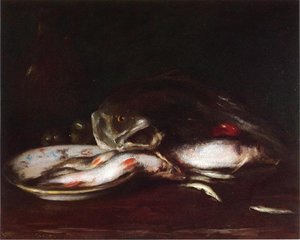
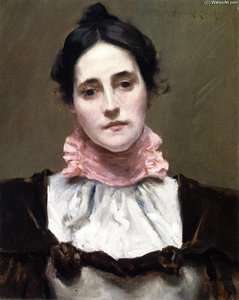
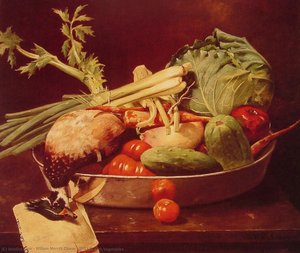

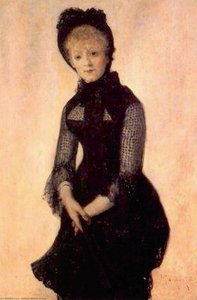
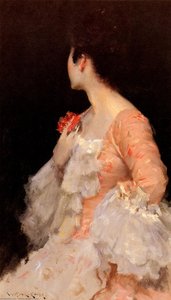
Biografía del artista
William Merritt Chase (1849-1916): Un Pionero del Impresionismo Estadounidense
William Merritt Chase fue una figura clave en el arte estadounidense de finales del siglo XIX, reconocido tanto como un destacado practicante del Impresionismo como por su influyente labor educativa. Sus vibrantes lienzos, que representan escenas de la vida cotidiana, paisajes y retratos, capturaron el espíritu de una América en rápida transformación. Más allá de sus logros artísticos, el legado de Chase se extiende a la fundación de la Escuela Chase (posteriormente Parsons The New School for Design), que desempeñó un papel crucial en la formación de generaciones de artistas estadounidenses.
Primeros Años y Desarrollo Artístico
- Nacimiento y Familia: William Merritt Chase nació el 1 de noviembre de 1849 en Williamsburg (actualmente Nineveh), Indiana. Su familia se trasladó a Indianápolis en 1861.
- Primeros Estudios: Inicialmente trabajando para el negocio familiar, Chase demostró un marcado interés por el arte desde temprana edad. Estudió con instructores locales, Barton S. Hays y Jacob Cox, mostrando considerables promesas.
- Educación Formal Comienza: Un breve período en la Marina lo llevó a mudarse a la ciudad de Nueva York en 1869, donde estudió bajo la tutela de Joseph Oriel Eaton. Posteriormente se inscribió en la National Academy of Design, aprendiendo de Lemuell Wilmarth, un alumno de Jean-Léon Gérôme.
- Dificultades Financieras y San Luis: Una crisis financiera familiar lo obligó a trasladarse a San Luis, Missouri, en 1870. Allí se involucró activamente en la escena artística local, obteniendo reconocimiento por su trabajo y exponiendo en la National Academy.
Estilo Impresionista y Obras Clave
- Abrazando el Impresionismo: Chase adoptó un estilo impresionista caracterizado por pinceladas sueltas, un enfoque en capturar momentos fugaces de luz y color, y representaciones de la vida contemporánea.
- "Keying Up – The Court Jester" (1876): Esta obra, expuesta en el Boston Art Club y en la Exposición Centenaria de Filadelfia donde ganó una medalla, se considera uno de sus primeros logros más significativos. Ejemplifica su habilidad para representar movimiento y personalidad con pinceladas enérgicas.
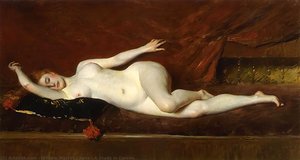
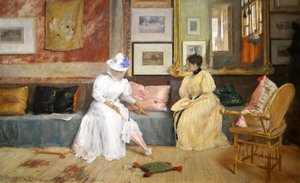
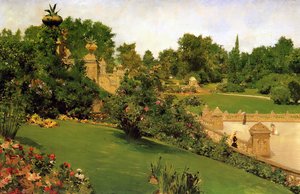
- Obras Notables: Su obra incluye impactantes retratos como Retrato de Virginia Gerson, evocadores paisajes como Gowanus Bay (también conocido como Misty Day, Gowanus Bay), y escenas que capturan la vitalidad de la vida urbana, incluyendo Alice Fernandez. Otras obras notables incluyen "A Friendly Call," "A Study in Curves," y “Terrace at the Mall, Central Park.”
- Temática: Chase frecuentemente representaba interiores domésticos, paisajes urbanos bulliciosos y actividades recreativas, reflejando su interés en retratar la vida estadounidense moderna con una sensación de inmediatez y vitalidad.
Legado Docente e Influencia
- La Escuela Chase: Un pilar del legado de Chase es la fundación de la Escuela Chase en la ciudad de Nueva York. Esta institución, que posteriormente se convirtió en Parsons The New School for Design, desempeñó un papel crucial en la formación de generaciones de artistas estadounidenses al enfatizar la observación, la técnica y la innovación artística.
- Cargos Docentes: Más allá de la Escuela Chase, ocupó cargos docentes en la Pennsylvania Academy of the Fine Arts, el Art Students League y la Brooklyn Art Association, difundiendo aún más su filosofía artística y sus habilidades.
- Influencia sobre Artistas Posteriores: Su énfasis en la observación directa y la pintura al aire libre influyó en numerosos artistas, incluyendo Wayman Elbridge Adams, quien reconoció a Chase como mentor.
Significado Histórico
William Merritt Chase ocupa una posición vital en la historia del arte estadounidense. Puenteó la brecha entre las tradiciones académicas anteriores y el emergente movimiento impresionista, contribuyendo significativamente al desarrollo de una identidad artística estadounidense distintiva. Su compromiso con la enseñanza aseguró que su enfoque innovador de la pintura continuara inspirando a generaciones de artistas, solidificando su legado tanto como un talentoso pintor como un influyente educador.
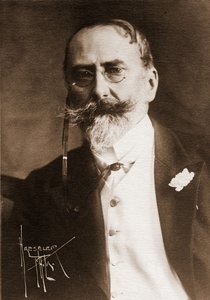
William Merritt Chase
1849 - 1916 , Estados Unidos de América
Datos clave
- Artistas Influenciados: ['Wayman Elbridge Adams']
- Artistas Que Influyeron: ['Jean-Léon Gérôme']
- Fecha De Fallecimiento: 1916
- Fecha De Nacimiento: 1 de noviembre de 1849
- Lugar De Nacimiento: Nineveh, EE. UU.
- Movimiento Artístico: Impresionismo
- Nacionalidad: Estadounidense
- Nombre Completo: William Merritt Chase
- Obras Notables:
- Retrato de Virginia Gerson
- En la costa
- Gowanus Bay
- Alice Fernandez
- Keying Up - El bufón
Artículos relacionados
25 Masterpieces by William Blake: The Visionary Genius of the Romantic Age
Step into the visionary world of William Blake. Explore 25 iconic Romantic masterpieces, from mystical illuminated prints to profound mythological works. Find museum-quality art reproductions and decor inspiration for your collection. Discover all masterpieces on ArtsDot.com.
William Merritt Chase: A Study in American Impressionism & Artistic Luminosity
Explore the life & work of William Merritt Chase, a leading American Impressionist painter and influential art educator. Discover his vibrant portraits, landscapes, and lasting legacy with ArtsDot.
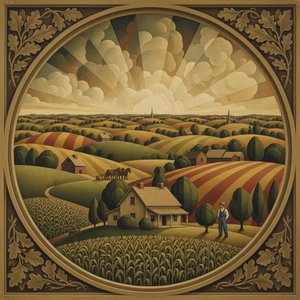
Grant Wood & American Regionalism: Identity, Myth & the Rural Landscape
Explore the world of Grant Wood & American Regionalism with ArtsDot. Discover the symbolism behind 'American Gothic', recurring themes, and the movement's lasting impact on art history. High-quality reproductions available.
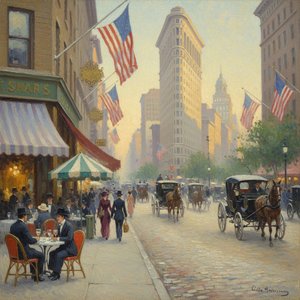
Frederick Childe Hassam: American Impressionism's Chronicler of Light & Modern Life
Explore the captivating world of Frederick Childe Hassam, a pioneer of American Impressionism. Discover his iconic paintings capturing light, urban life & coastal beauty. Learn about his legacy and influence on American art history.
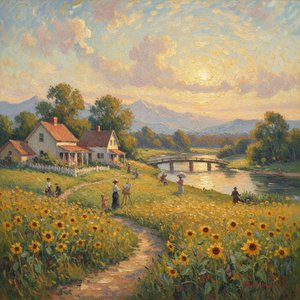
Capturando la Luz de una Nación: Explorando el Movimiento Impresionista Americano
Descubre el fascinante mundo del Impresionismo Americano. Explora a sus maestros, técnicas innovadoras y su legado perdurable. ¡Encuentra reproducciones de arte exclusivas en ArtsDot!