

 Ver en contexto
 Enviar
 Compartir
 Detalles

 Descargar
 Similares
 Radiografía
 Presentación de diapositivas
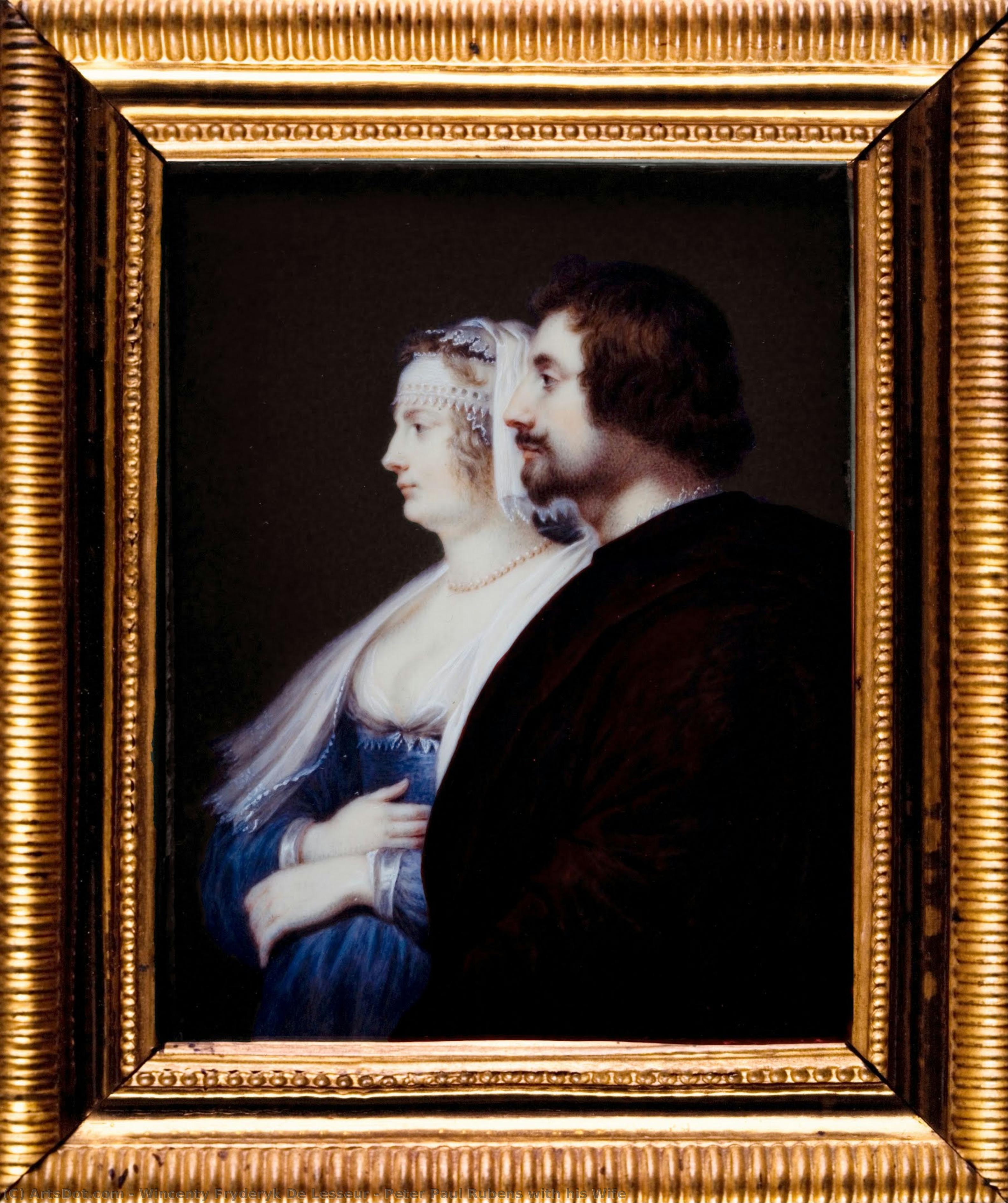
Peter Paul Rubens with his Wife
 Watercolor
- WallArt
- Neoclassicism
 1797
1797- Early Modern
 10.0 x 8.0 cm
 El Museo Polaco en Rapperswil
 Ver más
Reproducción al óleo hecha a mano
Óleo sobre lienzo pintado a mano en el tamaño y marco de su elección, realizado por encargo por nuestros artistas. ( Comprar impresión Comprar imagen)




P118B $10

P118H $10

P118W $10

P438Z $10

P508JH $12

P508YH $12

P805H $10

P805Z $10

P919BZ $10

P919G $10

P919XJ $10

P959ZH $10

P968JZ $12

W106C $8

W218G $10

W218JH $8

W218Y $10

W307PJ $10

W316G $10

W316PJ $8

W316Y $10

W398PJ $8

W4111J $10

W500HY $15

W500JH $15

W692G $12

W849H $8

W940BG $15

W953PJ $8




Elija entre nuestros tamaños predefinidos que respetan las proporciones originales de la obra.

Puede ingresar sus propias dimensiones para adaptarse a un marco o espacio específico. Si el tamaño seleccionado no coincide con las proporciones de la imagen original, recortaremos la obra o extenderemos la pintura con elementos adicionales pintados a mano. Se le enviará una maqueta digital para su aprobación antes de comenzar la producción.
Tenga en cuenta que la vista previa en pantalla no refleja el recorte o la extensión reales. Solo la maqueta mostrará con precisión la composición final.
Si bien existen tamaños personalizados, recomendamos seleccionar una dimensión de la lista predefinida para preservar las proporciones originales.
Tras realizar el pedido, el equipo de ArtsDot.com enviará un correo electrónico al cliente para solicitar instrucciones y proporcionarle una vista previa del boceto.
Envío a todo el mundo () en 3-4 semanas en lugar de las 5 semanas estándar. (28 agosto). Sin comprometer la calidad.

Envío exprés gratuito a todo el mundo

Lienzo de lino de alta calidad

Seguro de envío total

Garantía de reembolso de impuestos aduaneros

Garantía de fidelidad cromática exacta

Política de devolución de 60 días (solo por defectos)

Garantía de devolución del 100% del dinero

Descuento por cantidad
 La opción de vidrio solo está disponible en tamaños inferiores a 110 cm.

Peter Paul Rubens with his Wife
Técnica de reproducción
Dimensiones de la reproducción
-


Precio total final
$ 288
An Intimate Encounter in Miniature
In the delicate realm of late eighteenth-century portraiture, few things capture the heart quite like the miniature. Wincenty Fryderyk De Lesseur, a master of the Polish school, achieves something profoundly moving in his 1797 work, Peter Paul Rubens with his Emblazoned Wife. This small-scale masterpiece, measuring a mere ten by eight centimeters, invites the viewer into a private, whispered moment between two historical icons. Though the subjects are legendary figures of the Baroque era, De Lesseur approaches them through the refined lens of the Neoclassical and Rococo traditions, stripping away the grandiosity of Rubens' original era to focus on the quiet, enduring pulse of human connection.
The composition is a study in balanced intimacy. Positioned in profile, the figures stand side-by-side, their bodies drawn toward one another in a way that suggests a shared breath. The symmetry of their placement creates a sense of stability and permanence, while the subtle clasping of their hands serves as the emotional anchor of the piece. This single gesture—the interlocking of fingers—transcends mere portraiture; it becomes a profound symbol of unity, affection, and the unbreakable bond of marriage. For the collector or interior designer, this work offers a focal point of tenderness, perfect for spaces that value elegance and sentimental depth.
Mastery of Light and Pigment
De Lesseur’s technical prowess is on full display through his masterful use of watercolor on paper. The artist employs a sophisticated technique of layering translucent washes to build form and dimension within a very limited physical space. The color palette is intentionally somber, dominated by deep blacks and rich umbers that create a dramatic, chiaroscuro-like effect. This darkness is not merely an absence of light but a velvety backdrop that allows the highlights on the subjects' faces to glow with an ethereal quality. The woman’s attire, punctuated by delicate strokes of blue and white, provides a necessary visual breath, breaking the monochromatic tension and guiding the eye across the fine contours of the fabric.
The texture of the piece is remarkably smooth, a hallmark of De Lesseur’s ability to manipulate pigments to mimic the softness of skin and the weight of fine cloth. His lines are soft and blended, avoiding any harsh or jarring edges that might disrupt the dreamlike atmosphere of the miniature. This delicate handling of light and shadow creates a shallow perspective, pushing the subjects toward the viewer and making the encounter feel immediate and personal. It is this exquisite level of detail—achievable only through such disciplined technique—that makes a high-quality reproduction of this work so captivating; it preserves the luminous, breathing quality of the original watercolor for any sophisticated collection.
A Legacy of Elegance
To possess or display a piece inspired by De Lesseur is to engage with a pivotal moment in European art history. As a painter who served the Polish court and was influenced by the great masters of Vienna, De Lesseur brought a cosmopolitan sophistication to his work. This portrait is more than a historical commemoration; it is an evocative window into an era that prized refinement, dignity, and the poetic expression of emotion. Whether placed in a curated gallery setting or used as a subtle accent in a luxurious study, this artwork radiates a timeless grace that continues to inspire awe and admiration.
Obras relacionadas
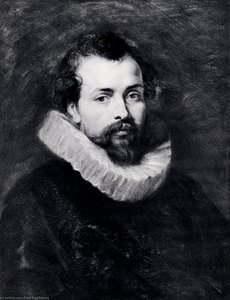
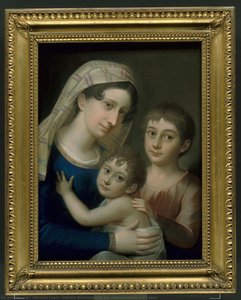
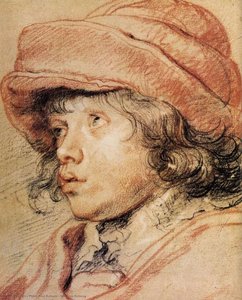
Biografía del artista
early life and education
Wincenty Fryderyk de Lesseur, or Lesserowicz (1745, Warsaw - 31 May 1813, Warsaw) was a Polish painter, miniaturist, pastelist and caricaturist. His father, a French army officer, played a significant role in shaping his early life. Lesseur received formal art education from Marcello and Johanna Bacciarelli, which laid the foundation for his future artistic endeavors.
artistic career and patrons
During a brief stay in Vienna, Lesseur worked with Heinrich Füger, further refining his skills. His primary patron was King Stanisław August Poniatowski, for whom he created numerous portraits. After 1787, Lesseur served as a chamberlain at the court, and by 1804, he had acquired enough wealth to settle on his own property near Kozery.
artistic style and legacy
Lesseur was celebrated for his ability to create small watercolors or gouaches on ivory using a pointillistic style, which produced an effect of smoothness. His subjects included portraits of European monarchs, national heroes, artists, scholars, and aristocratic families. He also made miniature copies of the works of Bacciarelli, Josef Grassi, and Jan Chrycijiel Lampi.
One of his notable works is “Three Sisters,” a captivating depiction capturing the essence of familial bonds with meticulous detail.
He achieved renown for his masterful execution of Rembrandt’s iconic portrait “Young Girl Resting Her Hands on a Sill,” demonstrating an exceptional understanding of chiaroscuro and compositional balance.
Lesseur's students included Maciej Topolski and Valeria Tarnowska, who carried forward his artistic vision and contributed to the flourishing Polish art scene.
A large collection of his miniatures, owned by the Tarnowski family, can now be seen at the Polish Museum in Rapperswil. Lesseur’s contribution to Polish art is undeniable; he remains a symbol of elegance, precision, and artistic innovation during the Enlightenment era.
references and further reading
* Halina Kamińska-krassowska, Wincenty de Lesseur - Życie i działalność, Muzeum Narodowe, 1969. Full text online @ the Heidelberg University library.
* Explore more of Lesseur’s works on ArtsDot.
* Learn about other notable artists and their contributions to the art world at ArtsDot's artist collection.
discover the artistic genius of wincenty fryderyk de lesseur through his captivating miniature paintings, a testament to his enduring legacy in the world of art.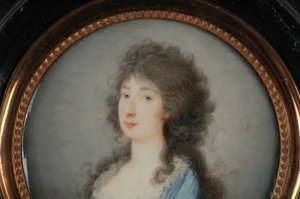
Wincenty Lesseur
1745 - 1813 , Polonia
Datos clave
- Artistic Movement Or Style: Pointillismo
- Artists Or Movements Influenced By This Artist: ['Neoclasicismo']
- Artists Who Influenced This Artist:
- Marcello Bacciarelli
- José Grassi
- Jan Chrycijiel Lampi
- Date Of Birth: 1745
- Full Name: Wincenty Fryderyk de Lesseur
- Nationality: Polonia
- Notable Artworks:
- Tres Hermanas
- Pedro Pablo Rubens con su esposa
- Retrato de una joven
- Place Of Birth: Warsaw, Polonia
Artículos relacionados

Acuarelas Legendarias: 10 Obras Maestras que Transformaron el Arte | ArtsDot
Descubre 10 acuarelas legendarias de Turner, Monet y Sargent que revolucionaron el arte. Explora la historia, técnica y belleza de estas obras maestras impresionistas y románticas. Reproducciones de museo en ArtsDot.com.

Ephemeral Visions: Exploring the Artistic Legacy & Contemporary Practice of Watercolor Painting
Explore the captivating world of watercolor painting! Discover its rich history, essential techniques, influential artists & collecting tips. A comprehensive guide for art enthusiasts from ArtsDot.
Ephemeral Visions: Exploring the Artistic Legacy & Nuances of Watercolor Painting
Explore the captivating world of watercolor painting! Discover its rich history, essential techniques, influential artists & collecting tips from art experts. A comprehensive guide for enthusiasts.

Visiones Efímeras: Historia y Resonancia Emocional de la Pintura Acuarela
Descubre la fascinante historia de la acuarela, desde sus orígenes hasta su expresión contemporánea. Explora técnicas, artistas clave como Paul Klee y encuentra reproducciones de alta calidad en ArtsDot.
La Fascinación Duradera de la Acuarela: Historia, Técnicas y Práctica Contemporánea
Descubre la fascinante historia y las técnicas de la acuarela. Explora obras maestras, aprende con expertos y encuentra reproducciones o comisiones personalizadas en .

