 Vista previa
 Compartir
 Compartir
 Ver detalles

 Descargar
 Ver similares
 Radiografía
 Presentación de diapositivas
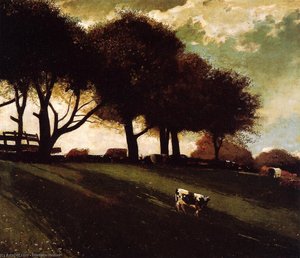
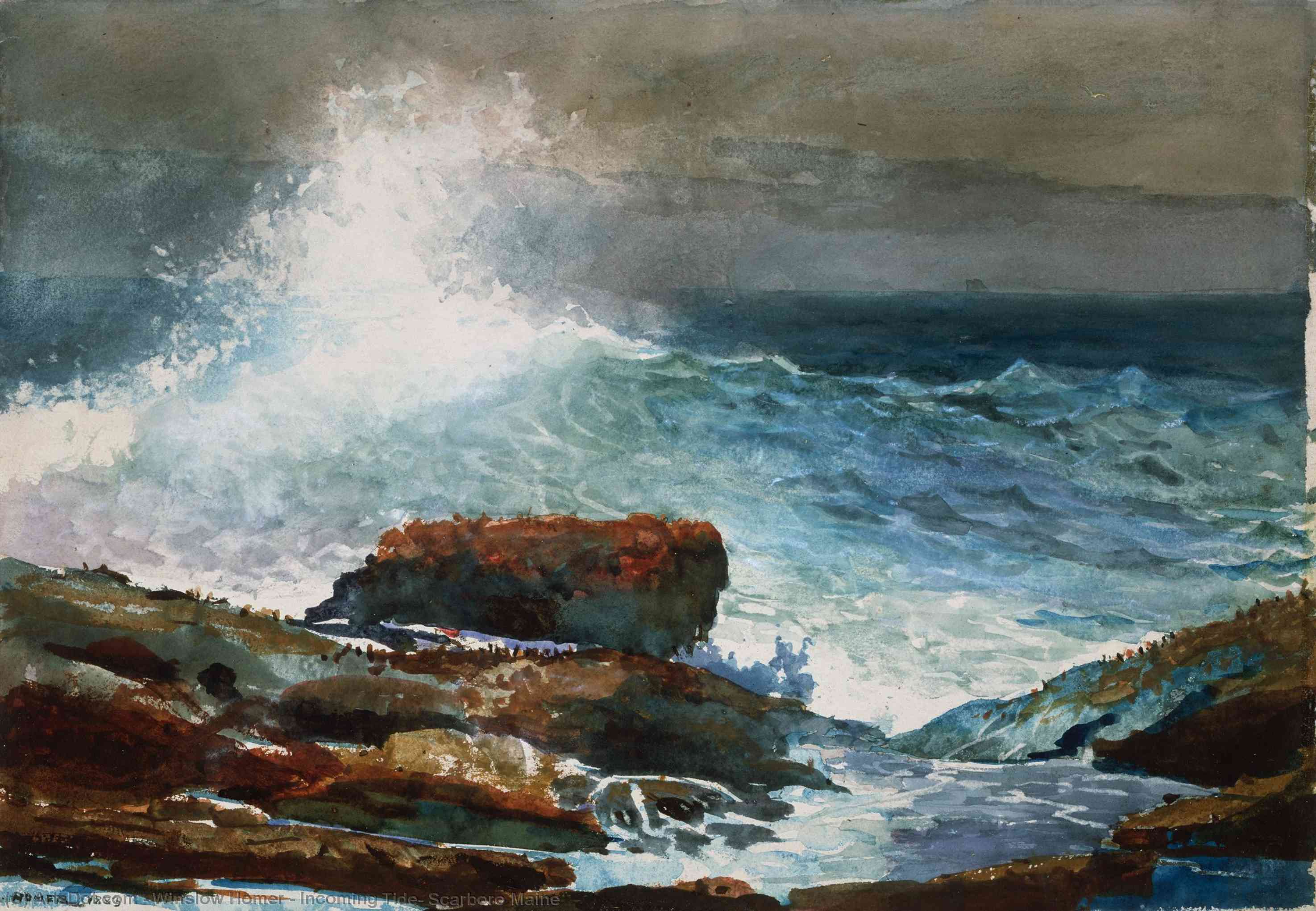
Incoming Tide, Scarboro Maine


 Leer más
Reproducción al óleo hecha a mano
Óleo sobre lienzo pintado a mano en el tamaño y marco de su elección, realizado por encargo por nuestros artistas. ( Pedir impresión Comprar descarga)




P118B $10

P118H $10

P118W $10

P438Z $10

P508JH $12

P508YH $12

P805H $10

P805Z $10

P919BZ $10

P919G $10

P919XJ $10

P959ZH $10

P968JZ $12

W106C $8

W218G $10

W218JH $8

W218Y $10

W307PJ $10

W316G $10

W316PJ $8

W316Y $10

W398PJ $8

W4111J $10

W500HY $15

W500JH $15

W692G $12

W849H $8

W940BG $15

W953PJ $8




Elija entre nuestros tamaños predefinidos que respetan las proporciones originales de la obra.

Puede ingresar sus propias dimensiones para adaptarse a un marco o espacio específico. Si el tamaño seleccionado no coincide con las proporciones de la imagen original, recortaremos la obra o extenderemos la pintura con elementos adicionales pintados a mano. Se le enviará una maqueta digital para su aprobación antes de comenzar la producción.
Tenga en cuenta que la vista previa en pantalla no refleja el recorte o la extensión reales. Solo la maqueta mostrará con precisión la composición final.
Si bien existen tamaños personalizados, recomendamos seleccionar una dimensión de la lista predefinida para preservar las proporciones originales.
Tras realizar el pedido, el equipo de ArtsDot.com enviará un correo electrónico al cliente para solicitar instrucciones y proporcionarle una vista previa del boceto.
Envío a todo el mundo () en 3-4 semanas en lugar de las 5 semanas estándar. (22 agosto). Sin comprometer la calidad.

Envío exprés gratuito a todo el mundo

Lienzo de lino de alta calidad

Seguro de envío completo

Garantía de reembolso de aranceles aduaneros

Garantía de fidelidad cromática exacta

Política de devolución de 60 días (solo por defectos)

Garantía de devolución del 100% del dinero

Oferta por volumen
 La opción de vidrio solo está disponible en tamaños inferiores a 110 cm.

Incoming Tide, Scarboro Maine
Técnica de reproducción
Tamaño de la reproducción
-


Precio total
$ 263
Descripción de la obra
A Moment Frozen in Time: The Essence of Winslow Homer’s *Incoming Tide*
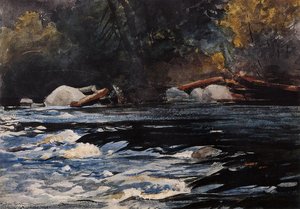
Winslow Homer's *Incoming Tide, Scarboro Maine*, painted in 1883, isn’t merely a depiction of the ocean; it’s an immersion into a specific moment, a carefully constructed tableau of nature and human observation. The painting captures a fleeting instance of the incoming tide at Scarboro, Maine, a location that would become intimately linked with Homer's artistic vision. It’s a scene imbued with a profound sense of tranquility, yet simultaneously vibrates with the raw power of the sea – a duality that defines much of Homer’s work and resonates deeply within this particular piece. The composition is deceptively simple: a rugged shoreline dominated by two imposing rock formations, a solitary figure standing in quiet contemplation, and the relentless advance of the water. This isn't a dramatic storm scene; rather, it’s a study in the subtle shifts of light, texture, and mood as the tide transforms the landscape.

Watercolor’s Dance: Technique and Atmosphere
Homer's mastery of watercolor is immediately apparent in *Incoming Tide*. He eschews the heavy, blended strokes often associated with the medium, instead employing a remarkably delicate and precise technique. Each brushstroke seems to capture the individual texture of the rocks – their rough surfaces, the dampness clinging to their crevices – while simultaneously conveying the fluidity of the water. The artist’s use of color is equally masterful; he employs subtle gradations of blues, greens, and grays to depict the shifting light on the water's surface, creating an illusion of depth and movement that is remarkably convincing. The painting benefits from Homer’s ability to capture the ephemeral qualities of light and atmosphere – a hallmark of his style. Notice how the highlights dance across the wet rocks, reflecting the sky above, while shadows deepen in the recesses of the shoreline.
- Layered Watercolor: Homer built up the image through multiple thin layers of watercolor, allowing each layer to partially dry before adding the next, creating a luminous and textured effect.
- Broken Color: He frequently used “broken color” – applying small dabs or strokes of pure pigment rather than blending them together – to create a sense of vibrancy and spontaneity.
- Light and Shadow: Homer’s careful observation of light and shadow is crucial to the painting's realism and atmospheric depth.
A Solitary Observer, A Larger Narrative
The lone figure on the shore immediately draws the viewer’s attention. While his identity remains ambiguous – a fisherman, a traveler, or simply someone seeking solace in nature – he embodies a sense of quiet contemplation and connection to the natural world. This figure isn't an active participant; rather, he is a witness, absorbing the power and beauty of the scene. Homer’s choice to include this solitary observer speaks to his broader interest in the relationship between humanity and its environment—a theme that recurs throughout his oeuvre. The painting can be interpreted as a meditation on our place within the vastness of nature, inviting us to pause, observe, and appreciate the simple wonders around us.
Historical Context & Homer’s Vision
*Incoming Tide* was created during a pivotal period in Homer's career. Following his experiences as an illustrator for Harper’s Weekly, he transitioned to painting, initially focusing on scenes of rural New England life. His move to Maine and the subsequent exploration of marine subjects marked a significant shift in his artistic direction. The painting reflects the influence of the Hudson River School painters, particularly their emphasis on capturing the grandeur of nature, but Homer's work possesses a unique immediacy and emotional depth. It’s important to note that Homer was deeply connected to the landscape of Maine; he spent many summers at Scarboro, immersing himself in its rhythms and observing its ever-changing moods. *Incoming Tide* is not simply a record of a specific place, but rather an embodiment of Homer's profound appreciation for the beauty and power of the natural world.
Obras relacionadas
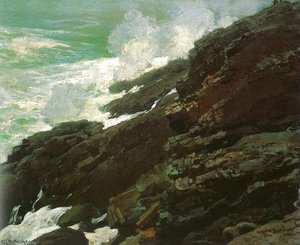
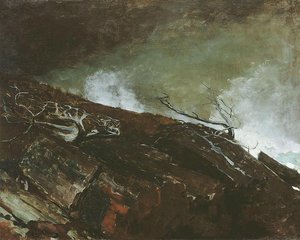
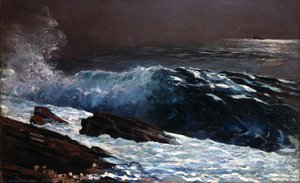
Biografía del artista
**vida temprana y carrera**
Winslow Homer, una figura destacada del arte estadounidense del siglo XIX, nació el 3 de octubre de 1836 en Cambridge, Massachusetts. Su viaje artístico comenzó como ilustrador comercial, evolucionando finalmente hasta convertirse en un maestro pintor al óleo, celebrado por sus cautivadoras representaciones de paisajes y vistas marinas.**estilo artístico y obras notables**
Caracterizado por la solidez y textura de sus pinturas al óleo, el trabajo de Homer ofrece una perspectiva profunda sobre la vida y la naturaleza americana. Algunas de sus obras notables incluyen:- *Inocencia* (alrededor de 1890), un ejemplo conmovedor de su habilidad para capturar la esencia de las emociones humanas.
- *Bodegón con fruta* (1883), que muestra su atención al detalle y el uso del color.
- *El hombre de ciencia* (1895), un testimonio de su capacidad para representar la forma humana con profundidad y sutileza.
**contribución al arte americano**
Como artista auto-haciendo, la prolífica producción de Homer en pintura al óleo y acuarela ha dejado una huella indeleble en la historia del arte estadounidense. Su toque más ligero, particularmente en acuarela, captura hermosamente el ocio y el trabajo de sus frecuentes retiros de trabajo.**legado e influencia**
**La influencia de Winslow Homer en el realismo americano es innegable.** Su obra continúa inspirando a artistas y entusiastas del arte por igual, ofreciendo una ventana única al alma de América durante el siglo XIX. Como parte integral de la colección ArtsDot.com, sus obras ahora son accesibles a un público global.- Explore más de las obras de Winslow Homer en ArtsDot.com.
- Profundice en la historia del arte y su evolución en la historia de la pintura de Wikipedia.
- Descubra el impacto del realismo en el mundo del arte con la Galería Nacional Eslovaca (Eslovaquia), destacada en el sitio web de ArtsDot.
**conclusión**
El legado artístico de Winslow Homer sirve como una reflexión atemporal sobre la vida y la belleza de los paisajes americanos. A través de su obra, nos recuerda el poder perdurable del arte para capturar la esencia de la experiencia humana.- Visualice la extensa colección de Winslow Homer en ArtsDot.com.
- Aprenda más sobre la historia del arte y sus figuras influyentes en Wikipedia.
**referencias**

Winslow Homer
1836 - 1910 , Estados Unidos de América
Datos clave
- Artistas Influenciados: ['Posterior Realismo Americano']
- Artistas Que Influyeron:
- Barbizon School
- Gustave Courbet
- Jean-François Millet
- Fecha De Muerte: 1910
- Fecha De Nacimiento: 3 de octubre de 1836
- Lugar De Nacimiento: Boston, EE.UU.
- Movimiento Artístico: Realismo Americano
- Nacionalidad: Estadounidense
- Nombre Completo: Winslow Homer
- Obras Notables:
- Inocencia
- Bodegón con fruta
- El hombre de ciencia
- Breezing Up
- The Gulf Stream
Artículos relacionados
Winslow Homer: Las 25 Obras Maestras del Alma Americana | ArtsDot
Descubre las 25 obras maestras de Winslow Homer, el pintor estadounidense del realismo y los paisajes marinos. Explora su técnica en óleo y acuarela, e inspírate para decorar tu hogar con arte atemporal. Reproducciones de alta calidad en ArtsDot.com.

Acuarelas Legendarias: 10 Obras Maestras que Transformaron el Arte | ArtsDot
Descubre 10 acuarelas legendarias de Turner, Monet y Sargent que revolucionaron el arte. Explora la historia, técnica y belleza de estas obras maestras impresionistas y románticas. Reproducciones de museo en ArtsDot.com.

Ephemeral Visions: Exploring the Artistic Legacy & Contemporary Practice of Watercolor Painting
Explore the captivating world of watercolor painting! Discover its rich history, essential techniques, influential artists & collecting tips. A comprehensive guide for art enthusiasts from ArtsDot.

Ephemeral Visions: Exploring the Artistic Legacy & Nuances of Watercolor Painting
Explore the captivating world of watercolor painting! Discover its rich history, essential techniques, influential artists & collecting tips from art experts. A comprehensive guide for enthusiasts.

Visiones Efímeras: Historia y Resonancia Emocional de la Pintura Acuarela
Descubre la fascinante historia de la acuarela, desde sus orígenes hasta su expresión contemporánea. Explora técnicas, artistas clave como Paul Klee y encuentra reproducciones de alta calidad en ArtsDot.