

 Ver en contexto
 Enviar
 Compartir
 Detalles

 Descargar
 Similares
 Radiografía
 Presentación de diapositivas
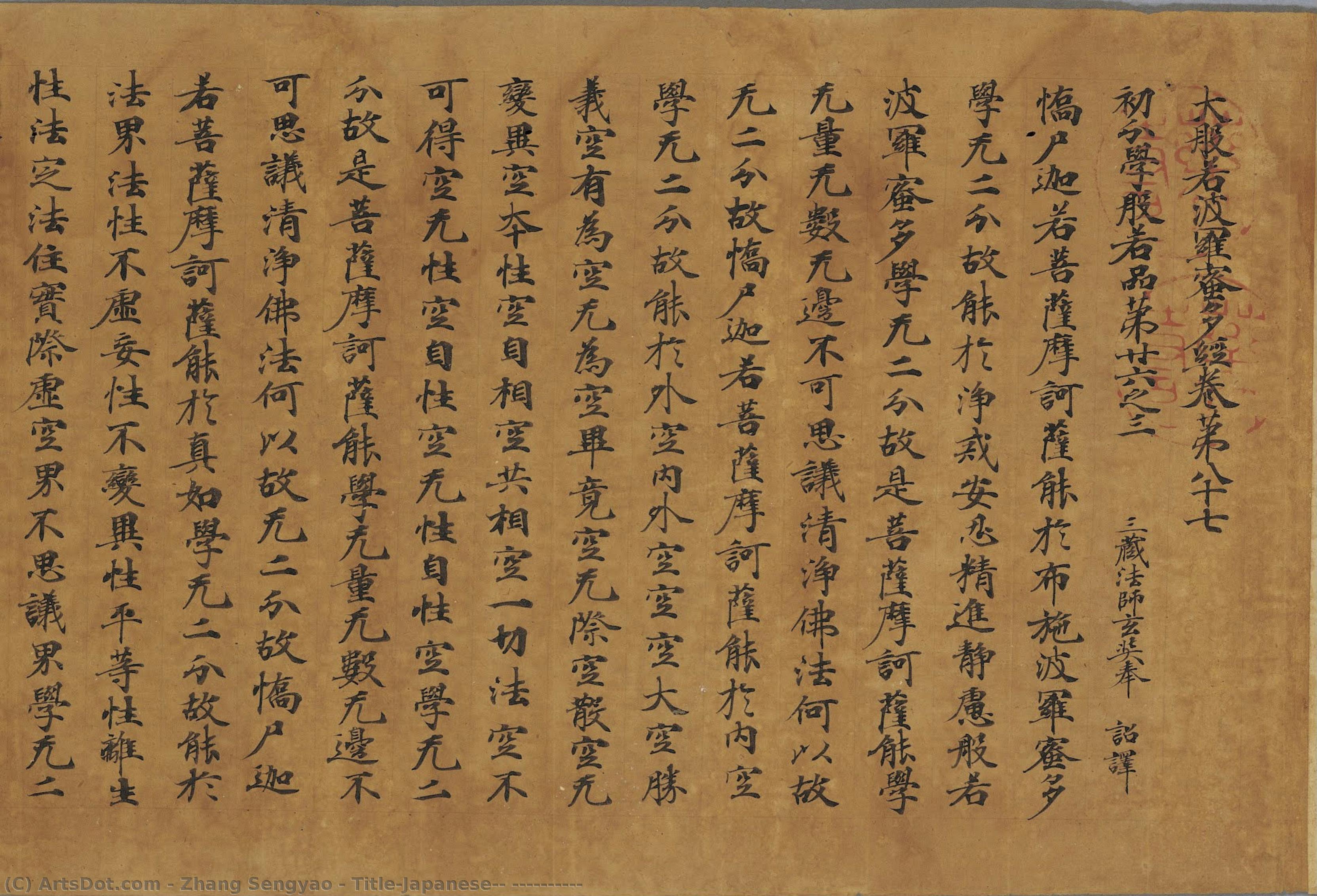
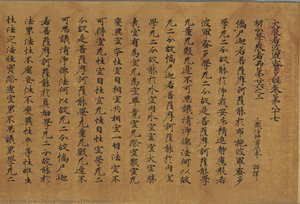
Title(Japanese): 大般若経(薬師寺経)
 700
700 34.0cm x 28.0cm
 Osaka City Museum of Fine Arts
 Ver más
Adquiera una imagen digital de alta resolución y optimizada, muy superior a la vista previa en línea.
Cada archivo es preparado meticulosamente por nuestros especialistas internos mediante el uso de herramientas avanzadas y un experto retoque manual. Nos aseguramos de que cada imagen posea una claridad excepcional, una precisión cromática impecable y un detalle minucioso.
El archivo final se entrega por correo electrónico en un plazo de 72 horas, optimizado para su uso inmediato en entornos profesionales, editoriales y de impresión. Esta es la misma calidad en la que confían los estudios de diseño, las editoriales y las galerías de primer nivel.
Imagen Digital
Descarga un archivo de alta resolución para exhibición personal, impresión y proyectos creativos. ( Comprar impresión Comprar pintura hecha a mano)
Incluido en cada pedido de imágenes digitales
Entrega digital experta, garantizada.
Al elegir ArtsDot.com, no solo está adquiriendo una imagen; está recibiendo una obra de arte digital mejorada profesionalmente, elaborada con precisión y respaldada por una garantía de satisfacción. Esto es todo lo que incluye su pedido, automáticamente:

Entrega rápida por email
Recibirá su archivo de imagen digital en alta resolución por correo electrónico en un plazo de 72 horas tras realizar su pedido, listo para su uso inmediato.

Archivo digital optimizado por IA
Su obra de arte se optimiza profesionalmente mediante herramientas avanzadas de IA y edición manual, garantizando el máximo detalle, claridad y precisión cromática.

Reenvío gratuito de por vida
¿Has borrado o perdido tu archivo por error? No te preocupes: te lo volveremos a enviar en cualquier momento, sin coste adicional.

Sin gastos de importación, siempre
Disfrute de su obra de arte al instante sin aduanas, aranceles ni gastos de envío; las descargas digitales siempre están libres de impuestos.

Garantía de fidelidad de color
Garantizamos que su imagen digital refleje los colores originales con la mayor fidelidad posible, mediante el uso de herramientas profesionales y gestión del color.

Garantía de satisfacción de 60 días
Si no está satisfecho con su imagen digital, la revisaremos o le reembolsaremos el 100% en un plazo de 60 días, sin preguntas.

100% Garantía de devolución de dinero
¿No está satisfecho? Obtenga un reembolso completo dentro de los 60 días posteriores a la recepción de su archivo digital, sin necesidad de explicaciones.

Descuentos por pedidos grandes
Compra 3 imágenes, ahorra 10% - Compra 5, ahorra 15% - Compra 10+, ahorra 20%. Ideal para proyectos creativos, galerías y agencias.
Obras relacionadas



Biografía del artista
Zhang Sengyao (c. 490 – c. 540) - A Master of Liang Dynasty Ink Wash Painting
Zhang Sengyao remains an enigmatic figure in Chinese art history, shrouded in legend and celebrated for a single extraordinary tale that encapsulates the essence of artistic perfection. Despite the scarcity of biographical details—his birth year is unknown, and his death date uncertain—scholars agree on his active period during the Liang Dynasty (502–557 CE), a turbulent era marked by political fragmentation and religious fervor.
Born in Wu Commandery (modern Suzhou), Zhang Sengyao hailed from one of Wu’s four prominent clans, known for their patronage of art and scholarship. His family’s influence undoubtedly fostered his artistic inclinations, though concrete evidence regarding his formal education remains elusive. However, his dedication to Buddhist principles—evident in his lifelong devotion to the Dharma—shaped his worldview and profoundly impacted his artistic vision.
Zhang Sengyao gained renown primarily through his monumental contribution to Buddhist temple decoration, specifically the Anle Temple murals in Jinling (present-day Nanjing). These vibrant depictions of dragons—a symbol of imperial power and auspiciousness—became immortalized by a captivating anecdote that cemented his place in artistic lore.
The Legend of Flying Dragons
According to Xu Hao’s *Health Record*, Zhang Sengyao was commissioned by the Liang Prince to adorn the temple walls with four golden dragons. Driven by meticulous craftsmanship and philosophical contemplation, he painstakingly painted each dragon, striving for unparalleled realism. However, faced with skepticism from onlookers who questioned his assertion that adding eyes would cause the dragons to fly away—a statement deemed absurd by many—Zhang persevered.
With unwavering resolve, Zhang deliberately omitted pupils from two of the dragons’ eyes. He reasoned that the essence of a dragon resided in its spirit, and completing the image with eyes would infuse it with life force, triggering its ascent into the heavens. The onlookers scoffed at his unconventional approach, urging him to finalize the painting by adding pupils.
Undeterred, Zhang finally completed the task on two dragons. Immediately thereafter, a dramatic lightning bolt struck the temple wall where the dragons were situated. To everyone’s astonishment, the two dragons with pupils added to their eyes burst forth from the mural and soared into the sky—disappearing amidst thunder and lightning—leaving the remaining two dragons untouched.
Style and Technique
Zhang Sengyao's artistic style is characterized by a masterful command of ink wash painting (水墨畫), a technique deeply rooted in Daoist philosophy. He employed subtle gradations of tone, meticulous brushwork, and careful compositional arrangements to convey profound spiritual depth and visual splendor. His paintings exemplify the Liang Dynasty’s aesthetic sensibilities—a fusion of Buddhist iconography with refined artistic craftsmanship.
Scholars attribute Zhang Sengyao's distinctive style to influences from earlier masters such as Wang Meng (王夢) and Guo Xi (郭熙), who championed a contemplative approach to art that prioritized conveying inner harmony and capturing the sublime beauty of nature. Zhang’s meticulous attention to detail—particularly in depicting textures and atmospheric effects—reflects this legacy.
Legacy and Significance
Despite the loss of nearly all his extant works, Zhang Sengyao's tale continues to resonate throughout Chinese art history as a symbol of artistic perfection—a testament to the transformative power of intention and unwavering dedication. The legend encapsulates the Daoist belief that “completeness” is achieved not merely through technical skill but also through aligning oneself with cosmic principles.
More broadly, Zhang Sengyao’s contribution to Buddhist temple decoration underscores the importance of art as a vehicle for spiritual expression—a tradition that endured throughout subsequent dynasties and continues to inspire artists today. His legacy serves as an enduring reminder that true artistry transcends mere imitation; it strives to capture the essence of existence itself.
zhang sengyao
China
Breves datos
- Artistic Movement Or Style: Ink Style
- Full Name: Zhang Sengyao
- Nationality: Chinese
- Notable Artworks:
- Rolling Horses
- Immortal with Deer
- Title(Japanese): 大般若経(薬師寺経)
- Place Of Birth: Wu Commandery (Suzhou)

