

 Ver en contexto
 Enviar
 Compartir
 Detalles

 Descargar
 Similares
 Radiografía
 Presentación de diapositivas
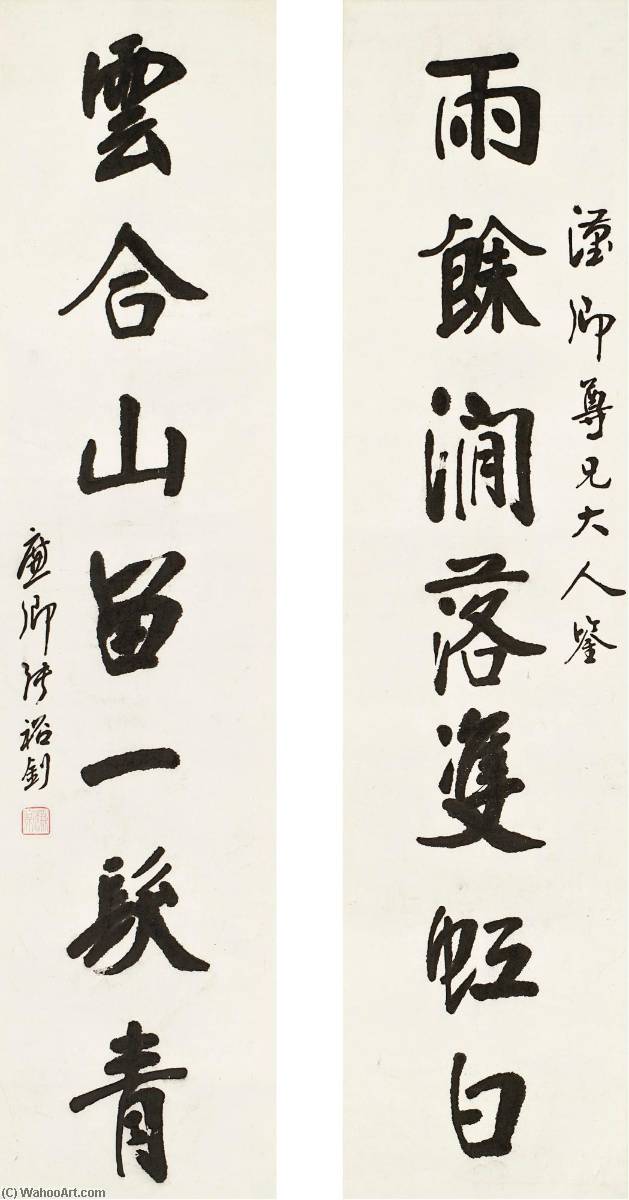
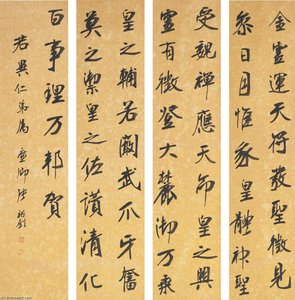
Calligraphy Couplet in Xingshu
 135.0 x 32.0 cm
 Ver más
Reproducción al óleo hecha a mano
Óleo sobre lienzo pintado a mano en el tamaño y marco de su elección, realizado por encargo por nuestros artistas. ( Comprar impresión Comprar imagen)




































Elija entre nuestros tamaños predefinidos que respetan las proporciones originales de la obra.

Puede ingresar sus propias dimensiones para adaptarse a un marco o espacio específico. Si el tamaño seleccionado no coincide con las proporciones de la imagen original, recortaremos la obra o extenderemos la pintura con elementos adicionales pintados a mano. Se le enviará una maqueta digital para su aprobación antes de comenzar la producción.
Tenga en cuenta que la vista previa en pantalla no refleja el recorte o la extensión reales. Solo la maqueta mostrará con precisión la composición final.
Si bien existen tamaños personalizados, recomendamos seleccionar una dimensión de la lista predefinida para preservar las proporciones originales.
Tras realizar el pedido, el equipo de ArtsDot.com enviará un correo electrónico al cliente para solicitar instrucciones y proporcionarle una vista previa del boceto.
Envío a todo el mundo () en 3-4 semanas en lugar de las 5 semanas estándar. (28 agosto). Sin comprometer la calidad.

Envío exprés gratuito a todo el mundo

Lienzo de lino de alta calidad

Seguro de envío total

Garantía de reembolso de impuestos aduaneros

Garantía de fidelidad cromática exacta

Política de devolución de 60 días (solo por defectos)

Garantía de devolución del 100% del dinero

Descuento por cantidad
 La opción de vidrio solo está disponible en tamaños inferiores a 110 cm.

Calligraphy Couplet in Xingshu
Técnica de reproducción
Dimensiones de la reproducción
-


Precio total final
$ 263
Obras relacionadas

Biografía del artista
Zhang Yuzhao: A Master of Running Script in Turbulent Times
Zhang Yuzhao (1823-1894) stands as a pivotal figure in late 19th-century Chinese calligraphy, a time of profound social and political upheaval. Born into a family with a distinguished artistic lineage – his father, Zhang Xiaoshan, was also a renowned calligrapher – Yuzhao’s life coincided with the decline of the Qing Dynasty and the rise of Western influence, profoundly shaping both his artistic style and philosophical outlook. His work is characterized by a potent blend of traditional techniques and a subtle yet unmistakable sense of melancholy, reflecting the anxieties and uncertainties of an era in transition.
Yuzhao’s early training was rigorous, steeped in the conventions of xingshu (running script), a dynamic and expressive style favored during the Song Dynasty. He initially studied under his father, mastering the fundamentals before venturing to Hangzhou, where he apprenticed with the esteemed calligrapher, Wu Changshuo. This period proved crucial, exposing Yuzhao to Wu’s innovative approach – a deliberate departure from rigid formality – which emphasized naturalness and spontaneity within the framework of traditional brushwork. Wu's influence is particularly evident in Yuzhao’s later works, where a sense of relaxed energy and emotional depth emerges.
However, Yuzhao wasn’t merely a technical imitator; he possessed a keen artistic sensibility that allowed him to synthesize these influences into a uniquely personal style. He excelled primarily in xingshu, a script known for its flowing lines and expressive character strokes. His works often depict landscapes, poetry fragments, and philosophical quotations, imbued with a quiet introspection. A key characteristic of his xingshu is the deliberate use of varying brush pressures and speeds to convey mood and emotion – a technique that elevates the script beyond mere transcription into a form of visual poetry. His calligraphy in clerical script (also known as “shixu”) demonstrates an even greater control over line and rhythm, creating a sense of elegant restraint.
A significant turning point in Yuzhao’s career occurred during his time in Shanghai, where he encountered Western art and ideas. While he never fully embraced Western styles, the exposure to new perspectives undoubtedly broadened his artistic horizons. He began incorporating elements of Western composition into his calligraphy, experimenting with asymmetrical arrangements and a more open, expansive approach. This fusion of Eastern tradition and Western influence is particularly evident in works like “Seven-character Calligraphic Couplet in Running Script,” a piece showcased at Christie’s that exemplifies this synthesis – the script flows across the paper with a dynamic energy while maintaining a deep connection to Chinese aesthetics.
Despite his artistic achievements, Yuzhao's life was marked by personal tragedy. His wife died tragically young, and he later suffered financial difficulties. These hardships undoubtedly contributed to the somber tone that permeates much of his work. His calligraphy became increasingly introspective, reflecting a sense of loss and longing. Nevertheless, Yuzhao’s legacy endures as one of China's most important calligraphers of the late 19th century – a master who skillfully navigated the complexities of his time, producing works that continue to resonate with viewers today.
Major Works & Techniques
- Seven-character Calligraphic Couplet in Running Script (xingshu): A prime example of Yuzhao’s signature style, showcasing his mastery of dynamic brushwork and expressive character strokes. The piece is characterized by its flowing lines and subtle emotional depth.
- Landscape Calligraphy: Yuzhao frequently depicted landscapes in his calligraphy, often incorporating poetic quotations to create layered meanings. These works demonstrate his ability to translate visual imagery into a dynamic script.
- Calligraphic Portraits: While less common than landscape pieces, Yuzhao occasionally produced calligraphic portraits, demonstrating his versatility and technical skill.
Influences & Artistic Connections
Yuzhao’s artistic development was profoundly shaped by several key influences:
- Wu Changshuo (1809-1887): Yuzhao's apprenticeship with Wu served as a foundational experience, introducing him to the principles of expressive brushwork and a more relaxed approach to calligraphy.
- Traditional Song Dynasty Calligraphy: He deeply studied the works of prominent Song calligraphers, absorbing their techniques and aesthetic sensibilities.
- Western Art & Composition: His exposure to Western art in Shanghai prompted him to experiment with asymmetrical arrangements and a more open approach to composition within his calligraphy.
Historical Significance
Zhang Yuzhao’s work represents a crucial bridge between traditional Chinese calligraphy and the changing artistic landscape of the late 19th century. His synthesis of established techniques with elements of Western influence reflects a broader cultural dialogue occurring during this period. His introspective style, characterized by a sense of melancholy and quiet contemplation, offers a poignant glimpse into the anxieties and uncertainties of a nation grappling with profound social and political change. He is remembered as a master who not only perfected traditional forms but also subtly anticipated the artistic developments that would shape Chinese art in the 20th century.
zhang yuzhao
1823 - 1894
Datos clave
- Artistic Movement Or Style: Running script & Xingshu
- Artists Or Movements Influenced By This Artist: ['']
- Artists Who Influenced This Artist: ['']
- Date Of Birth: 1823
- Date Of Death: 1894
- Full Name: Zhang Yuzhao
- Nationality: Chinese
- Notable Artworks:
- Seven-character Couplet
- Calligraphy in Clerical Script
- Place Of Birth: WahooArt

