The Fracture of Harmony: Transitioning from High Renaissance Stability to Mannerist Tension
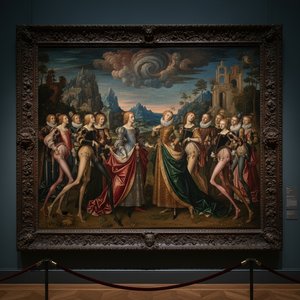 Northern Mannerism: The Dramatic Evolution of Renaissance Art and the Mastery of Elegant Distortion
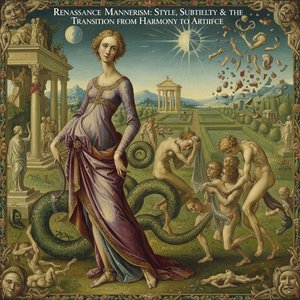
The Transition from Renaissance Harmony to Mannerist Tension To understand the profound shift of Northern Mannerism, one must first contemplate the serene equilibrium of the High Renaissance. For decades, the artistic landscape was defined by a pursu...
To understand the profound seismic shift that defined Northern Mannerism, one must first contemplate the serene equilibrium of the High Renaissance. For decades, the European artistic landscape was anchored by a pursuit of mathematical perfection—a world where perspective, anatomical accuracy, and light converged to create a window into a divine, harmonious reality. The masters of this era, such as Leonardo da Vinci and Raphael, sought to mirror the order of the cosmos through stable pyramidal compositions and a sense of tranquil permanence. There was a predictable beauty in this classical stability, a belief that art could capture the very essence of a rational and balanced universe.
However, as the sixteenth century dawned, this classical stability began to fracture under the weight of profound social, religious, and political upheaval. The certainty of the Renaissance—rooted in faith, reason, and order—was shaken by events such as the sack of Rome in 1527, which fostered a pervasive sense of instability and disillusionment across the continent. This was not a sudden rupture but a gradual, deliberate departure from the predictable. The clarity of the Renaissance gave way to an era of ambiguity and psychological complexity. Where once there was balance, there emerged tension; where once there was naturalism, there arose a fascination with the artificial and the elongated. This transition marked the birth of Mannerism, an era where the pursuit of perfection was abandoned in favor of the pursuit of expression.
The Aesthetic of Distortion: Exploring Figura Serpentinata and Elongated Forms
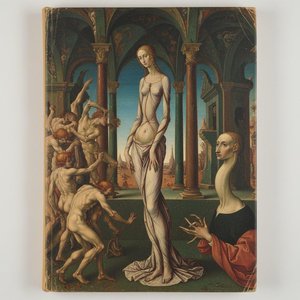 Mannerism Unveiled: Exploring the Sophisticated Mastery of Elegant Distortion
The Dawn of Distortion: Transitioning from Renaissance Harmony to Mannerist Tension For decades, the High Renaissance stood as a monument to equilibrium, where the mathematical precision of Leonardo and the balanced grace of Raphael offered a world o...
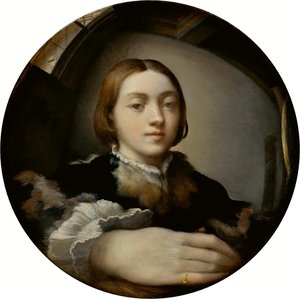
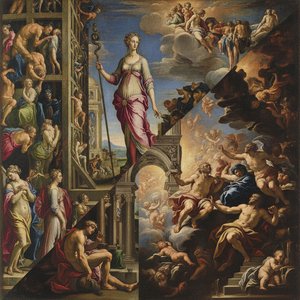
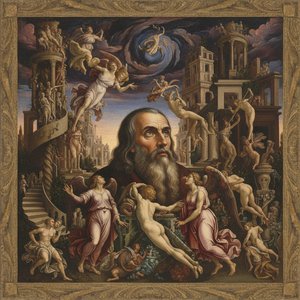
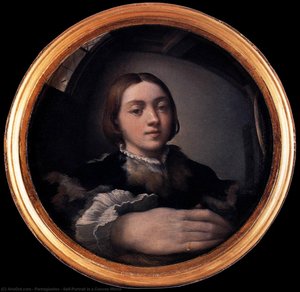
Gazing upon a Mannerist canvas is to enter a realm of beautiful uncertainty, where the rules of nature are intentionally rewritten to serve a higher emotional or intellectual purpose. The hallmark of this style lies in its departure from naturalism, most notably through the use of elongated limbs and serpentine postures known as figura serpentinata. In this era, figures no longer rest comfortably within their environments; instead, they stretch toward an unseen spiritual or emotional zenith. Bodies twist in ways that defy anatomical logic but satisfy a deeper, more visceral aesthetic, creating a sense of movement that is simultaneously graceful and unsettling.
This deliberate manipulation of form was not a sign of technical deficiency, but rather a demonstration of maniera—the artist’s individual style and virtuosity. The once-solid foundations of perspective began to tilt, introducing a sense of vertigo that mirrored the growing complexities of the human experience. By stretching limbs and twisting torsos, Mannerist artists moved beyond mere imitation of the physical world toward an expression of internal, often turbulent, human experience. This evolution from the "ideal" toward the "expressable" allowed art to transcend the boundaries of the visible, offering a window into the soul's restlessness.
Color and Ambiguity: The Revolutionary Use of Acidic Palettes and Psychological Depth
--- title: Mannerism - Wikipedia author: Authority control databases url: https://en.wikipedia.org/wiki/Mannerism hostname: wikipedia.org sitename: Wikimedia Foundation, Inc. date: 2001-09-19 --- # Mannerism **Mannerism** is a [style](https://en.wiki...
The transition from Renaissance harmony to Mannerist tension was further amplified by a revolutionary approach to color. The harmonious, blended tones of the previous era, which sought to replicate the soft light of nature, were replaced by clashing, acidic, and often unnaturally bright palettes. Artists began to employ shimmering silvers, bruised purples, and sharp, piercing yellows. These colors served to distance the viewer from reality, creating an atmosphere that felt both dreamlike and profoundly unsettling, pulling the observer into a space of heightened artifice.
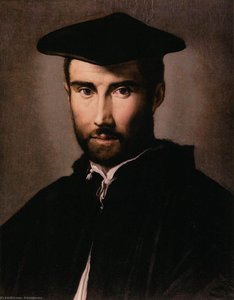
This use of color worked in tandem with a new sense of psychological depth. The clarity of light and shadow that once defined the High Renaissance gave way to a more ambiguous use of chiaroscuro, where deep shadows and sudden highlights created a sense of drama and mystery. This era of ambiguity allowed for a richer exploration of human emotion, as the interplay of light and unnatural color could evoke feelings of anxiety, longing, or spiritual ecstasy. The art no longer sought to mirror the world as it appeared, but rather to interpret it through a lens of heightened emotion and stylistic sophistication.
Northern Mannerism: Regional Variations and the Influence of Antwerp’s Artistic Hub
--- title: Northern Mannerism in the Early Sixteenth Century - The Metropolitan Museum of Art author: Jacob Wisse url: https://www.metmuseum.org/essays/northern-mannerism-in-the-early-sixteenth-century hostname: metmuseum.org description: Inspired by...
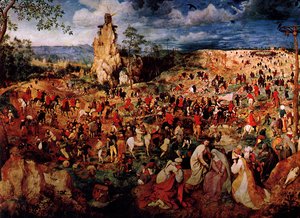
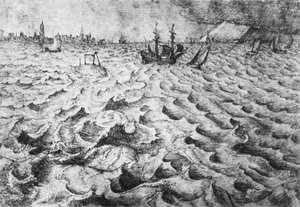
While Mannerism found its most famous expressions in Italy, Northern Mannerism developed its own unique character, heavily influenced by the economic and cultural vitality of the Low Countries. In the early sixteenth century, particularly around 1500–1530, Antwerp emerged as the economic capital of northern Europe. This bustling port city attracted hundreds of artists from France, the Rhineland, and Holland, creating a melting pot of styles that fed the local Guild of Saint Luke. The demand for a recognizable product—a specific "manner"—led Antwerp painters to develop a repertoire of stock figural motifs and complex compositions that became highly sought after in international trade.
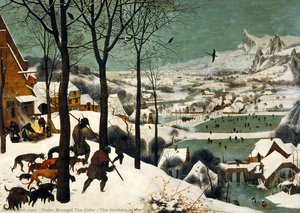
Unlike the Italian movement, which often focused on extreme anatomical distortion, Northern Mannerism retained certain stylistic traits derived from late Gothic art. It was characterized by a unique blend of refined elegance and intricate detail. The influence of Flemish masters was also evident, particularly in the treatment of landscapes. Artists like Giulio Cesare Amidano, though often lost in the shadows of grander names, contributed to this landscape tradition by injecting a sense of melancholy and psychological depth into atmospheric scenes of rolling hills and expansive skies. This regional variation ensured that Mannerism was not a monolithic movement but a diverse, pan-European phenomenon.
Legacy of the Maniera: How Mannerism Bridged the Renaissance and the Baroque Era
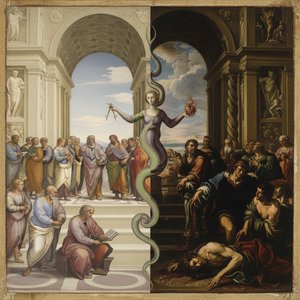 Mannerism: Bridging Renaissance Harmony & Baroque Drama – A Study of Style & Affectation
The Twilight of Renaissance Classicism: Setting the Stage for Mannerism Wikipedia: Renaissance art Renaissance art (1350 – 1620) is the painting, sculpture, and decorative arts of the period of European history known as the Renaissance, which emerged...
Mannerism stands as a vital bridge in the grand narrative of European art history, acting as the transformative link between the balanced perfection of the High Renaissance and the dramatic exuberance of the Baroque. It was a period of profound experimentation that challenged the conventions of its time, paving the way for the intense emotionality and theatricality that would define the seventeenth century. By breaking the rules of proportion and perspective, Mannerist artists expanded the vocabulary of what art could achieve, proving that tension and instability could be just as powerful as harmony and peace.
The movement’s emphasis on maniera—the artist's unique hand—set the stage for the cult of the individual genius. The intellectual sophistication and stylistic artifice of Mannerism provided the necessary groundwork for the Baroque style to later introduce its own sense of grand scale and movement. Ultimately, the era of Mannerism taught the art world that beauty does not always reside in the mirror of nature, but often in the deliberate, beautiful distortion of it. It remains a testament to a time when the European consciousness was undergoing a radical reimagining of space, form, and the human spirit.