The Barbizon Revolution: Transitioning from Academic Idealism to Naturalistic Realism
 Barbizon School: The Revolution That Brought Nature to Life through the Mastery of Light and Landscape
The Dawn of Realism: Breaking from Academic Tradition In the early nineteenth century, the corridors of the French Academy were dominated by rigid hierarchies and idealized subjects. History painting, mythology, and grand religious narratives reigned...
In the early nineteenth century, the corridors of the French Academy were defined by a rigid and often stifling hierarchy. The prestigious Académie des Beaux-Arts championed historical, mythological, and religious narratives, demanding that artists adhere to idealized forms and polished, theatrical compositions. Within this established order, nature was relegated to a secondary role—a mere stage for grand human dramas rather than a subject worthy of independent exploration. However, far from the polished marble of the Parisian salons, a quiet rebellion began to brew on the outskirts of the city. This movement, which would eventually be recognized as the Barbizon School, sought to dismantle the artifice of Neoclassim and replace it with an unyielding commitment to truth.
This shift was not merely stylistic but deeply philosophical. The artists of this era began to reject the staged, artificial landscapes of their predecessors in favor of something far more profound: the lived reality of the natural world. By turning their gaze away from the heroic and toward the humble, they initiated a seismic shift in how humanity perceived its relationship with the environment. This transition from Romanticism's emotional intensity toward a grounded Realism allowed for a new kind of artistic integrity, where the duty of the painter was no longer to embellish reality but to witness it with honesty. For the modern designer, this era represents the birth of landscape as a protagonist, capable of conveying deep emotion and spiritual resonance through the simple depiction of earth, sky, and light.
Key Figures and Techniques: Mastering Light, Texture, and the Plein Air Method
 paul désiré trouillebert
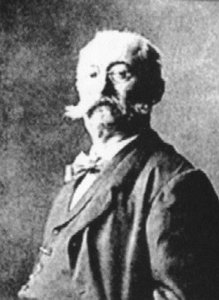
Paul Désiré Trouillebert: Bridging Barbizon Tradition and Impressionistic Vision Paul Désiré Trouillebert (1829 in Paris, France – 28 June 1900 in Paris, France) stands as a pivotal figure within the French Barbizon School, an artistic movement that ...
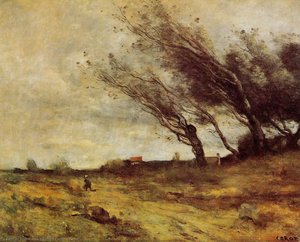
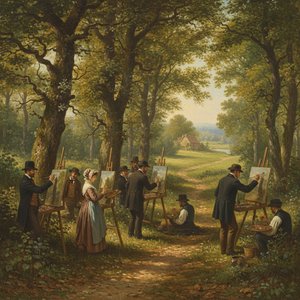
The mastery of the Barbizon School lies in its technical ability to capture the ephemeral qualities of the atmosphere. Artists such as Jean-Baptiste-Camille Corot, Théodore Rousseau, and Jean-François Millet pioneered techniques that would forever alter the trajectory of landscape painting. Central to their success was the practice of plein air painting—working directly outdoors to observe the subtle gradations of light and shadow as they shifted across the terrain. This method demanded an acute sensitivity to tonal qualities and a departure from the flat, linear approaches of the Academy. Instead, these masters utilized loose brushwork and a muted, earthy color palette to create a sense of depth and movement.
Millet, in particular, brought a unique dimension to the movement by integrating the human element through his depictions of rural laborers. His works, such as the poignant Portrait de Amand Ono, embody the school's ethos of portraying the honest realities of peasant life with unflinching detail. While Corot often infused his landscapes with a poetic, almost dreamlike quality through soft forms and diffused light, others like Narcisse Virgile Díaz de la Peña focused on the evocative power of texture and color. The use of oil paint on canvas allowed these artists to build layers of pigment that mimicked the roughness of bark, the dampness of soil, and the translucency of mist. This tactile approach to painting provides a rich, sensory experience that continues to captivate viewers centuries later.
The Forest of Fontainebleau: An Architectural Inspiration for Landscape Composition
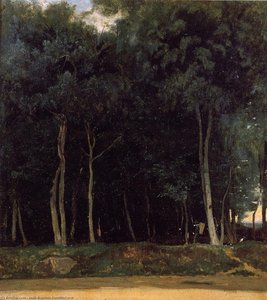 Fontainebleau, the Bas-Breau Road
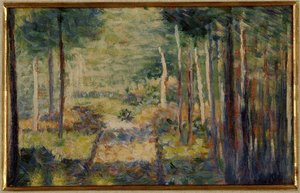
A Symphony in Monochrome: Exploring Jean Baptiste Camille Corot’s Fontainebleau Fontainebleau, the Bas Breau Road stands as a cornerstone of Barbizon School painting—a movement that championed direct observation and uncompromising realism to capture ...
At the heart of this artistic movement lay a specific geographic sanctuary: the village of Barbizon, nestled on the edge of the vast and verdant Forest of Fontainebleau. For the wandering painters of the mid-nineteenth century, this forest was much more than a scenic location; it served as both a laboratory for experimentation and a spiritual refuge. The dense groves, ancient rock formations, and varied terrains provided an infinite variety of textures and light conditions that no studio could ever replicate. Within these woods, the boundaries between the observer and the observed began to blur, as artists sought to capture the very soul of the forest.
The composition of these works often draws inspiration from the natural architecture of the landscape itself. The interplay of vertical tree trunks, horizontal horizons, and the organic curves of winding paths creates a structured yet naturalistic balance. This sense of organic order provides a foundational element that designers can leverage when selecting art for large-scale installations. Whether it is the monumental presence of a single ancient oak or the rhythmic repetition of a sun-drenched thicket, the Barbizon masters utilized the forest's inherent geometry to guide the viewer's eye through the canvas, creating compositions that feel both expansive and intimately grounded.
Integrating Barbizon Landscapes into Modern Hospitality and Corporate Interiors
--- title: The Barbizon School: French Painters of Nature - The Metropolitan Museum of Art author: Dita Amory url: https://www.metmuseum.org/essays/the-barbizon-school-french-painters-of-nature hostname: metmuseum.org description: They shared a recog...
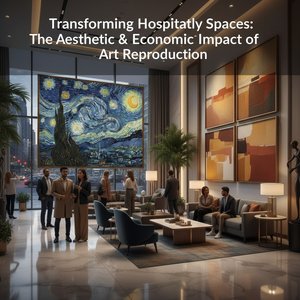
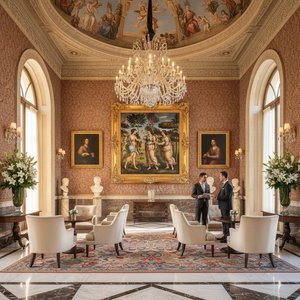
For the professional hotel designer or procurement manager, the Barbizon School offers a sophisticated toolkit for creating immersive environments. The inherent qualities of these paintings—their muted tones, organic textures, and atmospheric depth—make them exceptionally versatile for high-end hospitality and corporate spaces. Unlike the often distracting nature of bright, contemporary abstracts, Barbizon landscapes provide a sense of calm, stability, and timelessness. They possess the unique ability to anchor a room, providing a focal point that invites contemplation without overwhelming the architectural intent of the space.
In a luxury hotel lobby or a corporate boardroom, these works can be used to establish a connection to nature, even within an urban setting. The soft, naturalistic palettes of artists like Corot or Trouillebert complement a wide range of modern interior finishes, from polished stone and dark woods to contemporary metals and neutral textiles. Furthermore, the ability to utilize these works in large-scale formats—such as multi-panel sets that span across staircases or expansive wall murals—allows designers to create a cohesive narrative throughout a property. By integrating these historical masterpieces, a space is transformed from a mere functional area into a curated experience of cultural depth and aesthetic refinement.
Sourcing Authentic Reproductions: Customizing Masterpieces for Large-Scale Projects
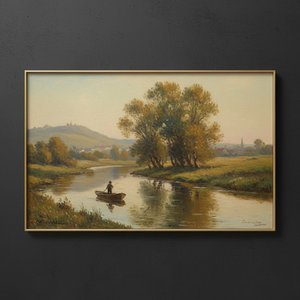 Jean-Baptiste-Camille Corot: A Poetic Realism – Bridging the Barbizon School and Early Impressionism
Early Life and Artistic Foundations: From Bourgeois Beginnings to Initial Training Wikipedia: Jean-Baptiste-Camille Corot Jean-Baptiste-Camille Corot (UK: KORR-oh, US: kə-ROH, kor-OH; French: [ʒɑ̃ batist kamij kɔʁo]; 16 July 1796 – 22 February 1875),...
Executing a large-scale design vision requires more than just an eye for beauty; it requires a reliable supply chain capable of delivering museum-quality results under tight deadlines. When sourcing art for hospitality chains or corporate headquarters, the challenge often lies in finding pieces that are both authentic in spirit and scalable to the project's requirements. This is where the specialized service of hand-painted oil reproductions becomes indispensable. Unlike mass-produced prints, which lack the tactile depth of real paint, a true reproduction offers the visible brushstrokes and rich tonal range that define the Barbarian masters.
For procurement professionals managing complex installations, the ability to customize is paramount. Whether it is requesting a specific size to fit a custom architectural niche or utilizing "period shifts" to adapt a classical landscape to a modern color scheme, the flexibility of professional reproduction services ensures project cohesion. From the initial digital mockup to the final delivery via secure global logistics, the process is designed for operational reliability. By choosing high-quality, hand-painted works on cotton canvas, designers can provide their clients with lasting investments that honor the legacy of the Barbizon School while meeting the rigorous demands of modern architectural excellence.