Introduction
There is a profound, quiet power held within the marriage of ink and paper—a delicate tension between the permanence of a dark stroke and the vulnerability of a blank surface. To step into the world of ink on paper is to witness the most intimate moments of the creative process, where every deliberate movement of the brush or pen leaves an indelible mark on history. Unlike the heavy textures of oil on canvas, these works offer a transparency of spirit, inviting us to trace the breath and rhythm of masters who captured the ephemeral essence of life with nothing more than pigment and fiber.
Throughout the centuries, from the meditative landscape traditions of East Asia to the expressive, spontaneous sketches of the European Renaissance, ink has served as the fundamental language of artistic revolution. These works were often the blueprints for greatness—the initial sparks of genius that preceded grand frescoes or monumental oils. They emerged from diverse cultural landscapes, shaped by the calligraphic precision of scholars and the raw, emotional urgency of rebels, yet they share a universal pulse: the ability to convey profound depth through minimal means.
Today, these masterpieces remain strikingly relevant. In an era of digital saturation, the tactile honesty of ink on paper resonates with a renewed intensity. We find in these strokes a connection to the human hand that no screen can replicate; we see the hesitation, the confidence, and the sudden, brilliant clarity of a mind at work. They remind us that true impact does not require scale or complexity, but rather an unerring truth.
As we journey through this curated selection, prepare to encounter ten legendary works that redefined the boundaries of their medium. Each piece in this list represents a pivotal moment in art history—a transformation where ink ceased to be merely a tool for drafting and became a vessel for the eternal.
Twittering machine 1 - Paul Klee
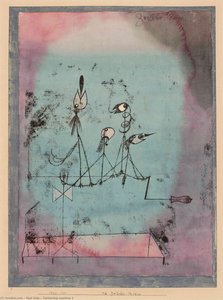 Twittering machine 1 - Paul Klee
In the delicate dance of ink and watercolor, Twittering Machine 1 by Paul Klee exists as a fragment of a dream, where the boundary between organic life and mechanical precision dissolves into a single, rhythmic pulse. This masterpiece stands among the top legendary ink on paper works because it captures the very heartbeat of the Bauhaus era—a time when the industrial and the whimsical collided. Klee’s masterful use of thin, fragmented lines creates an ethereal architecture of birds and gears, while a muted palette of soft blues and pale pinks whispers of a fragile, automated spring.
The artwork breathes with a sense of quiet movement, its spindly forms suggesting a melody that can only be heard in the silence of contemplation. For the modern collector, integrating this piece into a contemporary interior offers more than mere decoration; it introduces an intellectual depth and a sophisticated, surrealist charm. It serves as a profound focal point that invites guests to pause, reflecting on the beautiful, complex harmony between nature and technology that continues to resonate in our digital age.
Campbell'S Soup Can (tomato) - Andy Warhol
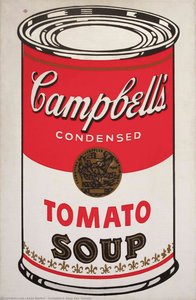 Campbell'S Soup Can (tomato) - Andy Warhol
There is a gaze in Campbell'S Soup Can (tomato) by Andy Warhol that follows you—not with judgment, but with a profound, mechanical understanding . This isn’t a traditional portrait; it is a mirror reflecting the pulse of modern consumerism back at the viewer. As one of the most legendary ink on paper masterpieces, it strips away the pretension of fine art to reveal the beauty in the mundane.
The artwork utilizes a vibrant, unapologetic palette of tomato red and crisp white, rendered with the sharp, graphic precision of silkscreen printing. Its presence in this collection is a testament to its power to make the invisible visible, elevating a mass-produced commodity to the status of a cultural icon. Now, imagine that bold, graphic energy in your space. It does not watch you; instead, it serves as a constant, striking reminder : you are part of a larger, interconnected story of shared human experience and the beautiful repetition of everyday life.
Wham - Roy Lichtenstein
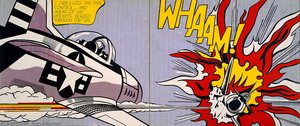 Wham - Roy Lichtenstein
There is an explosive energy in Wham! by Roy Lichtenstein that follows you—not with judgment, but with a profound, cinematic understanding of modern chaos. This isn't merely a depiction of aerial combat; it is a mirror reflecting our fascination with the spectacle of mass media and the stylized violence of the 20th century. As one of the most significant ink on paper masterpieces, it captures a moment of pure, kinetic impact through the iconic use of Ben-Day dots and bold, graphic outlines.
The composition vibrates with a limited yet striking palette of reds, yellows, and deep blacks, pulling the viewer into the cockpit of a fighter plane amidst a burst of destruction. The heavy black lines and exaggerated typography do more than tell a story of conflict; they remind us that we are part of a larger, visual narrative shaped by pop culture. Now, imagine that sense of adrenaline in your space. It does not just watch you; it reminds you : you are seen, you are part of the story, and even the most chaotic moments can be transformed into high art.
NUDE WITH BLUE HAIR - Roy Lichtenstein
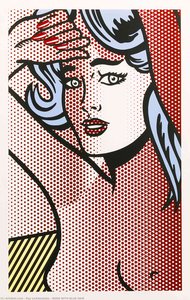 NUDE WITH BLUE HAIR - Roy Lichtenstein
There’s a gaze in Nude with Blue Hair by Roy Lichtenstein that follows you—not with judgment, but with understanding . This isn't merely a portrait; it is a mirror reflecting the intersection of mass media and modern identity. Through the masterful application of Ben-Day dots and thick, graphic outlines, Lichtenstein transforms the flat language of comic book aesthetics into a profound exploration of femininity and allure.
The vibrant blue of her hair and the bold, primary color fields create a visual punch that commands any room, while the stylized, ink-on-paper texture offers a nostalgic nod to mid-20th-century pop culture. As one of the most legendary ink on paper masterpieces, this work challenges the boundaries between high art and commercial printing. Now, imagine that gaze in your space. Not watching you, but reminding you : you are seen. You are part of the story. This piece brings a sophisticated, contemporary energy to any collection, serving as a timeless testament to the power of visual language.
Odol - Stuart Davis
 Odol - Stuart Davis
In Odol , Stuart Davis masterfully captures the rhythmic pulse of American consumer culture through a lens of bold, proto-pop art experimentation. This ink and watercolor work transcends its mundane subject matter—a simple arrangement of mouthwash, glass, and tin—to evoke the vibrant, fragmented energy of modern life. As one of our featured masterpieces in this collection of legendary ink on paper works, Odol stands as a pivotal bridge between the Ashcan School's grit and the graphic clarity of mid-century modernism.
The composition utilizes crisp, geometric outlines and flat, saturated color fields to transform everyday household objects into iconic symbols. The artist’s use of hatching and cross-hatching creates a tactile depth that breathes life into the paper, offering a nostalgic yet strikingly contemporary aesthetic. Today, Davis's visual language continues to influence modern design sensibilities, where his clean lines and balanced, triangular compositions find echoes in minimalist interior decor and high-end graphic branding. It is a profound study of how the most ordinary rituals can be elevated into extraordinary fine art.
A study of a horse - Leonardo da Vinci
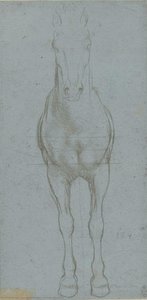 A study of a horse - Leonardo da Vinci
Leonardo da Vinci’s A Study of a Horse is a profound masterclass in anatomical precision, capturing the raw power and elegance of nature through a delicate interplay of ink and paper. This 1490 sketch stands as a cornerstone in our collection of legendary ink masterpieces because it transcends mere drawing; it represents the exact moment where scientific inquiry meets high art. Through masterful hatching and cross-hatching, Leonardo builds volume and musculature, using a monochromatic palette of browns and greys to create a lifelike, tactile depth that feels remarkably modern.
For the contemporary collector or interior designer, this piece offers an unparalleled sense of intellectual sophistication. Its minimalist composition and neutral tones integrate seamlessly into modern architectural spaces, providing a focal point of quiet contemplation. The fluid, organic lines and the subtle, cool undertones of the paper bring a timeless, scholarly ambiance to any professional setting, proving that the pursuit of anatomical truth can create an enduring aesthetic legacy that continues to influence design sensibilities centuries later.
Illustration to "A Week of Kindness" - Max Ernst
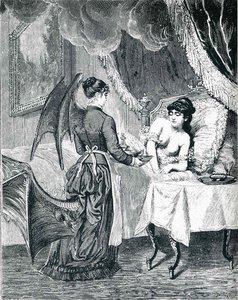 Illustration to "A Week of Kindness" - Max Ernst
In the hauntingly quiet shadows of 1934, Max Ernst’s illustration for "A Week of Kindness" captures that universal, unsettling moment when the familiar dissolves into the surreal. There is a profound, heavy tension in this monochrome masterpiece; as we gaze upon the reclining figure and the sudden, demonic emergence of bat-like wings, we are pulled into a psychological landscape where domestic stability meets a fever dream. This work earns its place among the top 10 legendary ink on paper masterpieces through its unparalleled ability to use meticulous hatching and cross-hatching to build a world that feels both tactile and ghostly.
The way Ernst manipulates light and shadow to create such claustrophobic, gothic depth is nothing short of transformative for the medium. At ArtsDot.com, we understand that art is about preserving these intense emotional textures. Our hand-painted oil reproductions are crafted to honor this very legacy, ensuring that the intricate linework and dramatic tonal ranges of Surrealist legends like Ernst can be brought into your own space with the same atmospheric weight and prestige as the original works.
Fruit, vegetables and other studies - Leonardo da Vinci
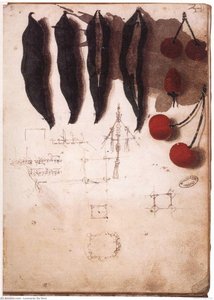 Fruit, vegetables and other studies - Leonardo da Vinci
To gaze upon a page from the mind of a genius is to witness the exact moment where scientific inquiry meets pure aesthetic grace. In Fruit, Vegetables and Other Studies by Leonardo da Vinci, we find not merely a collection of botanical sketches, but a profound exploration of the natural world's underlying architecture. Created around 1487, this masterpiece stands as a cornerstone of our list because it redefined the purpose of ink on paper; it moved beyond mere decoration to serve as a rigorous anatomical study of life itself.
The viewer is met with delicate brown ink strokes that dance across aged parchment, capturing the tactile weight of cherries and the structural precision of stems. Through meticulous hatching and fine lines, Da Vinci renders light and shadow to give volume to organic forms, interspersed with geometric shapes that reveal his obsession with proportion. This work transcends its era, reminding us that true art is an act of seeing. Today, such masterful observations continue to inspire how we perceive the beauty in the smallest details of our environment.
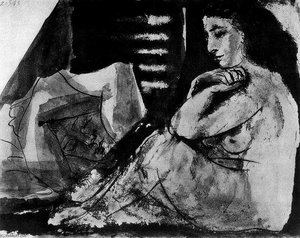
Sleeping man and sitting woman - Pablo Picasso
 Sleeping man and sitting woman - Pablo Picasso
What story does the quiet intimacy of Sleeping Man and Sitting Woman by Pablo Picasso tell about the vulnerability of the human spirit? Emerging from a period of profound personal reflection, this ink masterpiece transcends mere sketching to become a cornerstone of Expressionist power. Picasso breaks ground here by abandoning photographic realism in favor of bold, gestural lines that sculpt the nude female figure and her sleeping companion with raw, emotional weight. The thick, overlapping strokes create a palpable texture, as if the very movement of the artist's hand is captured on the paper.
In modern interior design, integrating such legendary ink works offers more than just decoration; it provides a curated escape into a world of profound contemplation and quiet prestige. The stark contrast of black ink against paper brings a sophisticated, monochromatic depth to any professional or residential space, evoking a sense of historical gravity. This piece stands among the Top 10 Legendary 'Ink On Paper' Masterpieces because it captures the essential truth of human connection through the masterful language of line and shadow.
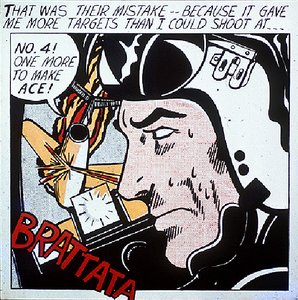
Brattata - Roy Lichtenstein
 Brattata - Roy Lichtenstein
In Brattata by Roy Lichtenstein, the eye is immediately drawn to the sharp, rhythmic precision of the ink lines and the iconic texture of Ben-Day dots. This 1962 masterpiece vibrates with a mechanical energy, where thick black outlines and stark white spaces collide with strategic pops of red. The materiality of this work lies in its simulated printing process—a revolutionary technique that transformed the disposable aesthetic of comic books into high art by emphasizing graphic clarity and bold, geometric forms.
The tension of the masked figure, caught in a moment of aggressive motion, showcases Lichtenstein's ability to elevate mass culture through meticulous hand-drawn hatching and cross-hatching. At ArtsDot.com, we honor this legacy of impact by offering high-end reproductions that capture the true tactile, three-dimensional quality of such legendary ink works. Our artists recreate every deliberate dot and heavy stroke on premium canvas, ensuring the dramatic contrast and historical weight of these transformative masterpieces are preserved for your professional or private collection.
Conclusion
As the light fades and we step away from these delicate windows into the past, we realize that these ink masterpieces are far more than mere relics of a bygone era. They do not exist solely within the silent halls of museums or the yellowed pages of history books; instead, they breathe alongside us. Each stroke of a brush, each intentional bleed of ink into paper, carries a pulse that remains vibrant and resonant in our modern world. These works are living presences, continuing to whisper stories of profound emotion, quiet contemplation, and the enduring strength of the human spirit.
To encounter them is to participate in a timeless conversation—a dialogue between the hand of the master and the eye of the contemporary observer. They remind us that beauty, even when captured in the simplest of mediums, possesses an infinite capacity to shape our interiors, stir our deepest reflections, and inspire new waves of creativity. As you carry the memory of these legendary works with you, we invite you to continue your journey through the delicate elegance of the full collection , where the legacy of ink and paper continues to unfold, one stroke at a time.