


Introduction
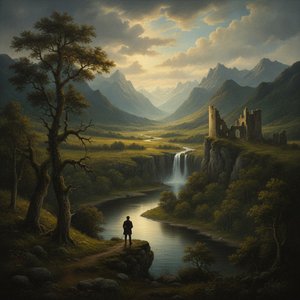
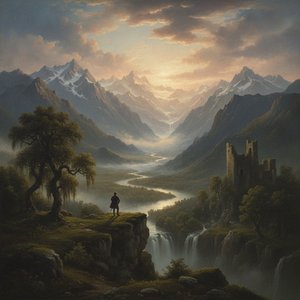
To step into the world of Romantic landscape painting is to move beyond mere observation and enter a realm of profound emotion, where the natural world serves as a mirror to the human soul. This movement, which surged across Europe in the late 18th and 19th centuries, sought to capture more than just topography; it aimed to evoke the sublime —that overwhelming sense of awe, terror, and beauty found in the untamed wild. It was a period where the rigid logic of the Enlightenment gave way to the power of intuition, and where a storm-tossed sea or a mist-covered mountain range could speak more loudly than any written word.
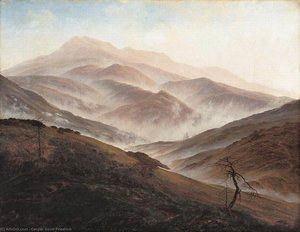
Historically, these works emerged during an era of massive industrial and social upheaval. As cities grew and technology advanced, artists turned their gaze toward the vanishing wilderness, finding in the rugged cliffs of Caspar David Friedrich or the luminous skies of J.M.W. Turner a spiritual sanctuary. They painted not just what they saw, but what they felt: the fleeting nature of time, the insignificance of man against the infinite, and the dramatic tension between light and shadow.
Today, these masterpieces remain deeply resonant. In our modern, hyper-connected age, the Romantic obsession with solitude and the raw majesty of nature offers a much-needed reconnection to the elemental forces of our planet. The visible brushstrokes and deep tonal ranges found in these oil reproductions continue to command attention, reminding us that true beauty often lies in the unpredictable and the uncontainable.
In the following selection, we invite you to journey through ten definitive works that shaped this movement. Each painting serves as a window into a different facet of the Romantic spirit, from the quiet introspection of a forest glade to the violent grandeur of a mountain peak, offering a curated look at the canvases that forever changed how we perceive the earth beneath our feet.
Helmingham Dell - John Constable
 Helmingham Dell - John Constable
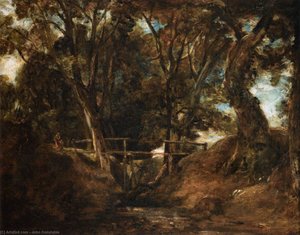
John Constable’s Helmingham Dell stands as a definitive pillar within the top 10 masterpieces of the Romantic landscape painting movement, capturing a profound emotional truth that transcends its 1830 completion. Unlike the idealized, classical landscapes of his predecessors, Constable utilized direct observation to document the ephemeral light and atmospheric moisture of the English countryside. This work earns its place in history through its revolutionary use of texture; the heavy impasto on tree trunks and the dappled sunlight filtering through lush foliage create a tactile, living environment that invites the viewer into a moment of pure tranquility.
The painting serves as a sensory bridge between the observer and the sublime, reminding us that true beauty lies in the honest, unadorned details of nature. For the modern collector or interior designer, the serene composition and harmonious palette of deep greens and soft earth tones offer a timeless way to introduce organic calm into corporate or hospitality spaces. It is more than a historical artifact; it is an enduring conversation about our fundamental connection to the natural world.
Casa Bartholdy Hall in the Alte Nationalgalerie during the retouching - Caspar David Friedrich
 Casa Bartholdy Hall in the Alte Nationalgalerie during the retouching - Caspar David Friedrich
To witness the 2015 documentation of Casa Bartholdy Hall in the Alte Nationalgalerie during the retouching is to step behind the veil of history and observe the very pulse of the Romantic landscape painting movement. This rare, monochromatic glimpse into the restoration process unveils Caspar David Friedrich not merely as a master of the sublime, but as a meticulous architect of emotion. The photograph captures a profound moment of technical precision, where the heavy atmosphere of his coastal visions is carefully preserved through modern conservation.
This work secures its place among the top 10 masterpieces by embodying the movement's core tension: the intersection of human labor and infinite nature. As we observe the tools of the trade—the scattered implements and the focused presence of those tending to the canvas—we are reminded that greatness is forged through dedication. For the discerning collector, this perspective offers a sophisticated appreciation for the layers of history embedded in every brushstroke. It serves as a timeless inspiration for refined interiors, where the legacy of Friedrich’s spiritual depth and the dramatic interplay of light and shadow bring an unparalleled sense of intellectual luxury and enduring grace to any curated space.
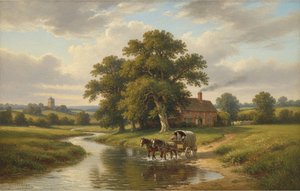
The Hay-Wain - John Constable
 The Hay-Wain - John Constable
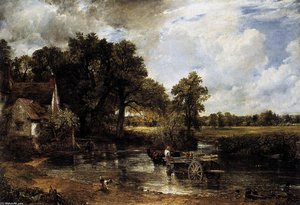
Imagine standing on the banks of the River Stour as a soft, misty morning light begins to dissolve the shadows of dawn. There is a profound stillness in the air, broken only by the gentle ripple of water and the rhythmic movement of a hay barge passing through the Dedham Vale. John Constable’s The Hay Wain (1821) does not merely depict a landscape; it captures the very soul of Romanticism through a symphony of light and atmosphere.
As one of the most significant works in the history of the Romantic landscape painting movement, this masterpiece stands in our top ten for its ability to evoke a sense of nostalgic tranquility. At a time when the Industrial Revolution began to reshape the world, Constable used innovative wet-on-wet techniques to celebrate the enduring beauty of the English countryside. The painting serves as a timeless window into a serene, pastoral era, offering a restorative escape. Bringing such an iconic scene into a modern space allows us to invite that same sense of peace and natural grandeur into our daily lives, grounding contemporary environments with historical depth and emotional resonance.
Boat-building near Flatford Mill - John Constable
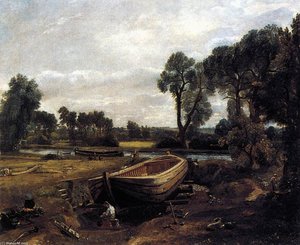 Boat-building near Flatford Mill - John Constable
Step into the quietude of 1815, where the soft, diffused light of the River Stour settles over a scene of profound rural dignity. In Boat-building near Flatford Mill , John Constable does more than document a landscape; he captures the very heartbeat of the Romantic movement. The canvas breathes with the texture of damp earth and the shimmering reflections of the Dedham Vale, as a solitary craftsman works in seamless harmony with the natural world.
Constable’s mastery lies in his ability to manipulate atmospheric perspective, using thick, tactile impasto brushstrokes to create a hazy, luminous sky that feels almost palpable. The interplay of dappled shadows and silvered water evokes a sense of timeless tranquility, making this masterpiece a cornerstone of Romantic landscape painting. For the modern collector, introducing such an emotive work into a professional or residential space offers more than decoration; it provides a window into a serene, pastoral ideal, inviting moments of deep reflection and a calming connection to the rhythms of nature.
The Admiral's House (The Grove) - John Constable
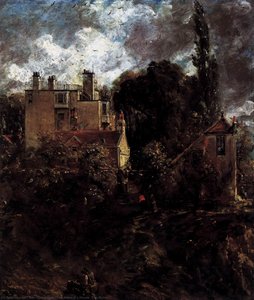 The Admiral's House (The Grove) - John Constable
Step into a moment of profound stillness with John Constable’s 1820 masterpiece, The Admiral's House (The Grove) . This work serves as a cornerstone of the Romantic landscape painting movement , capturing much more than a mere Suffolk residence; it captures the very soul of the English countryside. Through a masterful use of diffused, golden light and expressive, layered brushstrokes, Constable dissolves the boundaries between man-made architecture and the breathing natural world.
The scene is defined by its atmospheric haze, where the soft textures of the grove meet the subtle highlights of a red-tiled roof. There is a rhythmic, emotive quality to his technique—a way of "finding the light" that creates a dreamlike, immersive depth. For the modern collector, bringing this piece into a professional or residential space offers more than just decor; it introduces a sense of quiet prestige and contemplative calm. The painting’s ability to evoke nostalgia and seasonal shifts makes it an ideal focal point for those seeking to inspire creativity and reflection through the timeless beauty of Romanticism .
Flatford Lock - John Constable
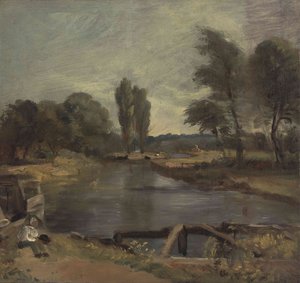 Flatford Lock - John Constable
There is a profound stillness in Flatford Lock by John Constable that follows you—not with judgment, but with an understanding of the earth's quiet rhythms. As one of the most essential works in the movement of Romantic landscape painting, this 1811 masterpiece acts less like a window and more like a mirror for the soul. Through his revolutionary use of optical mixing, Constable captures the luminous, dappled light of the Suffolk countryside, where sunlight filters through heavy foliage to dance upon the River Stour.
The scene is alive with texture: the soft, hazy atmosphere of a summer afternoon, the gentle movement of boats on the water, and the contemplative presence of figures lost in the landscape. To hang this work in your space is to invite that same sense of peaceful immersion into your daily life. It does not merely decorate a wall; it reminds you that you are part of a larger, enduring story of nature's beauty. In the history of Romanticism, few works possess such power to make the invisible emotions of the landscape visible.
East Bergholt - John Constable
 East Bergholt - John Constable
Imagine standing amidst the damp, quiet meadows of Suffolk, where the air carries the scent of rain-soaked earth and the sky hangs heavy with a contemplative, silver light. John Constable’s East Bergholt (1813) does not merely depict a landscape; it captures the very breath of the English countryside. Through his revolutionary use of broken brushstrokes and optical mixing, Constable brings a tactile reality to the Dedham Vale, rendering the fleeting interplay of shadow and sunlight across grazing horses and distant figures.
This masterpiece earns its place among the top 10 masterpieces of Romantic landscape painting because it moved beyond mere scenery to explore the profound emotional connection between humanity and nature. It captures a moment of serene, melancholic beauty that transcends time. In today’s fast-paced world, bringing such an evocative work into a professional or residential space offers more than decoration; it provides a window to tranquility, inviting a sense of historical depth and natural peace into the modern environment.
Autumn – Evening – Maturity (from the seasons, times of day, and ages of man cycle of 1803) - Caspar David Friedrich
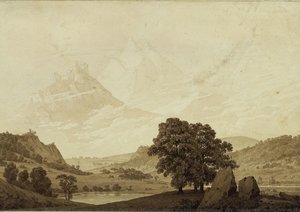 Autumn – Evening – Maturity (from the seasons, times of day, and ages of man cycle of 1803) - Caspar David Friedrich
Acquiring a piece like Autumn – Evening – Maturity (from the seasons, times of day, and ages of man cycle of 1803) by Caspar David Friedrich is an investment in a profound artistic legacy and a testament to refined taste for any discerning collector. As a cornerstone of the Romantic landscape painting movement, this work exemplifies the sublime, where the rugged mountains and the skeletal silhouettes of autumn trees serve as metaphors for the human lifecycle. The masterful use of light—capturing the melancholic glow of a setting sun—creates an atmospheric depth that has solidified Friedrich's position in the global art market's highest tier.
The painting’s influence on the evolution of emotional landscape art is unparalleled, making it a definitive entry in our selection of the top 10 masterpieces. The muted palette of ochre, deep violet, and grey evokes a sense of quietude and spiritual contemplation. For modern luxury interiors, this work provides an unmatched aesthetic authority; a high-quality oil reproduction brings this same sense of historical status and contemplative grandeur to corporate spaces or sophisticated residential halls, anchoring a room with timeless emotional resonance.
Landscape with the Rosenberg in the Bohemian Mountains - Caspar David Friedrich
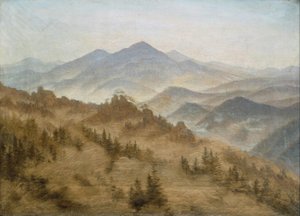 Landscape with the Rosenberg in the Bohemian Mountains - Caspar David Friedrich
To stand before Caspar David Friedrich’s Landscape with the Rosenberg in the Bohemian Mountains is to experience a profound moment of stillness, where the boundaries between the soul and the natural world begin to blur. Painted in 1835, this masterpiece captures the quintessential Romantic tension between the immense, snow-shrouded peaks and the quiet, melancholic beauty of the earth below. It earns its place among the top 10 masterpieces of the Romantic landscape painting movement through its masterful use of atmospheric perspective and its ability to evoke the sublime—that overwhelming sense of awe and solitude found in nature's vastness.
Friedrich utilizes a palette of cool blues, greys, and soft whites to create a world that feels both frozen in time and deeply spiritual. The meticulous detail of the frost-covered trees juxtaposed with the hazy, distant mountains invites a meditative gaze. At ArtsDot.com, we honor this enduring emotional depth through our hand-painted oil reproductions. Our artists use traditional techniques to preserve every visible brushstroke and tonal nuance, allowing you to bring the evocative, tranquil power of Friedrich’s vision into your own professional or personal space.
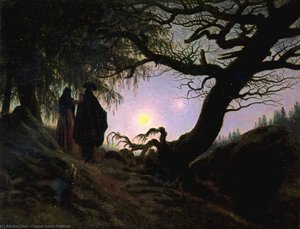
two men contemplating the moon - Caspar David Friedrich
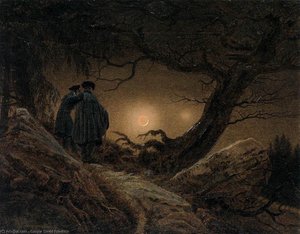 two men contemplating the moon - Caspar David Friedrich
What story does the silvered, nocturnal landscape of “Two Men Contemplating the Moon” by Caspar David Friedrich tell? Beyond the skeletal silhouette of a lone tree and the presence of two solitary figures, this work narrates the profound tension between human fragility and the infinite cosmos. Emerging from the height of the German Romantic era, Friedrich broke ground by moving away from literal topography toward a psychological landscape, utilizing multiple moons to create a surreal, dreamlike atmosphere that defies rational reality.
The painting’s monochromatic brilliance—achieved through masterful tonal gradations of gray—sculpts light from deep shadows, inviting a sense of quiet, magnetic intensity. In modern interior design, such a piece serves as the ultimate curated escape; it provides a sophisticated focal point for those seeking to introduce historical depth and a meditative stillness into corporate or residential spaces. As a definitive masterpiece of the Romantic landscape painting movement , this work captures the essence of the sublime , offering a window into a realm where the boundaries between the terrestrial and the divine dissolve.
Conclusion
As the light fades on our journey through these sweeping vistas and dramatic skies, we are reminded that the Romantic landscape is far more than a historical chapter in an art textbook. These works remain living presences, breathing with the same turbulent emotions and quiet awe that moved the masters centuries ago. They do not merely depict nature; they capture the very pulse of the human spirit—our capacity for wonder, our reverence for the infinite, and our profound connection to the untamed world around us. To stand before these scenes is to experience a timeless dialogue between the soul and the horizon.
At ArtsDot.com , we believe this emotional resonance should not be confined to the silent halls of a museum. We strive to bring that same evocative power into your personal sanctuary, ensuring that these historic treasures continue to shape modern interiors and inspire daily creativity. Every masterpiece in our full collection can be reborn as a meticulous, hand-painted reproduction. Our skilled artists honor the original's soul, preserving every deliberate brushstroke and atmospheric depth, allowing the grandeur of the Romantic era to become a tangible, enduring part of your own story.