Introduction
To step into the world of Francisco José de Goya y Lucientes is to walk through a gallery of the human soul, where the light of courtly elegance meets the profound shadows of psychological truth. His work does not merely sit upon a canvas; it breathes with the tension of an era caught between the fading grace of the Rococo and the turbulent dawn of modernity. As you prepare to explore these twenty-five masterpieces, imagine yourself moving from the sun-drenched tapestries of Spanish festivities into the haunting, visceral depths of his later visions, where the brushstrokes seem to vibrate with the artist's own internal struggles.
Born in the small village of Fuendetodos, Goya’s trajectory was one of extraordinary transformation. He began his career as a master of light, capturing the vibrant, social rhythms of the Spanish aristocracy with a technical precision that earned him the highest royal honors. Yet, history remembers him most poignantly for how he navigated the darkness. Following a devastating illness that left him profoundly deaf, Goya’s gaze shifted inward and toward the raw realities of war, superstition, and human frailty. He became a chronicler of the unseen—the nightmares, the societal decay, and the unvarnished truth of the human condition.
These selected works remain deeply meaningful today because they transcend their 18th and 19th-century origins. In an age of uncertainty, Goya’s ability to capture vulnerability, fear, and resilience resonates with a modern audience that seeks authenticity over artifice. His paintings serve as a bridge between the classical tradition and the expressive freedom of the modern era, offering a sensory experience that is as unsettling as it is beautiful.
In the following list, we guide you through a curated selection of his most impactful achievements. From his luminous royal portraits to the haunting intensity of his darker compositions, each piece offers a window into the mind of a man who dared to look directly into the abyss and find something profoundly human.
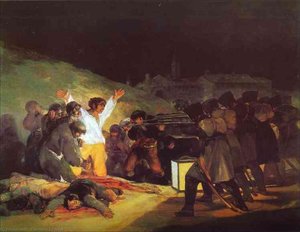
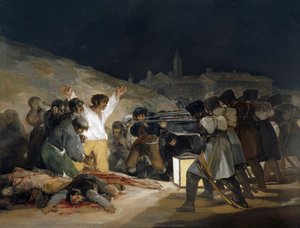
The Third of May, 1808 The Execution of the Defenders of Madrid - Francisco José de Goya y Lucientes
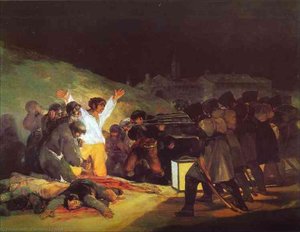 The Third of May, 1808 The Execution of the Defenders of Madrid - Francisco José de Goya y Lucientes
A visceral scream captured in oil, The Third of May, 1808 by Francisco José de Goya y Lucientes stands as one of the most harrowing and profound indictments of human cruelty ever committed to canvas. This masterpiece earns its place in our Top 25 through its revolutionary departure from traditional war painting; instead of celebrating conquest, Goya focuses on the raw, unvarnished terror of the Spanish resistance against Napoleon’s forces. The stark chiaroscuro —the violent contrast between the lantern's glow and the suffocating night—illuminates a central figure in white, whose outstretched arms evoke a martyr’s sacrifice, creating an indelible symbol of defiance.
The painting’s heavy, impasto brushstrokes and dramatic emotional weight offer more than historical documentation; they provide a profound psychological experience. For the modern collector, this work is not merely a relic of the Peninsular War but a transformative force. By acquiring a high-fidelity reproduction, you bring this intense, atmospheric power into your home or corporate space, allowing Goya’s timeless message of resilience to serve as a commanding focal point in any curated interior.
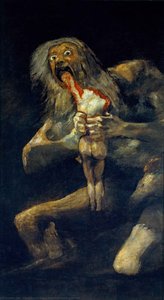
Saturn Devouring His Son - Francisco José de Goya y Lucientes
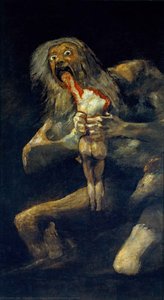 Saturn Devouring His Son - Francisco José de Goya y Lucientes
A profound, abyssal black dominates Saturn Devouring His Son by Francisco José de Goya y Lucientes, establishing a mood of overwhelming dread and existential isolation. This masterpiece, a cornerstone of the top 25 artworks of Francisco José de Goya y Lucientes, utilizes a restricted palette of ochre, bone white, and deep earth tones to amplify its visceral horror. The mastery lies in Goya's use of chiaroscuro; the stark, violent contrast between the illuminated, mutilated flesh and the swallowing shadows creates a sense of raw, unmediated emotion that predates Expressionism.
For the discerning decorator or professional curator, this painting offers a powerful template for dramatic interior styling. The somber, heavy tones can be used to anchor a sophisticated dining room or a private study, where deep charcoal walls and low-profile lighting mimic Goya’s chiaroscuro effect. Integrating such a high-impact piece allows you to introduce a focal point of intense texture and historical gravity, transforming a modern space into a gallery of profound emotional depth and architectural strength.
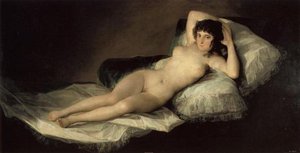
La maja desnuda. . Madrid, Museo del Prado. - Francisco José de Goya y Lucientes
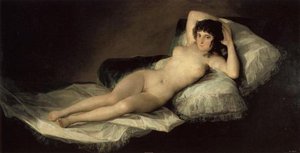 La maja desnuda. . Madrid, Museo del Prado. - Francisco José de Goya y Lucientes
In the quiet shadows of 1797, Goya captured a moment of profound intimacy with La maja desnuda . The scene unfolds in a dramatic chiaroscuro, where a soft, directional light sculpts the reclining figure against an almost impenetrable black void. This masterful use of contrast does more than highlight the smooth texture of skin and the heavy folds of white drapery; it creates a palpable sense of vulnerability and presence. Goya’s brushwork moves with organic fluidity, tracing the natural contours of the body with a realism that was famously scandalous for its era.
The palette is anchored by earthy tones—deep grays, muted whites, and somber browns—evoking an atmosphere of quiet introspection and timeless beauty. For the modern professional or decorator, this piece offers more than historical significance; it provides a sophisticated focal point. Whether placed in a high-end hotel suite or a corporate lounge, the painting’s ability to command attention through light and shadow brings a sense of classical elegance and intellectual depth to any architectural space.
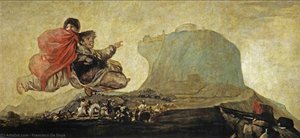
Witches' sabbath - Francisco José de Goya y Lucientes
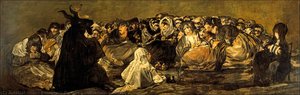 Witches' sabbath - Francisco José de Goya y Lucientes
In Witches' Sabbath by Francisco José de Goya y Lucientes, a dominant, obsidian black anchors the composition, casting an atmosphere of profound mystery and psychological tension. This mastery of shadow, characteristic of his famous Black Paintings series, utilizes a restricted but powerful palette of earthy ochres, muted greys, and stark whites to pull the viewer into a chaotic, ritualistic gathering. The dramatic use of chiaroscuro—the intense contrast between light and dark—is precisely why this work remains a cornerstone in any collection of the top 25 artworks of Francisco José de Goya y Lucientes .
For professionals managing large-scale interior projects, such as boutique hotels or private dining rooms, this piece offers unparalleled atmospheric depth. The somber tones and heavy impasto texture can be used to anchor a room's lighting design, providing a sophisticated focal point that complements modern, moody aesthetics or classic, dimly lit corridors. Integrating this masterpiece allows designers to curate a space of contemplation and historical weight, making it an essential selection for those seeking impactful, high-volume art solutions.
Asmodea - Francisco José de Goya y Lucientes
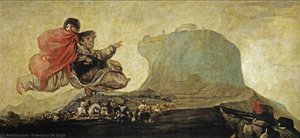 Asmodea - Francisco José de Goya y Lucientes
In Asmodea , part of Goya’s haunting Black Paintings series, there is a gaze that follows you—not with judgment, but with profound understanding . This isn't merely a depiction of chaos; it is a mirror reflecting the darkest recesses of the human psyche and the turbulence of the Peninsular War. As you observe the central figures hovering above a landscape of carnage, the vibrant red of the woman’s robe pierches through an earthy, somber palette of ochre and shadow, creating a focal point of intense emotional urgency.
The composition utilizes a dramatic, almost flattened perspective to pull you into the fray, where the innocence of a floating figure contrasts sharply with the brutal reality of soldiers and refugees below. To possess such a piece is to invite a powerful reminder into your space: that even amidst the most profound social decay and inner turmoil , there is an enduring, visceral truth. Within this selection of the top 25 artworks of Francisco José de Goya y Lucientes , Asmodea stands as a testament to the artist's ability to make the invisible weight of history visible.
The Colossus - Francisco José de Goya y Lucientes
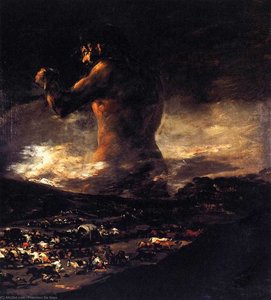 The Colossus - Francisco José de Goya y Lucientes
To stand before The Colossus by Francisco José de Goya y Lucientes is to witness the overwhelming weight of existence itself. There is a profound, unsettling beauty in how this monumental figure emerges from a turbulent, storm-swept sky, embodying the raw tension between divine power and human vulnerability. It earns its place among the top 25 artworks of Francisco José de Goya y Lucientes through its sheer emotional gravity; it is not merely a painting, but a visceral experience of shadow and light.
Goya utilizes masterful chiaroscuro and thick, expressive impasto brushstrokes to create a landscape of chaos, where dark earth tones clash with flashes of amber light. This work captures the turbulent spirit of the Peninsular War, serving as a timeless allegory for resilience amidst upheaval. At ArtsDot.com, we specialize in preserving this very intensity. Our hand-painted oil reproductions meticulously recreate Goya’s vigorous textures and dramatic tonal ranges on 100% cotton canvas, allowing you to bring the haunting, mythic grandeur of this Romantic masterpiece into your own professional or private space with absolute fidelity.
St Isabel of Portugal treating the wounds of an injured - Francisco José de Goya y Lucientes
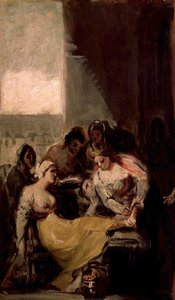 St Isabel of Portugal treating the wounds of an injured - Francisco José de Goya y Lucientes
Acquiring a reproduction of St Isabel of Portugal treating the wounds of an injured by Francisco José de Goya y Lucientes is more than a decorative choice; it is a profound investment in a legacy of unparalleled taste. As one of the top 25 artworks of Francisco José de Goya y Lucientes, this masterpiece commands attention through its visceral command of chiaroscuro . The dramatic interplay of light and shadow sculpts a scene of intense empathy, where the muted ochres and deep earth tones create a sanctuary of compassion amidst a somber, atmospheric darkness.
The painting’s historical significance and enduring market value stem from its ability to capture the rawest facets of the human condition. Goya’s expressive brushwork and the tactile realism of the figures provide an emotional depth that remains unmatched in the Romantic movement. For the discerning decorator or professional, integrating this work into a modern luxury interior offers immense aesthetic authority. A high-quality, hand-painted oil reproduction carries the same prestige and status, serving as a powerful focal point that brings the soulful gravity of Spanish history into contemporary corporate or residential spaces.
Josefa de Castilla Portugal y van Asbrock de Garcini (1775–about 1850) - Francisco José de Goya y Lucientes
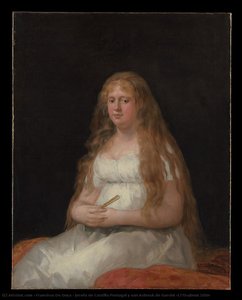 Josefa de Castilla Portugal y van Asbrock de Garcini (1775–about 1850) - Francisco José de Goya y Lucientes
In the 1804 portrait of Josefa de Castilla Portugal y van Asbrock de Garcini , Francisco José de Goya y Lucientes moves away from rigid courtly formality to embrace a profound, intimate naturalism. This work serves as a masterclass in psychological depth, where the subject is captured in a moment of quiet contemplation, resting with a book amidst the soft textures of her domestic surroundings. Goya utilizes a muted yet luminous palette, employing chiaroscuro to pull Josefa from the darkened background into a visible, breathing reality.
The painting breathes with the monumental energy of Rubens and the emotional gravity of Rembrandt. Through loose, expressive brushstrokes and a masterful interplay of light and shadow, Goya captures more than a physical likeness; he reveals an inner life marked by serenity and subtle introspection. Owning this piece from the top 25 artworks of Francisco José de Goya y Lucientes is not merely an acquisition; it is an inheritance of a profound artistic lineage. It allows you to bring a legacy of Spanish Romanticism into your own space, where every glance at the canvas becomes a silent dialogue with history.
The Water Carrier ( - Francisco José de Goya y Lucientes
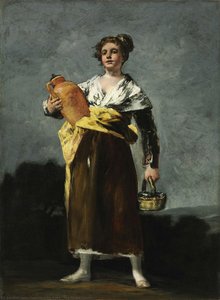 The Water Carrier ( - Francisco José de Goya y Lucientes
A profound sense of quiet resilience radiates from The Water Carrier , a work that captures the rhythmic pulse of Spanish life amidst historical upheaval. As part of our curated selection of the top 25 artworks by Francisco José de Goya y Lucientes, this piece stands as an essential pillar of his legacy, bridging the gap between classical tradition and the raw emotion of Romanticism.
Goya moves away from courtly polish to embrace a visceral, painterly technique. Through heavy impasto and a sophisticated palette of ochres, deep browns, and muted yellows, he transforms a simple scene of rural labor into a powerful symbol of endurance. The soft, diffused light illuminates the central figure with a gentle glow, highlighting the physical weight of her task and the dignity of the working class. This masterpiece is included in our collection for its ability to evoke deep empathy and its masterful use of texture and atmosphere.
Today, the earthy tones and soulful depth of this painting offer a timeless aesthetic for modern curation. You can bring this transformative presence into your home, office, or professional gallery through our high-fidelity, hand-painted oil reproductions, ensuring Goya's enduring spirit remains accessible to all.
Portrait of the Matador Pedro Romero - Francisco José de Goya y Lucientes
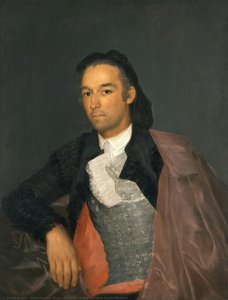 Portrait of the Matador Pedro Romero - Francisco José de Goya y Lucientes
There is a gaze in Portrait of the Matador Pedro Romero by Francisco José de Goya y Lucientes that follows you—not with judgment, but with understanding . In this 1795 masterpiece, the celebrated bullfighter sits before us, draped in the striking crimson and stark whites of his traditional attire. Goya utilizes a revolutionary wet-on-wet technique to breathe life into the fabric, creating a shimmering luminosity that captures the very essence of courage and refined composure.
This isn’t merely a portrait; it is a mirror . As you observe the meticulous textures of the matador's jacket and the steady, piercing eyes of the subject, you are invited to reflect on your own strength. Its inclusion in this collection of the top 25 artworks of Francisco José de Goya y Lucientes is a testament to its power to make the invisible visible—capturing the soul behind the spectacle. Now, imagine that gaze in your space. Not watching you, but reminding you : you are seen. You are part of the story.
Tubercio Pérez Cuervo - Francisco José de Goya y Lucientes
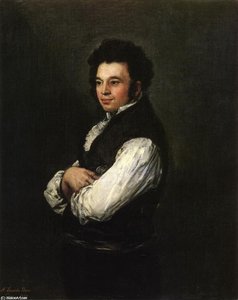 Tubercio Pérez Cuervo - Francisco José de Goya y Lucientes
Acquiring Tubercio Pérez Cuervo by Francisco José de Goya y Lucientes represents a profound investment in both artistic legacy and refined taste for the discerning collector. As one of the top 25 artworks of Goya, this 1820 masterpiece stands as a testament to the artist's ability to blend neoclassical precision with an emerging psychological realism. The portrait of the architect Pérez y Cuervo avoids the stiff formality of royal commissions, opting instead for a dramatic, directional light that sculpts the subject’s features against a somber, shadowy background.
The palette is masterfully restrained, utilizing deep blacks and muted browns to create an atmosphere of intense introspection. Goya’s visible brushstrokes provide a tactile richness, particularly in the creamy whites of the linen, which draw the eye toward a gaze that suggests both confidence and quiet contemplation. For those curating modern luxury interiors, this piece offers unparalleled aesthetic authority. A high-quality, hand-painted reproduction brings this historical gravity into contemporary spaces, providing a focal point of immense status and emotional depth that resonates far beyond the canvas.
Majas on a Balcony - Francisco José de Goya y Lucientes
 Majas on a Balcony - Francisco José de Goya y Lucientes
While many recognize Goya for his haunting shadows, Majas on a Balcony captures a rare, suspended moment of Spanish intimacy amidst the Napoleonic turbulence. Painted between 1808 and 1814, this work transcends simple portraiture; it is a psychological study of three women perched upon a balcony, their conversation veiled by the architectural geometry of the balustrade. Goya’s technical genius is evident in the way he manipulates light to catch the delicate lace of their mantillas and the heavy, luxurious textures of their gowns, creating a palpable sense of presence.
As one of the top 25 artworks of Francisco José de Goya y Lucientes, this piece exemplifies the transition from Rococo grace to Romantic truth. The interplay of muted tones and soft shadows creates an atmosphere of sophisticated mystery that is both voyeuristic and serene. For the professional looking to curate a high-end corporate space or a private study, integrating such a masterpiece provides a sense of historical depth and quiet focus, fostering an environment of profound intellectual and creative productivity.
Portrait of Luis María de Borbón y Vallabriga (Retrato de Luis Maria de Borbon y Vallabriga) - Francisco José de Goya y Lucientes
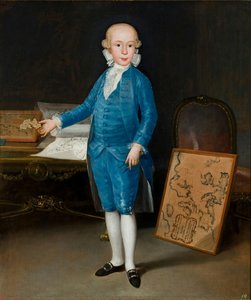 Portrait of Luis María de Borbón y Vallabriga (Retrato de Luis Maria de Borbon y Vallabriga) - Francisco José de Goya y Lucientes
To stand before the Portrait of Luis María de Borbón y Vallabriga is to encounter a moment of profound, quiet innocence captured just before the weight of history descended. There is a palpable stillness in the room, an atmosphere of courtly grace where the soft light catches the delicate white lace and the deep, regal indigo-blue of the young boy's attire. Goya masterfully balances the formal rigidity of the House of Bourbon with the tender vulnerability of a six-year-old child.
This work earns its place among the top 25 artworks of Francisco José de Goya y Lucientes because it captures the artist at a pivotal transition—moving from the charming Rococo elegance of his early commissions toward the psychological depth that would later define his genius. The inclusion of the map, inscribed with his lineage, serves as a poignant reminder of a destiny already mapped out by birthright. In a modern interior, such a piece brings more than just historical prestige; it introduces a sense of timeless dignity and a contemplative calm, allowing the legacy of Spanish Romanticism to breathe life into contemporary spaces.
Here comes the bogey-man - Francisco José de Goya y Lucientes
 Here comes the bogey-man - Francisco José de Goya y Lucientes
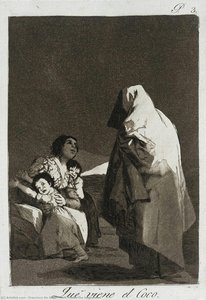
In the shadowy recesses of 1799, Francisco José de Goya y Lucientes invites us into a moment of profound psychological tension with “Here Comes the Bogey-man.” The scene is thick with an unsettling atmosphere; a woman and her children sit perched on the edge of a bed, their domestic sanctuary suddenly breached by a masked figure that embodies our most primal, nocturnal fears. Through his masterful use of etching and aquatint, Goya manipulates light and deep, ink-like shadows to create a visceral sense of dread and deception.
This piece stands out among the top 25 artworks of Francisco José de Goya y Lucientes because it transcends mere storytelling, acting as a window into the collective anxieties of an era marked by social upheaval. The stark contrast between the vulnerability of the figures and the looming, anonymous threat creates a magnetic, haunting energy. For the discerning collector or decorator, integrating such a powerful work into a professional space provides more than just decoration; it introduces a profound layer of intellectual depth and a conversation piece that celebrates the dramatic, emotive power of Spanish Romanticism.
Interieur de Prison - Francisco José de Goya y Lucientes
 Interieur de Prison - Francisco José de Goya y Lucientes
Step into the shadows of Interieur de Prison by Francisco José de Goya y Lucientes, a work that feels less like a painting and more like a heavy, breathless moment frozen in time. Created during Goya’s period of profound isolation following a debilitating illness, this piece plunges the viewer into a claustrophobic world of monochrome despair. The stark, dramatic use of chiaroscuro illuminates the slumped forms of prisoners bound by heavy chains, casting long, haunting shadows across the dirt floor and cold stone walls.
The atmosphere is thick with the weight of confinement, yet there is an undeniable, raw beauty in Goya’s mastery of light and texture. The gritty reality of the cell—the simple bowl on the floor, the desolate bed—serves as a powerful meditation on human vulnerability. For the modern collector, integrating such a profound piece into a curated space offers more than mere decoration; it provides a focal point for deep reflection and an anchor of historical gravity. It is a masterpiece that commands attention, inviting a quiet, somber appreciation for the resilience of the human spirit amidst the darkness.
Portrait of a Lady (María Martínez de Puga?) - Francisco José de Goya y Lucientes
 Portrait of a Lady (María Martínez de Puga?) - Francisco José de Goya y Lucientes
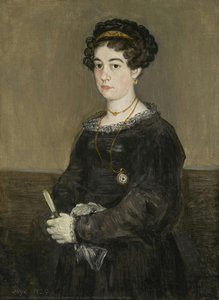
To encounter the "Portrait of a Lady (María Martínez de Puga?)" is to step into one of the most profound psychological encounters in the history of Spanish Romanticism. As one of the top 25 artworks of Francisco José de Goya y Lucientes, this piece commands attention through its haunting intimacy and masterful use of chiaroscuro . The subject emerges from a sea of deep, enveloping shadows, her face bathed in an ethereal glow that highlights a gaze both dignified and vulnerable.
Goya moves beyond mere likeness, utilizing thick, textured impasto to create a visceral, tactile presence that breathes life into the canvas. The dramatic interplay between the luminous skin tones and the heavy, dark attire creates a tension that is as intellectually stimulating as it is visually arresting. For the sophisticated collector or professional decorator, this painting offers more than decoration; it provides a focal point of immense emotional weight and quiet prestige. Its timeless ability to balance aristocratic grace with raw human emotion makes it an essential acquisition for any refined collection seeking to embody legacy and depth.
Ferdinand VII (1784–1833), When Prince of Asturias - Francisco José de Goya y Lucientes
 Ferdinand VII (1784–1833), When Prince of Asturias - Francisco José de Goya y Lucientes
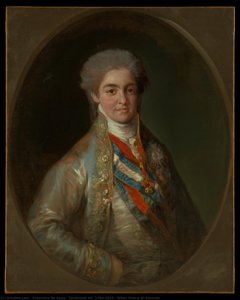
In Ferdinand VII (1784–1833), When Prince of Asturias , the lines of Goya’s brush aren’t merely drawn; they are choreographed . This portrait is not a static composition; it is a dance frozen in time , capturing the youthful vitality of a prince before the shadows of his reign descended. Within this work, Goya masterfully balances the weight of royal tradition with an unexpected, breathing intimacy.
The texture of the blue coat and the vibrant red sash pulse against the canvas, while the subtle tonal modulations create a sense of quiet prestige. As one of the top 25 artworks of Francisco José Goya y Lucientes , this piece invites you to look beyond the royal emblems of the Golden Fleece and the Holy Spirit. Instead, feel the psychological depth in the sitter's gaze—a moment of profound reflection amidst political turbulence. What if your walls could breathe rhythm ? Integrating such a masterpiece into your space allows your living room to hold that same delicate balance between historical grandeur and emotional harmony.
The Duke of Wellington - Francisco José de Goya y Lucientes
 The Duke of Wellington - Francisco José de Goya y Lucientes
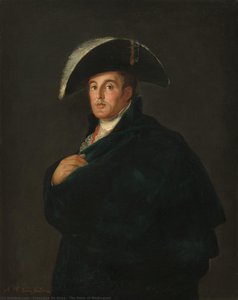
In The Duke of Wellington , Goya transcends the boundaries of traditional portraiture to capture a profound moment of historical gravity. Painted in 1812, this work serves as a powerful psychological study of Arthur Wellesley, the commander whose influence reshaped the map of Europe. Goya utilizes his mastery of chiaroscuro to sculpt the Duke’s presence, using dramatic light and deep shadows to pull the figure from the darkness into a sharp, commanding reality.
The visual narrative is one of heavy responsibility; while the meticulous rendering of the military uniform conveys undeniable authority and status, Goya’s brushwork introduces a subtle, humanizing weariness to the subject's expression. This tension between the rigid symbols of power and the soft, emotive modeling of the face makes this piece a cornerstone of the top 25 artworks of Francisco José de Goya y Lucientes . To possess such a work is to invite the weight of history and the somber beauty of the Romantic era into your own space, transforming a mere wall into a window onto the soul of a nation rebuilt.
Old Women or Time - Francisco José de Goya y Lucientes
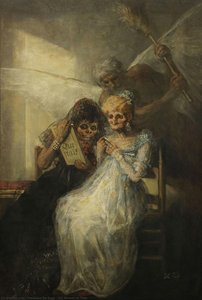 Old Women or Time - Francisco José de Goya y Lucientes
In Old Women or Time , Francisco José de Goya y Lucientes achieves a haunting structural harmony that secures its place among the top 25 artworks of Francisco José de Goya y Lucientes . The composition is built upon a somber, triangular geometry; the seated woman with her book forms a stable base, while the vertical presence of the standing figures directs the eye upward into the encroaching shadows. This deliberate arrangement creates a sense of heavy, stagnant balance, where every line serves to trap the viewer within a moment of quiet dread.
The painting’s internal equilibrium—the way the muted blues and whites are anchored by deep, earthy browns—mirrors the principles of modern minimalist design . By stripping away unnecessary ornamentation and focusing on tonal weight and essential forms, Goya creates a piece that feels remarkably grounded in a contemporary aesthetic. The interplay of light and shadow does not just depict a room; it establishes a rhythmic, atmospheric tension that remains as visually arresting today as it was at the turn of the 19th century.
Crucified Christ - Francisco José de Goya y Lucientes
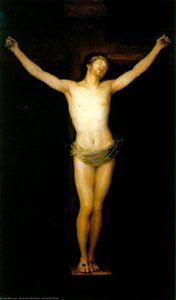 Crucified Christ - Francisco José de Goya y Lucientes
To stand before a canvas that captures the very essence of human fragility is to encounter the early, profound genius of the Spanish master. In “Crucified Christ” by Francisco José de Goya y Lucientes , we witness a pivotal moment from 1780 where religious iconography begins to dissolve into raw, psychological realism. This work earns its place among the top 25 artworks of Francisco José de Goya y Lucientes through its masterful use of chiaroscuro , pulling the slumped, suffering figure from an impenetrable darkness into a stark, unforgiving light.
Goya eschews the polished, heroic divinity typical of his era, opting instead for a gritty, tactile depiction of flesh and bone. The subtle application of sfumato creates an atmospheric, brooding sky that mirrors the weight of the scene's spiritual agony. There is no golden glow here, only the heavy stillness of mortality. This masterpiece serves as a haunting bridge between classical tradition and Romantic expressionism, offering a timeless emotional depth that continues to transform modern spaces with its somber, commanding presence.
Queen María Luisa Wearing a Mantilla - Francisco José de Goya y Lucientes
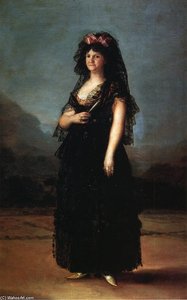 Queen María Luisa Wearing a Mantilla - Francisco José de Goya y Lucientes
To encounter Queen María Luisa Wearing a Mantilla by Francisco José de Goya y Lucientes is to witness a masterclass in royal portraiture, where the heavy textures of Spanish tradition meet an unsettling psychological depth. This 1799 masterpiece secures its place among the top 25 artworks of Francisco José de Goya y Lucientes through its profound ability to balance courtly elegance with a haunting, somber realism.
Goya utilizes the stark, black lace of the traditional mantilla to frame the Queen’s face, creating a dramatic contrast that draws the eye toward her unwavering, melancholic gaze. The composition, set against a grounded, earthy backdrop, strips away much of the Rococo fluff, replacing it with a sense of quiet authority and palpable tension. For the discerning collector or decorator, this piece offers more than just historical significance; its rich tonal range and sophisticated use of light provide a timeless anchor for refined, high-end interiors. It is a work of immense prestige, embodying a legacy of emotional intelligence that continues to resonate in modern, luxury aesthetic curation.
King Carlos IV in Hunting Costume - Francisco José de Goya y Lucientes
 King Carlos IV in Hunting Costume - Francisco José de Goya y Lucientes
In King Carlos IV in Hunting Costume , Francisco José de Goya y Lucientes transcends the boundaries of traditional royal portraiture to offer a profound study of power and presence. Painted in 1799, this monumental work serves as a cornerstone of the Romantic movement, moving away from rigid Neoclassical precision toward an expressive, atmospheric realism. The King is captured with striking honesty, dressed in his hunting attire, holding a firearm with a regal yet grounded composure that reveals Goya’s unparalleled psychological insight.
The composition is masterfully balanced; while the monarch dominates the frame, the presence of a loyal hunting dog and the subtle inclusion of secondary figures create a dynamic narrative within the Spanish landscape. Goya’s loose, textured brushstrokes breathe life into the canvas, capturing the interplay of light and shadow that defines his late style. To possess a reproduction of this masterpiece is to invite the very essence of Spanish history and Romantic emotion into your space, transforming a mere wall into a gallery of the soul.
Dona Teresa Sureda - Francisco José de Goya y Lucientes
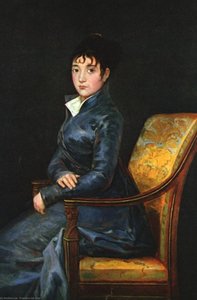 Dona Teresa Sureda - Francisco José de Goya y Lucientes
In the pantheon of the top 25 artworks of Francisco José de Goya y Lucientes, Dona Teresa Sureda stands as a profound testament to the artist's ability to merge aristocratic grandeur with an unsettling psychological intimacy. Painted in 1805, this portrait captures more than just the social standing of a Sevillian noblewoman; it encapsulates a moment of quiet, dignified tension that resonates across centuries. Goya utilizes a masterful chiaroscuro, where light sculpts the subject's face against a void of deep, shadowy tones, creating a sense of presence that feels both immediate and eternal.
The painting’s placement in this collection is earned through its technical brilliance—specifically Goya’s expressive impasto and the striking contrast between the cool blues of her gown and the warm, gilded textures of her ornate chair. For the modern collector or interior designer, this piece offers a sophisticated dialogue between historical weight and contemporary elegance. It invites us to reflect on the duality of human nature: the public mask of status versus the private reality of the soul. Integrating such a masterpiece into a curated space brings a timeless, contemplative energy that transcends mere decoration.
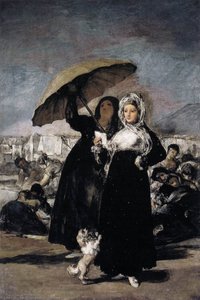
Les Jeunes or the Young Ones - Francisco José de Goya y Lucientes
 Les Jeunes or the Young Ones - Francisco José de Goya y Lucientes
In Les Jeunes , or The Young Ones , Francisco José de Goya y Lucientes invites us into a quiet, monochromatic world where the bustle of a town square dissolves into a study of profound human connection. This masterful etching captures two women strolling under the shared protection of an umbrella, a simple gesture that serves as a powerful symbol of companionship amidst the anonymity of urban life. The artwork does not merely depict a scene; it breathes with the rhythmic textures of Goya’s signature hatching and cross-hatching, creating a tactile landscape of light and shadow.
There is a gaze in Les Jeunes that follows you—not with judgment, but with understanding . As you observe the soft, atmospheric recession of buildings and the subtle movement of figures in the background, you realize this isn’t just a historical snapshot; it is a mirror . Its inclusion in the top 25 artworks of Francisco José de Goya y Lucientes is a testament to its power to make the invisible visible. Imagine this evocative piece in your space, not merely watching you, but reminding you : you are seen. You are part of the enduring story of human resilience.
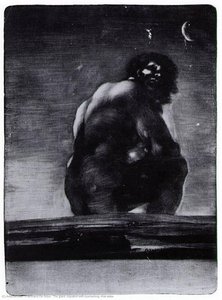
The giant, Aquatint with burnishing (first state) - Francisco José de Goya y Lucientes
 The giant, Aquatint with burnishing (first state) - Francisco José de Goya y Lucientes
What if I told you that The Giant, Aquatint with burnishing (first state) by Francisco José de Goya y Lucientes was born from a moment of profound psychological rebellion? This is not merely a print; it is a haunting manifesto of the human condition. Its inclusion in our Top 25 is demanded by its ability to redefine the boundaries of shadow and light, transforming a desolate landscape into an experience of pure, visceral emotion.
In this masterful work, Goya utilizes the granular texture of aquatint and the delicate refinement of burnishing to sculpt a colossal figure emerging from a bruised, nocturnal sky. The grayscale palette creates a sense of monumental isolation that resonates through the centuries. At ArtsDot.com, we believe such powerful imagery should not be confined to museum archives. By offering high-quality, hand-painted reproductions, we bring this atmospheric intensity into your professional or private spaces. Imagine this somber, commanding presence hanging in a corporate lobby or a refined study—turning a simple wall into a profound statement of strength and historical depth.
Conclusion
To wander through the visual legacy of Francisco José de Goya y Lucientes is to traverse the very landscape of the human soul, moving from the sun-drenched elegance of Spanish court life into the profound, shadowed depths of our shared vulnerabilities. These twenty-five masterpieces are far more than mere relics of a bygone era or static subjects for historical study; they are living, breathing presences that pulse with an enduring energy. Each brushstroke carries the weight of Goya’s transformation, offering us a mirror in which we can recognize our own triumphs, our deepest anxieties, and our capacity for resilience.
There is a unique power in bringing such profound narratives into our personal environments. To hang a Goya reproduction within a home or a professional space is to invite a silent, sophisticated dialogue between the past and the present. These works do not merely decorate a wall; they anchor a room, providing a focal point of texture, light, and emotional gravity that inspires contemplation and sparks creativity long after the initial viewing. They serve as daily reminders of the grace found in truth and the beauty that can emerge from even the most turbulent shadows.
As we conclude this journey through Goya’s transformative oeuvre, we invite you to move beyond the role of a distant observer and become a custodian of this enduring spirit. Whether you are drawn to the luminous clarity of his early portraits or the haunting intensity of his later visions, you can find the perfect piece to resonate with your own space within our full collection . Let these timeless works become a part of your daily life, transforming your surroundings into a sanctuary of art, history, and profound human connection.