The Post-War Rupture: Historical Context and the Birth of a New Visual Language
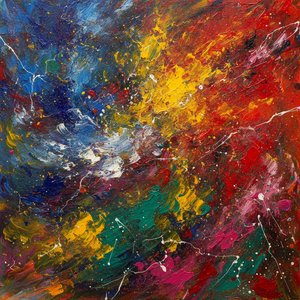 Pure Chaos & Color: The High-Voltage World of Abstract Expressionism
The Post-War Explosion: When Chaos Met Canvas Abstract expressionism Abstract expressionism in the United States emerged as a distinct art movement in the aftermath of World War II and gained mainstream acceptance in the 1950s, a shift from the Ameri...
To understand Abstract Expressionism, one must first grasp the profound silence and subsequent scream that followed the conclusion of World War II. The mid-20th century was not merely a period of reconstruction; it was an era of unprecedented psychological fracture. As the smoke cleared from the global conflict, the established norms of Western art—the serene landscapes, the polished portraits, and the structured social realism of the 1930s—suddenly felt inadequate, perhaps even dishonest, in the face of a world grappling with the horrors of nuclear tension and existential uncertainty. The collective psyche of humanity had been shattered, leaving behind a deep sense of disillusionment that demanded a new, more visceral vocabulary.
From this wreckage emerged a radical movement centered in the electric, gritty atmosphere of New York City. This was the birth of the New York School, a group of rebels who sought to wrest the mantle of artistic supremacy from Paris. These artists were not interested in depicting the external world; they believed that traditional representation could no longer articulate the complexities of modern human experience. Instead, they turned inward. Influenced by the psychological depths explored by Carl Jung and the spontaneous, automatic techniques of the Surrealists, they sought to create a visual language that bypassed the intellect to strike directly at the soul. It was an era where chaos met canvas, and where the search for meaning became a struggle against the void.
Action Painting: The Canvas as an Arena for Physical Gesture
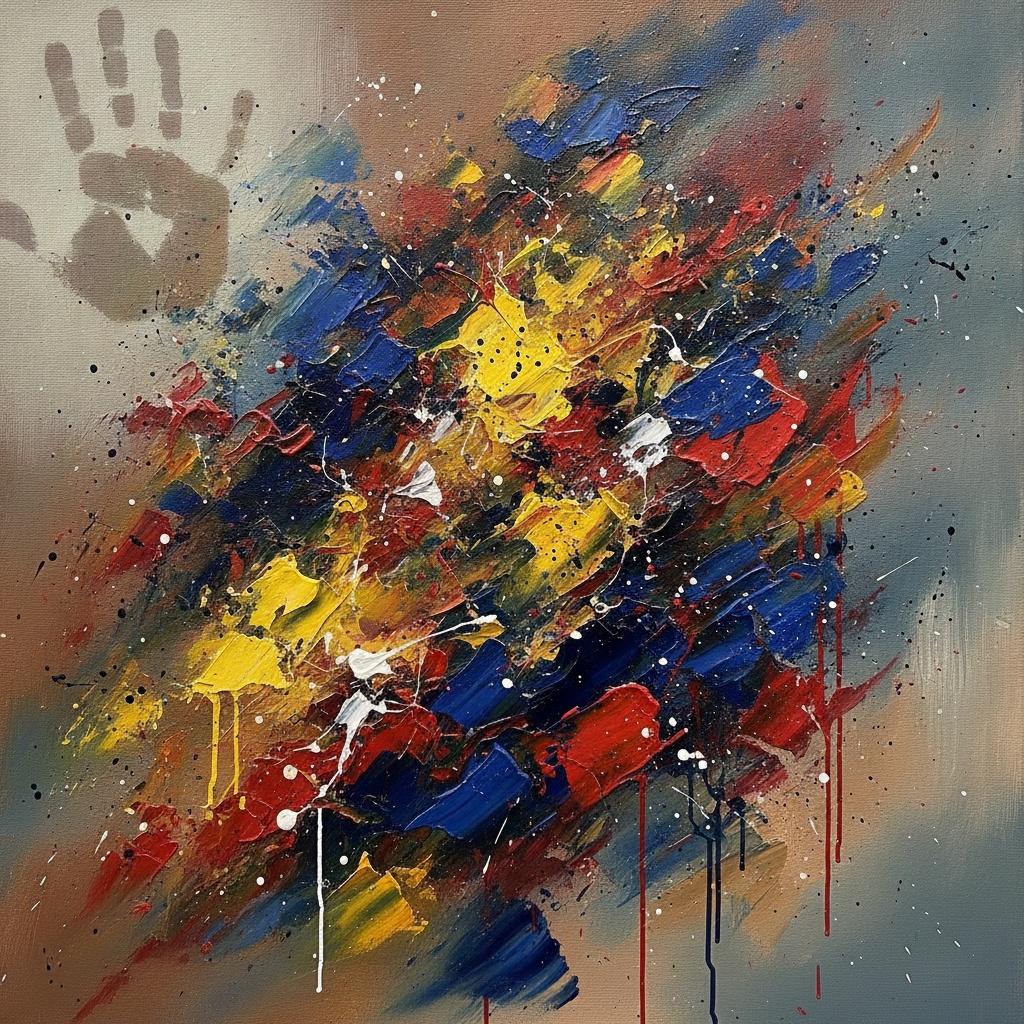
Action painting, sometimes called "gestural abstraction", is a style of painting in which paint is spontaneously dribbled, splashed or smeared onto the canvas, rather than being carefully applied. The resulting work often emphasizes the physical act ...
Perhaps the most dramatic departure from tradition within this movement was the emergence of Action Painting, often referred to as gestural abstraction. In this revolutionary approach, the canvas ceased to be a mere surface for depiction and instead became an arena in which to act. As the influential critic Harold Rosenberg famously posited, the painting was no longer a picture, but an event. This shift placed immense importance on the physical act of creation itself—the movement of the arm, the force of the wrist, and the spontaneous energy of the artist's entire body.
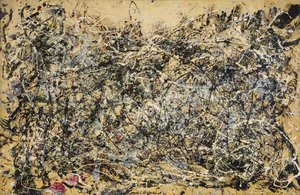
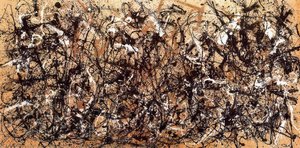
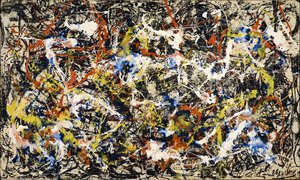
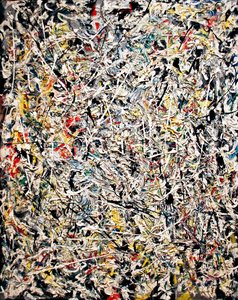
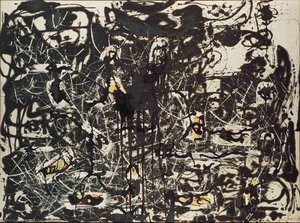
Consider the legendary techniques of Jackson Pollock, whose "drip" method involved pouring, splattering, and dribbling paint onto canvases laid flat on the floor. This was not a random act of chaos, but a highly rhythmic, almost performative dance with the medium. The resulting webs of pigment captured the very essence of motion and time. Similarly, artists like Willem de Kooning utilized thick, aggressive brushstrokes that emphasized the materiality of the paint. In these works, the texture—the clotted, oil-caked surfaces—serves as a direct record of the artist's struggle. To view an Action Painting is to witness a frozen moment of intense physical labor, where the boundary between the creator and the creation begins to dissolve.
Beyond Representation: Exploring the Psychological and Subconscious Landscape
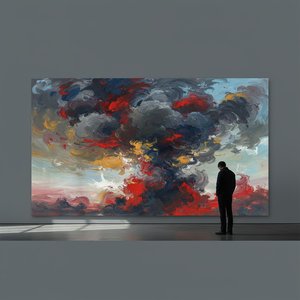 Beyond Representation: Exploring the Emotional Landscape of Abstract Expressionism
The Genesis of Feeling: Post-War America and the Rise of Abstract Expressionism The Raw Emotion of Expressionism: A Revolution in 20th-Century Art Explore the revolutionary world of Expressionism with . Discover key artists like Kirchner & Nolde, und...
While Action Painting focused on the externalized gesture, another facet of Abstract Expressionism delved into the quiet, profound depths of the subconscious. This branch of the movement sought to map the emotional landscape through color, scale, and atmosphere. The goal was to move beyond the "what" of a painting to the "how" of feeling. By stripping away recognizable figures and narrative constraints, artists could tap into universal archetypes and primal emotions—anxiety, passion, and transcendence.
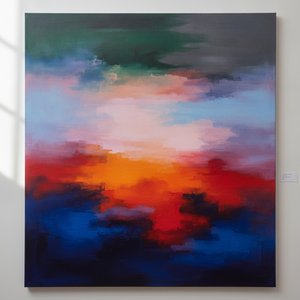
This exploration was deeply intertwined with the rise of psychoanalysis. The influence of Jungian theory encouraged artists to look toward the collective unconscious, seeking symbols and forms that resonated on a pre-verbal level. This led to works that utilized vast, monochromatic fields or swirling, nebulous shapes to evoke a sense of the infinite. The scale of these paintings was often monumental, designed to envelop the viewer and provoke a direct, almost primal connection. In this realm, color became a psychological tool; a deep blue could evoke a profound melancholy, while a vibrant gold might suggest a spiritual awakening. It was art stripped bare, liberated from the need to tell a story, focusing instead on the pure resonance of form and hue.
Masterpieces of Emotion: Analyzing Key Figures and Iconic Works
 Abstract Expressionism's 10 Defining Masterpieces |
Introduction To gaze upon these ten canvases is to step into a realm where emotion reigns supreme, where the very act of painting became a visceral outpouring of the human spirit. The Abstract Expressionist movement, born in the aftermath of World Wa...
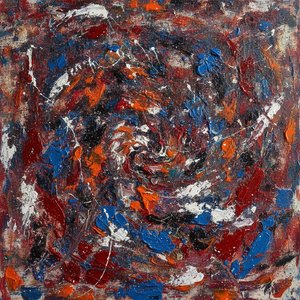
To gaze upon the defining masterpieces of this era is to step into a realm where emotion reigns supreme. Each artist brought a unique perspective to this exploration of the human spirit. Milton Resnick, for instance, contributed works like Abstraction (1963), which utilized bold colors and intricate textures to create a dynamic, expressive quality that seems to dance across the canvas. His ability to push the boundaries of non-representational form serves as a testament to the movement's innovative spirit.
We also see the profound impact of artists like Michael Goldberg, whose work emerged from the vibrant post-war crucible of New York, bringing a singular and powerful voice to the movement through his mastery of gesture and color. Even in more structured forms, such as the geometric abstractions seen in the triptychs of Vaclav Vytlacil, we see the echoes of modernism's search for new order amidst chaos. Whether through the thick impasto of Michele Elizabeth Field’s vibrant oil paintings or the sweeping, atmospheric reaches of the great color-field painters, these masters created a canon of works that continue to challenge our perceptions of beauty and truth.
The Legacy of Abstraction: Influence on Modernism and Contemporary Aesthetics
Abstract Expressionism, a group of loosely affiliated painters participating in the first truly American modernist movement
The legacy of Abstract Expressionism extends far beyond the mid-20th century. By redefining the possibilities of painting and challenging conventional notions of aesthetics, these artists paved the way for countless subsequent movements, from Color Field painting to Minimalism and contemporary abstraction. They proved that art could exist independently of visual references, focusing instead on the intrinsic power of medium, texture, and gesture.
Today, we see their influence in everything from large-scale architectural murals to the digital explorations of modern media. The movement's emphasis on individual freedom and the authenticity of the artist's hand remains a cornerstone of artistic practice. For the student of art history or the dedicated collector, these works offer more than just aesthetic pleasure; they offer a window into a pivotal moment in human history when the world was reinventing itself through the medium of paint. At ArtsDot.com, we celebrate this enduring legacy by offering museum-quality, hand-painted reproductions that allow you to bring the raw power and profound emotion of these historical masterpieces into your own space, preserving the soul of modernism for generations to come.