The Genesis of Surreality: From Dadaist Rebellion to André Breton’s Manifesto
SurrealismSurrealism is an art and cultural movement that developed in Europe in the aftermath of World War I in which artists aimed to allow the unconscious mind to express itself, often resulting in the depiction of illogical or dreamlike scenes and ideas. I...
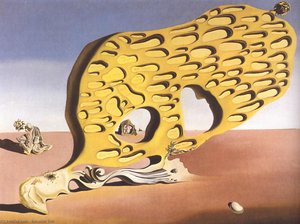
To understand the Surrealist movement, one must first grasp the profound sense of disillusionment that permeated Europe in the wake of World War I. The rationalism and logic that had once promised progress were seen by a generation of thinkers as having led directly to the senseless carnage of the trenches. This era of fragmentation gave rise to Dadaism, a rebellious, anti-art movement that embraced absurdity and chaos to protest the very foundations of bourgeois society. However, where Dada sought to destroy, Surrealism aimed to reconstruct. In 1924, the poet André Breton published the first Surrealist Manifesto, providing a structured intellectual framework for this new exploration. He envisioned a revolution of the mind, seeking to resolve the seemingly contradictory conditions of dream and reality into an absolute reality—a super-reality, or surreality. This was not merely an aesthetic shift but a philosophical crusade, heavily influenced by the burgeoning field of Freudian psychoanalysis, aiming to liberate the human psyche from the repressive constraints of reason and social convention.
The Architecture of Dreams: Exploring the Unconscious through Symbolism and Precedents
 Beyond Reality: A Sophisticated Exploration of Symbolism and the Dreamlike Subconscious in Art History
The Veil of Perception: Defining the Symbolist Movement To gaze upon a Symbolist masterpiece is to step through a threshold, leaving the tangible certainties of the material world for a realm where shadows possess weight and silence speaks in metapho...
Before the Surrealists arrived on the scene, the seeds of their vision were already being sown by the Symbolist movement of the late 19th century. While the Realists documented the grit of industrial life and the Impressionists captured the fleeting play of light, the Symbolists sought to capture the internal resonance of the soul. They believed that art should serve as a vessel for the unseen currents of the human psyche, utilizing metaphors and shadows to express ideas that lay beyond the reach of literal description. This lineage is vital when studying Surrealism; the movement inherited this fascination with the intangible. The Surrealists took the Symbolist preoccupation with myth and mystery and pushed it into the realm of the overtly irrational. By tapping into the subconscious, they transformed the canvas into a psychological landscape where the boundaries between the tangible world and the nebulous dreamscape dissolved, allowing for an exploration of desire, fear, and the profound mysteries of existence.
Masters of the Illogical: The Technical Brilliance of Salvador Dalí and René Magritte
 Salvador Dalí
A Life Submerged in Dreams: The World of Salvador Dalí Salvador Domingo Felipe Jacinto Dalí i Domènech, a name synonymous with surrealism, was born on May 11, 1904, in the sun-drenched town of Figueres, Spain. His existence was destined to be anythin...
The true power of Surrealism lies in its ability to render the impossible with startling, almost unsettling, clarity. No artist embodies this technical paradox more profoundly than Salvador Dalí. His approach, which he termed the
paranoiac-critical method, involved a self-induced state of paranoia designed to unlock hidden imagery from the subconscious. In masterpieces such as
Soft Watches (1933), Dalí employs a meticulous, academic realism—reminiscent of Renaissance masters—to depict objects that are fundamentally distorted. The way the timepiece appears to melt and yield under pressure is executed with such precision that the viewer is forced to confront the dreamlike imagery as if it were physically present. Similarly, René Magritte utilized a more cerebral, deadpan style to challenge our perceptions of reality. Through the juxtaposition of ordinary objects in extraordinary contexts, Magritte’s work functions as a visual puzzle, prompting the viewer to question the relationship between an object, its name, and its representation, thereby stripping away the comfort of certainty.
Metamorphosis and Memory: Analyzing Key Motifs in Surrealist Masterpieces
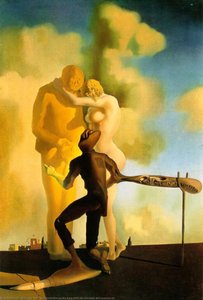
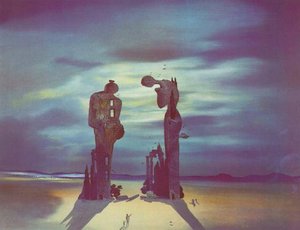 Archaeological Reminiscence of Millet's Angelus, 1935
A Fragment of Millet Revisited: Dali’s Surreal Echoes Salvador Dalí's “Archeological Reminiscence of Millet’s Angelus,” painted in 1935, isn’t merely a depiction of Jean-François Millet’s pastoral scene; it’s an audacious reimagining—a dreamscape bor...
Surrealist imagery is rarely accidental; it is a carefully curated language of symbols designed to trigger deep-seated emotional responses. Themes of metamorphosis, decay, and the fluidity of time permeate the movement's most iconic works. In Dalí’s
Archaeological Reminiscence of Millet’s Angelus, we see an audacious reimagining of a pastoral classic, where the peaceful scene is replaced by a desolate landscape of colossal, weathered statues. This reflects a preoccupation with memory and the erosion of tradition. The recurring motif of the clock, particularly in its pliable form, serves as a meditation on mortality and the elusive nature of time itself. These artists utilized unexpected juxtaposities—a spoon resting near a melting watch, or a heavy stone figure standing against a muted sea—to create a sense of disorientation. This
element of surprise is essential to the Surrealist experience, forcing the observer to abandon their rational defenses and engage with the artwork on an instinctive, emotional level, where the logic of the everyday world no longer applies.
The Enduring Legacy: How Surrealism Redefined Modern Visual Culture
The impact of Surrealism extends far beyond the confines of 20th-century painting; it fundamentally altered the DNA of modern visual culture. Its influence can be traced through the evolution of filmmaking, photography, advertising, and even contemporary digital art. The movement’s ability to blend the bizarre with the beautiful has provided a toolkit for creators to explore identity, politics, and the human condition in ways previously unimaginable. Today, when we encounter imagery that defies logic or uses dreamlike symbolism to convey complex truths, we are witnessing the living legacy of Breton, Dalí, and Magritte. For those who seek to bring this sense of wonder into their own lives, finding a high-quality reproduction of these canonical works offers more than mere decoration; it provides a window into a revolutionary era of human thought. At
ArtsDot.com, we specialize in preserving this legacy through museum-grade, hand-painted oil reproductions that capture the very texture and soul of these historical masterpieces, allowing the profound beauty of the subconscious to reside permanently within your collection.