The Dawn of Realism: Defining the Early Netherlandish Movement
--- title: Early Netherlandish Painting - The Metropolitan Museum of Art author: Maryan Ainsworth url: https://www.metmuseum.org/essays/early-netherlandish-painting hostname: metmuseum.org description: Whether they were made as objects for veneration...
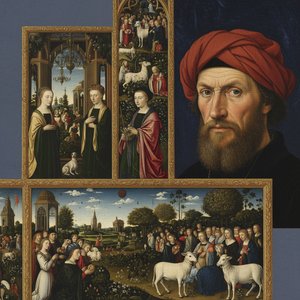
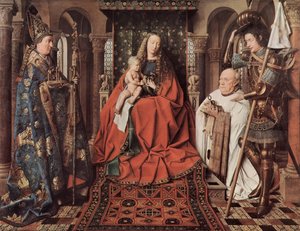
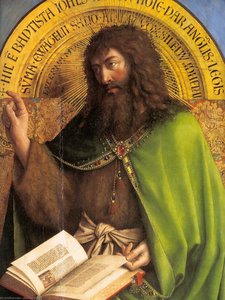
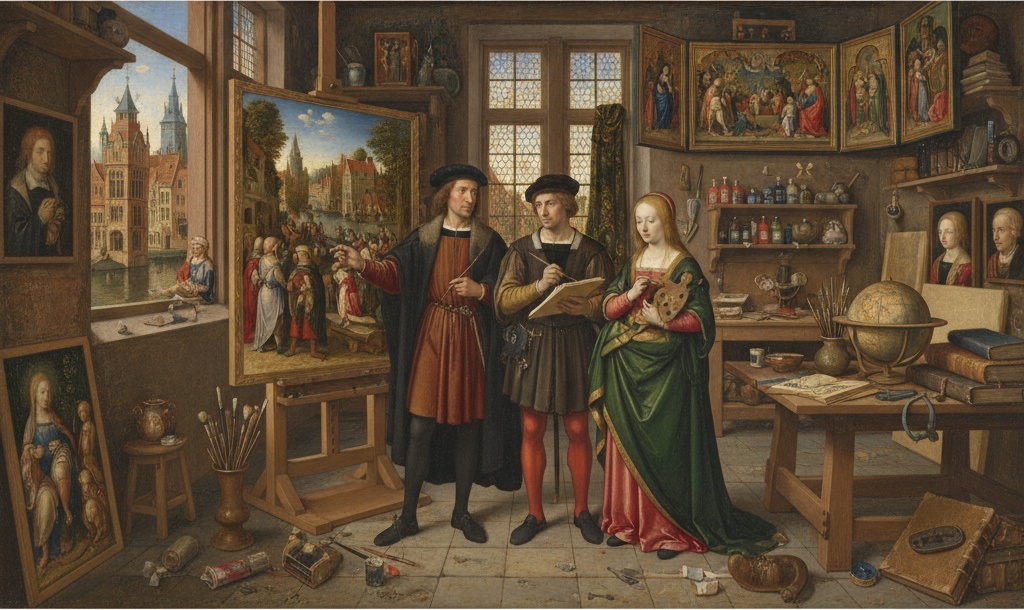
To step into the world of the Early Netherlandish Renaissance is to enter a realm where light itself seems to breathe, and reality is rendered with an almost unsettling precision. Emerging from the vibrant artistic communities of Flanders and Holland during the 15th century, this movement marked a radical departure from the stylized, often flattened forms of the preceding Gothic era. It was a period of profound transition, where the heavy, symbolic language of the Middle Ages began to merge seamlessly with an unprecedented focus on naturalism and observational truth. Unlike their contemporaries in the Italian Renaissance, who sought perfection through mathematical perspective and idealized anatomy, the masters of the Low Countries found divinity in the minute details of the physical world.
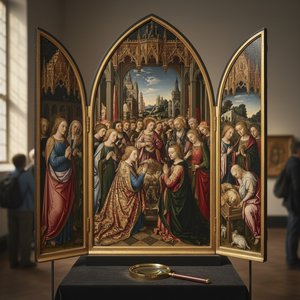
This era was characterized by a burgeoning humanist spirit, fueled by the rise of wealthy merchant patrons in cities like Bruges, Ghent, and Antwerp. These individuals did not merely desire religious icons; they sought sophisticated works that reflected their social status, their piety, and their growing fascination with the tangible world. The result was an art form that functioned as a window—a portal into the lives, beliefs, and burgeoning sensibilities of 15th-century Northern Europe. Whether through a meticulously rendered portrait or a sprawling altarpiece, these artists aimed to make the painted image vividly present, rendering the unseen palpable through the sheer power of visual accuracy.
The Alchemy of Oil: How Jan van Eyck Revolutionized Light and Texture
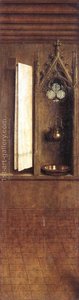 The Ghent Altarpiece: Niche with Wash Basin
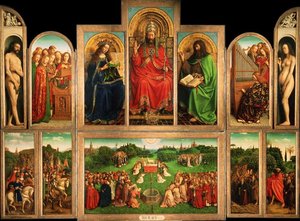
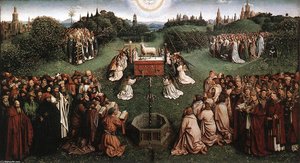
A Window Into Medieval Faith In the quiet corners of Saint Bavo Cathedral in Ghent, there exists a fragment of a much larger divine vision, a singular moment captured in Jan van Eyck’s “The Ghent Altarpiece: Niche with Wash Basin.” Completed in 1432,...
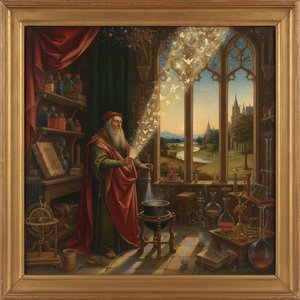
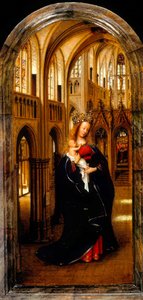
At the heart of this artistic revolution lay a technical breakthrough that would forever alter the course of Western art: the mastery of the oil medium. While many artists of the era were still bound to the quick-tending, opaque nature of tempera—a medium prone to cracking and limited in its tonal range—Jan van Eyck pioneered a technique involving the slow, translucent layering of oils. This process, often described as an alchemy of light, allowed for a luminosity that seems to radiate from within the wooden panels themselves. By applying thin glazes, Van Eyck could capture the subtle play of light as it enters an unseen window, dancing across the rim of a ceramic bowl or catching the sheen on a polished gemstone.
The impact of this innovation cannot be overstated. In works such as The Ghent Altarpiece: Niche with Wash Basin, one can almost feel the cool temperature of the masonry and the smooth, polished surface of the vessels. This technique allowed for an unparalleled level of detail, from the glint of gold leaf to the delicate, velvety folds of heavy fabric. The ability to manipulate light and shadow—a precursor to the more dramatic chiaroscuro seen in later centuries—imbued these portraits and religious scenes with a three-dimensional volume and a sense of profound presence. It is this breathtaking precision that continues to captivate modern collectors, offering a depth of texture that no mere print can replicate.
Symbolism in the Mundane: Decoding Hidden Meanings in Northern Masterpieces
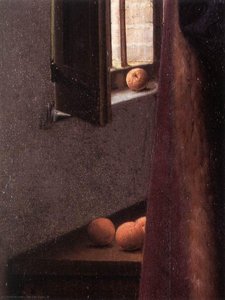 l5
l5A Window Into Medieval Brilliance: Exploring Jan van Eyck’s “l5” Subject Matter: The painting depicts a simple yet profound scene—a window framed by brickwork, adorned with three apples resting on its sill. This seemingly unassuming composition belie...
To the untrained eye, an Early Netherlandish painting might appear to be a simple depiction of domestic life or religious devotion. However, for the 15th-century viewer, every element within the frame was imbued with profound spiritual significance. This movement perfected the art of "disguised symbolism," where everyday objects served as metaphors for divine truths. A window framed by brickwork is never just a window; it is a threshold between the earthly and the divine. An arrangement of three apples resting on a windowsill, as seen in Van Eyck’s evocative compositions, might carry the weight of fertility, immortality, or even the fall of man.
This intricate visual language invites us to decode the world around us. A simple wash basin or a piece of fruit becomes a vessel for contemplation, inviting the viewer to consider themes of grace and purity. Even in portraiture, such as the Portrait of a Man, the subject's pose—perhaps with clasped hands suggesting prayer—serves to connect the individual to the broader religious currents of the age. This layering of meaning ensures that these masterpieces are not merely decorative; they are intellectual puzzles that demand engagement, rewarding the observer who looks closely enough to see the sacred hidden within the mundane.
The Rise of the Merchant Class: Patronage and the Shift Toward Humanism
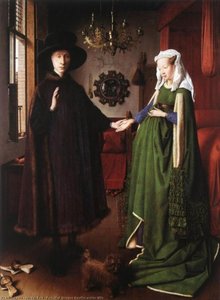 Portrait of Giovanni Arnolfini and his Wife
A Window into Renaissance Domestic Life: Exploring Jan van Eyck’s Portrait of Giovanni Arnolfini and His Wife The painting “Portrait of Giovanni Arnolfini and His Wife,” executed by Jan van Eyck around 1435, stands as an unparalleled achievement in E...
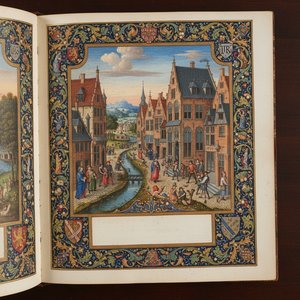
The evolution of Netherlandish art was inextricably linked to the socio-economic shifts of the Burgundian Netherlands. The flourishing of trade in the Low Countries created a new class of wealthy merchants whose ambitions extended far beyond commerce. These patrons sought to immortalize their piety and their prosperity through the commissioning of increasingly sophisticated artworks. This shift in patronage moved art away from purely ecclesiastical functions toward more private, domestic settings. It was within these affluent homes that the portrait emerged as a dominant genre, capturing not just the likeness of the subject, but their character, their possessions, and their place within a changing social hierarchy.
This period witnessed the early stirrings of humanism—a movement that placed greater value on human experience and the observation of nature. As artists began to document the textures of clothing, the anatomy of animals, and the specificities of landscapes, they were participating in a broader cultural movement toward scientific curiosity and individual identity. This is why we see figures like Jan van Steffeswert asserting their artistic identity through signatures, a bold step that challenged established norms. The art of this era serves as a historical record of a society on the cusp of modernity, caught between the religious fervor of the Middle Ages and the observational rigor of the Renaissance.
Legacy of the North: The Enduring Influence of Flemish Masters on Western Art
--- title: Early Netherlandish painting: deep feeling and great truth of character url: https://artuk.org/discover/stories/early-netherlandish-painting-deep-feeling-and-great-truth-of-character hostname: artuk.org description: Explore 1 million artwo...
The legacy of the Early Netherlandish masters remains a cornerstone of the global art canon. Their innovations in oil painting provided the technical foundation upon which much of later European art was built, influencing everyone from the Italian masters to the Dutch Golden Age painters like Rembrandt and Vermeer. The tradition of meticulous detail and the use of light to create atmosphere established a standard of excellence that continues to inspire artists and collectors alike. Even today, the works of this period resonate because they touch upon the universal human condition—the intersection of the physical and the spiritual, the transient and the eternal.
For those who wish to bring this sense of historical elegance and contemplative calm into their own environments, the preservation of these masterpieces is essential. At ArtsDot.com, we honor this enduring legacy by offering museum-quality, hand-painted oil reproductions that capture the true soul of these works. Unlike digital prints, our artists use the same principles of layering and texture to recreate the visible brushstrokes and deep tonal ranges characteristic of the masters. Whether you are a history enthusiast seeking to adorn your study with the profound depth of a Van Eyck or an interior designer looking for a focal point of historical significance, our collection allows you to experience the breathtaking precision of the Northern Renaissance in your own home.