The Alchemical Revolution: How Oil Painting Unlocked New Dimensions of Light
 The Alchemical Revolution: Unlocking the Hyper-Real Mastery of Early Netherlandish Art
The Alchemical Revolution: How Oil Painting Unlocked New Dimensions of Light The Alchemy of Light: Discovering the Luminous Realism of Early Netherlandish Masters The Alchemical Revolution: How Oil Painting Unlocked New Dimensions of Light The Northe...
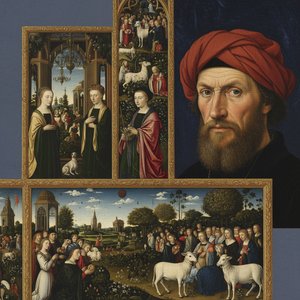
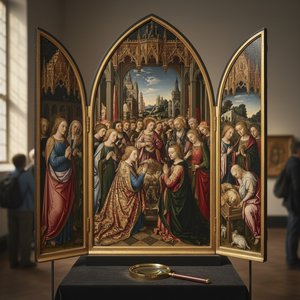
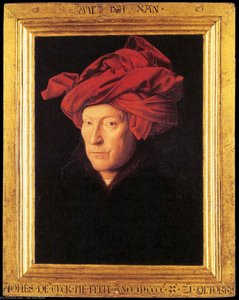
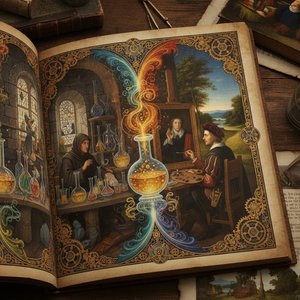
To step into the world of fifteenth-century Flemish art is to witness a profound revolution in the very chemistry of light. Before the masters of the North achieved their legendary status, the visual language of Europe was largely defined by the matte, opaque, and somewhat rigid qualities of egg tempera. While this older medium possessed its own delicate beauty, it lacked the capacity for the slow, luminous transitions that would eventually define the Northern Renaissance. The true transformation occurred through what can only be described as an alchemical mastery over transparency and depth.
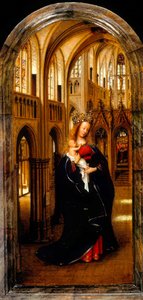
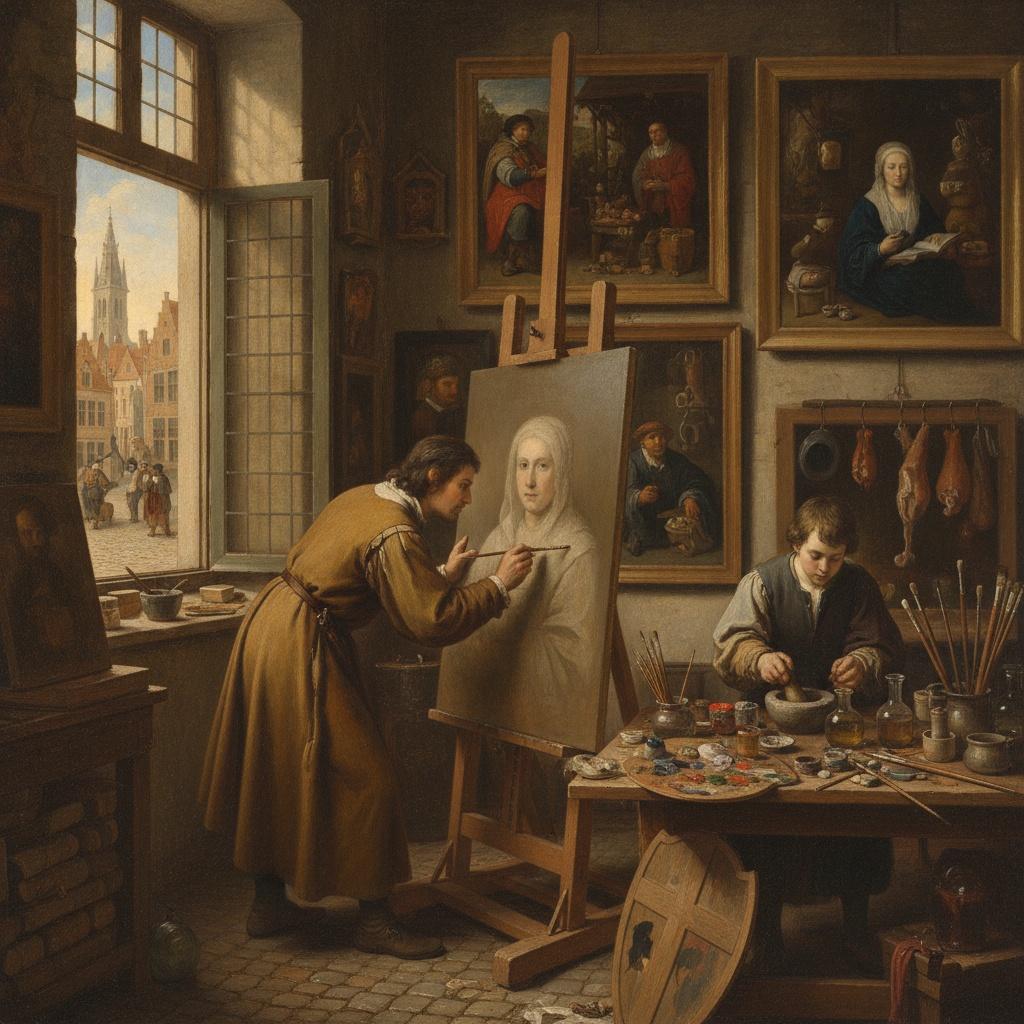
The innovation lay in the refinement of layering thin, translucent glazes of pigment suspended in drying oils, such as walnut or poppy seed. This technique allowed artists to unlock a new dimension of expression, creating a jewel-like brilliance where light would penetrate the surface, catch within the pigment, and refract back to the viewer’s eye. This created a sense of internal radiance that seemed to emanate from within the canvas itself. While the roots of oil painting can be traced much further back to ancient traditions in places like Afghanistan, it was the Early Netherlandish painters who breathed true life into the medium, using its forgiving nature and rich color density to move art away from the symbolic flatness of the Middle Ages toward a breathtakingly tactile reality.
Microscopic Devotion: The Hyper-Real Pursuit of Texture and Detail
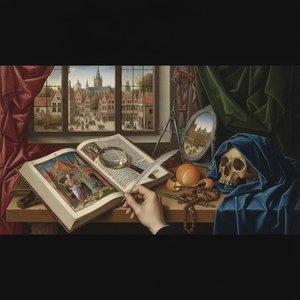 Mastering Realism: A Definitive Guide to the Precision and Symbolism of the Early Netherlandish Renaissance
The Dawn of Detail: Defining the Early Netherlandish Renaissance To step into the world of the Early Netherlandish Renaissance is to enter a realm where the boundaries between the divine and the terrestrial begin to dissolve through the sheer power o...
Unlike the Italian Renaissance, which often sought perfection through mathematical perspective and idealized human forms, the Northern masters found their transcendence in the microscopic. This was an era defined by a profound devotion to the tangible world, where the boundaries between the divine and the terrestrial began to dissolve through the sheer power of observation. The goal was simple yet incredibly ambitious: to make the painted image vividly present and to render the unseen palpable.
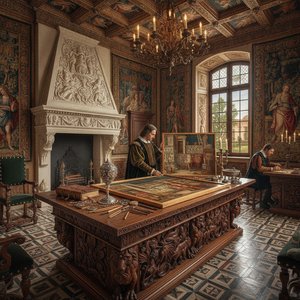
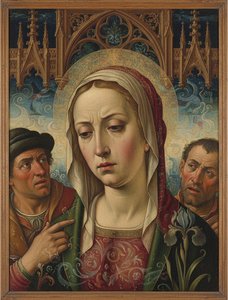
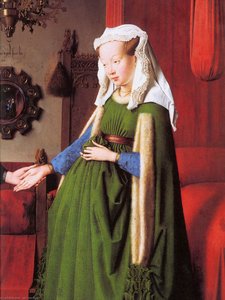
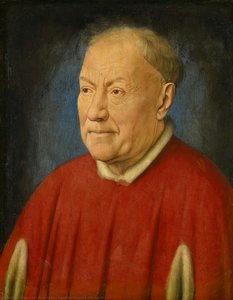
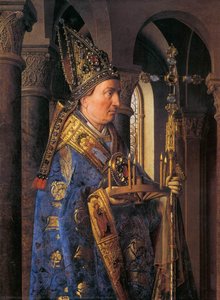
This pursuit of hyper-realism meant that every surface became a subject worthy of intense study. One could trace the heavy weight of velvet, the cold glint of polished brass, or the delicate moisture on a single petal with startling clarity. This meticulous attention to detail was not merely a display of technical virtuosity; it was an act of devotion. By capturing the minute textures of the physical world—the way light catches a stray thread in a rug or the subtle wrinkles in aged skin—these artists brought the viewer into an intimate, almost overwhelming encounter with reality. It is this level of precision that continues to captivate modern eyes, offering a window into a world where nothing is too small to be significant.
Beyond the Surface: Decoding the Symbolic Depth of Northern Masters
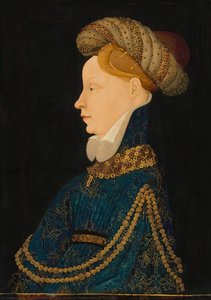 Franco-Flemish 15Th Century
The Enigmatic World of Hieronymus Bosch Hieronymus Bosch, a name synonymous with fantastical imagery and moral allegory, remains one of the most compelling and elusive figures in art history. Born around 1450 in 's-Hertogenbosch, Netherlands, little ...
While the surface of these paintings offers an incredible feast for the eyes, the true depth of Early Netherlandish art lies in its layered meanings. To the untrained eye, a painting might appear as a simple domestic scene or a serene landscape, but beneath the hyper-real textures lies a complex web of iconography. Every object placed within these compositions often serves a dual purpose: it is both a realistic element of the setting and a profound religious or moral symbol.
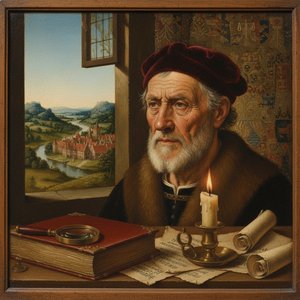
In the works of masters like Jan van Eyck or Rogier van der Weyden, a simple carafe of water or a single lit candle can carry immense theological weight. This use of disguised symbolism allowed artists to embed spiritual truths within the everyday. Even more enigmatic are the later works, such as those by Hieronymus Bosch, where the realism of form meets a fantastical, almost surrealist landscape populated by hybrid creatures and moral allegories. In this realm, the mastery of oil paint is used to render the impossible with such convincing detail that the line between dream and reality becomes dangerously thin, challenging the viewer to look past the physical surface to find the deeper, often unsettling, truths hidden within.
The Northern Edge: Distinguishing Netherlandish Realism from Italian Idealism
The Northern Renaissance was the Renaissance that occurred in Europe north of the Alps, developing later than the Italian Renaissance, and in most respects only beginning in the last years of the 15th century. It took different forms in the various c...
It is essential to understand that the Northern Renaissance was not merely a shadow of its Italian counterpart. While the Italian masters were obsessed with the revival of Classical antiquity, focusing on the mathematical perfection of linear perspective and the idealized proportions of the human body, the artists of the Low Countries followed a different path. Theirs was a journey of empirical observation rather than theoretical geometry.
Where an Italian painter might use perspective to create a structured, stage-like space, a Netherlandish painter used light and atmospheric haze to suggest infinite distance. They were less concerned with the "perfect" human form and more interested in the "true" human form—capturing the imperfections, the character, and the lived experience of their subjects. This distinction creates a fascinating tension in art history: the Italian tradition offers us the beauty of the ideal, while the Netherlandish tradition offers us the profound beauty of the actual. This focus on the tangible, the textured, and the atmospheric is what gives Northern Renaissance art its unique, hauntingly present energy.
From Tradition to Transformation: The Legacy of the Flemish Primitives
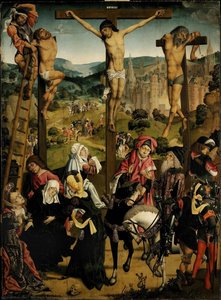 northern netherlandish painter
The Enigmatic Vision of Pieter Bruegel the Elder Pieter Bruegel the Elder, a name synonymous with the late Northern Renaissance, remains one of the most profoundly enigmatic and enduring figures in Western art history. Born around 1525 in what is now...
The period from approximately 1420 to 1550 stands as one of the most astonishing eras of uninterrupted artistic achievement in Western history. From the foundational works of Robert Campin and Jan van Eyck to the complex, crowded landscapes of Pieter Bruegel the Elder, the evolution of the Flemish style is a testament to the power of technical innovation. These artists took the raw materials of pigment and oil and transformed them into a medium capable of capturing the very soul of light.
The legacy of these "Flemish Primitives" extends far beyond their era. Their mastery of oil glazes paved the way for the great developments in European painting for centuries to come, influencing everything from the dramatic chiaroscuro of the Baroque to the modern fascination with texture and light. Today, when we look at a reproduction of a Netherlandish masterpiece, we are not just looking at an old painting; we are engaging with a revolutionary moment in human history where art learned to breathe, to glow, and to exist with a startling, hyper-real vitality that remains unsurpassed.
At ArtsDot.com, we celebrate this enduring legacy by bringing the textures and luminous depths of these masters into the modern home. Whether you are drawn to the microscopic detail of a Van Eyck or the atmospheric landscapes of Bruegel, our professional artists specialize in creating 100% hand-painted oil reproductions that capture the true soul, brushstroke, and brilliance of these historical treasures.