Introduction
To step into the world of Francisco José de Goya y Lucientes is to embark on a journey through the very soul of humanity, navigating the delicate boundary between light and shadow, reason and madness. Goya was not merely a painter; he was a witness to the turbulent metamorphosis of Spain and the profound psychological shifts of the modern era. His brush possessed a singular, haunting power to capture both the sun-drenched elegance of the Spanish court and the visceral, bone-chilling terrors that lurk within the human subconscious.
Born in the humble village of Fuendetodos, Goya’s evolution from a skilled practitioner of Rococo tapestry designs to the progenitor of modern expressionism remains one of the most dramatic arcs in art history. His early years were defined by the grace of the Enlightenment and the vibrant social tapestries of Madrid, yet a pivotal, life-altering deafness in 1793 forced his gaze inward. This isolation birthed a new visual language—one that stripped away the veneer of aristocratic politorr and confronted the raw, often grotesque realities of war, superstition, and societal decay.
The works we explore today remain profoundly meaningful because they refuse to look away. Whether he is documenting the tragic consequences of conflict or peering into the nightmare landscapes of his private imagination, Goya speaks to the universal human condition. His ability to infuse a portrait with psychological depth or a dark etching with prophetic dread continues to resonate with contemporary viewers who grapple with their own era's uncertainties.
In the following curation, we invite you to traverse this monumental career. From his luminous royal portraits and charming genre scenes to the harrowing intensity of his later masterpieces, this selection of twenty-five essential works serves as a guide through the labyrinthine mind of a master who taught us that art is most powerful when it dares to confront the dark.
The Third of May, 1808 The Execution of the Defenders of Madrid - Francisco José de Goya y Lucientes
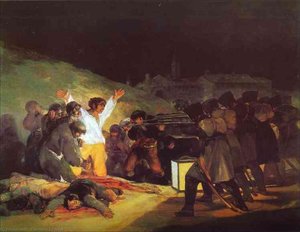 The Third of May, 1808 The Execution of the Defenders of Madrid - Francisco José de Goya y Lucientes
In the pantheon of the top 25 artworks of Francisco José de Goya y Lucientes, few pieces possess the visceral, bone-chilling power of The Third of May, 1808 . This is not merely a historical record; it is a raw, cinematic scream against the brutality of war. Goya abandons the polished grace of his earlier courtly portraits to embrace a revolutionary Romanticism, utilizing thick, impasto brushstrokes and a haunting chiaroscuro that pulls the viewer into the blood-soaked earth of Madrid.
The composition is anchored by a central figure in a brilliant, luminous white shirt—arms outstretched in a Christ-like gesture of defiance—standing in stark contrast to the faceless, mechanical line of Napoleon’s firing squad. The lantern's harsh glow illuminates the terror in the eyes of the condemned and the grim reality of the fallen, creating a sense of claustrophobic urgency. To possess a hand-painted oil reproduction of this masterpiece is to invite a profound dialogue on human resilience into your home; it transforms a mere wall into a gallery of the soul, where the heavy textures of paint mirror the weight of history itself.
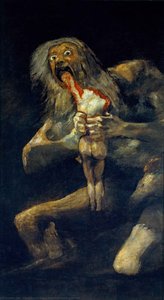
Saturn Devouring His Son - Francisco José de Goya y Lucientes
In Saturn Devouring His Son , Goya achieves a harrowing mastery of chiaroscuro , utilizing a stark, almost violent interplay between abyssal shadows and a haunting, localized light. This illumination does not merely reveal the scene; it carves the grotesque, distorted anatomy of Saturn out of the darkness, forcing the viewer to confront the raw terror of the flesh. The light catches the frantic glint in the deity's eyes and the visceral texture of the impasto, creating a sense of movement that is both primal and deeply unsettling. This command of shadow was revolutionary, moving away from courtly elegance toward a psychological realism that secures its place among the top 25 artworks of Francisco José de Goya y Lucientes .
For the discerning collector, owning a high-quality oil reproduction of this masterpiece allows one to bring this profound emotional depth into a modern interior. When captured on 100% cotton canvas with visible, authentic brushstrokes, the dramatic contrast of the Black Paintings adds an incomparable layer of intellectual gravity and sophisticated drama to any curated wall.
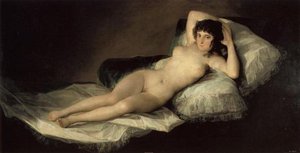
La maja desnuda. . Madrid, Museo del Prado. - Francisco José de Goya y Lucientes
In the quiet, shadowed depths of the Museo del Prado, a single figure emerges from the darkness with an arresting, unblinking gaze. Francisco José de Goya y Lucientes’ La maja desnuda is not merely a painting; it is a profound encounter with intimacy and audacity. Created around 1797, this masterpiece utilizes masterful chiaroscuro to sculpt the reclining form, where soft, luminous skin contrasts against the heavy, velvety void of the background. The fluid, organic lines of the subject’s body and the rich textures of the silken drapery evoke a sense of tactile reality that feels both timeless and startlingly modern.
The painting’s historical scandal—its unapologetic celebration of the female form—has cemented its status as a cornerstone of Spanish Romanticism. Today, the evocative power of Goya's light and shadow offers a sophisticated anchor for contemporary interiors. Whether rendered as a large-scale handmade oil reproduction to create a dramatic focal point or a delicate study in a private study, this work brings an atmosphere of contemplative elegance and historical depth to any curated space.
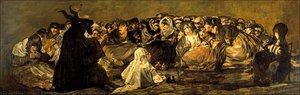
Witches' sabbath - Francisco José de Goya y Lucientes
To encounter Witches' Sabbath is to step directly into the fever dream of Francisco José de Goya y Lucientes. Created in 1821 as part of his haunting Black Paintings , this work transcends mere canvas; it is a visceral descent into the shadows of the human psyche. Goya utilizes a dramatic, chiaroscuro-heavy technique to illuminate a chaotic, ritualistic gathering where light and shadow struggle for dominance. The composition is thick with tension, featuring swirling, organic forms and expressive, impasto brushstrokes that lend a tactile sense of unease to the figures gathered in the gloom.
The painting serves as a profound critique of superstition and the societal decay Goya witnessed during Spain's turbulent era. Every stroke conveys a sense of claustrophobia and spiritual unrest, making it a cornerstone of Dark Romanticism. Owning a reproduction of this masterpiece is not merely a purchase; it is an inheritance of Goya’s profound emotional legacy. At ArtsDot.com, we offer meticulously hand-painted oil recreations that capture the very soul of this nocturnal vision, allowing you to bring this lineage of historical gravity into your own private gallery.
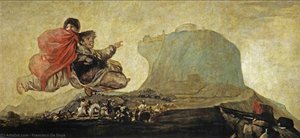
Asmodea - Francisco José de Goya y Lucientes
In Asmodea , Francisco José de Goya y Lucientes delivers one of the most hauntingly visceral experiences within his legendary Black Paintings series. This masterpiece captures a profound sense of cosmic and earthly chaos, where the boundaries between myth and historical tragedy dissolve. The composition is anchored by two airborne figures—a man and a woman—whose desperate flight above a landscape of war creates a breathtaking tension between the ethereal and the brutal.
Goya utilizes a somber, earthy palette, punctuated only by the striking red of a female figure's robe, which draws the eye through a whirlwind of gestural, impastoed brushstrokes. The painting’s raw emotional depth and dramatic use of light make it a cornerstone of the top 25 artworks of Francisco José de Goya y Lucientes , representing the pinnacle of Romanticism's darker impulses. For the modern collector, such a piece brings an unparalleled sense of historical gravity and intellectual depth to a space, offering a window into the artist's most private, turbulent reflections on human suffering and resilience.
The Colossus - Francisco José de Goya y Lucientes
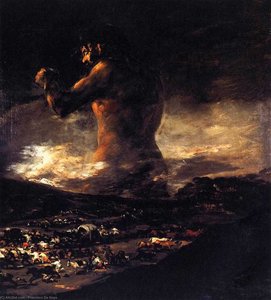 The Colossus - Francisco José de Goya y Lucientes
In The Colossus by Francisco José de Goya y Lucientes, a sense of primordial dread and monumental awe is frozen in time, capturing the very moment where myth meets the turbulence of human history. This masterpiece earns its place among the top 25 artworks of Francisco José de Goya y Lucientes through its unparalleled ability to evoke the sublime; it is a visceral exploration of power, vulnerability, and the chaotic spirit of the Romantic era. The canvas breathes with heavy, impasto brushstrokes, where dark, earthen tones collide with flashes of sulfurous light amidst a swirling, stormy sky. The chiaroscuro technique sculpts the giant’s muscular form, creating a dramatic interplay of shadow that feels almost tactile.
To possess a reproduction of this work is to bring a profound intellectual gravity into a modern interior. Whether rendered as a large-format museum-grade oil painting or a textured Giclée print, its commanding presence serves as a sophisticated focal point, inviting deep introspection and echoing the resilience of the human spirit within any curated space.
St Isabel of Portugal treating the wounds of an injured - Francisco José de Goya y Lucientes
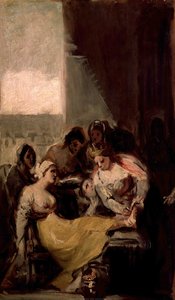 St Isabel of Portugal treating the wounds of an injured - Francisco José de Goya y Lucientes
In St Isabel of Portugal treating the wounds of an injured , Francisco José de Goya y Lucientes captures a profound moment of tenderness that transcends its religious origins. The painting is anchored by the gentle, focused hands of the Saint, whose compassionate gaze meets the vulnerability of the wounded figure with an almost spiritual intimacy. Through a masterful use of chiaroscuro , Goya sculpts emotion from the darkness, using dramatic light to highlight the textures of skin and fabric against a somber, earth-toned backdrop.
This work stands as a vital entry in our collection of the top 25 artworks of Francisco José de Goya y Lucientes because it serves as a universal mirror of human empathy. The heavy, contemplative atmosphere—filled with deep ochres and muted blues—offers a unique opportunity for collectors. Bringing a high-quality oil reproduction of this masterpiece into your home can transform a personal sanctuary into a space for profound reflection and quiet calm, inviting the same sense of mercy and resilience into your daily life.
Josefa de Castilla Portugal y van Asbrock de Garcini (1775–about 1850) - Francisco José de Goya y Lucientes
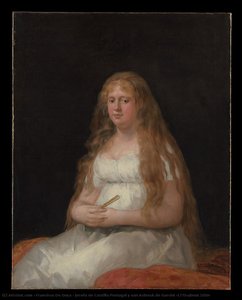 Josefa de Castilla Portugal y van Asbrock de Garcini (1775–about 1850) - Francisco José de Goya y Lucientes
In the quietude of 1804, Goya captures a moment of profound domestic intimacy in his portrait of Josefa de Castilla Portugal y van Asbrock de Garcini . The scene unfolds with a cinematic stillness; Josefa rests upon a couch, her figure luminous against a deep, enveloping darkness. Holding a book, she exists in a state of gentle contemplation, her unbound hair and loose white dress suggesting a vulnerability that transcends mere aristocratic portraiture.
Goya masterfully weaves the monumental grandeur of Rubens with the psychological chiaroscuro of Rembrandt, using light to sculpt not just flesh, but character. The muted palette and soft, atmospheric textures create a sense of serene introspection that feels remarkably modern. This masterpiece does more than document a historical figure; it invites a sense of calm and intellectual depth into any contemporary setting. Whether displayed as a large-format museum-quality oil reproduction or a delicate study, the painting’s interplay of shadow and light serves as a timeless anchor for reflection, bringing the soulful weight of Spanish Romanticism into the heart of your home.
The Water Carrier ( - Francisco José de Goya y Lucientes
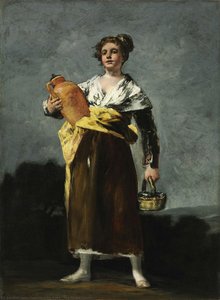 The Water Carrier ( - Francisco José de Goya y Lucientes
In The Water Carrier , Goya captures a gaze of quiet, unyielding determination that transcends the simple act of manual labor. The central figure, a young woman bearing the weight of an earthenware jug, serves as a profound symbol of resilience amidst the historical turbulence of 1812 Spain. Through a masterful use of impasto and earthy ochres, Goya breathes life into the rugged textures of her clothing, creating a visceral connection between the subject and the viewer.
This work stands as a cornerstone in our collection of the top 25 artworks of Francisco José de Goya y Lucientes because it moves beyond mere portraiture to touch upon the universal human capacity for endurance. The soft, diffused light illuminating her face invites a moment of stillness, making this piece an ideal selection for those seeking to transform a personal sanctuary into a space for deep reflection and calm. Whether you are drawn to its historical gravity or its painterly spontaneity, owning a hand-painted oil reproduction of this masterpiece allows the soulful strength of Goya’s vision to reside permanently within your home.
Portrait of the Matador Pedro Romero - Francisco José de Goya y Lucientes
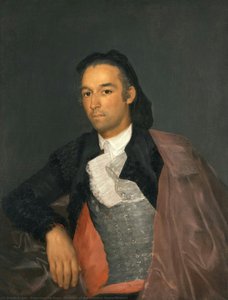 Portrait of the Matador Pedro Romero - Francisco José de Goya y Lucientes
In the Portrait of the Matador Pedro Romero , Francisco José de Goya y Lucientes captures more than a man; he freezes a moment of profound courage and aristocratic grace. This masterpiece earns its place among the top 25 artworks of Goya through its breathtaking use of the wet-on-wet technique, a method that allows light to dance across the vibrant red of the bullfighter's jacket with an almost ethereal luminosity. As you gaze upon Romero’s composed yet piercing stare, you feel the pulse of 18th-century Spanish tradition and the tension of the arena.
Goya’s ability to blend Neoclassical clarity with a burgeoning emotional depth makes this portrait an irreplaceable pillar of art history, influencing generations of painters to seek the soul beneath the surface. This painting does not merely decorate a space; it commands it, offering a sophisticated focal point that brings a sense of historical weight and dramatic elegance to any modern setting. Through our high-fidelity, hand-painted oil reproductions, you can bring this transformative presence into your own home or private gallery, allowing Goya’s mastery of light and shadow to inspire your personal sanctuary for decades to come.
Tubercio Pérez Cuervo - Francisco José de Goya y Lucientes
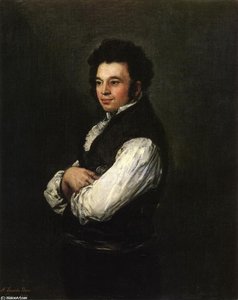 Tubercio Pérez Cuervo - Francisco José de Goya y Lucientes
In Tubercio Pérez Cuervo , Goya achieves a masterful structural harmony that secures its place among the top 25 artworks of Francisco José de Goya y Lucientes . The composition is anchored by a sophisticated use of directional lighting; a sharp, luminous glow strikes the subject from the left, carving his features out of an enveloping, velvety darkness. This interplay of light and shadow creates a powerful geometric balance, where the organic curves of the face and the crisp lines of the white collar provide a focal point against a void of deep, somber tones.
There is a striking parallel to be found between this 1820 masterpiece and the principles of modern minimalist design . The restrained color palette—dominated by muted blacks and earthy browns—strips away unnecessary ornamentation, leaving only the essential psychological truth of the sitter. This reduction of form creates a clean, contemporary aesthetic that allows the portrait to ground any modern interior with its quiet, monumental presence. For collectors seeking a piece that embodies both historical gravity and timeless elegance, this work offers an unparalleled window into Goya's profound ability to capture the human soul through light.
Majas on a Balcony - Francisco José de Goya y Lucientes
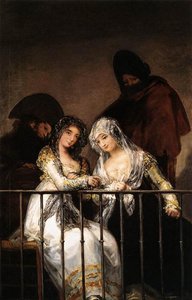 Majas on a Balcony - Francisco José de Goya y Lucientes
In the quiet, shadowed corners of Majas on a Balcony by Francisco José de Goya y Lucientes, one finds a moment of suspended animation where the heartbeat of Spain is frozen in time. This masterpiece stands among the top 25 artworks of Goya because it transcends mere social portraiture, offering a profound window into the psychological landscape of a nation in transition during the Napoleonic era. The scene captures three women perched upon a balcony rail, their presence a delicate balance of elegance and unspoken tension.
Goya’s technical mastery breathes life into the canvas; the muted palette and subtle gradations of light create an atmosphere of sophisticated mystery. One can almost feel the tactile richness of the lace mantillas and the heavy weight of embroidered gowns, as shadows dance across the architectural geometry of the balustrade. For the modern collector, this work brings a sense of historical depth and quiet drama to any interior, providing a focal point of soulful Romanticism that invites viewers to peer into a private, beautifully blurred world of grace and intimacy.
Portrait of Luis María de Borbón y Vallabriga (Retrato de Luis Maria de Borbon y Vallabriga) - Francisco José de Goya y Lucientes
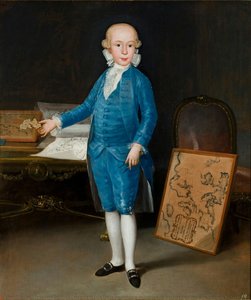 Portrait of Luis María de Borbón y Vallabriga (Retrato de Luis Maria de Borbon y Vallabriga) - Francisco José de Goya y Lucientes
Acquiring a piece as profound as the Portrait of Luis María de Borbón y Vallabriga by Francisco José de Goya y Lucientes is an investment in both cultural legacy and refined personal taste. As one of the top 25 artworks of Goya, this 1783 masterpiece serves as a vital window into the Rococo elegance that preceded the artist's later, darker explorations. The composition captures the young Infante in striking indigo-blue court attire, a color synonymous with the House of Bourbon, paired with delicate white lace and a powdered wig that radiates aristocratic grace.
Goya’s technical mastery is evident in the way light dances across the silk textures and the symbolic map propped against the chair, which anchors the boy's noble lineage. Beyond its historical importance, this portrait possesses an enduring aesthetic authority; a high-quality, hand-painted oil reproduction brings this same sense of prestige and historical depth to modern luxury interiors, offering a sophisticated focal point that commands respect in any curated space.
Here comes the bogey-man - Francisco José de Goya y Lucientes
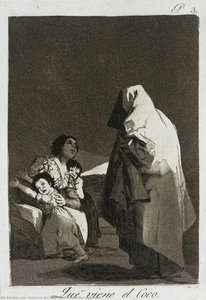 Here comes the bogey-man - Francisco José de Goya y Lucientes
While many recognize Goya for his royal portraits, it was during a period of profound isolation and deafness that he unleashed his most unsettling visions. In 1799, as part of his monumental series Los Caprichos , he produced “Here comes the bogey-man,” a work that transcends mere illustration to become a psychological haunting. Through the masterful use of etching and aquatint, Goya manipulates light and shadow to create a suffocating atmosphere where a masked figure looms over a mother and her children.
The technical brilliance lies in his ability to use stark, tonal contrasts to represent the masks of deception worn by society. This piece is a cornerstone among the top 25 artworks of Francisco José de Goya y Lucientes because it captures the raw, primal fear of the unknown. The same intense focus and unflinching honesty required to confront such darkness can serve as a profound inspiration in a modern study or home office. Displaying a high-quality oil reproduction of this masterpiece invites a sense of intellectual depth and a sophisticated, contemplative energy into your professional space.
Interieur de Prison - Francisco José de Goya y Lucientes
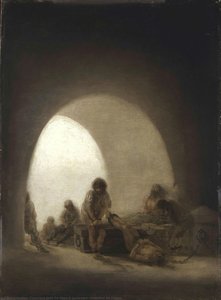 Interieur de Prison - Francisco José de Goya y Lucientes
In Interieur de Prison by Francisco José de Goya y Lucientes, a profound and suffocating charcoal black dominates the canvas, establishing a mood of absolute desolation. This monochromatic mastery is precisely why this work earns its place among the top 25 artworks of Francisco José de Goya y Lucientes ; rather than using color to decorate, Goya uses the absence of it to sculpt psychological terror. The stark interplay of light and shadow—the classic chiaroscuro —transforms a simple prison cell into a haunting stage of human vulnerability.
For the discerning collector, this painting offers a powerful tool for interior curation. The somber, dramatic atmosphere can be used to anchor a modern study or a sophisticated dining room, providing a focal point that commands attention through its emotional gravity. Integrating a high-quality handmade oil reproduction of this masterpiece allows you to introduce a sense of historical depth and "museum-grade" drama to your walls. Much like the shadows in Goya's work, such a piece can define the lighting and tonal weight of a room, turning a contemporary space into a sanctuary of profound reflection.
Portrait of a Lady (María Martínez de Puga?) - Francisco José de Goya y Lucientes
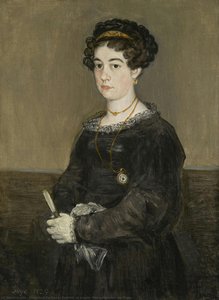 Portrait of a Lady (María Martínez de Puga?) - Francisco José de Goya y Lucientes
In the quiet, shadowed corridors of art history, few works command attention with such haunting intimacy as Francisco José de Goya y Lucientes’ "Portrait of a Lady (María Martínez de Puga?)" . Created in 1824, this masterpiece serves as a profound psychological study that captures the very essence of Romanticism. The subject emerges from a sea of darkness, her presence felt through an intense, unwavering gaze that seems to pierce the veil of time itself. Goya utilizes a masterclass in chiaroscuro , where a soft, ethereal glow illuminates the lady’s face and delicate gold necklace, sharply contrasted by heavy, enveloping shadows that consume her black attire.
To behold this portrait is to witness Goya’s technical virtuosity; his use of thick, textured impasto lends the skin a lifelike warmth and the fabric a tactile quality. Owning such a work isn’t merely a purchase; it is an inheritance—a lineage of taste brought to your own walls. Through our museum-grade, hand-painted oil reproductions, this profound tension between light and shadow becomes a living part of your collection, allowing you to host a silent dialogue with one of the greatest masters of the Spanish soul.
Ferdinand VII (1784–1833), When Prince of Asturias - Francisco José de Goya y Lucientes
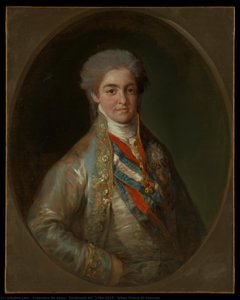 Ferdinand VII (1784–1833), When Prince of Asturias - Francisco José de Goya y Lucientes
In the quiet gaze of a young prince, one finds the intersection of royal destiny and the raw, unvarnished truth of human character. Ferdinand VII (1784–1833), When Prince of Asturias by Francisco José de Goya y Lucientes is far more than a mere preparatory sketch; it is a profound psychological study that captures the fleeting innocence of a future monarch before the shadows of political upheaval descended upon Spain. This work earns its place among the top 25 artworks of Francisco José de Goya y Lucientes through its remarkable ability to prioritize emotional resonance over courtly artifice.
Goya utilizes masterful tonal modulation, focusing on the sitter's expression while leaving the costume in a state of evocative, unfinished grace. The presence of the Order of the Golden Fleece and the Order of the Holy Spirit serves as a silent testament to his Bourbon and Habsburg lineage, yet the true power lies in the artist's ability to reveal the boy beneath the regalia. Today, this masterpiece offers a unique opportunity to bring a sense of historical gravity and intellectual depth into your own space. Through our high-fidelity, hand-painted oil reproductions, you can invite the transformative presence and storied elegance of Goya’s vision into your home or private gallery.
The Duke of Wellington - Francisco José de Goya y Lucientes
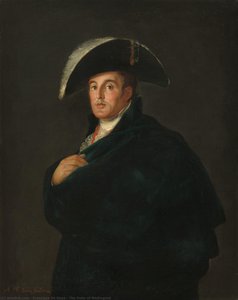 The Duke of Wellington - Francisco José de Goya y Lucientes
In the presence of The Duke of Wellington , one does not merely observe a portrait; one encounters a profound historical document. Painted in 1812, Goya captures Arthur Wellesley with an unsettling directness that transcends simple military documentation. Through his masterful use of chiaroscuro , Goya weaves light and shadow around the Duke’s uniform, creating a sense of weight and authority that reflects the shifting power dynamics of post-Napoleonic Europe. The meticulous rendering of the blue coat and white collar speaks to the prestige of the era, yet there is a subtle, weary depth in the facial modeling that hints at the psychological toll of the Peninsular War.
Owning this piece from the top 25 artworks of Francisco José de Goya y Lucientes isn’t just a purchase; it is an inheritance of a lineage of taste. At ArtsDot.com, we allow you to bring this legacy into your own home through our hand-painted oil reproductions. Each brushstroke on our 100% cotton canvas preserves the dramatic tension and historical gravity that Goya intended, transforming a museum masterpiece into a permanent fixture of your personal gallery.
Old Women or Time - Francisco José de Goya y Lucientes
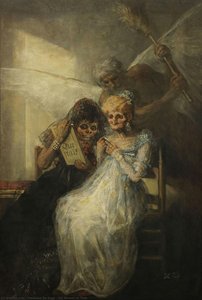 Old Women or Time - Francisco José de Goya y Lucientes
In the haunting stillness of Old Women or Time by Francisco José de Goya y Lucientes, time itself seems to thicken, heavy with the weight of mortality and unspoken shadows. This masterpiece earns its place among the top 25 artworks of Goya through its profound ability to transform a domestic scene into a psychological landscape of quiet dread. The palette is a somber symphony of earth tones—deep browns, muted greys, and bruised blues—that wrap the figures in an atmosphere of theatrical gloom.
Goya’s brushwork breathes life into the textures of simple white linen and the weathered skin of his subjects, using light to sculpt faces etched with weariness. The man clutching a broom appears to be sweeping away not dust, but the encroaching darkness of the unknown. For the modern collector, this painting offers more than mere decoration; it brings a sophisticated, contemplative gravity to a room. Owning a hand-painted oil reproduction of this work allows you to invite Goya’s masterful exploration of human vulnerability and light into your own sanctuary, serving as a timeless window into the Spanish soul.
Crucified Christ - Francisco José de Goya y Lucientes
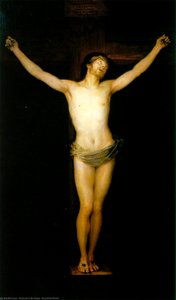 Crucified Christ - Francisco José de Goya y Lucientes
To stand before Goya’s 1780 Crucified Christ is to encounter a profound, heavy stillness that transcends mere religious iconography. In this early masterpiece, we witness the birth of an artist who would eventually redefine the boundaries of human emotion. Rather than presenting a triumphant deity, Goya captures the visceral weight of mortality; the slumped shoulders and the stark, unforgiving light sculpting the anatomy evoke a sense of universal vulnerability that resonates deeply across centuries.
This work earns its place among the top 25 artworks of Francisco José de Goya y Lucientes because it marks a pivotal departure from Neoclassical idealism toward a raw, psychological realism. Through masterful chiaroscuro , Goya pulls the figure from an impenetrable darkness, creating a haunting bridge to the Romantic era. At ArtsDot.com, we honor this dramatic legacy through our handmade oil reproductions. Our artists meticulously recreate every subtle brushstroke and atmospheric shadow on 100% cotton canvas, allowing you to bring the profound, somber beauty of Goya’s spiritual intensity into your own private collection.
Queen María Luisa Wearing a Mantilla - Francisco José de Goya y Lucientes
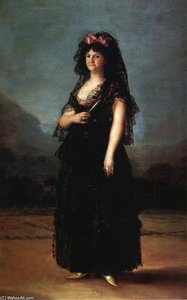 Queen María Luisa Wearing a Mantilla - Francisco José de Goya y Lucientes
To encounter Queen María Luisa Wearing a Mantilla by Francisco José de Goya y Lucientes is to witness the profound intersection of royal authority and Spanish intimacy. As one of the most significant entries in our collection of the top 25 artworks of Francisco José de Goya y Lucientes, this 1799 masterpiece transcends simple portraiture to become a psychological study of power. Goya masterfully utilizes the stark, elegant contrast of the black lace mantilla against the Queen's composed stature, creating a visual rhythm that is both somber and deeply captivating.
The painting’s brilliance lies in its ability to ground a monarch within a tangible, almost tactile reality—the textured dirt road and the subtle presence of secondary figures suggest a world far larger than the frame. For the discerning collector, this work offers an unparalleled sense of historical gravity. Its sophisticated palette and dramatic use of light make it a peerless centerpiece for refined, modern interiors, bringing the timeless legacy of the Spanish court into a contemporary architectural context. It is not merely a depiction of a Queen, but an enduring symbol of dignity and grace.
King Carlos IV in Hunting Costume - Francisco José de Goya y Lucientes
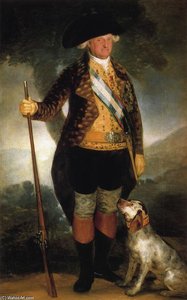 King Carlos IV in Hunting Costume - Francisco José de Goya y Lucientes
In King Carlos IV in Hunting Costume , Francisco José de Goya y Lucientes orchestrates a masterful play of light that transcends mere portraiture. The illumination falls with a focused, almost theatrical intensity upon the King, catching the rich textures of his hunting attire and the subtle sheen of his regal composure. This sophisticated use of chiaroscuro —the dramatic interplay between luminous highlights and deep, velvety shadows—creates a sense of breathing atmosphere that was revolutionary for its time. By capturing the way light dances across the fabric and the watchful eyes of the hunting dog, Goya secured this work's place among the top 25 artworks of Francisco José de Goya y Lucientes .
When owning a handmade oil reproduction of this masterpiece, that same dramatic lighting is preserved through visible, textured brushstrokes. The depth of the shadows and the glow of the highlights bring a quiet prestige and a sense of historical weight to any contemporary room. A faithful reproduction allows the soulful, moody elegance of Goya’s Spanish landscape to add layers of luxury and intellectual depth to your private collection.
Les Jeunes or the Young Ones - Francisco José de Goya y Lucientes
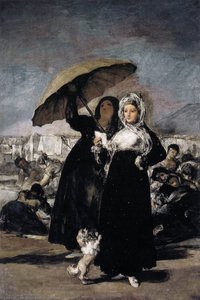 Les Jeunes or the Young Ones - Francisco José de Goya y Lucientes
To encounter Les Jeunes (The Young Ones) by Francisco José de Goya y Lucientes is to witness a masterclass in the art of the ephemeral. This exquisite etching, produced during the turn of the 19th century, captures a fleeting moment of urban intimacy that transcends its monochromatic medium. Within this bustling town square, Goya directs our gaze toward two women sheltered under an umbrella—a poignant symbol of companionship and protection amidst the swirling anonymity of the crowd.
What secures this work's place among the top 25 artworks of Goya is his unparalleled ability to infuse a simple street scene with profound psychological depth. Through masterful hatching and dramatic chiaroscuro, he creates a tactile world of light and shadow that feels remarkably modern. The composition, characterized by its atmospheric perspective and organic textures, offers a sophisticated aesthetic that resonates deeply within contemporary luxury interiors. For the discerning collector, a high-quality oil reproduction of such a piece brings not just a window into Spanish Romanticism, but a timeless sense of quiet drama and intellectual elegance to any curated space.
The giant, Aquatint with burnishing (first state) - Francisco José de Goya y Lucientes
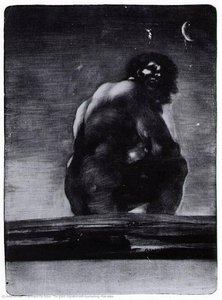 The giant, Aquatint with burnishing (first state) - Francisco José de Goya y Lucientes
To gaze upon the shadows of history is to confront the profound psychological weight of The giant, Aquatint with burnishing (first state) by Francisco José de Goya y Lucientes . Created in 1818, this work emerges from the somber aftermath of the Peninsular War, serving as a haunting cornerstone in our collection of the top 25 artworks of Francisco José de Goya y Lucientes. The print transcends mere illustration; through the masterful use of aquatint and burnishing, Goya sculpts a world of velvety blacks and ethereal grays, where a colossal, solitary figure sits beneath a bruised, nocturnal sky.
The texture is almost tactile, with the grain of the acid-etched copper plate creating a sense of atmospheric dread. There is no vibrant color to distract the eye, only the stark, tonal interplay between the crescent moon and the desolate landscape that evokes the sublime. This piece captures the artist's transition from courtly grace to an exploration of human vulnerability and existential unease. Owning a reproduction of such a masterpiece allows this profound sense of mystery and historical gravity to transform a modern space into a sanctuary for deep reflection.
Judith and Holofernes - Francisco José de Goya y Lucientes
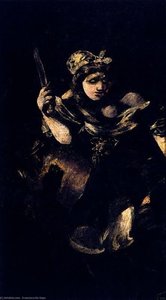 Judith and Holofernes - Francisco José de Goya y Lucientes
In the haunting depths of Judith and Holofernes by Francisco José de Goya y Lucientes, a single moment of violent liberation is frozen in an eternal dance of shadow and light. This masterpiece earns its place among the top 25 artworks of Goya through its visceral, psychological intensity that defies the boundaries of mere biblical illustration. The canvas breathes with a dramatic chiaroscuro ; deep, swallowing blacks collide with the luminous, stark white of Judith’s resolute face, creating a tension that feels almost tactile. Goya’s mature, expressive brushstrokes do not merely depict skin and steel—they convey the very pulse of desperation and the raw energy of defiance.
To possess a reproduction of this work is to invite a profound sense of drama into a modern space. The painting's heavy textures and somber palette offer a sophisticated anchor for contemporary interiors, providing a window into the Romantic soul. Whether viewed as a study in courage or a confrontation with darkness, this piece remains an unparalleled testament to the power of human emotion, making it a cornerstone for any serious collection of Spanish Masterpieces.
Conclusion
To wander through the vast, emotive landscape of Francisco José de Goya y Lucientes is to witness the very pulse of the human condition. His brush did not merely apply pigment to canvas; it captured the flickering shadows of fear, the radiant warmth of Spanish sunlight, and the profound, often unsettling depths of the soul. As we conclude this journey through his most iconic masterpieces, we find that these works are far more than static relics of a bygone era or mere subjects for academic study. They are living presences, breathing with an intensity that defies the passage of centuries.
There is a profound power in bringing such history into one's personal sanctuary. To hang a Goya reproduction is to invite a dialogue between the past and the present, allowing his mastery of light and shadow to shape the atmosphere of your home. Whether it is the courtly elegance of his early portraits or the raw, visceral energy of his later works, these paintings serve as daily reminders of our shared capacity for both grace and resilience. They transform a simple wall into a window onto the eternal, offering a sense of texture, depth, and intellectual gravity that inspires anyone who pauses to look.
We invite you to continue this exploration and find the piece that speaks most intimately to your own story. You may browse our full collection of Goya’s masterpieces, where each hand-painted oil reproduction is crafted to preserve the authentic spirit and tactile beauty of the original. Let these works move beyond the museum walls and become a part of your daily life—a lasting testament to the enduring strength of human creativity.