

The Ghost in the Machine: Decoding Banksy’s Enigma of Anonymity
 Banksy: The Art of Rebellion and the Power of Street Graffiti
The Enigma of Anonymity: Banksy and the Subversion of Authorship Banksy Unveiled: The Power and Mystery of Street Art's Greatest Icon The Ghost in the Machine: Decoding Banksy's Anonymity In the grand tapestry of art history, few figures have command...
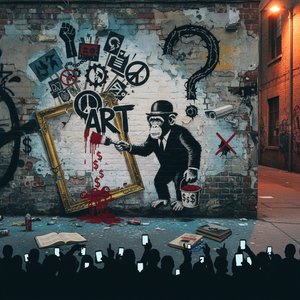
In the grand, sweeping tapestry of art history, few figures have commanded as much reverence and curiosity as the specter known only as Banksy. To discuss this artist is to engage with a profound paradox; he is a global phenomenon whose face remains hidden behind a veil of anonymity, a phantom operating within the very heart of the public eye. This deliberate erasure of identity serves as far more than a mere shield against legal repercussions or the watchful eyes of authorities. It is a fundamental artistic statement that critiques the very nature of authorship, commodification, and the cult of personality that often defines the modern art market.
By removing the persona of the creator, Banksy forces the viewer to confront the inherent value we place on an artist’s celebrity versus the intrinsic message contained within the work itself. The question of “who is Banksy?” has become a secondary narrative, a shadow cast by the brilliance of the works themselves. In an era where the artist's brand is often as significant as their brushstroke, this strategic obfuscation allows the art to transcend the individual, turning the name Banksy into a symbol of resistance rather than just a person.
From Bristol Underground to Global Icon: The Evolution of a Stencil Revolution
 Banksy Unmasked: The Street Art Icon Redefining Modern Rebellion and the Future of Urban Aesthetics
The Stencil Revolution: How Banksy Rewrote the Rules of Urban Rebellion In the gritty, rain-slicked streets of Bristol, a new kind of visual language was being forged, one that didn't require a gallery invitation or a velvet rope. Before the auction ...
The story begins not in the pristine halls of a museum, but in the gritty, rain-slicked streets of Bristol, England. Born around 1974, Banksy’s early life is shrouded in mystery, yet his roots are firmly planted in the city’s vibrant underground scene of the early 1990s. As part of the DryBreadZ Crew (DBZ), he developed his skills alongside local legends like 3D, a founding member of Massive Attack. This period laid the foundation for a distinctive style and a rebellious spirit that would eventually reshape urban aesthetics worldwide.
The transition from freehand graffiti to a signature stencil-based technique marked a pivotal moment in his artistic development. While many associate graffiti with slow, laborious lettering, Banksy embraced the rapid-fire efficiency of stencilling. Legend has it that this shift occurred while he was hiding from the police under a rubbish lorry, noticing the quick application of stencilled serial numbers. This technical evolution allowed for the execution of complex designs in mere moments, enabling his works to appear overnight and claim the urban landscape as a tactical strike on the collective consciousness.
The Urban Canvas: Social Commentary and the Subversion of Public Space
 Global Street Art Foundation
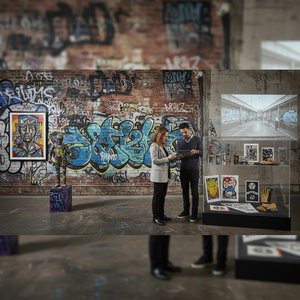
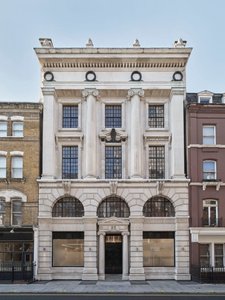
A City Unveiled: Exploring the Global Street Art Foundation London pulses with a restless energy, an urban heartbeat that finds its most immediate expression not within hallowed halls, but splashed across the city’s very surfaces. The Global Street A...
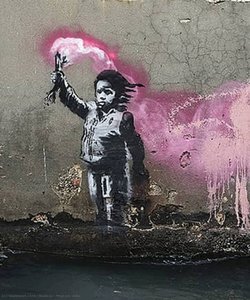
Banksy’s work has revolutionized street art by transforming public spaces into platforms for social critique. Unlike traditional galleries that require an invitation or a velvet rope, his art is democratized, accessible to every passerby on a city wall, bridge, or sidewalk. This movement reimagines the very concept of art consumption, where the boundaries between the gallery and the street dissolve into a breathtaking spectacle of urban expression.
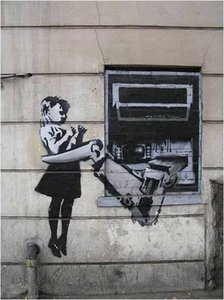
Through his eyes, we see the world through a lens of poignant interaction. Consider the Cash Machine Girl, which captures a moment of innocence meeting modernity, inviting us to reflect on technological dependence and consumerism. Or the Policeman Searching Girl, a piece that uses raw immediacy to explore power dynamics and social justice. By utilizing weathered walls and textured urban surfaces as his canvas, Banksy ensures that each piece carries an air of authenticity, making the city itself a living, breathing gallery that pulses with a restless, human energy.
Satire and Shadows: Analyzing Themes of Consumerism and Political Resistance
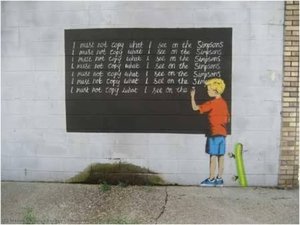 Simpsons blackboard
Subject and Concept This striking street art mural captures a young boy standing beside a blackboard, immersed in a humorous yet thought-provoking message. The blackboard bears the repeated phrase, "I must not copy what I see on the Simpsons," servin...
The brilliance of Banksy lies in his ability to blend dark humor with subversive epigrams. His themes are as diverse as they are challenging, ranging from critiques of war and political manipulation to examinations of media influence and animal rights. He possesses a unique talent for taking the familiar—a cartoon character or a well-known political figure—and recontextualizing it to expose the absurdities of our modern existence.
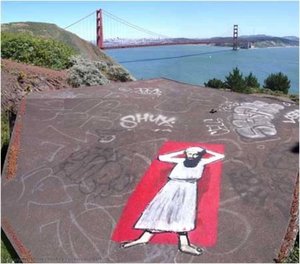
In his Simpsons Blackboard mural, he uses the playful imagery of popular culture to satirize the tension between inspiration and imitation in the digital age. Similarly, works like Osama Sunbathing use provocative juxtaposition to shock the viewer into a state of reflection. This mastery of satire allows him to tackle heavy subjects—poverty, inequality, and the ethics of power—without losing the engagement of a pop-culture-savvy audience. His art does not merely decorate; it interrogates the very fabric of our societal norms.
The Paradox of the Gallery: When Rebellion Becomes High-End Collectible
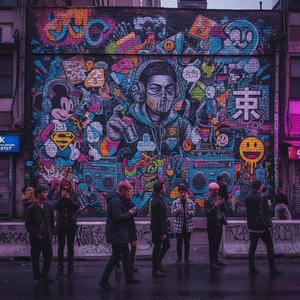 Urban Edge: The High-Impact Revolution of Street Art and Modern Pop Culture Trends
From Rebellion to Revenue: The Evolution of Street Art into High-End Collectibles From Walls to Galleries: The Bold Evolution of Street Art and Its Rise into High-End Collectibles The Concrete Canvas: Tracing the Raw Origins of Urban Graffiti Before ...
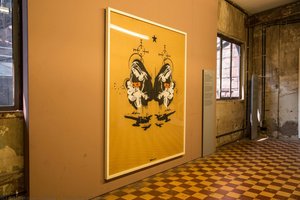
Perhaps the most profound irony in Banksy’s career is the evolution of street art from a rebellious act into a high-end collectible. Before his works graced the pristine, white-walled galleries of the elite, they lived a much more rebellious life as whispered dialogues between the city and its inhabitants. Today, the very pieces once dismissed as vandalism are sought after by the world's most prestigious auction houses, often being sold even when the physical wall they were painted on is removed.
This transition from rebellion to revenue creates a fascinating tension within the art world. While some argue that the commodification of his work undermines its subversive intent, others see it as the ultimate victory of the message over the medium. Whether through his official agency, Pest Control, or through the global movement of street art collectors, Banksy has successfully bridged the chasm between traditional art hierarchies and the raw, unfiltered creativity of the streets, ensuring that his voice continues to resonate far beyond the edges of the concrete he once claimed.
For those who find inspiration in the textures of history and the power of a single, meaningful stroke, we invite you to explore more at ArtsDot.com.