

The Concrete Canvas: Tracing the Raw Origins of Urban Graffiti
 Graffiti in New York City
Graffiti in New York City has had a substantial local, national, and international influence. During the late 1960s and 1970s, Graffiti in New York City emerged primarily throughout the city of New York's subway system and as well as throughout worki...
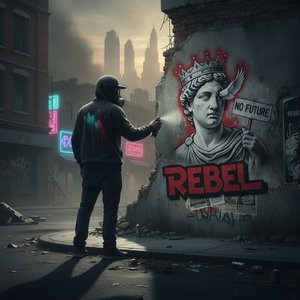
To understand the vibrant pulse of our modern streets, one must first listen to the whispers of the past. Long before the bright, kaleidoscopic murals of today graced our metropolitan skylines, there existed a much more primal, whispered dialogue between the city and its inhabitants. This was an era defined by raw energy and a fierce, unyielding desire for identity within the crushing anonymity of the urban landscape. The roots of what we now celebrate as street art lie in the defiant markings etched onto subway cars and scrawly notes left on crumbling brickwork. In the 1970s, particularly within the rhythmic, steel-clad veins of the New York City subway system and the neighborhoods of Philadelphia, a new visual language was being born.
This movement was not born in the quiet, climate-controlled sanctity of a gallery, but in the grit and motion of the streets. It began as a tool for self-assertion, where the aerosol spray can became an instrument of rebellion. Early pioneers like Cornbread sought merely to claim space, leaving behind monikers that acted as signatures of existence. There was no permission sought, only presence asserted. This period was characterized by its ephemeral nature; it was art that lived and died with the movement of a train or the cleaning of a wall. Yet, in this very transience, there was a profound beauty—a fleeting, electric frequency that captured the heartbeat of a generation refusing to be ignored.
From Rebellion to Revenue: The Rise of Street Art as High-End Collectibles
 Urban Edge: The High-Impact Revolution of Street Art and Modern Pop Culture Trends
From Rebellion to Revenue: The Evolution of Street Art into High-End Collectibles From Walls to Galleries: The Bold Evolution of Street Art and Its Rise into High-End Collectibles The Concrete Canvas: Tracing the Raw Origins of Urban Graffiti Before ...
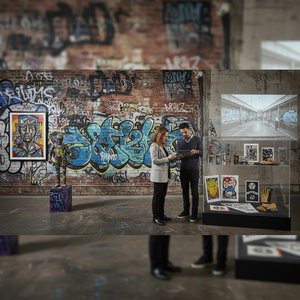
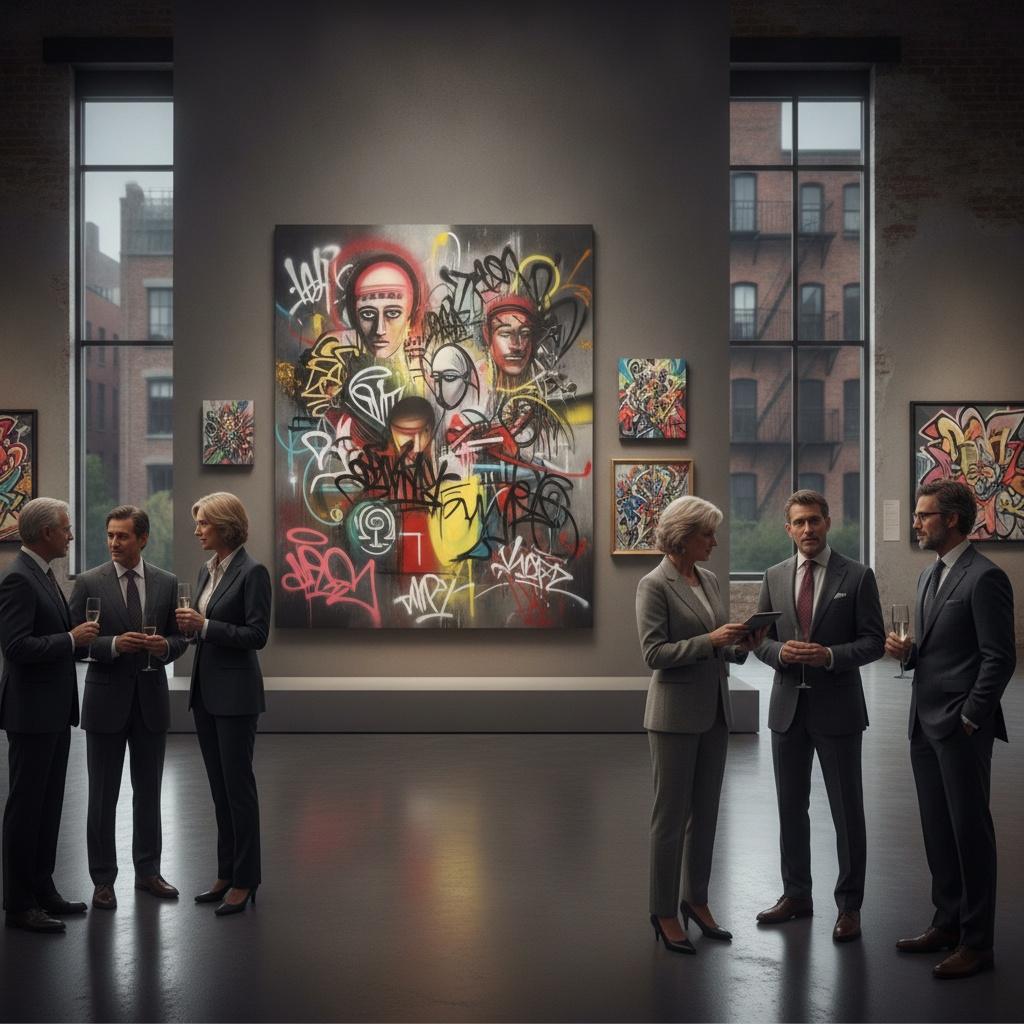
We are currently witnessing one of the most breathtaking metamorphoses in art history. What was once dismissed by the elite as mere vandalism has ascended, with startling speed, into the stratosphere of high-end collectibles. The very surfaces that were once targets of urban decay have become the most sought-after canvases in prestigious auction houses. This evolution represents a profound shift in our cultural consciousness, where the grit of the street meets the prestige of the gallery. We are seeing a transition from the rebellious "tag" to the monumental masterpiece, as collectors recognize the immense power and visual impact of this new, uninhibited language.
This movement from walls to galleries is not merely about legality or permission; it is about the recognition of a profound aesthetic truth. The raw, unfiltered energy that once lived in the shadows has found its way into the light of the contemporary art market. Today, pieces that capture this transition—the tension between the underground and the extraordinary—are highly coveted by those who seek art that tells a story of social change and cultural revolution. It is an era where the boundary between the street and the studio has blurred, allowing for a new kind of investment: one that celebrates the pulse of the pavement and the enduring legacy of urban expression.
Icons of the Underground: Decoding Stencil Art and Social Commentary
 mobstr
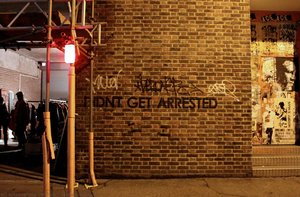
Mobstr: A London Voice in Stencil Art Mobstr, a London-based street artist, has emerged as a distinctive voice within the contemporary stencil art movement. Though shrouded in anonymity – a deliberate choice that contributes to his mystique – he’s ga...
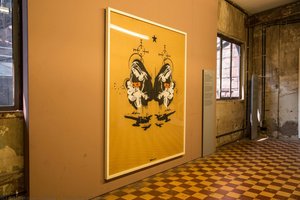
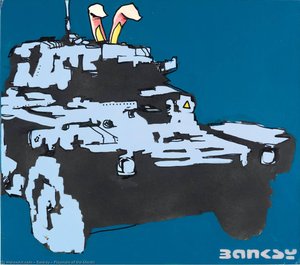
Within this vast landscape, certain figures have emerged as shadows of legend, using the precision of the stencil to deliver messages with surgical clarity. The stencil revolution, perhaps most famously embodied by the enigmatic Banksy, has rewritten the rules of urban aesthetics. Unlike the sweeping, spontaneous gestures of traditional graffiti, stencil art allows for a rapid reproduction of ideas, making it the perfect medium for social activism and satirical commentary. It is an art form that thrives on contrast—the stark, monochrome silhouette against a textured, weathered wall, creating a visual punch that is impossible to ignore.
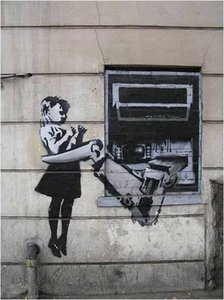
Consider the profound emotional weight found in works like Policeman Searching Girl or Bubble Girl. These are not merely images; they are poignant explorations of societal tension, childhood vulnerability, and the loss of innocence amidst urban decay. Through the use of bold lines and simplified forms, these artists engage with themes of authority and social justice, inviting every passerby to become a participant in a global conversation. Artists like London-based Mobstr further this dialogue by blending typography with satire, interrogating advertising and consumer culture. This layer of intellectual depth transforms the street from a mere surface into a sophisticated medium for critique, where every spray of paint serves as a catalyst for reflection.
Global Rhythms: A Visual Journey Through São Paulo, London, and Paris
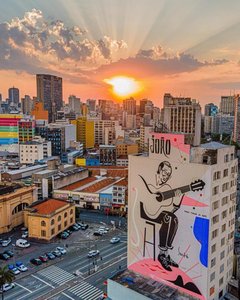 São Paulo Street Art
The Living Canvas: An Urban Odyssey through São Paulo To step into the realm of São Paulo Street Art is to abandon the quiet, climate-controlled sanctity of a traditional gallery and instead surrender to the rhythmic pulse of the metropolis itself. T...
Street art is a living, breathing organism that adapts to the unique rhythm of every city it inhabits. In São Paulo, the art is an urban odyssey. To walk through the vibrant corridors of Vila Madalena is to surrender to a rhythmic pulse where the city’s concrete skin serves as a perpetual canvas. Here, the scale is monumental; breathtaking, kaleidoscopic canvases by artists like Kobra dominate the skyline, radiating hope and global solidarity, while the surrealist dreamscapes of Os Glimões invite us into fantastical, mythological worlds. It is an open-air institution that defies the boundaries of traditional architecture.
In London, the energy is found in the very fabric of the streets, supported by institutions like the Global Street Art Foundation, which seeks to bridge the chasm between traditional hierarchies and the raw creativity of public spaces. The city becomes a dynamic portal where murals are encountered unexpectedly, transforming unremarkable surfaces into extraordinary landmarks. Meanwhile, in Paris, specifically within the 13th arrondissement, the boundaries between gallery and street dissolve entirely. Through initiatives like Street Art 13, weathered walls are reimagined as monumental masterpieces, creating an invitation to wander through a sanctuary of urban expression. Each city contributes its own unique dialect to this global language, creating a worldwide tapestry of human resilience and creativity.
The New Aesthetic: How Street Style Influences Modern Pop Culture Trends
 Street Vibes & Urban Motion: The Ultimate Trend Guide to Bold Pop Art and Street Style Aesthetics
The Pulse of the Pavement: Capturing Urban Energy Through Motion Urban Pulse: A Singular Symphony of Crimson Motion and Spontaneous Street Expression The Pulse of the Pavement: A Symphony of Urban Motion In the heart of the modern metropolis, where t...
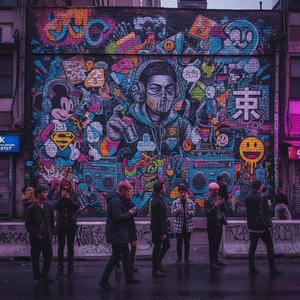
The influence of the street has moved far beyond the walls of our cities; it has permeated the very essence of modern pop culture. We see it in the way contemporary design embraces urban motion—capturing that specific, electric frequency of a metropolis in flux. The aesthetic of the street, with its celebration of spontaneous movement and the beauty found in chaos, now informs everything from high fashion to digital media. There is a profound fascination with capturing the visceral tension of existence within the concrete jungle, where the silhouette of a classic sneaker or the blur of a passing train becomes a subject of artistic reverence.
This trend is characterized by a dance between the permanent and the ephemeral. We see it in the rise of bold, high-impact aesthetics that utilize heavy textures and intentional drips to mimic the sensory overload of a crowded intersection. This "urban pulse" is a symphony of motion, where the precision of modern design meets the raw, unscripted energy of life itself. As we continue to move forward, the legacy of street art will undoubtedly continue to shape our visual world, reminding us that even in the most structured environments, there is always room for the spontaneous, the rebellious, and the beautiful.
For those who find themselves moved by the profound textures and historical weight of these urban narratives, ArtsDot.com offers a curated window into the soul of art history.