The Weight of Eternity: The Theological Foundations of Divine Imagery in Art
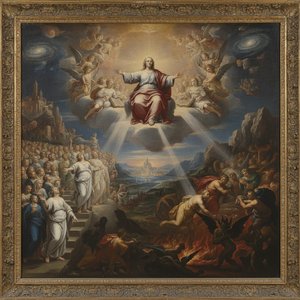 Divine Judgment in Art: Capturing the Sublime, Eternal Truths, and the Weight of the Infinite
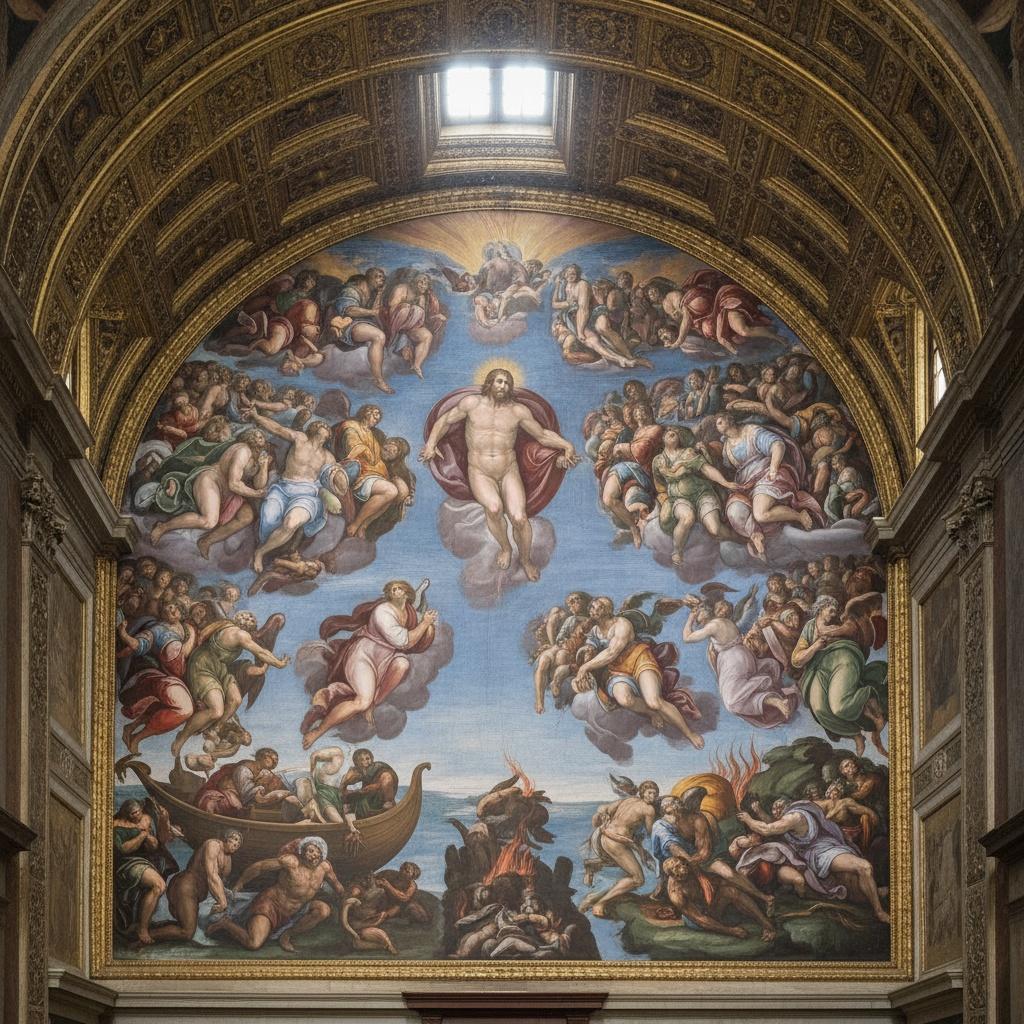
The Weight of Eternity: Understanding the Concept of Divine Judgment in Art History To stand before a grand depiction of the Last Judgment is to feel the very air thicken with the gravity of existence. For centuries, the concept of divine reckoning h...
To stand before a grand depiction of the Last Judgment is to feel the very air thicken with the gravity of existence. It is an encounter with the sublime, where the temporal meets the eternal, and the fleeting actions of a single lifetime are weighed against the infinite scales of cosmic justice. In the heart of Christian eschatology lies this profound moment of divine reckoning—the
divine audit—where Christ returns to evaluate all of humanity, both the living and the resurrected dead. This is not merely a religious narrative; it is a visual manifestation of the ultimate separation between the righteous and the wicked, a final verdict rendered upon the soul. For centuries, artists have sought to capture this tension, using the language of iconography to bridge the gap between our earthly struggles and the unseen realm of divine authority. Through light, shadow, and meticulously crafted symbols, these works serve as mirrors held up to the human condition, inviting us to contemplate the eternal consequences of our faith, words, and deeds.
Michelangelo’s Sistine Vision: The Human Form at the Threshold of Heaven and Hell
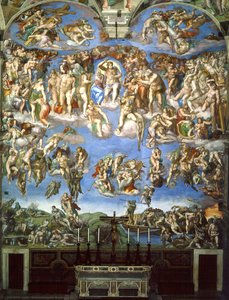
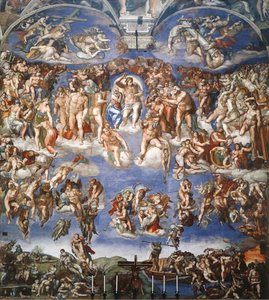
 The Last Judgment (Michelangelo)
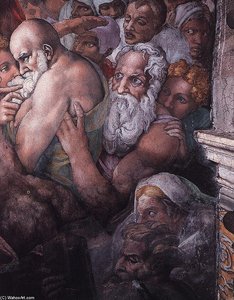
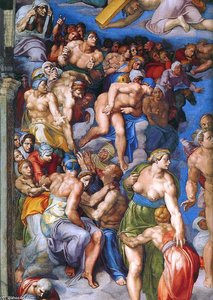
The Last Judgment (Italian: Il Giudizio Universale) is a fresco by the Italian Renaissance painter Michelangelo covering the whole altar wall of the Sistine Chapel in Vatican City. It is a depiction of the Second Coming of Christ and the final and et...
In the heart of Vatican City, covering the entire altar wall of the Sistine Chapel, resides perhaps the most monumental expression of this divine drama. Michelangelo’s
Il Giudizio Universale is a whirlwind of celestial energy, a fresco that captures the Second Coming with an intensity that borders on the overwhelming. Here, the human form becomes the primary vessel for spiritual emotion. Over three hundred figures populate this cosmic stage, their bodies rendered with a muscularity and tension that reflect the profound struggle of the soul. As the dead rise and descend to their final fates, we see Christ seated in majesty, surrounded by saints who bear witness to the unfolding judgment. The sheer scale of the work—the way the figures seem to surge toward the viewer—creates an immersive experience of awe and dread. While much of the original nudity was later obscured by painted drapery, the raw, sculptural power of Michelangelo’s vision remains, reminding us that at the threshold of eternity, the human spirit is stripped of all but its most essential truths.
Northern Renaissance Precision: Hans Memling and the Meticulous Detail of Devotion
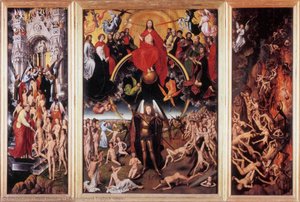 Last Judgment Triptych (open)
Hans Memling's Last Judgment Triptych: A Window into Medieval Justice The Last Judgment Triptych by Hans Memling, completed in 1467, is more than just a religious painting; it’s a meticulously crafted meditation on mortality, judgment, and the enduri...
While the Italian masters focused on the monumental and the muscular, the artists of the Northern Renaissance found divinity in the infinitesimal. In the hands of Hans Memling, a master of the Early Netherlandish style, the Last Judgment becomes a meticulously crafted meditation on mortality. His
Last Judgment Triptych, completed in 1467, exemplifies the breathtaking realism and spiritual depth characteristic of the Bruges school. Utilizing the luminous qualities of oil on wood, Memling invites the viewer into a world where every detail is imbued with theological significance. The painting does not rely on grand gestures alone but on a startling precision that captures the textures of heaven and the chaos of the abyss with equal clarity. Through his mastery of light and shadow, Memling creates a window into the soul, where the profound spiritual fervor of the era is rendered with an almost palpable sense of reality, making the distant promise of judgment feel intimately present.
Monochromatic Majesty: Albrecht Dürer and the Graphic Intensity of the Apocalypse
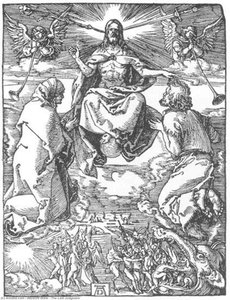 The Last Judgment
Subject and Composition This powerful black-and-white illustration captures the awe-inspiring moment of divine judgment, a central theme in Christian eschatology. The scene is meticulously layered, with the majestic figure of Christ seated on a radia...
There is a unique, stark power found in the absence of color, a strength that emerges when the artist relies solely on the interplay of black and white. Albrecht Dürer, the titan of German printmaking, captured the terrifying beauty of the apocalypse through the medium of engraving. His
Last Judgment is a masterclass in graphic intensity, using fine hatching and cross-unhatching to create a world of dramatic contrast. In this monochromatic landscape, Christ sits upon a radiant throne, an anchor of divine light amidst a tumultuous assembly of human souls, mythological creatures, and allegorical figures. The composition is meticulously layered, drawing the eye through a cosmic battle that transcends time. Without the distraction of hue, the viewer is forced to confront the raw movement and emotion of the scene—the frantic energy of the angels wielding trumpets and swords, and the heavy, chaotic weight of the souls caught in the final confrontation between good and evil.
Sacred Shadows: The Emotional Resonance of Baroque Religious Carvings
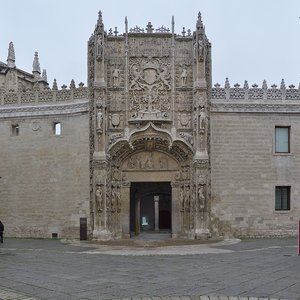 National Museum of Religious Carvings
A Sanctuary of Sacred Splendor In the heart of Valladolid, where the echoes of Spain’s imperial past still linger in the air, lies the National Museum of Religious Carvings—a profound sanctuary dedicated to the spiritual and artistic soul of a nation...
The drama of judgment is not confined to the canvas; it breathes through the very wood and stone of sacred sculpture. In the heart of Spain, within sanctuaries like the National Museum of Religious Carvings in Valladolid, we encounter a different kind of intensity. The masters of the Baroque era, such as Alonso Berruguete and Gregorio Fernández, breathed life into polychrome carvings, creating works of intense emotionality that bridge the gap between the earthly and the divine. These sculptures, often part of intricate altarpieces, utilize hyper-realistic textures and hauntingly expressive faces to evoke a visceral response in the faithful. The interplay of light upon carved drapery and the deep shadows within the folds of saintly robes create a sense of movement and presence that is almost supernatural. In these sacred shadows, the Last Judgment is not just a depicted event, but a living, breathing reality that continues to stir the prayers of the devoted.
The Eternal Echo: How Masterpieces of Judgment Continue to Stir the Human Soul
Ultimately, the most powerful artworks of the Last Judgment share a common purpose: they serve as enduring anchors in the Western artistic consciousness. Whether through the sweeping frescoes of the Renaissance, the precise oils of the North, or the stark engravings of the German masters, these works explore the intersection of the temporal and the eternal. They remind us that our lives are part of a much larger, cosmic narrative—a journey where every action carries weight. To study these masterpieces is to engage in a dialogue with history and faith, finding within their beauty and terror a profound reflection of our own search for meaning. These works do not merely illustrate a religious doctrine; they capture the very essence of the human struggle for salvation, ensuring that the drama of the final judgment will echo through the halls of art history for generations to come.