The Renaissance Departure: From Serene Harmony to Mannerist Tension
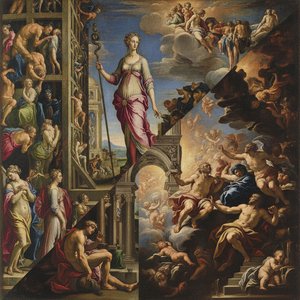 Drama and Distortion: A Definitive Guide to the Mastery of Mannerism and Baroque Art
The Renaissance Departure: Understanding the Rise of Mannerism Mannerism Mannerism is a style in European art that emerged in the later years of the Italian High Renaissance around 1520, spreading by about 1530 and lasting until about the end of the ...
To understand the profound seismic shift that occurred within the European consciousness during the sixteenth century, one must first look back at the serene stability of the High Renaissance. For decades, the masters—Leonardo, Raphael, and the early Michelangelo—had pursued a divine equilibrium, a perfection of proportion, balance, and naturalistic clarity that seemed to capture the very essence of a rational universe. There was a mathematical grace in their compositions, a sense that the world could be understood through the lens of perfect geometry and light.
However, as the sixteenth century progressed, this era of harmonious ideals began to fracture. The certainty of the Renaissance was replaced by an era of profound tension, giving birth to Mannerism. This movement did not emerge from a lack of skill, but rather from a deliberate reaction against the perceived limitations of naturalism. As the intellectual and spiritual landscape of Europe became increasingly complex, artists felt that the imitation of nature was no longer sufficient to express the deeper, often unsettling truths of the human condition. The stability of the pyramid composition was abandoned in favor of more complex, often unsettling arrangements, marking the beginning of an era where art no longer sought to mirror the world as it appeared, but rather to interpret it through a lens of heightened emotion.
The Art of Artifice: Exploring Distortion and Stylistic Virtuosity
 Northern Mannerism
Northern Mannerism is the form of Mannerism found in the visual arts north of the Alps in the 16th and early 17th centuries. Styles largely derived from Italian Mannerism were found in the Netherlands and elsewhere from around the mid-century, especi...
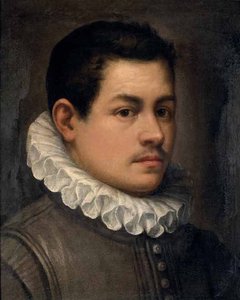
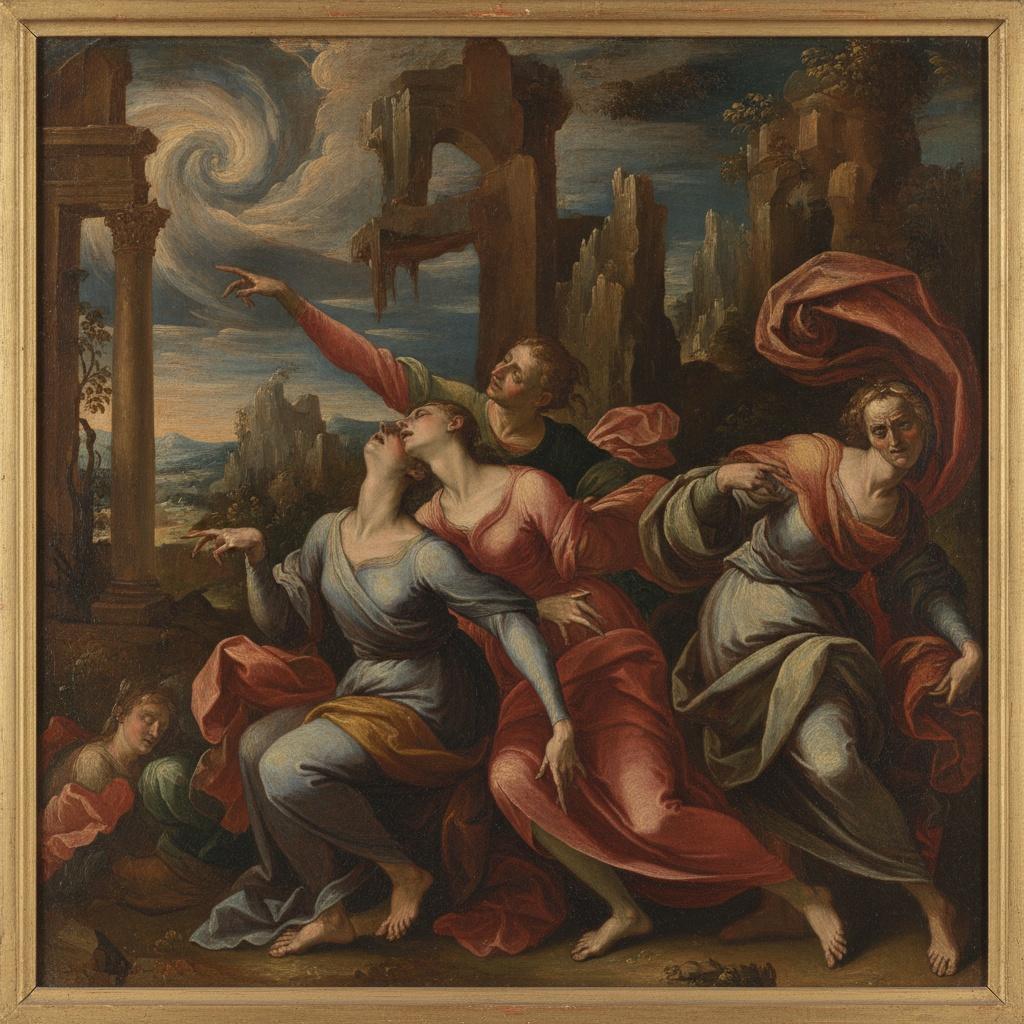
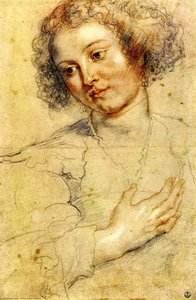
Mannerism, emerging around 1520, was a period where the intellectual sophistication of the artist became as important as the subject matter itself. The term maniera—referring to the artist's unique style or virtuosity—became the guiding principle. This was an era of deliberate artifice, where beauty was found not in the imitation of life, but in the elevation of it through stylized elegance and elongated forms. Figures became stretched, limbs grew impossibly graceful, and the spatial logic that had defined the previous century was intentionally subverted.
In Northern Mannerism, particularly in the Netherlands, France, and Prague, this style took on its own distinctive character. While Italian Mannerism relied heavily on a highly trained audience capable of recognizing flouted conventions, the Northern iterations blended these sophisticated Italian influences with local traditions, creating works of intricate ornament and complex narrative. This was art that demanded an educated eye, celebrating the artist's ability to manipulate form and create a sense of maniera that transcended the mundane reality of the physical world.
Light as Drama: The Mastery of Chiaroscuro and Tenebrism
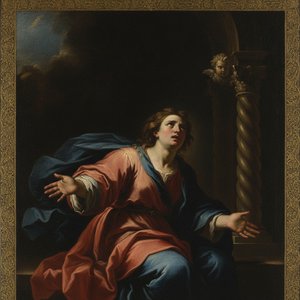 Drama & Light: The Captivating Power of Baroque Painting and the Mastery of Chiaroscuro
The Great Shift: From Renaissance Harmony to Baroque Emotion The Visceral Stage: Exploring Dramatic Narratives & Emotional Intensity in Baroque Art The Baroque Embrace of Emotion: A Shift from Renaissance Rationality Wikipedia: Baroque painting Baroq...
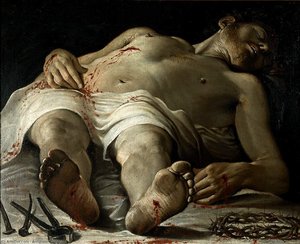
As we transition from the stylized distortions of Mannerism into the full-throated drama of the Baroque, a new protagonist emerges on the canvas: light. If Mannerism was about the elegance of form, the Baroque was about the visceral impact of atmosphere. This era perfected the use of chiaroscuro—the bold, dramatic interplay between light and dark that affects an entire composition. Through this technique, artists could direct the viewer's eye with surgical precision, pulling figures out of deep, impenetrable shadows into a sudden, radiant illumination.
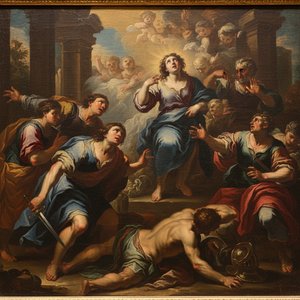
Taking this even further, we encounter tenebrism, a method where darkness becomes a dominant, almost physical presence. In the hands of visionaries like Václav Vavřinec Reiner, canvases began to pulsate with psychological depth. His work, characterized by intense chiaroscuro, utilized light not merely for visibility, but as a tool for spiritual ecstasy. By plunging figures into shadow and highlighting key areas with brilliant light, Baroque painters created an atmosphere of palpable tension, making the divine feel tangibly present and emotionally overwhelming.
Faith in Motion: The Baroque Counter-Reformation and Emotional Grandeur
 The Dramatic Flourish: Exploring the Baroque Movement's Enduring Legacy in Art History
The Genesis of Grandeur: Historical Context & The Counter-Reformation Wikipedia: Counter-Reformation The Counter-Reformation (Latin: Contrareformatio), also sometimes called the Catholic Revival, was the period of Catholic resurgence that was initiat...
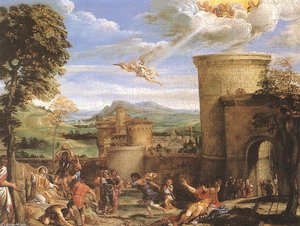
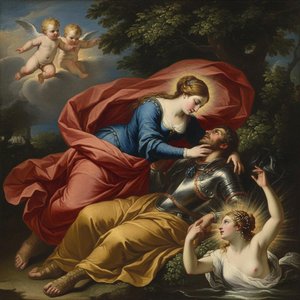
The Baroque period, erupting from the heart of 17th-century Rome, was far more than a stylistic shift; it was an artistic earthquake born from profound religious and political upheaval. Following the Protestant Reformation, the Catholic Church initiated the Counter-Reformation—a period of spiritual resurgence designed to re-engage the faithful through spectacle and awe. The Church recognized the potent power of art as a visual counter-offensive, commissioning works that were not simply beautiful, but emotionally charged and persuasively grand.
This era saw the transformation of sacred spaces into theatrical stages for faith. In Venice, the I Gesuiti church became an architectural marvel where every curve and flicker of candlelight was designed to bridge the gap between the earthly and the divine. Similarly, in Hungary, the Parish Church of Pápa stands as a repository of this Baroque fervor, where monumental sculptures by masters like Matthias Maulbertsch convey profound emotion through stone. This was an art of movement and mass, designed to inspire piety through overwhelming sensory experience, reflecting the rise of absolute monarchies and the unyielding ambition of the era.
A Legacy of Splendor: From Northern Mannerism to the Baroque Era
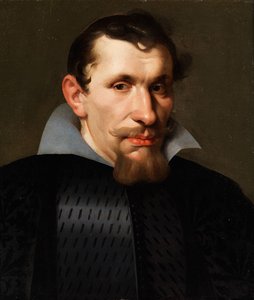 gaspard de crayer
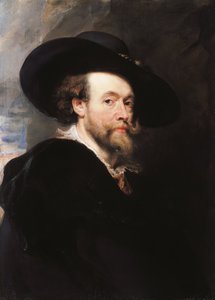
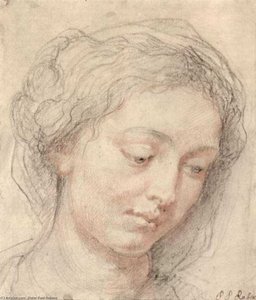
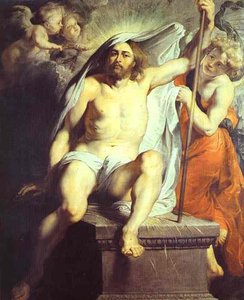
Gaspar de Crayer: A Flemish Master of Counter-Reformation Splendor Gaspar de Crayer, a name perhaps less familiar than his contemporaries Rubens or Van Dyck, nevertheless stands as a pivotal figure in 17th-century Flemish art. Born in Antwerp in 1584...
The journey from the intellectualized distortions of Mannerism to the opulent, emotional landscapes of the Baroque represents one of the most transformative arcs in art history. We see a progression from the pursuit of maniera—the artist's personal virtuosity—to a collective movement that sought to capture the very soul of humanity through light, shadow, and scale. From the intricate, ornamental works found in the Netherlands and Prague to the monumental, flesh-and-blood drama of the Flemish masters like Gaspar de Crayer, the legacy of this era remains unparalleled.
Today, we continue to find ourselves captivated by this period of "drama and distortion." Whether it is through the breathtaking frescoes of Giovanni Battista Carlone in Genoa or the spiritual intensity found in the works of the Belgian Baroque, these masterpieces remind us that art's greatest power lies in its ability to move us. They teach us that beauty is not always found in perfect balance, but often in the tension, the shadow, and the magnificent, unbridled expression of the human spirit.
At ArtsDot.com, we celebrate this enduring legacy of human creativity. Our mission is to make the grandeur of the Old Masters accessible to all through exquisite, hand-painted oil reproductions. Each piece is a labor of passion, meticulously crafted by academy-trained artists on 100% cotton canvas to capture the true texture and soul of history. Whether you wish to transform a personal memory into a Baroque masterpiece or adorn your home with the dramatic light of the masters, we invite you to explore our collection and bring the timeless beauty of art history into your modern life.