


A Beacon of Artistic Excellence
Nestled within the vibrant heart of Madrid, Spain—a city renowned for its artistic heritage and cultural dynamism—stands a singular institution that has quietly guided the trajectory of Spanish art for over two centuries: The Faculty of Fine Arts of the Complutense University of Madrid (UCM). More than simply an academic center, it represents a living embodiment of tradition and innovation, where the echoes of masters past inspire future generations. Founded in 1752 as part of the Royal Academy of San Fernando, its origins are inextricably linked to the Enlightenment’s fervent pursuit of knowledge and aesthetic refinement—a testament to Spain's enduring commitment to artistic advancement.
From its inception, the Faculty sought to elevate artistic standards through rigorous training and emulation of classical models. The Academy’s early years mirrored those of esteemed institutions in Paris and Rome, emphasizing not only technical skill but also historical understanding and critical thinking—a cornerstone of the UCM's educational philosophy. This commitment to intellectual curiosity continues today, fostering a dialogue between scholarship and artistic practice that distinguishes it from many other universities.
The Faculty’s Architectural Soul
The building itself is more than just a space for learning; it’s an artwork in its own right—a magnificent example of neoclassical architecture situated on the expansive Ciudad Universitaria campus. Constructed with grandeur and precision, its soaring halls adorned with ornate decorations reflect the artistic sensibilities of its time and serve as a constant reminder of the Faculty's illustrious past. The Casa de la Panadería, where the Academy’s headquarters reside in Madrid’s Plaza Mayor, embodies this legacy—a historic landmark that continues to inspire awe and admiration.
A Treasure Trove of Artistic Heritage
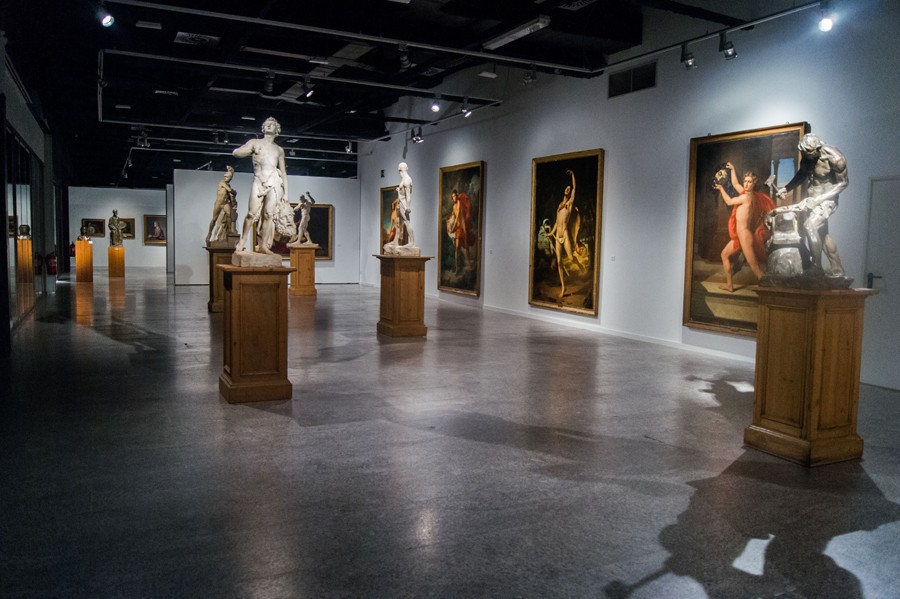
Within its walls resides an impressive collection that chronicles Spain's artistic evolution from the Baroque to the avant-garde. Dominating the holdings are paintings originating from the Royal Academy of San Fernando, showcasing masterful technique and dramatic flair—pieces that capture the spirit of their era with remarkable detail. Alongside these masterpieces are sculptures crafted by renowned artists, demonstrating both traditional craftsmanship and contemporary experimentation—a celebration of artistic diversity.
Furthermore, the Faculty’s collection extends beyond visual arts to encompass historical artifacts—tools, sketches, early studies—providing invaluable insights into the creative processes behind celebrated artworks. These objects illuminate the dedication and skill required to produce enduring masterpieces, fostering a deeper appreciation for Spain's artistic heritage.
A Legacy of Innovation
Today, The Faculty of Fine Arts UCM remains at the forefront of artistic innovation—a hub for experimentation across disciplines that embraces new technologies and encourages students to push creative boundaries. Alumni have gone on to achieve international acclaim, contributing significantly to Spain’s cultural landscape and upholding the institution's reputation for excellence.
More than just preserving art history; it actively *makes* it—a place where tradition informs progress, and where artistic passion fuels intellectual inquiry. For art enthusiasts, collectors seeking authentic connections to Spanish artistry, or interior designers yearning for inspiration rooted in centuries of artistic achievement, this institution offers an unparalleled experience—a chance to immerse oneself in the beauty, history, and enduring power of art.