A Florentine Tapestry of Faith and Renaissance Brilliance
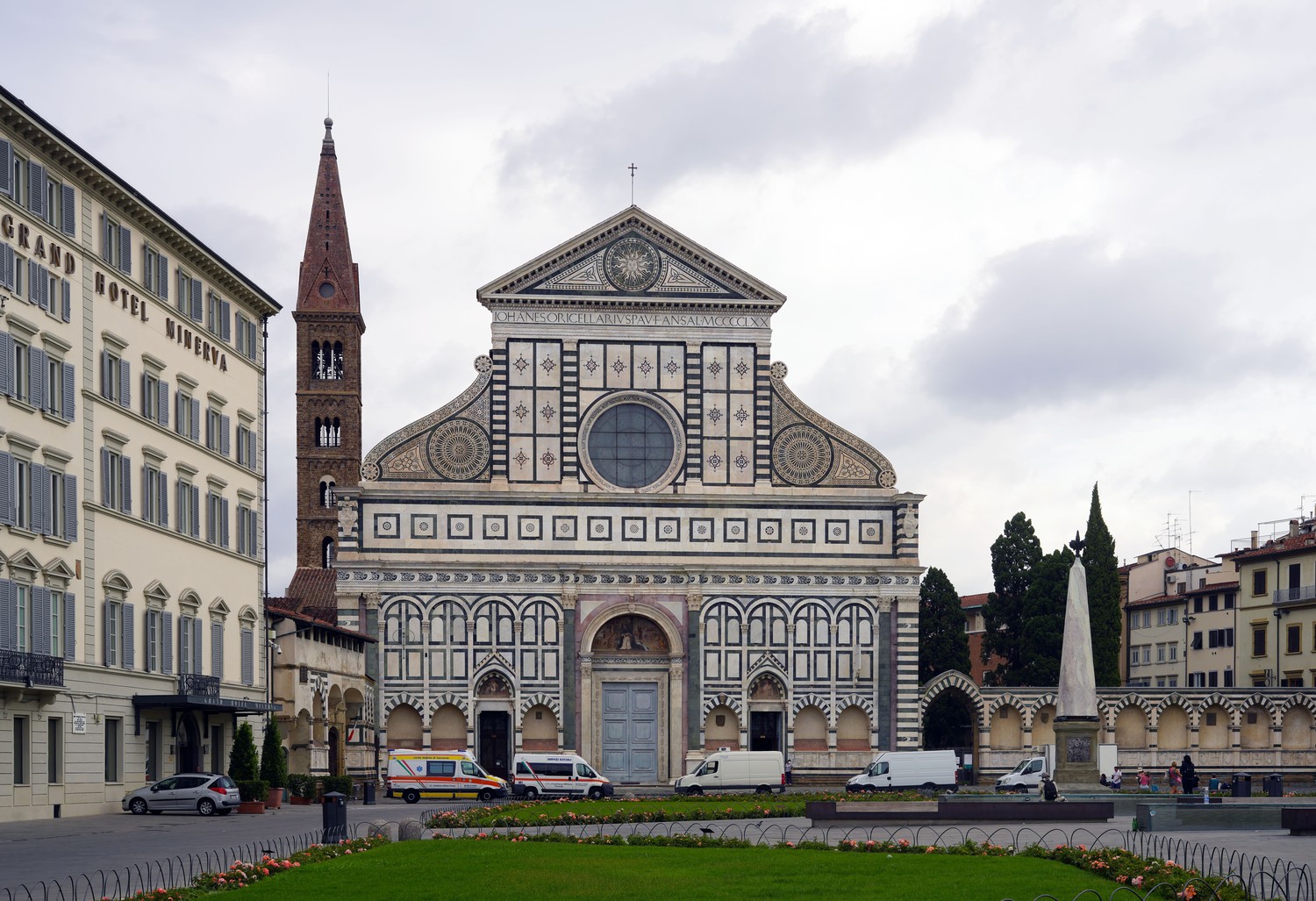
Nestled opposite Florence’s bustling railway station, Santa Maria Novella isn't merely a church; it is an immersive experience—a breathtaking testament to the city’s enduring legacy as a cradle of art and innovation. This magnificent basilica, born from a confluence of Gothic ambition and Renaissance refinement, stands as a powerful symbol of Florentine identity, inviting visitors on a journey through centuries of artistic evolution and spiritual contemplation. More than just a religious space, Santa Maria Novella is a meticulously crafted dialogue between architectural styles, a vibrant gallery of masterpieces, and a keeper of secrets—from the oldest pharmacy in Italy to the echoes of papal intrigue. The story begins in the 13th century, with the Dominican Order establishing a new church on the site of an earlier oratory. Construction spanned over eighty years, witnessing the arrival of some of Florence’s most influential architects and artists. Fra Sisto Fiorentino and Fra Ristoro da Campi laid the initial foundations, but it was Leon Battista Alberti who, in 1456-1470, dramatically reshaped the façade, injecting a humanist sensibility into the Gothic framework. This masterful intervention—characterized by its elegant S-curved volutes, intricate detailing, and harmonious proportions—became an instant landmark, influencing church design across Italy for generations to come. The building’s evolution is a captivating narrative of artistic exchange and intellectual ferment.
-
The Gothic Foundation:
The initial structure, conceived in the 13th century, reflects the robust spirit of the Gothic period, evident in its soaring arches and overall spatial arrangement.
-
Alberti’s Renaissance Transformation:
Leon Battista Alberti's intervention marked a pivotal shift, introducing classical proportions and a distinctly humanist aesthetic to the façade. The S-curved volutes are not merely decorative; they represent a sophisticated structural solution, elegantly managing transitions between floor levels – a testament to Alberti’s architectural genius.
-
A Living History:
Throughout its history, Santa Maria Novella has served as a focal point for Florentine life, witnessing political intrigue, artistic commissions, and evolving religious practices.
Masterpieces Within Stone Walls
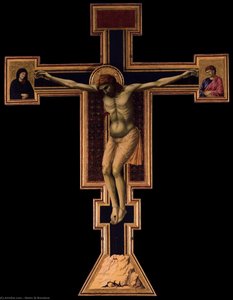
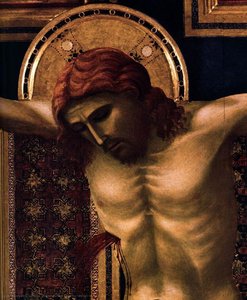
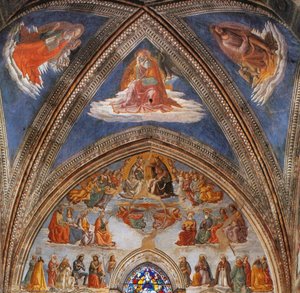
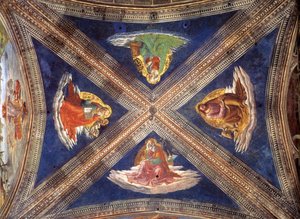
Within the basilica's vast interior, one encounters works that redefined artistic expression. The space itself is a carefully orchestrated experience, designed to inspire awe and contemplation. Giotto’s *Crucifix* (circa 1300-1306), originally intended for Florence Cathedral, immediately commands attention. This monumental sculpture represents a radical departure from the stylized Byzantine traditions that had dominated religious art for centuries. Giotto's work is characterized by its raw power and emotional intensity—a profound sense of suffering conveyed through remarkably naturalistic anatomy and expressive gestures. It’s a cornerstone of the early Renaissance, laying the groundwork for future generations of artists to explore human emotion with unprecedented depth. Nearby, Masaccio’s *Trinity* (1425-1427) stands as a pivotal moment in perspective; his groundbreaking use of linear perspective—creating an illusion of depth and space—fundamentally altered how artists depicted reality. The fresco seems to open a window into another realm, drawing the viewer into its sacred space with a startling sense of realism. The figures appear to exist within a three-dimensional world, meticulously rendered with astonishing detail. Further within, the frescoes of Domenico Ghirlandaio in the Tornabuoni Chapel showcase his exceptional skill in capturing human character and detail; his portrait of Giovanna Tornabuoni is particularly striking, revealing an ability to convey both dignity and intimacy – a subtle elegance that speaks volumes about her status and personality. These works are not merely paintings but windows into the lives and beliefs of a bygone era, rendered with breathtaking artistry and technical mastery.
A Symphony of Styles: Architectural Marvels
Santa Maria Novella’s architecture is a captivating blend of Romanesque-Gothic and Renaissance elements, reflecting the evolving artistic sensibilities of its builders. Alberti's façade is particularly noteworthy for its innovative use of S-curved volutes—a structural solution that elegantly addresses the challenge of transitioning between different floor levels. These graceful curves, reminiscent of flowing water, are a testament to Alberti’s ingenuity and his deep understanding of architectural principles. They represent a harmonious balance between Gothic ornamentation and classical restraint. Inside, the basilica boasts a vast, T-shaped Egyptian cross plan, dominated by soaring ribbed vaults and polychrome arches. The stark contrast between black and white creates an atmosphere of both austerity and grandeur, drawing the eye upwards towards the clerestory windows that flood the space with light. The trompe-l'œil effect in the nave—a subtle manipulation of perspective—creates a remarkable illusion of spatial depth, making the basilica appear significantly longer than it actually is. The interplay of light and shadow, form and color, creates an atmosphere of profound spiritual resonance – a carefully orchestrated visual experience designed to inspire reverence.
Beyond Art: Treasures and Hidden Histories
Santa Maria Novella offers far more than just its artistic treasures. Adjacent to the church lies Italy’s oldest pharmacy, *Officina Profumo-Farmaceutica di Santa Maria Novella*, a historic apothecary that has been producing exquisite perfumes and herbal remedies since the 17th century. The shop's unique products—infused with scents of rose, jasmine, and ambergris—are sought after by perfumers worldwide. The Cloisters and Chapter House offer a serene retreat from the city’s bustle; these areas contain additional art treasures, including funerary monuments and elaborate frescoes. The building itself is a remarkable example of Florentine Gothic architecture, showcasing intricate detailing and soaring arches. This juxtaposition of artistic grandeur and everyday life—the sacred and the secular—is what makes Santa Maria Novella so uniquely compelling. Don’t miss the opportunity to explore the fascinating history of this ancient apothecary, a testament to Florence's long-standing tradition of craftsmanship and innovation.
A Living Legacy: Exploring Santa Maria Novella Today
Santa Maria Novella continues to captivate visitors with its rich history, artistic masterpieces, and unique atmosphere. The museum regularly hosts temporary exhibitions that delve into various aspects of the basilica’s collection and heritage, often focusing on specific artists or periods within its long history. Guided tours provide invaluable insights into the building's architectural and artistic significance, while the *Officina Profumo-Farmaceutica* offers a chance to experience the traditions of Florentine perfumery firsthand – purchasing authentic fragrances crafted according to centuries-old recipes. A visit to Santa Maria Novella is not merely a sightseeing excursion; it’s an immersion in the heart of Florence’s artistic soul—a journey through time that celebrates the city's enduring legacy as a beacon of creativity and innovation.