

 プレビュー
プレビュー
 プリントを購入
 シェアする
シェアする シェアする
シェアする
 詳細を見る
詳細を見る

 ダウンロード
 似ている作品
 X線調査
X線調査 スライドショー
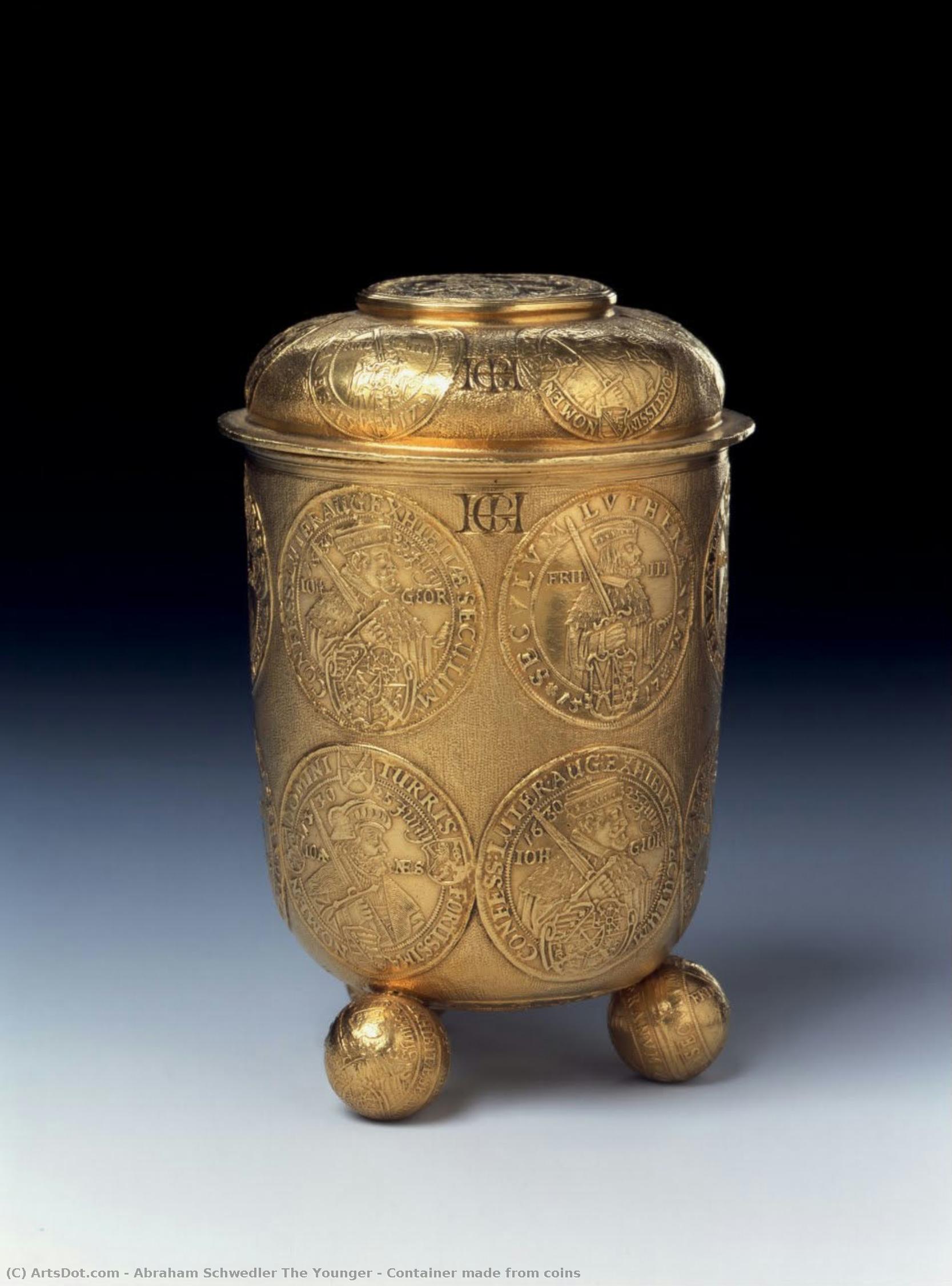
Container made from coins


 詳細を見る
詳細を見る




































作品のオリジナル比率に合わせた、当店の規定サイズからお選びください。

特定のフレームやスペースに合わせて、ご希望のサイズをご入力いただけます。選択されたサイズが元の画像の比率と異なる場合、アートワークをトリミングするか、手描きで要素を追加して絵画を拡張いたします。デジタルモックアップ を制作し、制作開始前にご確認(承認)をいただきます。
画面上のプレビューは、実際のトリミングや拡張を正確に反映しているものではありません。最終的な構図は、モックアップによってのみ正確にご確認いただけます。
カスタムサイズもご利用いただけますが、元の比率を維持するためには、あらかじめ用意されたリストからサイズを選択することをお勧めいたします。
ご注文後、ArtsDot.com チームより詳細な指示をお送りするとともに、仕上がりイメージ(モックアップ)をご提供いたします。


 ガラスオプションは、110cm未満のサイズでのみご利用いただけます。

Container made from coins
複製技法
複製画のサイズ
-


合計金額
$ 263
関連作品







アーティストの略歴
Abraham Schwedler the Younger: A Master of Miniature and Coin
Born in Dresden, Germany, in 1612, Abraham Schwedler the Younger emerged as a significant figure within the burgeoning world of German goldsmithing during the early 17th century. His life, tragically cut short at the age of thirty-six in 1648, coincided with a period of intense artistic and cultural transformation – the Baroque era – and his work reflects both the stylistic trends of the time and his own exceptional technical skill. Schwedler’s legacy rests primarily on his intricate jewelry and miniature portraiture, particularly his mastery of the techniques of rollwerk and email enamel, which combined to create surfaces of breathtaking detail and shimmering beauty.
Schwedler's training likely began within the established workshops of Dresden, a city renowned for its goldsmith tradition. The influence of rollwerk, a technique involving layering thin sheets of gold to build up complex designs, is immediately apparent in his work. This method allowed him to create incredibly detailed surfaces, mimicking textures and patterns with remarkable precision. Equally important was his skill in email enamel – a process of fusing powdered glass onto metal surfaces, resulting in vibrant colors and luminous effects. These two techniques, when skillfully combined, produced a visual richness rarely seen in contemporary craftsmanship.
The ‘Container Made From Coins’ and Early Works
Perhaps the most celebrated piece attributed to Schwedler is the “Container Made From Coins,” created around 1635. This small, exquisite box, constructed entirely from meticulously arranged coins, stands as a testament to his ingenuity and technical prowess. The sheer complexity of the design – replicating a landscape or intricate pattern with miniature coins – demonstrates an extraordinary level of planning and execution. It’s believed this piece was commissioned for a prominent figure, possibly a member of the Saxon court, highlighting the demand for such elaborate and personalized objects during that period.
Early in his career, Schwedler also produced numerous goldsmith fassungen – settings or mounts – for portrait miniatures. These weren’t merely functional; they were miniature works of art in themselves, designed to enhance the beauty and value of the painted likeness within. He demonstrated a keen eye for proportion and detail, ensuring that each setting complemented the sitter's features and conveyed a sense of elegance and refinement. The British Museum holds a medallion pendant created by Schwedler, showcasing his early talent and demonstrating his ability to work with precious stones alongside gold.
Technique and Style
Schwedler’s style can be characterized as distinctly Baroque, reflecting the era's emphasis on drama, ornamentation, and emotional intensity. His use of color was particularly striking, utilizing vibrant enamel hues – blues, greens, reds – to create a sense of depth and movement. The meticulous application of rollwerk created surfaces that seemed to shimmer with light, while the email enamel added an ethereal quality to the overall design. He wasn’t simply replicating existing styles; he adapted them to his own artistic vision, imbuing each piece with a unique character.
It's important to note that Schwedler operated within a network of skilled artisans, and while he undoubtedly possessed considerable independence, it is likely he was influenced by the broader trends in German goldsmithing. The work of earlier masters, such as those associated with the workshop of Johann Hoffmann, would have provided a foundation for his own artistic development.
Legacy and Historical Significance
Despite his tragically short life, Abraham Schwedler the Younger left behind a remarkable body of work that continues to fascinate collectors and art historians today. His “Container Made From Coins” remains an iconic example of 17th-century goldsmithing, demonstrating both technical mastery and artistic vision. His contributions to miniature portraiture elevated the status of these small paintings, transforming them into treasured objects of beauty and historical significance. Schwedler’s work offers a valuable window into the cultural and artistic landscape of Dresden during a pivotal period in European history – a testament to the skill and creativity of a young artist whose brilliance was ultimately cut short.

abraham schwedler the younger
1612 - 1648 , Germany
基本情報
- Artistic Movement Or Style: Rollwerk & Email
- Date Of Birth: 1612
- Date Of Death: 1648
- Full Name: Abraham Schwedler the Younger
- Nationality: German
- Notable Artworks: ['Container made from coins']
- Place Of Birth: Dresden, Germany