

 プレビュー
プレビュー
 シェアする
シェアする シェアする
シェアする
 詳細を見る
詳細を見る

 ダウンロード
 似ている作品
 X線調査
X線調査 スライドショー
Still Life with Wild Strawberries
 Oil On Canvas
- WallArt
- Baroque
 1705
1705- Early Modern
 17.0 x 14.0 cm
 マウリッツハイス美術館
 詳細を見る
詳細を見る
ジークレー/アートプリント
迅速な制作と多彩な仕上げオプションを備えた、ミュージアムクオリティのジークレーまたはキャンバスプリント。 ( 手描きの絵画を購入 画像を購入)




































作品のオリジナル比率に合わせた、当店の規定サイズからお選びください。

特定のフレームやスペースに合わせて、ご自身でサイズを指定することも可能です。選択されたサイズが元の画像の比率と一致しない場合、作品をトリミングするか、鏡面反射または単色での塗りつぶしによって画像を拡張いたします。制作を開始する前に、ご確認用のデジタルモックアップをお送りいたします。
画面上のプレビューには、実際のトリミングや拡張は反映されませんのでご注意ください。最終的な構図を正確に確認できるのは、モックアップのみとなります。
カスタムサイズも承っておりますが、元の比率を維持するためには、あらかじめ用意されたリストからサイズを選択することをお勧めいたします。


 ガラスオプションは、110cm未満のサイズでのみご利用いただけます。

Still Life with Wild Strawberries
ジークレー/アートプリント
複製画のサイズ
-


合計金額
$ 62
作品詳細説明
A Quiet Masterpiece of the Dutch Golden Age
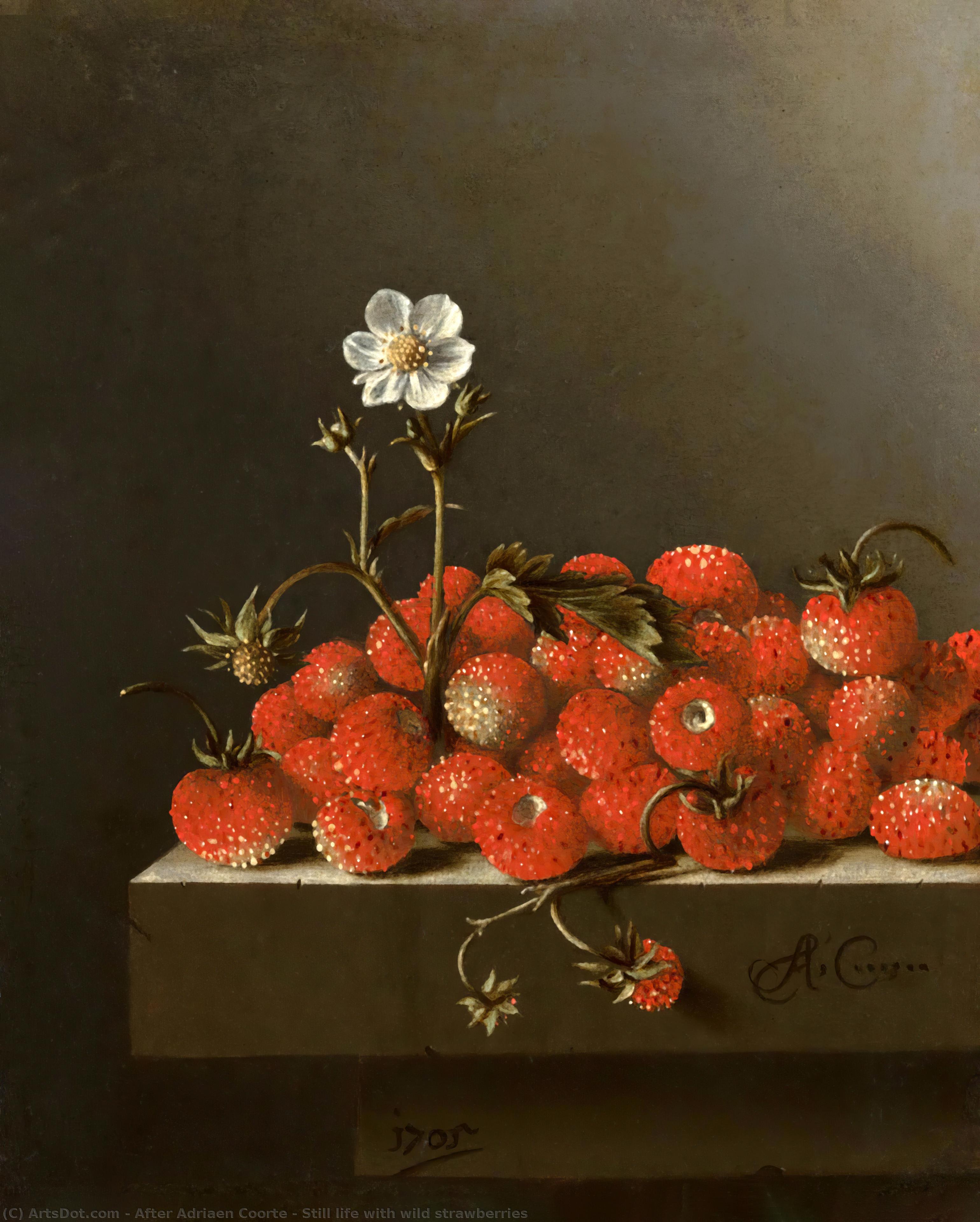
In the hushed stillness of a dark, indeterminate space, a small miracle of nature unfolds. Still Life with Wild Strawberries, painted around 1705, invites the viewer into a moment of profound intimacy and sensory clarity. This exquisite work, executed in the tradition of Adriaen Coorte, captures more than just a simple arrangement of fruit; it captures a fleeting breath of life preserved forever in oil. The composition is centered upon a rustic wooden box, which holds a delicate bowl of vibrant red strawberries and a single, ethereal white flower. There is a remarkable sense of weight and presence here, as if the viewer has stumbled upon a private, sacred offering left undisturbed in the shadows.
The artistry lies in the masterful tension between light and shadow, a hallmark of the Dutch Golden Age. A soft, directional light source enters from the upper left, gently brushing the rounded contours of the berries and illuminating the delicate petals of the flower. This technique, known as chiaroscuro, allows the brilliant crimson of the strawberries to pulse against the deep, velvety darkness of the background. Every element is rendered with meticulous precision; one can almost sense the tactile difference between the smooth, juicy skin of the fruit, the rough, weathered grain of the wooden container, and the fragile, paper-thin texture of the floral stem. It is a triumph of realism that transforms humble organic matter into something precious and luminous.
Symbolism and the Poetry of Nature
Beyond its visual splendor, the painting is steeped in the symbolic language of the seventeenth century. In the Dutch tradition, still life paintings were rarely mere decorations; they were meditations on existence. The wild strawberries, with their sweetness and seasonal brevity, often served as metaphors for love, fertility, and the ephemeral nature of earthly pleasures. Paired with a single white flower—a symbol of purity and innocence—the arrangement creates a poetic dialogue between passion and grace. This subtle interplay of meaning invites collectors and enthusiasts to look deeper, finding a spiritual resonance within the physical beauty of the natural world.
For the discerning interior designer or art lover, this piece offers an unparalleled sense of calm and sophistication. Its intimate scale and focused composition make it an ideal centerpiece for a curated collection, providing a focal point that commands attention without overwhelming its surroundings. Whether placed in a sunlit gallery or a moody, contemporary study, the painting brings with it a timeless elegance. Owning a high-quality reproduction of such a work is not merely about decorating a wall; it is about inviting a piece of history and a sense of quiet, contemplative beauty into the modern home.
関連作品



アーティストの略歴
A Rediscovered Intimacy: The Life and Art of Adriaen Coorte
Adriaen Coorte, a name that remained largely obscured for centuries, now resonates as one of the most captivating figures of the Dutch Golden Age. Born around 1665 in Middelburg, Netherlands, his life was shrouded in mystery until relatively recently. Unlike many of his contemporaries who enjoyed widespread recognition during their lifetimes, Coorte’s existence faded into near oblivion after his death sometime after 1707. It wasn't until the mid-20th century that Dutch art historian Laurens J. Bol meticulously pieced together fragments of information, resurrecting Coorte from historical obscurity and revealing a painter of remarkable sensitivity and unique vision. What emerged was not the story of an artist celebrated in grand courts or commissioned for elaborate displays, but rather one of quiet dedication to a profoundly intimate form of still life painting.Early Influences and Artistic Development
Coorte’s artistic journey began around 1680 with an apprenticeship under Melchior d'Hondecoeter in Amsterdam. D'Hondecoeter was renowned for his depictions of birds, often repeating specific poses and compositions—a practice that would subtly shape Coorte’s early style. It appears the master tasked pupils with copying these established motifs, creating a recognizable signature within their work. Indeed, echoes of d'Hondecoeter’s avian subjects can be detected in some of Coorte’s earlier paintings, though he quickly diverged from his teacher’s flamboyant approach. He returned to Middelburg around 1683 and established a modest workshop. This return marked a pivotal shift towards the minimalist aesthetic that would define his oeuvre. He eschewed the elaborate arrangements favored by contemporaries like Jan Davidsz de Heem, instead focusing on small-scale compositions of fruits, vegetables, or shells—subjects rendered with an almost monastic simplicity. His choice of materials was equally unconventional; he frequently painted on paper glued to wooden panels, a practice indicative of his unpretentious approach and perhaps limited resources.A Singular Style: Minimalism and the Study of Light
Coorte’s paintings are characterized by their extraordinary restraint. He typically presented arrangements of just a few objects—a bowl of strawberries, a scattering of shells, or a single peach—against dark backgrounds. These were not lavish displays intended to showcase wealth or status; rather, they were intensely focused studies of form, texture, and light. His compositions are remarkably balanced, almost geometric in their precision, yet imbued with a sense of naturalism that transcends mere technical skill. The lighting is particularly noteworthy, often emanating from an unseen source above, casting subtle shadows and highlighting the delicate surfaces of his subjects. He possessed a remarkable ability to capture the transient beauty of perishable objects—the velvety skin of a peach, the glistening dew on a strawberry, the pearlescent sheen of a shell. This focus on ephemerality lends his work a poignant quality, reminding viewers of the fleeting nature of existence. Unlike many still lifes of the period that incorporated opulent silver or Chinese porcelain, Coorte favored simple pottery—a deliberate rejection of ostentation in favor of humble authenticity.Rediscovery and Lasting Significance
For centuries, Adriaen Coorte remained largely unknown outside his native Middelburg. His work appeared sporadically in local tax inventories, but he was not celebrated or widely collected during his lifetime. It wasn’t until the 1950s that art historian Laurens J. Bol embarked on a painstaking investigation into his life and paintings. Bol's monograph and catalogue raisonné, published in 1977, brought Coorte to the attention of a wider audience, sparking a renewed appreciation for his unique style. An exhibition at the Dordrechts Museum in 1958 proved particularly influential, captivating Dutch audiences and inspiring poets like Hans Faverey and Ed Leeflang. Subsequent exhibitions at institutions such as the National Gallery of Art in Washington D.C. (2003) and the Mauritshuis in The Hague (2008) further cemented his reputation as a master of Dutch Baroque painting. Today, Coorte’s paintings are highly sought after by collectors and museums alike. His work stands as a testament to the power of simplicity—a quiet rebellion against the excesses of his time and a profound meditation on the beauty of the everyday. He is now recognized not merely as an anomaly within the Dutch Golden Age but as a singular voice, offering a unique perspective on light, form, and the ephemeral nature of life itself.Themes and Symbolism
While Coorte’s paintings lack the overt moralizing often found in other still lifes of the period, they are not devoid of symbolic meaning. The fruits he depicted—peaches, strawberries, grapes—were frequently associated with themes of temptation, abundance, and the pleasures of earthly life. However, his minimalist approach tempers these traditional interpretations. The single butterfly that appears in many of his compositions is often seen as a symbol of transformation and resurrection, while the dark backgrounds evoke a sense of mystery and contemplation. His paintings are not didactic pronouncements but rather invitations to quiet reflection. The very act of focusing on such humble subjects—a few pieces of fruit or a handful of shells—can be interpreted as a celebration of simplicity and a rejection of materialism. Coorte’s work resonates with a sense of spiritual stillness, inviting viewers to appreciate the beauty of the present moment. The intense study of light itself can also be seen as symbolic, representing divine illumination or the fleeting nature of time. Ultimately, Coorte's paintings are open to multiple interpretations, allowing each viewer to find their own meaning within these exquisitely rendered scenes.
after adriaen coorte
1665 - 1707
基本情報
- Artistic Movement Or Style: Dutch Golden Age Still Life
- Artists Or Movements Influenced By This Artist: Rediscovered Dutch Baroque painters
- Artists Who Influenced This Artist: ["Melchior d'Hondecoeter"]
- Date Of Birth: ca. 1665
- Date Of Death: after 1707
- Full Name: Adriaen Coorte
- Nationality: Dutch
- Notable Artworks:
- A Bowl of Strawberries
- Still Life with Shells
- Five Shells on a Slab
- Place Of Birth: Middelburg, Netherlands
関連記事

黄金世紀の巨匠たち:バロック絵画が彩る10選|ArtsDot
オランダ黄金時代の10大傑作を紐解く!レンブラント、フェルメール…バロック絵画の魅力と時代背景を深く探求。ArtsDotで、至高のアートコレクションと空間演出のヒントを見つけよう。高品質なアートプリントで、お部屋を華やかに。

Golden Age Reflections: Dutch Baroque Painting & Cultural Innovation
Explore the Dutch Golden Age of painting! Discover key artists like Vermeer & ter Borch, their innovative techniques, and the rich cultural context behind these Baroque masterpieces. Learn about collecting & appreciating this iconic art period.

Illuminating Innovation: Exploring the Dutch Golden Age of Painting
Explore the Dutch Golden Age of painting with ArtsDot. Discover Rembrandt, Vermeer & other Masters. Learn about key characteristics, iconic artworks, and lasting influence. Expert insights for collectors & enthusiasts.
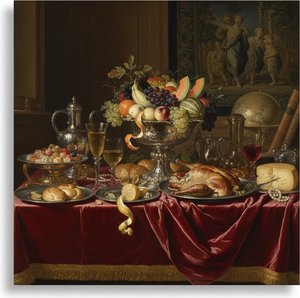
Abraham Hendricksz van Beyeren: Pioneering Dutch Still Life & the Banquet Tradition
Explore the captivating world of Dutch Golden Age still life with Abraham van Beyeren. Discover his innovative techniques, symbolic banquet scenes & lasting influence on art history. Learn about collecting these masterpieces.
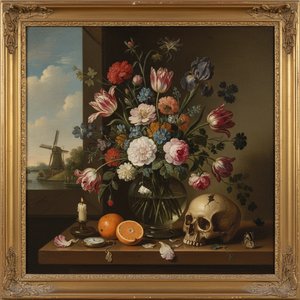
Jan Jansz Wijnants: A Study in Dutch Golden Age Still Life & Floral Transience
Explore the captivating world of Jan Wijnants and Dutch Golden Age still life painting. Discover symbolism, masterful techniques & lasting influence on floral art history. Learn more!

