

 プレビュー
プレビュー
 シェアする
シェアする シェアする
シェアする
 詳細を見る
詳細を見る

 ダウンロード
 似ている作品
 X線調査
X線調査 スライドショー
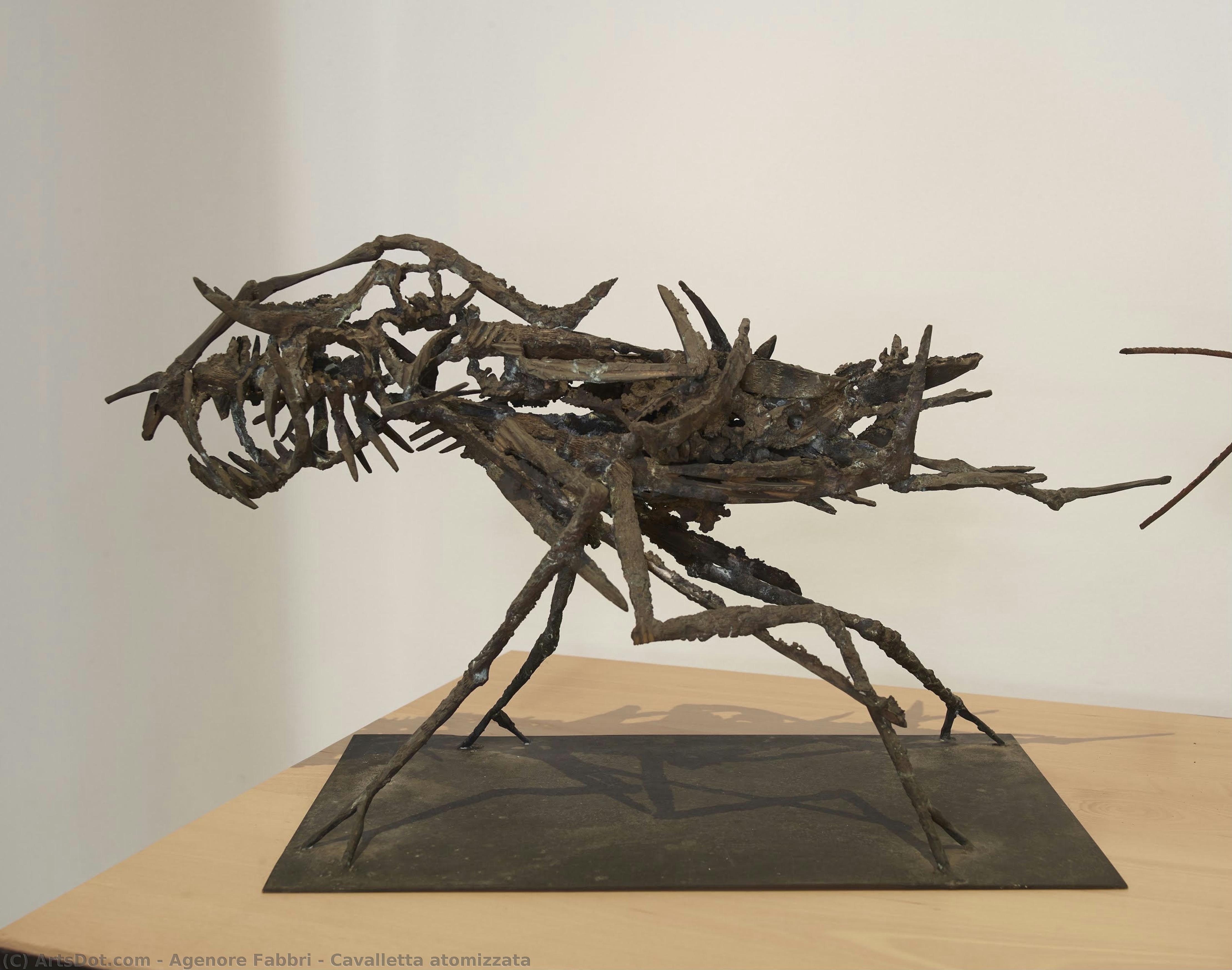
Cavalletta atomizzata
 46.0 x 91.0 cm
 Museo del Novecento
 詳細を見る
詳細を見る
ジークレー/アートプリント
迅速な制作と多彩な仕上げオプションを備えた、ミュージアムクオリティのジークレーまたはキャンバスプリント。 ( 手描きの絵画を購入 画像を購入)




































作品のオリジナル比率に合わせた、当店の規定サイズからお選びください。

特定のフレームやスペースに合わせて、ご自身でサイズを指定することも可能です。選択されたサイズが元の画像の比率と一致しない場合、作品をトリミングするか、鏡面反射または単色での塗りつぶしによって画像を拡張いたします。制作を開始する前に、ご確認用のデジタルモックアップをお送りいたします。
画面上のプレビューには、実際のトリミングや拡張は反映されませんのでご注意ください。最終的な構図を正確に確認できるのは、モックアップのみとなります。
カスタムサイズも承っておりますが、元の比率を維持するためには、あらかじめ用意されたリストからサイズを選択することをお勧めいたします。


 ガラスオプションは、110cm未満のサイズでのみご利用いただけます。

Cavalletta atomizzata
ジークレー/アートプリント
複製画のサイズ
-


合計金額
$ 62
関連作品









アーティストの略歴
A Pioneer Bridging Expressionism and Informalism: The Artistic Journey of Agenore Fabbri
Agenore Fabbri (1911-1998) stands as a singular figure in Italian sculpture and painting, an artist who deftly navigated the turbulent currents of 20th-century art movements—specifically bridging the rigorous tenets of Expressionism with the liberating spirit of Informalism. Born in Bologna on May 20, 1911, Fabbri’s artistic trajectory unfolded against a backdrop of intellectual ferment and artistic experimentation, leaving an indelible mark on the landscape of modern Italian art.- Early Influences and Artistic Formation:
- From Pistoia to Florence: The Seeds of Creativity
- The Embrace of Expressionism and Futurism:
- Notable Sculptures and Paintings:
- Legacy and Recognition:
Early Influences and Artistic Formation
Fabbri’s artistic awakening began at the tender age of twelve when he enrolled in the scuola d'arte in Pistoia, where he received instruction from painter Fabio Casanova. This formative experience instilled within him a foundational understanding of artistic principles and techniques—a bedrock upon which his subsequent explorations would rest. Recognizing his burgeoning talent, Fabbri subsequently relocated to Florence, continuing his education at the Accademia di Belle Arti, immersing himself in the vibrant intellectual atmosphere fostered by artists’ cafés like Giubbe Rosse. It was here that he encountered luminaries such as Eugenio Montale and Carlo Bo, forging connections that would prove crucial to shaping his artistic worldview.From Pistoia to Florence: The Seeds of Creativity
The Florentine environment proved particularly stimulating for Fabbri’s creative development. Surrounded by fellow artists and thinkers—individuals who championed innovation and challenged conventional boundaries—he cultivated a spirit of inquiry that propelled him toward groundbreaking artistic endeavors. Frequent visits to Giubbe Rosse nurtured his engagement with avant-garde ideas, cementing his affiliation with movements like Futurism, where he wrestled with the possibilities of representing dynamism and speed through sculptural form. This period solidified Fabbri’s commitment to pushing beyond established stylistic conventions.The Embrace of Expressionism and Futurism
Fabbri's artistic style evolved dramatically throughout his career, reflecting a profound engagement with both Expressionist fervor and Futurist experimentation. He sought to convey emotion and psychological depth—characteristic traits of Expressionism—while simultaneously grappling with the challenge of capturing movement and energy—a core tenet of Futurism. This duality informed his approach to sculpture and painting alike, resulting in works imbued with palpable intensity and a distinctive visual vocabulary. The influence of Franz Marc’s expressive landscapes and Michelangelo Buonarroti's monumental sculptures undoubtedly contributed to Fabbri’s artistic sensibilities.Notable Sculptures and Paintings
Fabbri’s oeuvre encompasses a diverse range of sculptural masterpieces and paintings that exemplify his mastery of various mediums and techniques. Among his most celebrated creations are “Young Boy with a Lamb,” a poignant depiction of innocence and vulnerability rendered in vibrant hues—a testament to his Expressionist style. Equally impressive is “The Little Fisherman,” a bronze sculpture embodying the spirit of Informalism, demonstrating Fabbri’s ability to achieve textural richness and sculptural dynamism without adhering to rigid geometric forms. Furthermore, "Angel with Candlestick," crafted from marble, showcases Fabbri's meticulous attention to detail and his capacity for crafting aesthetically sublime pieces. His works are housed in prestigious institutions such as the Museum of Modern Art in Milan and Lenbachhaus in Munich, securing his place within the canon of 20th-century Italian art.Legacy and Recognition
Agenore Fabbri’s artistic legacy extends beyond his individual creations; he served as an inspiration to subsequent generations of sculptors and painters. His pioneering spirit—his willingness to embrace experimentation and challenge artistic conventions—continues to resonate within the broader context of Italian art history. Recognized for his contribution to both Expressionism and Informalism, Fabbri’s work stands as a beacon of artistic innovation and emotional resonance—a testament to the enduring power of art to convey profound human experience.
Agenore Fabbri
1911 - 1998 , Italy
基本情報
- Artistic Movement Or Style: Expressionism & Informalism
- Artists Or Movements Influenced By This Artist: ['Futurism']
- Artists Who Influenced This Artist:
- Franz Marc
- Michelangelo Buonarroti
- Date Of Birth: May 20, 1911
- Date Of Death: 1998
- Full Name: Agenore Fabbri
- Nationality: Italian
- Notable Artworks:
- Young Boy with Lamb
- The Little Fisherman
- Angel with Candlestick
- Place Of Birth: Bologna, Italy