

 プリントを購入
 シェアする
シェアする シェアする
シェアする
 詳細を見る
詳細を見る

 ダウンロード
 似ている作品
 スライドショー
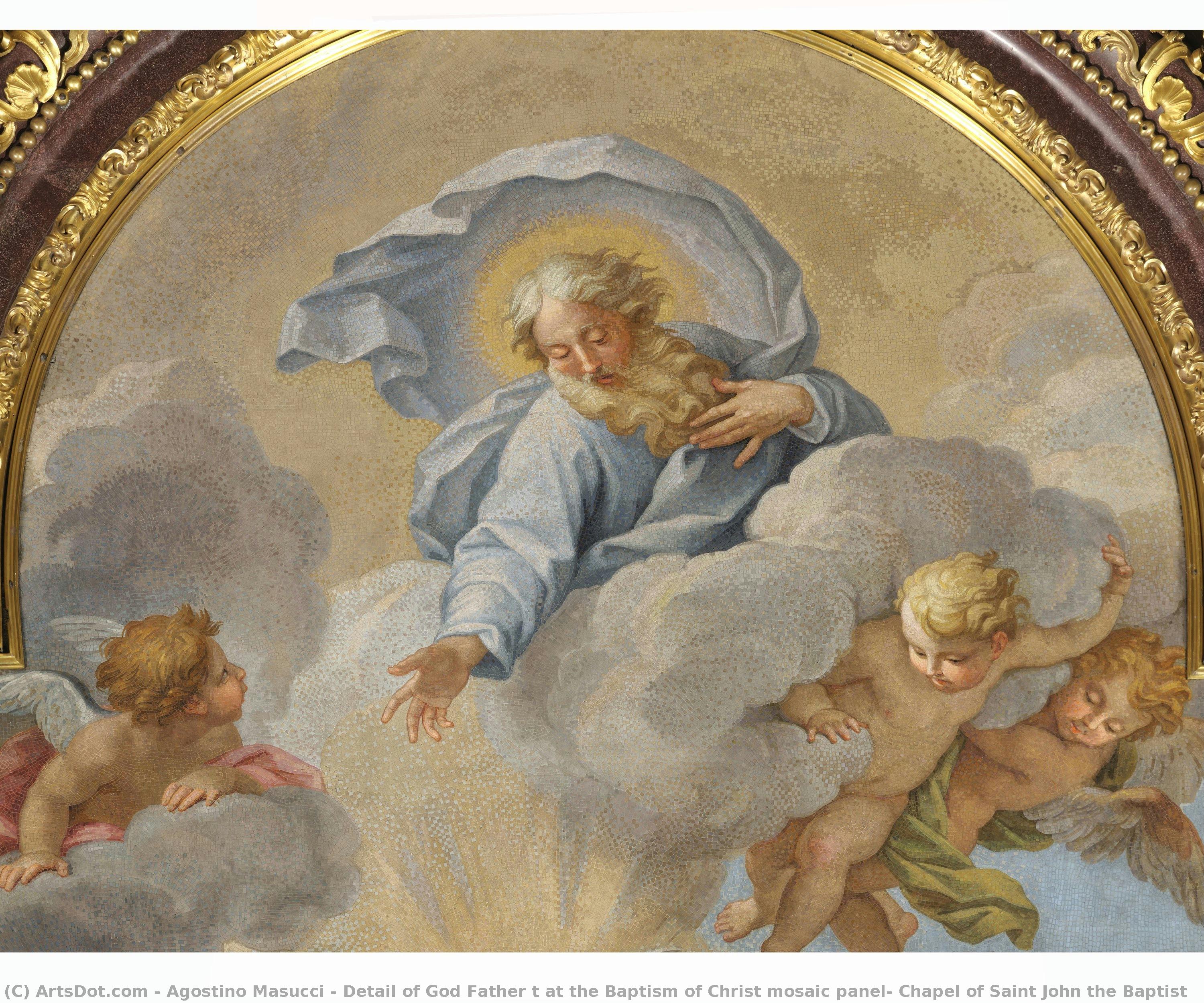
Detail of God Father t at the Baptism of Christ mosaic panel, Chapel of Saint John the Baptist


 詳細を見る
詳細を見る
オンラインプレビューをはるかに凌ぐ、高解像度で鮮明なデジタル画像をご購入いただけます。
各ファイルは、社内の専門家が高度なツールと熟練した手作業によるレタッチを用いて、細心の注意を払って準備されています。すべての画像において、卓越した鮮明度、正確な色彩再現性、そして繊細なディテールを保証いたします。
最終ファイルは、プロフェッショナルな編集・印刷環境ですぐにご利用いただけるよう最適化された状態で、72時間以内にメールにてお届けいたします。これは、一流のデザインスタジオ、出版社、ギャラリーから信頼されているものと同等の品質です。
デジタル画像のご注文に付随する特典
高品質なデジタル画像配信を、確かな品質で。
ArtsDot.com を選ぶことは、単に画像を手に入れることではありません。それは、プロの手によって精密に仕上げられ、満足保証が付いた高品質なデジタルアートワークを受け取ることを意味します。ご注文いただいた際に自動的に付随する内容は、以下の通りです:

メールですぐにお届け
ご注文から72時間以内に、高解像度のデジタル画像ファイルがメールでお手元に届きます。すぐにそのままご利用いただけます。

AI技術で最適化されたデジタルファイル
お客様の作品は、高度なAIツールと専門家による手作業の編集を組み合わせてプロフェッショナルに最適化されており、細部のディテール、鮮明さ、そして正確な色再現性を最大限に引き出しています。

一生涯無料の再送サービス
ファイルを誤って削除したり、紛失してしまったりしましたか?ご安心ください。いつでも無料で再送いたします。

輸入手数料は一切かかりません
関税や手数料、配送料を気にすることなく、お気に入りのアートワークをすぐにお楽しみいただけます。デジタルダウンロードは常に免税です。

色彩再現の保証
プロ仕様のツールとカラーマネジメント技術を用いることで、デジタル画像が元の色を最大限に忠実に再現することを保証いたします。

100日間満足保証
ご購入いただいたデジタル画像にご満足いただけない場合は、100日以内であれば、修正または100%の返金(理由を問う必要はありません)をさせていただきます。

100% 返金保証
ご満足いただけない場合は、デジタルファイルを受け取ってから100日以内であれば、理由を問わず全額返金いたします。

まとめ買い割引
3枚購入で10%OFF - 5枚購入で15%OFF - 10枚以上購入で20%OFF。クリエイティブなプロジェクト、ギャラリー、エージェンシーに最適です。
A Divine Encounter in Mosaic: The Majesty of Masucci’s Vision
In the hallowed atmosphere of the Chapel of Saint John the Baptist, there exists a fragment of celestial splendor that transcends the boundaries of mere decoration. This exquisite mosaic panel, a detail from Agostino Masucci’s profound depiction of the Baptism of Christ, serves as a window into the late Baroque soul. The scene captures a moment of supreme spiritual significance, where the earthly and the divine converge through the medium of light and texture. As one gazards upon the intricate arrangement of figures, there is an immediate sense of being drawn into a sacred drama, where every tessera—every tiny tile—contributes to a larger narrative of redemption and grace.
The composition is anchored by the powerful presence of the Holy Trinity, specifically focusing on the God the Father figure, whose gaze commands both reverence and awe. Masucci, a master who flourished in the prestigious Roman studios under the influence of Carlo Maratta, utilizes the mosaic medium to replicate the soft, luminous transitions characteristic of his painterly style. The background is not merely a setting but an atmospheric force; swirling clouds drift through the frame, creating a sense of movement and divine turbulence that mirrors the weight of the moment. This interplay of light and shadow—the chiaroscuro of the mosaic—imbues the work with a dramatic tension that is quintessential to the Rococo and late Baroque periods.
Symbolism and the Language of Sacred Art
Beyond its visual splendor, the artwork is rich with theological symbolism designed to instruct and inspire the faithful. The presence of John the Baptist, the precursor, introduces a theme of preparation and purification. In the lower reaches of the panel, the inclusion of an infant figure adds a layer of tender complexity, perhaps hinting at the continuity of Christ’s humanity and the broader lineage of the saints. The central placement of a book—likely representing the Holy Scriptures—acts as a silent witness to the fulfillment of prophecy, grounding the ethereal scene in the permanence of the Word.
For the discerning collector or interior designer, this piece offers more than just historical value; it provides an emotional anchor for any space. The mosaic technique lends a unique tactile quality and a shimmering luminosity that changes with the light of the room, making it a dynamic centerpiece. Whether placed in a grand library, a formal dining hall, or a contemplative private study, this reproduction brings with it the weight of 18th-century Roman grandeur. It is an invitation to experience the opulence of the past, offering a sophisticated touch of classical elegance that celebrates the enduring power of religious iconography and the masterful hand of Agostino Masucci.
関連作品
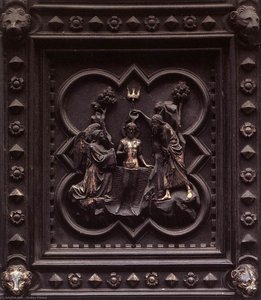
![Scrovegni - [23] - Baptism Of Christ — ジョット, Early Renaissance](/media/artworks/images-thumb/17/af/17af47626cb93b2000ad3d13e045f189.jpg)
作家の略歴
Agostino Masucci: A Roman Master Bridging Eras
In the vibrant, sun-drenched landscape of eighteenth-century Rome, Agostino Masucci emerged as a painter of profound grace and technical refinement. Born in 1691, Masucci was a child of the Eternal City, coming of age at a moment when the heavy, dramatic grandeur of the High Baroque began to soften into the delicate, airy sensibilities of the Rococo. His artistic journey was one of seamless transition, navigating the shifting tides of European taste with a hand that remained anchored in classical tradition yet responsive to the burgeoning elegance of his era. Through his brush, the monumental weight of the previous century found a new, more luminous expression, bridging the gap between the theatricality of the Baroque and the nascent clarity of Neoclassicism.
The foundation of Masucci’s mastery was laid within the prestigious studios of Rome, where he first studied under Andrea Procaccino. However, it was his subsequent association with Carlo Maratta—the titan of Roman painting—that would most profoundly shape his aesthetic DNA. As a pupil in Maratta’s influential circle, Masucci absorbed a style characterized by clarity, balanced compositions, and a certain noble restraint. This lineage is evident in his religious works, which often possess a smooth, porcelain-like finish and a serene, cultivated atmosphere. While some critics of his time noted that his devotional Madonnas occasionally struggled to reach the heights of his master’s emotional intensity, there is no denying the exquisite technical precision and the "clear, cool" quality that defined his altarpieces.
A Legacy of Patronage and Architectural Grandeur
Masucci’s influence extended far beyond the confines of a solitary studio; he was a central figure in the intellectual and social fabric of Rome’s artistic elite. His membership in the Accademia di San Luca provided him with a platform for scholarly exchange, and his appointment as Principe della Stamperia Re Reale Romana between 1736 and 1738 cemented his status as a leader within the Roman art world. This period of professional ascendancy allowed him to forge deep connections with the great architects of the age, such as Filippo Juvarra and Luigi Vanvitelli. These alliances transformed Masucci from a mere painter of canvases into a visionary of integrated spaces, where painting, architecture, and ornament coalesced into a singular, breathtaking experience.
Perhaps the most glittering testament to his international renown was his relationship with King John V of Portugal. This royal patronage led to one of the most ambitious artistic undertakings of the century: the design and oversight of the Chapel of Saint John the Baptist in Lisbon. In this monumental project, Masucci’s talent for narrative and decorative splendor was fully realized. His work on the chapel's magnificent mosaic panels demonstrated an ability to translate complex biblical narratives into enduring, opulent visual poetry, contributing to a religious space that remains one of the most costly and breathtakingly ornate in Europe.
The Versatility of a Roman Draughtsman
While his large-scale religious commissions captured the public imagination, Masucci’s true versatility shone through in his intimate portraiture and his exceptional skill as a draughtsman. In an era where the portrait served as a vital instrument of social identity, Masucci proved himself a formidable chronicler of the Roman elite and European royalty alike. His portraits of figures such as Pope Clement XII and Cardinal Niccolò del Giudice reveal a keen eye for character and a sophisticated command of light and texture. It was in this genre that many contemporaries viewed him as the legitimate heir to Maratta, possessing a unique ability to imbue his subjects with both dignity and a lifelike presence.
Beyond the oil canvas, Masucci’s preparatory studies offer a window into his creative intellect. His drawings, executed in various media including black, red, and blue chalk, reveal an artist deeply engaged with the anatomical and compositional rigors of his craft. These works, such as his studies for Saint Anne in the Education of the Virgin, showcase a fluid, expressive line that anticipates the more spontaneous energy of the Rococo. Through this duality—the ability to execute monumental, structured compositions and to capture the fleeting delicacy of a sketch—Agostino Masucci secured his place as a pivotal figure whose work echoed the splendor and the evolving spirit of the Roman Golden Age.
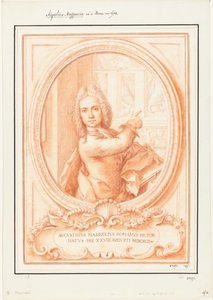
Agostino Masucci
1691 - 1758
プロフィール概要
- Artistic Movement Or Style: Late Baroque & Rococo
- Artists Or Movements Influenced By This Artist: ['Pompeo Batoni']
- Artists Who Influenced This Artist: ['Carlo Maratta']
- Date Of Death: October 19, 1758
- Full Name: Agostino Masucci
- Nationality: Italian
- Notable Artworks:
- The Judgement of Solomon
- Detail of two angels at the Baptism of Christ mosaic panel
- Baptism of Christ mosaic panel
- Place Of Birth: Rome, Italy