

 プレビュー
プレビュー
 プリントを購入
 シェアする
シェアする シェアする
シェアする
 詳細を見る
詳細を見る

 ダウンロード
 似ている作品
 X線調査
X線調査 スライドショー
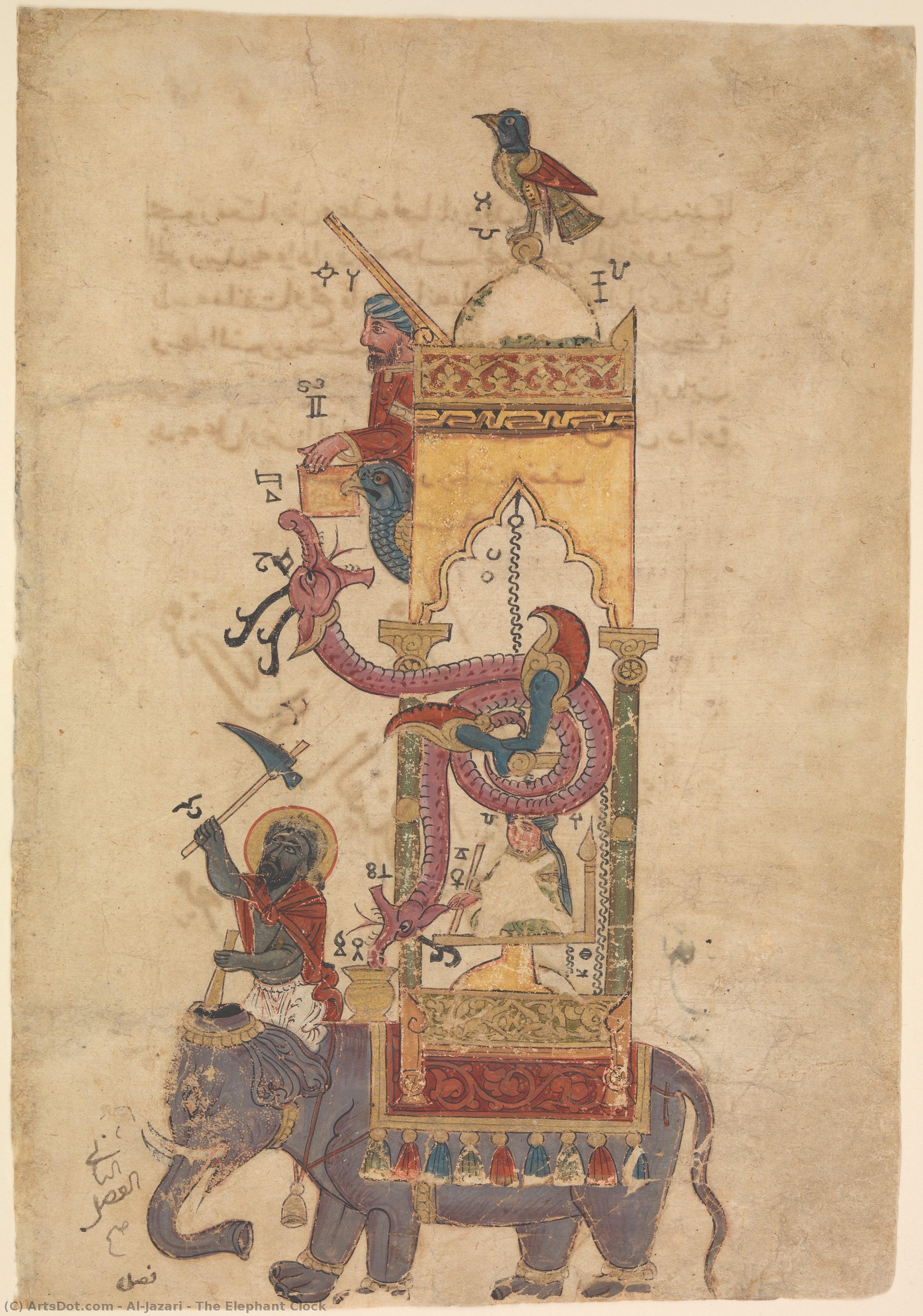
The Elephant Clock
 Abbasid Period
 1206
1206 30.0 x 20.0 cm
 詳細を見る
詳細を見る




































作品のオリジナル比率に合わせた、当店の規定サイズからお選びください。

特定のフレームやスペースに合わせて、ご希望のサイズをご入力いただけます。選択されたサイズが元の画像の比率と異なる場合、アートワークをトリミングするか、手描きで要素を追加して絵画を拡張いたします。デジタルモックアップ を制作し、制作開始前にご確認(承認)をいただきます。
画面上のプレビューは、実際のトリミングや拡張を正確に反映しているものではありません。最終的な構図は、モックアップによってのみ正確にご確認いただけます。
カスタムサイズもご利用いただけますが、元の比率を維持するためには、あらかじめ用意されたリストからサイズを選択することをお勧めいたします。
ご注文後、ArtsDot.com チームより詳細な指示をお送りするとともに、仕上がりイメージ(モックアップ)をご提供いたします。


 ガラスオプションは、110cm未満のサイズでのみご利用いただけます。

The Elephant Clock
複製技法
複製画のサイズ
-


合計金額
$ 263
関連作品







アーティストの略歴
A Pioneer of Mechanical Marvels: The Life and Legacy of Al-Jazari
The name Ismail al-Jazari, often hailed as the “father of robotics,” resonates through history as a testament to human ingenuity during the Islamic Golden Age. Born in 1136 in Mesopotamia – modern-day Iraq – Al-Jazari was not merely an inventor; he was a polymath whose contributions spanned engineering, mathematics, astronomy, and art. His life unfolded within the vibrant intellectual landscape of the Artuqid court in Diyarbakır (present-day Turkey), where he served as chief engineer for over twenty-five years. This position afforded him access to skilled artisans, resources, and a patronage that fueled his remarkable creativity.
The Book of Knowledge: A Blueprint for Innovation
Al-Jazari’s enduring legacy rests upon his magnum opus, *Kitāb fī maʿrifat al-ḥiyal al-handasiyya* – “The Book of Knowledge of Ingenious Mechanical Devices.” Completed in 1206, this meticulously illustrated manuscript is far more than a collection of designs; it represents a systematic approach to mechanical engineering. Within its pages lie detailed schematics and descriptions of over fifty devices, ranging from elaborate water clocks and automated fountains to practical tools for agriculture and everyday life. The book’s significance isn't simply in *what* Al-Jazari created, but *how* he documented it – with precise measurements, clear notes, and a willingness to acknowledge corrections, embodying an early form of scientific methodology.
Ingenious Automata and the Foundations of Robotics
Perhaps most captivating are Al-Jazari’s automata—self-operating machines designed to mimic human or animal actions. These were not simply whimsical creations; they showcased a profound understanding of mechanical principles, including the use of cams, crankshafts, and water power. His famous “peacock fountain,” for instance, featured humanoid figures that offered soap and towels to guests, demonstrating intricate programming through timed sequences. He also designed musical automata powered by water flow and rotating cylinders, and even programmable on-off switches for fountains. These inventions weren’t just feats of engineering; they were expressions of artistic vision, blending functionality with aesthetic beauty. The concept of programmable devices, a cornerstone of modern robotics, finds its roots in Al-Jazari's work.
A Bridge Between Cultures and Eras
Al-Jazari did not operate in isolation. He built upon the knowledge accumulated by earlier scholars from Greek, Persian, and Indian civilizations. His contemporaries included influential philosophers like Ibn Rushd and Ibn Arabi, reflecting a period of intense intellectual exchange within the Islamic world. However, Al-Jazari’s genius lay in his ability to synthesize existing ideas and push the boundaries of mechanical innovation. He acknowledged the debt owed to those who came before him, demonstrating a humility that further underscores his scholarly approach. His work, sadly overlooked for centuries in Western scholarship, is now recognized as having potentially inspired later inventors like Leonardo da Vinci, particularly in areas such as hydraulics and automated mechanisms. The four-dial combination lock he designed, documented in detail within *The Book of Knowledge*, stands as a testament to his ingenuity and remains a fascinating example of early security technology.
Historical Significance and Enduring Influence
Al-Jazari’s impact extends far beyond the medieval era. His inventions laid the groundwork for modern engineering, robotics, and cybernetics. His systematic approach to design and documentation continues to inspire engineers today. The rediscovery of his work has sparked renewed interest in the scientific achievements of the Islamic Golden Age, challenging Eurocentric narratives of technological progress. Al-Jazari’s legacy is a powerful reminder that innovation flourishes through cross-cultural exchange, meticulous observation, and a relentless pursuit of knowledge. His story serves as an inspiration to young learners in science and engineering, demonstrating the profound impact that faith, reflection, and skill can have on shaping inventions that endure for generations.

基本情報
- Artistic Movement Or Style: Mechanical Engineering
- Artists Or Movements Influenced By This Artist:
- Leonardo da Vinci
- Modern Robotics
- Date Of Birth: 1136
- Date Of Death: 1206
- Full Name: Badi' al-Zaman Abu al-'Izz Isma'il ibn al-Razzaz al-Jazari
- Nationality: Muslim
- Notable Artworks:
- Book of Knowledge
- Automata
- Water Clocks
- Elephant Clock
- Place Of Birth: Mesopotamia, Iraq