

 プレビュー
プレビュー
 シェアする
シェアする シェアする
シェアする
 詳細を見る
詳細を見る

 ダウンロード
 似ている作品
 X線調査
X線調査 スライドショー
 統計情報
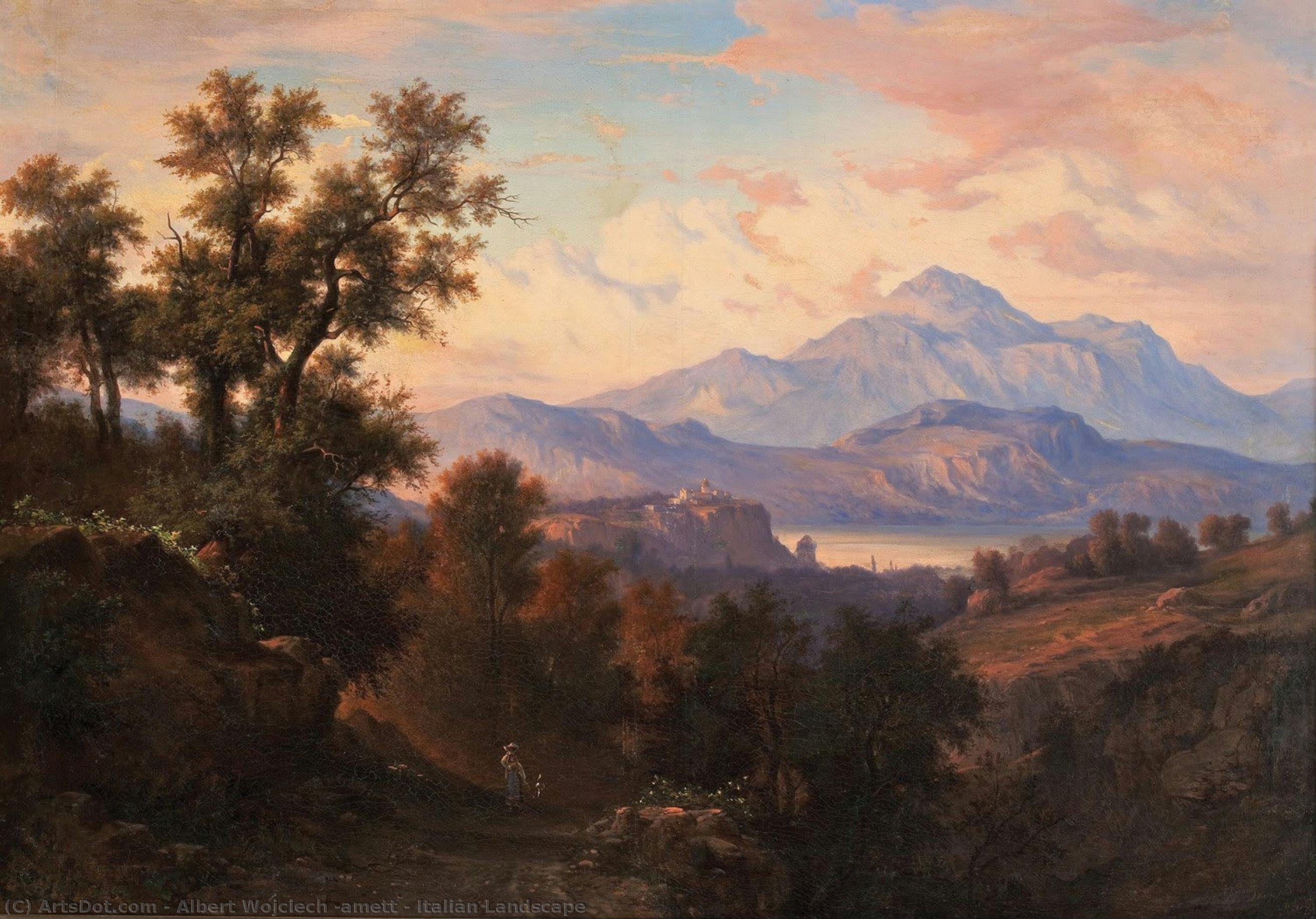
統計情報Italian Landscape
 1861
1861 77.0 x 105.0 cm
 Lithuanian Art Centre TARTLE
 詳細を見る
詳細を見る
手描き油彩複製画
当社のアーティストが、お客様のご希望のサイズと額縁に合わせて、キャンバスに手描きで制作する油彩画です。 ( プリント版に切り替え デジタル画像販売へ切り替え)




































作品のオリジナル比率に合わせた、当店の規定サイズからお選びください。

特定のフレームやスペースに合わせて、ご希望のサイズをご入力いただけます。選択されたサイズが元の画像の比率と異なる場合、アートワークをトリミングするか、手描きで要素を追加して絵画を拡張いたします。デジタルモックアップ を制作し、制作開始前にご確認(承認)をいただきます。
画面上のプレビューは、実際のトリミングや拡張を正確に反映しているものではありません。最終的な構図は、モックアップによってのみ正確にご確認いただけます。
カスタムサイズもご利用いただけますが、元の比率を維持するためには、あらかじめ用意されたリストからサイズを選択することをお勧めいたします。
ご注文後、ArtsDot.com チームより詳細な指示をお送りするとともに、仕上がりイメージ(モックアップ)をご提供いたします。


 ガラスオプションは、110cm未満のサイズでのみご利用いただけます。

Italian Landscape
複製技法
複製画のサイズ
-


合計金額
$ 263
関連作品









アーティストの略歴
A Life Painted in Light: The Evocative Landscapes of Albert Żamett
Albert Wojciech Żamett (1821–1876) was a painter whose life and work beautifully bridged the worlds of Polish Romanticism and Russian academic tradition. Born on November 25th, 1821, in Vilnius, Lithuania, his story is one of artistic pursuit fueled by patronage and shaped by extensive travel across Europe’s cultural heartlands. Żamett was not merely documenting landscapes; he was capturing fleeting moments of serenity and light, imbuing his scenes with a quiet emotional resonance that continues to captivate viewers today. His upbringing was steeped in both Polish heritage and the broader Imperial context, as his father, Daniel Schamett, an emigrant from East Prussia, had established himself as a Russian citizen in Vilnius. The foundations of Żamett’s technical mastery were laid during his formative years in Vilnius, where he attended gymnasium education before seeking more rigorous training. His journey led him to the Imperial Academy of Arts in St. Petersburg, where he studied under the guidance of Maxim Vorobiev. Under Vorobiev’s mentorship, Żamett absorbed the essential stylistic precepts of the era, specifically focusing on tonal harmony and atmospheric perspective. Though he attended the academy as a free listener—a testament to his independent spirit—the training he received there provided him with the structural precision necessary to later master the more fluid, emotive qualities of Romantic landscape art.The Italian Transformation and Artistic Refinement
A pivotal moment in Żamett’s development arrived in 1847, facilitated by the generous support of the Kaunas Marshal, Benedict Tyszkiewicz. This patronage enabled a transformative decade-long immersion in Italy, where he lived from 1847 to 1857. During this period, Żamett moved beyond the academic rigors of St. Petersburg to study at the St. Luke Academy in Rome, perfecting his ability to capture the sublime beauty of the Mediterranean landscape. He became profoundly captivated by the Italian light, the grandeur of classical ruins, and the picturesque countryside—themes that would dominate his oeuvre for decades to come. His time in Italy was not merely a period of study but an emotional awakening. He drew inspiration from the vibrant hues of Tuscan hillsides and the dramatic vistas of the Apennines. One of his most notable achievements includes works depicting the Gran Sasso in the Abruzzo region, where he utilized a masterly composition to showcase mountain peaks looming over tranquil waters. Even after leaving Italy, Żamett continued to recreate these landscapes from memory and sketches, ensuring that the warm, shimmering evening light and the romantic mood of the Italian peninsula remained central to his artistic identity.Legacy and the Romantic Vision
Beyond his Italian sojourns, Żamett’s travels extended through France, England, and Germany, allowing him to absorb the diverse artistic currents of 19th-century Europe. His years in France, specifically between 1859 and 1863, further refined his ability to capture atmospheric effects, a skill that allowed him to create "ideal landscapes" that were highly sought after by collectors of the era. His work often featured:- Atmospheric Perspective: The use of light and haze to create a sense of depth and distance.
- Emotional Resonance: The inclusion of small, human elements—such as a lone figure walking a path—to emphasize the vastness and grandeur of nature.
- Tonal Harmony: A sophisticated palette that transitioned from the lush greens of foreground foliage to the soft pinks and blues of distant, sun-drenched hills.
albert wojciech żamett
1821 - 1876 , Lithuania
基本情報
- Artistic Movement Or Style: Romantic Painting
- Artists Or Movements Influenced By This Artist: ['Imperial Academy of Arts']
- Artists Who Influenced This Artist: ['Maxim Vorobiev']
- Date Of Birth: November 25, 1821
- Date Of Death: 1876
- Full Name: Albert Wojciech Żamett
- Nationality: Lithuanian
- Notable Artworks:
- Italian Landscapes
- Serene Scenes
- Place Of Birth: Vilnius, Lithuania