 プレビュー
プレビュー
 プリントを購入
 シェアする
シェアする シェアする
シェアする
 詳細を見る
詳細を見る

 ダウンロード
 似ている作品
 X線調査
X線調査 スライドショー
Two White Clouds


 詳細を見る
詳細を見る




P118B $10

P118H $10

P118W $10

P438Z $10

P508JH $12

P508YH $12

P805H $10

P805Z $10

P919BZ $10

P919G $10

P919XJ $10

P959ZH $10

P968JZ $12

W106C $8

W218G $10

W218JH $8

W218Y $10

W307PJ $10

W316G $10

W316PJ $8

W316Y $10

W398PJ $8

W4111J $10

W500HY $15

W500JH $15

W692G $12

W849H $8

W940BG $15

W953PJ $8




作品のオリジナル比率に合わせた、当店の規定サイズからお選びください。

特定のフレームやスペースに合わせて、ご希望のサイズをご入力いただけます。選択されたサイズが元の画像の比率と異なる場合、アートワークをトリミングするか、手描きで要素を追加して絵画を拡張いたします。デジタルモックアップ を制作し、制作開始前にご確認(承認)をいただきます。
画面上のプレビューは、実際のトリミングや拡張を正確に反映しているものではありません。最終的な構図は、モックアップによってのみ正確にご確認いただけます。
カスタムサイズもご利用いただけますが、元の比率を維持するためには、あらかじめ用意されたリストからサイズを選択することをお勧めいたします。
ご注文後、ArtsDot.com チームより詳細な指示をお送りするとともに、仕上がりイメージ(モックアップ)をご提供いたします。


 ガラスオプションは、110cm未満のサイズでのみご利用いただけます。

Two White Clouds
複製技法
複製画のサイズ
-


合計金額
$ 263
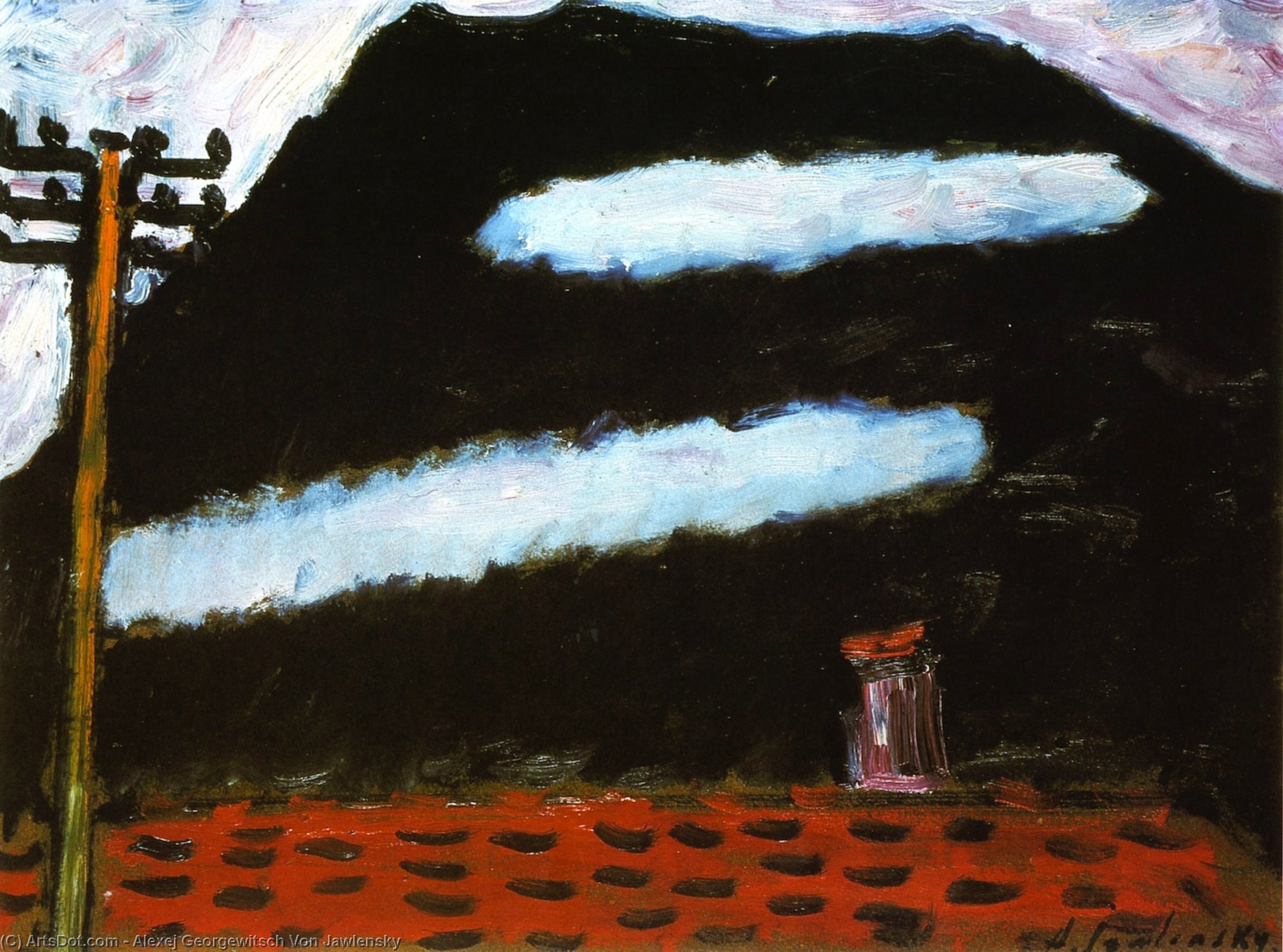
Two White Clouds by Alexej von Jawlensky: A Landscape of Isolation
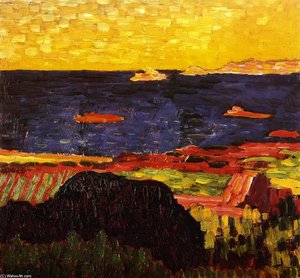
Alexej von Jawlensky’s “Two White Clouds” stands as a haunting testament to the expressive power of early twentieth-century Expressionism. Painted in 1909, this monumental canvas captures not merely a visual depiction of a mountainous landscape but delves into profound psychological and emotional territory—a realm where stark contrasts amplify feelings of solitude and unease.
The painting’s dominant palette is deliberately austere: deep blacks dominate the jagged peaks of the mountain range, punctuated by flashes of intense crimson. This dramatic juxtaposition immediately establishes a mood of oppressive darkness countered by an unsettling vibrancy. The artist eschews traditional perspective, flattening the scene to heighten its surreal quality and emphasizing the emotional core of his vision.
Technique and Material Considerations
Jawlensky’s masterful execution is characterized by thick impasto brushstrokes—a technique that lends textural richness and physicality to the artwork. He employs a palette knife with considerable fervor, layering paint onto the canvas in bold, decisive gestures. This deliberate manipulation of material contributes significantly to the painting's visceral impact, inviting viewers to experience the landscape as if they were physically present within its desolate expanse.
The pigments themselves appear to be oil paints on canvas—a choice that ensures longevity and allows for nuanced tonal variations. The artist’s meticulous attention to detail is evident in the careful rendering of the clouds and mountains, despite their simplified forms. These elements are rendered with angular lines and geometric shapes – triangles representing telephone poles and rectangles defining the structure – reinforcing the painting's underlying sense of order amidst chaos.
Symbolism and Emotional Resonance
“Two White Clouds” transcends mere topographical representation; it operates on a symbolic level, reflecting themes of isolation and decay. The solitary red structure positioned prominently in the foreground serves as a focal point, illuminated by an unseen light source—a beacon of hope struggling against the overwhelming darkness of the surrounding mountains.
The angular lines dominating the composition convey a feeling of instability and disruption, mirroring the anxieties prevalent during Jawlensky’s time. The painting's overall atmosphere evokes a sense of foreboding, prompting contemplation on themes of vulnerability and existential questioning. It is precisely this emotional depth—this willingness to confront uncomfortable truths—that cements “Two White Clouds” as an enduring masterpiece of Expressionist art.
Further Exploration
To appreciate the full scope of Jawlensky’s artistic vision, consider examining reproductions of “Two White Clouds” alongside other works from his oeuvre. His exploration of color and form consistently prioritized emotional expression over representational accuracy—a stylistic hallmark that distinguishes him as one of the foremost innovators of Expressionism.
A high-quality print or canvas reproduction offers an opportunity to experience the painting’s textural brilliance and dramatic palette firsthand, allowing viewers to engage with its evocative imagery and contemplate its profound symbolic significance. Meisterdrucke specializes in museum grade reproductions that faithfully capture the essence of Jawlensky's artistic legacy.
関連作品
アーティストの略歴
アレクセイ・フォン・ヤヴレンスキー:感情に染められた人生
アレクセイ・フォン・ヤヴレンスキー(1864年3月13日 - 1941年3月15日)は、ロシア生まれの画家であり、20世紀初頭の表現主義を代表する重要な人物の一人として知られています。彼の人生は、故郷であるトルジョックから始まり、モスクワでの幼少期を経て、芸術への情熱が芽生え、やがてミュンヘンへと移り、独自の芸術世界を確立していくという、波瀾万丈なものでした。当初は軍人としての道を志しましたが、1880年のモスクワ万博で目にした芸術作品との出会いが、彼の人生の転換点となり、絵画への献身へと導きました。サンクトペテルブルク美術アカデミーでの学びを経て、彼はイリヤ・レピンという巨匠と出会い、その影響を受けながら、自身の芸術的探求を深めていきます。そして、画家であり庇護者でもあるマリアンネ・フォン・ヴェレフキンの登場は、彼の芸術活動に大きな支えとなり、経済的な安定をもたらすだけでなく、芸術家としての成長を促しました。ミュンヘンでの表現主義の萌芽
1894年にミュンヘンへ拠点を移したヤヴレンスキーは、アントン・アズベーの私塾で研鑽を積む中で、当時のヨーロッパ美術界を席巻していた新しい芸術思想に触れました。フェルディナント・ホドラーやヤン・ヴェルカデといった画家たちとの交流を通して、象徴主義や合成主義の影響を受け、内面世界からの感情表現を重視する独自のスタイルへと発展していきます。初期の作品には印象派的な要素も残されていますが、次第に色彩の鮮烈さが増し、構成は簡素化され、より精神性を帯びた表現へと向かっていきました。新ミュンヘン芸術家協会への参加や、青い騎士団(Der Blaue Reiter)との関わりを通して、彼は表現主義運動の中心人物の一人として活躍しました。神秘の顔:魂を映す色彩
ヤヴレンスキーの芸術における最大の功績は、1909年頃から制作を開始した「神秘の顔」シリーズにあります。これらの作品は、単なる肖像画ではなく、被写体の内面にある精神性や感情を捉えようとした試みであり、その鮮やかな色彩と抽象化されたフォルムは見る者を魅了します。ショッコと赤い帽子やアレクサンドル・サハロフの肖像といった作品に見られるように、顔は幾何学的な形へと還元され、色彩によって感情が表現されています。これは、肉体的な外見を超えて、人間の魂の本質を捉えようとしたヤヴレンスキーの芸術的探求の集大成と言えるでしょう。1910年代には、さらに抽象化が進み、限られた色彩と幾何学的な構成要素によって、強烈な感情表現を生み出す独自の様式を確立しました。流浪と晩年:揺るぎない芸術への献身
第一次世界大戦の勃発により、ヤヴレンスキーはドイツから亡命し、スイスへと移り住みました。そこで彼はエミー・シェイヤーという女性と出会い、彼女は彼の作品を熱心に擁護し、アメリカで積極的にプロモーションを行いました。晩年は、関節炎による身体的な苦痛に苛まれながらも、芸術への情熱は衰えることなく、1937年まで制作活動を続けました。1941年3月15日、ヴィースバーデンにてその生涯を閉じましたが、彼の作品は今日でも世界中の美術館に収蔵され、多くの人々に感動を与え続けています。影響と芸術的遺産
ヤヴレンスキーの芸術は、イリヤ・レピンやマリアンネ・フォン・ヴェレフキンの庇護のもとで育まれました。また、フェルディナント・ホドラー、ヤン・ヴェルカデといった画家たちとの交流も彼の芸術的成長に大きな影響を与えました。さらに、ワシリー・カンディンスキーやフランツ・マルクといった青い騎士団のメンバーとの共同制作は、表現主義運動を深化させる上で重要な役割を果たしました。ヤヴレンスキーの作品は、色彩とフォルムを通して人間の内面世界を探求する姿勢が特徴であり、その影響は現代美術にも受け継がれています。彼の芸術的遺産は、感情に根差した表現の可能性を示唆し、後世のアーティストたちに多大なインスピレーションを与え続けています。
アレクセイ・フォン・ヤウレンスキー
1864 - 1941 , ロシア
基本情報
- フルネーム: アレクセイ・フォン・ヤヴレンスキー
- 主な作品:
- ショッコと赤い帽子
- アレクサンダー・サハロフの肖像
- 紫色のターバン
- 出生地: トルジョック(ロシア)
- 国籍: ロシア
- 影響を与えた芸術家/運動: ['ブルーライダー']
- 影響を受けたアーティスト:
- イリヤ・レーピン
- フェルディナント・ホドラー
- 死亡年月日: 1941年3月15日
- 生年月日: 1864年3月13日
- 芸術運動/スタイル: 表現主義
関連記事

Dark Masterpieces: 10 Iconic Paintings Dominated by Black Tones |
Explore 10 iconic paintings dominated by black tones, from Rembrandt’s chiaroscuro to Goya's dark expressions. Discover the stories behind these masterpieces & find museum-quality art reproductions for your home at .

ロマン派ランドスケープ:時代を彩る巨匠の10選|アートとインテリアの世界
ロマン派絵画の時代を彩る10選。巨匠たちの風景が織りなす感動の世界へ。ターナー、ルーベンスなど、名作の裏話と高精細複製でアートをお部屋に。ArtsDot.comで至福のアート体験を。

ジョン・コンスタブルの傑作25選:英国風景画の巨匠が描く自然と光の詩 | ArtsDot
ジョン・コンスタブルの傑作25選。英国風景画の巨匠が描く自然と光の詩の世界へ。ロマン主義を代表する絵画、デダム・ヴェールやヘイ・ウェインなど、ArtsDotで高品質なアートプリントをお楽しみください。インテリアに深みと感動を。コレクションはこちら。

Evocations of Place: A Historical Journey Through Landscape Art
Explore the rich history of landscape art with ArtsDot. Discover renowned artists, movements like Impressionism & Romanticism, and expert guidance for collecting timeless pieces. Find your perfect serene escape today!
Fyodor Vasilyev: A Poetic Vision of Russian Landscape – Life, Legacy, and the Transience of Nature
Explore the captivating world of Fyodor Vasilyev, a pioneering Russian landscape painter. Discover his lyrical style, influential works like 'Clouds' & lasting legacy. Learn about his life, artistic journey & impact on Russian art history.